7 days in Jeju itinerary
Seven days is enough to see essentially all of Jeju’s major regions without rushing any of them: a full island loop through Jeju City, East Jeju, Seogwipo, Hallasan, and West Jeju, plus a full day out to Udo Island that shorter itineraries have to skip or rush. It’s the itinerary length this site would recommend by default if a visitor asked for one number.
| Where | Jeju City, East Jeju, Seongsan, Seogwipo, Hallasan, West Jeju, Udo |
| Duration | 7 days, 6 nights |
| Cost | around ₩1,100,000-1,450,000/person (~US$815-1,075), excl. flights |
| Getting there | CJU airport, rental car (IDP required) |
| Book ahead | Hallasan trail reservation — mandatory, online only |
The seven days at a glance
| Day | Region | Highlight | Overnight |
|---|---|---|---|
| 1 | Jeju City | Dongmun Market, Yongduam Rock | Jeju City |
| 2 | East Jeju | Manjanggul, Bijarim/Sangumburi | Seongsan |
| 3 | Seongsan → Udo | Sunrise at Seongsan Ilchulbong, Udo Island | Seongsan |
| 4 | South to Seogwipo | Cheonjiyeon and Jeongbang Waterfalls | Seogwipo |
| 5 | Hallasan | Seongpanak or Gwaneumsa summit trail | Seogwipo |
| 6 | Recovery → West Jeju | Jusangjeolli, Sanbangsan | West coast/Aewol |
| 7 | West Jeju → CJU | Osulloc, Aewol cafes | Departure |
Who a full week suits
This pace suits genuinely slow travelers, hikers who want Hallasan plus recovery time built in rather than bolted onto a packed schedule, photographers chasing multiple regions’ golden hours, and anyone treating this as a once-in-a-while trip worth doing properly rather than efficiently. It’s more time than most people need for a first Jeju visit if the goal is simply “see the highlights” — the 4-day or 5-day versions cover that more efficiently.
Visa logistics stay simple for a week-long stay: US, EU, UK, Canadian, and Australian passport holders get 30 days visa-free on a direct CJU flight, with the K-ETA exemption for these groups running through December 2026. The two things worth booking well ahead of arrival are the Hallasan trail reservation (online, mandatory, fills up on popular dates) and a rental car if traveling during spring bloom season or the July-August peak.
Day 1: Arrival and Jeju City
Land at CJU, collect a rental car in Yongdam (International Driving Permit required), and ease into the trip with an afternoon in Jeju City — Dongmun Traditional Market for lunch and black-pork street for dinner, Yongduam Rock for an evening walk. With a full week ahead, there’s no need to rush east today. Overnight in Jeju City, where mid-range hotel rooms run ₩80,000-120,000/night.
Day 2: East to Manjanggul and Seongsan
Drive east 50-70 minutes to Manjanggul lava tube (entry ~₩4,000, 40-60 minute walk, constant 11-21°C underground) in the morning, then continue to Bijarim Forest (entry ~₩3,000) or Sangumburi Crater (entry ~₩4,000) in the early afternoon — both quieter alternatives to the coastal crowds. Settle into Seongsan town by evening; guesthouse rooms run ₩60,000-90,000/night. South-West Jeju Essentials: Hallasan & UNESCO Highlights is worth noting for later in the trip.
Day 3: Seongsan sunrise and Udo Island
Arrive at Seongsan Ilchulbong 30-45 minutes before sunrise (entry ~₩5,000, 20-40 minute climb on paved steps) — a week-long trip means no excuse to skip this. Afterward, walk to Seopjikoji’s headland, then head to Seongsan’s ferry port for the crossing to Udo. Jeju: Udo Island E-Bike, Seongsan Ilchulbong & Speed Boat bundles the crossing with e-bike rental, a practical way to cover the island’s roughly 17km perimeter road. Udo’s round-trip ferry runs ₩8,500-10,500, and ferries cancel outright in rough seas, so build flexibility into this day specifically. Try the island’s peanut ice cream, sold at nearly every café, and return to Seongsan by evening or stay over if a guesthouse there suits your pace better.
Day 4: South to Seogwipo
Drive south to Seogwipo — about an hour — for the Maeil Olle Market and an afternoon between Cheonjiyeon Waterfall (entry ~₩2,000; see the Cheonjiyeon Waterfall guide) and Jeongbang Waterfall, which drops directly into the ocean. Cheonjeyeon, the three-tiered third waterfall in Seogwipo’s cluster, is worth a visit too if you have the legs for a slightly more strenuous path. Jeju: Sunset Tour Olle Trail Walking Tour with Hotel Pickup is a good low-effort way to close the day if the waterfalls haven’t tired you out. Overnight in Seogwipo, ₩90,000-130,000/night.
Day 5: Hallasan
The physically demanding centerpiece of the trip. The Seongpanak trail (9.6km one way, gentler grade, 8-9 hours round trip) and Gwaneumsa trail (8.7km one way, steeper, 7.5-9 hours round trip) both reach the crater rim and require an advance reservation with a strict gate cutoff — compare them in the Seongpanak Trail guide and Gwaneumsa Trail guide. If a full summit doesn’t suit your fitness level or the day’s weather, the Yeongsil trail to Witse Oreum (about 3.7km one way, 3-4 hours round trip, no reservation needed) is a genuinely good alternative — see the Yeongsil Trail guide. Stay in Seogwipo again tonight for an easy dinner and early night.
Day 6: Recovery day in Seogwipo, then west
Build in a deliberately lighter morning after Hallasan — Jusangjeolli’s columnar basalt cliffs near Jungmun require only a short boardwalk walk (entry ~₩2,000-3,000) and reward the low effort with genuinely striking scenery. By early afternoon, drive west 45-60 minutes toward West Jeju for Sanbangsan’s grotto temple and the nearby Yongmeori coastal cliffs (Sanbangsan entry ~₩2,500). Overnight around Aewol or elsewhere on the west coast, ₩80,000-120,000/night.
Day 7: West Jeju cafes and departure
Spend the final morning at Osulloc Tea Museum’s green tea fields, free to walk with tastings available, then wander Aewol’s cafe coast along the Handam walk before the drive back to CJU — a comfortable 20-45 minutes depending on your exact location. Return the rental car with a full tank and budget 20-30 minutes for the return process. Jeju: Haenyeo Culture Experience with Seafood Tasting works well as a closing cultural stop if timing allows before an evening flight.
Booking the Hallasan reservation ahead of time
Since 2019, both summit trails require an advance online reservation through the national park’s booking system, with a daily hiker quota and an assigned starting-time window. Popular dates — weekends, holidays, peak October foliage weeks — can fill within days of the booking window opening, so reserve as soon as your travel dates are confirmed rather than waiting until closer to departure. Gate cutoff times vary seasonally and are enforced strictly at the trailhead checkpoint; confirm the current cutoff for your specific date and plan to arrive with margin rather than right at the deadline.
A seven-day trip gives you something shorter itineraries don’t: room to move the Hallasan day if the forecast looks bad. If your reserved date turns out stormy, having two or three flexible days elsewhere in the schedule to shuffle around is one of the strongest arguments for this itinerary length over a tighter five-day version.
If it rains during the trip
With seven days, there’s enough slack to shuffle the schedule around a bad-weather day rather than pushing through it. Manjanggul is a reliable underground fallback any day. Udo’s ferries are the first thing to cancel in rough weather — if day three looks bad, swap it with day six’s lighter schedule and try Udo again once conditions improve. Hallasan’s trails close outright in high wind or heavy rain regardless of your reservation, with no easy rebooking — treat the extra days in this itinerary as your weather buffer for the summit attempt specifically.
Getting around over seven days
A rental car handles this loop most efficiently — roughly 220-250km across the week including the Udo add-on and the Hallasan access road. Fuel runs approximately ₩40,000-55,000 total. Rental pickup and drop-off both happen in Yongdam, within a five-minute walk of arrivals; bring your home driver’s license plus an International Driving Permit, checked at pickup without exception. Naver Map or Kakao Map are the navigation apps to use — Google Maps has meaningful gaps for driving directions in Korea.
Insurance terms vary meaningfully between agencies, and disputes over scratches and minor damage are a common complaint among visitors — photograph the car from all angles at pickup, and confirm exactly what the collision damage waiver covers before signing anything. An eSIM or pocket wifi device arranged before landing solves most of the connectivity and navigation friction for a trip this length, and is worth setting up before leaving the rental counter rather than after.
Practical notes for a week-long trip
Tap water is safe to drink island-wide, so a refillable bottle cuts down on plastic waste over seven days — genuinely useful given how much water the Hallasan day alone requires. Tipping isn’t customary anywhere in South Korea, so none of the prices above need an extra amount added. Pack layers rather than a single jacket: Manjanggul’s cave temperature, Hallasan’s summit wind, the Udo ferry crossing, and coastal breezes at Seongsan all run noticeably cooler than the daytime air at sea level, sometimes by a wide margin on the same day.
Eating your way around the island
Each region has its own food identity worth building meals around. Jeju City’s Dongmun Market and black-pork street are the place for heukdwaeji. The east coast, especially Seongsan’s harbor, leans toward abalone and same-day seafood. Seogwipo mixes both traditions with a stronger night-market feel at the Maeil Olle Market. West Jeju, particularly Aewol, is where cafe culture concentrates. Momguk (seaweed-and-pork soup) and galchijorim (braised beltfish) are worth seeking out specifically if black pork gets repetitive by day four.
Budget for seven days
A realistic mid-range daily budget runs ₩100,000-140,000 per person for food, entry fees, and local transport, before lodging and the car. Entry fees stay modest throughout: Manjanggul ₩4,000, Seongsan Ilchulbong ₩5,000, Cheonjiyeon ₩2,000, Sanbangsan ₩2,500, Udo ferry ₩8,500-10,500 round trip plus e-bike rental ₩15,000-25,000. Hallasan’s trails are free once reserved. The bigger costs are six nights of mid-range lodging (₩480,000-680,000 total) and a compact rental car across seven days (₩350,000-490,000 in low season, more in peak periods).
Rough per-person total for seven days, mid-range and split between two travelers: ₩1,100,000-1,450,000 (~US$815-1,075), excluding flights to Jeju. This is also a length of trip where a mix of self-driving and one or two guided day tours — like South-West Jeju Essentials: Hallasan & UNESCO Highlights for the toughest logistics day — can genuinely improve the trip without breaking the budget.
Where to stay
A four-base plan works well over seven nights: Jeju City for the first night, Seongsan for two nights (covering the sunrise and Udo), Seogwipo for two nights (covering the waterfalls and Hallasan), and the west coast for the final night. This keeps driving manageable each day while still giving each region enough time to feel unhurried. Seongsan’s guesthouse supply is the smallest of the regions on this loop, so book it earliest.
What makes seven days worth it over five
The extra two days over the 5-day itinerary go almost entirely to Udo Island and a genuine recovery day after Hallasan, both of which get compressed or cut on shorter trips. If neither of those specifically appeals, the shorter itinerary covers the same core sights more efficiently — but if this is likely to be a once-in-a-while visit to Jeju, the extra time removes nearly all the “we should have stayed longer” regret that tighter itineraries tend to produce.
It also gives more room for the island’s slower pleasures — an unhurried coffee in Aewol without watching the clock, a second walk through Dongmun Market once you already know your way around, or simply sitting at Seopjikoji after the sunrise crowd has thinned rather than moving on immediately. None of that shows up on a packing list, but it’s often what people remember longest about a trip this length.
Swapping in the museums and gardens a week has room for
A seven-day pace has enough slack to add one or two of Jeju’s well-regarded museums or gardens without displacing anything above — something the shorter itineraries genuinely can’t fit. The Jeju museums roundup is a good starting point for choosing, but two stand out for this specific route: Bonte Museum sits near Jungmun, making it an easy add to day six’s drive from Seogwipo toward West Jeju, and Spirited Garden near Hallim rewards an unhurried hour more than a rushed one, which day seven’s lighter schedule can absorb. Neither is essential, but either turns an otherwise transit-heavy day into something with a genuine stop worth lingering at.
Adapting this route for a family with kids
The itinerary above assumes adult pacing — an early sunrise climb, a full Hallasan summit day, and daily driving that a family with young children will find considerably more tiring than a couple or solo traveler would. If traveling with kids, the biggest single swap is replacing day five’s Hallasan summit attempt with a lower-key day: Aqua Planet’s aquarium near Seongsan or a slower morning at one of the family attractions roundup’s picks works better for most ages than an 8-9 hour mountain hike. The dedicated Jeju with kids guide has a fuller breakdown of which of this itinerary’s stops work well for families as-is (Manjanggul, the waterfalls, Udo’s flatter terrain) and which are worth trimming or swapping (the pre-dawn sunrise start, the full Hallasan day).
Frequently asked questions about the 7-day Jeju itinerary
Is seven days too long for Jeju?
Not if you want to properly cover the full island loop, Hallasan, and Udo without rushing any of them. If your interest is narrower — just the coast, or just hiking — a shorter, more focused itinerary may suit better.
Do I need to book Hallasan and Udo separately in advance?
Hallasan’s trail reservation is mandatory and should be booked as soon as dates are fixed. Udo’s ferry is typically walk-up outside peak season, though summer weekends get busy enough that arriving early in the day helps.
What if Udo’s ferry is cancelled on my scheduled day?
With seven days, you likely have flexibility to shift it to another day — Udo pairs naturally with day three or day six in this itinerary, so use whichever has better weather.
Can I skip Hallasan and use that day differently?
Yes — swapping the Hallasan day for a second, more relaxed day in Seogwipo or an extra half-day on Udo works fine if summiting isn’t a priority.
How much driving does this itinerary involve overall?
Roughly 220-250km across seven days, comparable to just over one full circuit of the island once the Udo and Hallasan detours are included.
Is this itinerary suitable for a family?
It’s workable for families with older children or teens comfortable with a full-day hike; families with young kids are usually better served by the dedicated Family Jeju itinerary, which builds in more downtime.
What’s the best season for a week-long trip?
October offers the clearest skies island-wide for both hiking and coastal photography. May-June is a close second, with better Hallasan summit weather odds than early autumn.
Should I rent the car for all seven days, or mix in tours?
Renting the full week is simplest logistically, but pairing a rental with one or two guided days — especially for the Hallasan logistics — is a reasonable way to reduce driving fatigue without losing flexibility.
Is Udo worth an overnight stay instead of a day trip?
It can be — Udo has a small guesthouse scene aimed at travelers wanting to catch its own sunrise or sunset without the return-ferry deadline, though most visitors find a well-timed day trip sufficient.
What’s the single most common mistake on a 7-day Jeju trip?
Overpacking the schedule anyway, despite having a full week — treating every day as a checklist rather than leaving deliberate slack for weather, fatigue, or a place worth lingering longer than planned defeats much of the point of choosing this length over a shorter itinerary.
Is seven days enough to also add a second Hallasan trail attempt?
Not realistically — one summit attempt is physically demanding enough for most travelers, and a second attempt on the alternate trail is better saved for a future return trip rather than squeezed into this itinerary’s remaining days.
Can I add a museum or garden without cutting anything from this itinerary?
Yes — Bonte Museum near Jungmun fits day six’s drive west, and Spirited Garden near Hallim suits day seven’s lighter pace, without displacing any of the sights above.
Is this itinerary too demanding for a family with young kids?
As written, yes for very young children — the sunrise start and full Hallasan day are genuinely tiring. Swapping day five for Aqua Planet or another lower-key stop from the family attractions roundup makes the week much more workable.
Related guides
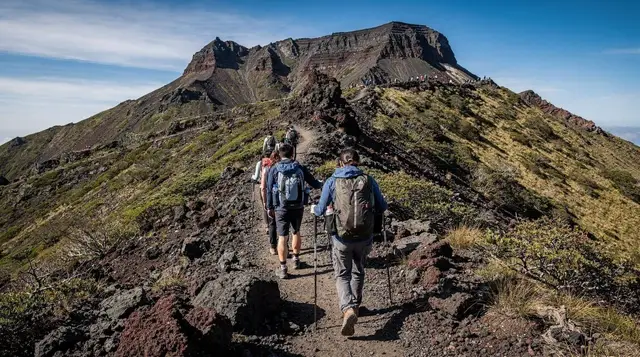
Hiking Hallasan: Complete Guide
Compare all four Hallasan trails — Seongpanak, Gwaneumsa, Yeongsil, Eorimok — by distance, difficulty, reservation rules, and what each one delivers.

Hallasan: Seongpanak Trail
Seongpanak is the longer but gentler of Hallasan's two summit trails — 9.6km one way, reservation required, 8-9 hours round trip.

Ferries to Udo, Gapado and Marado
Ferry schedules, prices, and cancellation risk for the boats to Udo, Gapado, and Marado from Jeju Island.

Hallasan: Eorimok Trail
Eorimok is the gentlest of Hallasan's four trails, climbing toward Witse Oreum from the west — no reservation, roughly 4.7km one way.
Ready to book? Top tours for this guide
We earn a small commission if you book through GetYourGuide — at no extra cost to you. Every tour is hand-picked and verified.
Jeju: UNESCO Day Tour for Cruise Guests
Jeju: Highlights Day Trip (East Course)
Jeju Island: Full Day Tour for Cruise Ship Passengers
Jeju: Small Group UNESCO Highlights Tour for Cruise Guests

Jeju East: Cherry Blossom Early Bird Tour with Hotel Pickup