
West Jeju
West Jeju covers Aewol's cafe coast, Hallim's caves and dolphins, Osulloc's tea fields, and Sanbangsan's coastal cliffs.
Quick facts
Top tours and experiences
We earn a small commission if you book through GetYourGuide — at no extra cost to you. Every tour is hand-picked and verified.
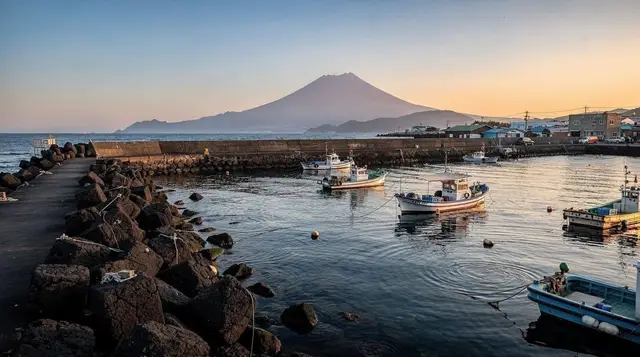
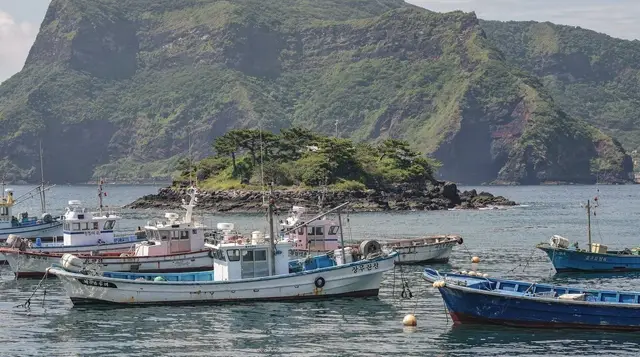
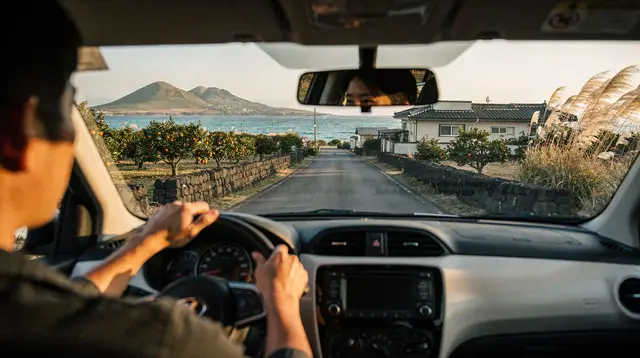
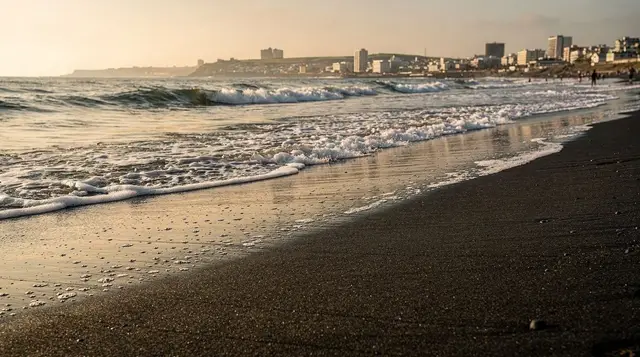
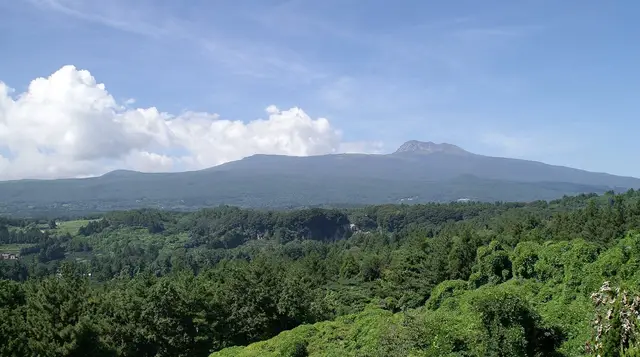

West Jeju runs along the coast from Aewol’s café strip down to the southwestern tip near Sanbangsan, and it reads as the island’s most relaxed, most photogenic-for-its-own-sake region: fewer must-climb landmarks than the east, more coastal drives, green tea fields, and small-town charm. It’s also the most car-dependent of Jeju’s regions in practice, since its appeal is spread thin along a long stretch of coast road rather than concentrated at one or two headline sites.
| Where | Coast from Aewol to Sanbangsan, west side |
| Getting there | 30-45 min drive from CJU airport |
| Time needed | 2-3 days |
| Cost | Around ₩35,000-55,000/person for a full day of sights |
| Best time | October for clear skies; any season for sunset drives |
What defines west Jeju
Where east Jeju has its UNESCO trio and Hallasan has its trails, west Jeju’s identity is built from smaller, cumulative pleasures: the café coast around Aewol, the caves and dolphin-spotting at Hallim, the columnar basalt at Yongmeori Coast, and the tea fields at Osulloc. Several coastal towns here have their own destination pages — Aewol, Hallim, Hyeopjae, Gwakji, Moseulpo, Hangyeong, Sinchang, and Songak — this guide covers the region’s shared attractions and how they connect.
Getting here and around
CJU airport sits close enough to west Jeju that Aewol is only about a 25-30 minute drive along the coastal road, making this the fastest region to reach from a landing flight. Continuing further south to Hallim adds another 20-25 minutes, and Sanbangsan/Osulloc near the southwestern tip is about an hour total from the airport. The coast road (1132) hugs the shoreline the whole way, which makes for slow but scenic driving — budget more time than a straight-line distance would suggest if you plan to stop often, which is really the point of this region.
Public buses run along the coast road but at lower frequency than the routes serving Jeju City; a rental car is close to essential for covering more than one or two stops in west Jeju in a day.
Aewol’s cafe coast
Aewol has become Jeju’s most Instagrammed café strip — a run of ocean-view coffee shops, several in converted or purpose-built buildings with striking architecture, packed along a short stretch of coast road. It’s genuinely pleasant for a slow afternoon, and genuinely crowded on weekends with both tourists and Korean domestic day-trippers chasing the same photos. See the Aewol destination guide for specific café recommendations and the Aewol cafe street guide for a walking route.
Hallim Park and the caves
Hallim Park combines botanical gardens, a folk village recreation, and Hyeopjae/Ssangyong Caves (lava tube caves, smaller and more developed for visitors than Manjanggul in the east) in a single ticketed complex — entry around ₩17,000. It’s a solid family stop, if more manicured and less raw than the geological sites further east. Nearby, boat tours from Hallim’s harbor run dolphin-spotting trips, since a resident pod of bottlenose dolphins is regularly sighted off this stretch of coast; Jeju: West Healing Tour, Caves & Dolphins bundles the cave visit with a dolphin-watching component. Sightings aren’t guaranteed — treat it as a bonus, not the reason to book.
Osulloc Tea Fields
Jeju’s most-visited tea plantation, with rolling green rows open for free walking, a museum on Korean tea culture, and a café serving green tea-flavored everything (soft serve, lattes, roll cakes). It gets crowded at peak times but the fields themselves are large enough to find quieter corners, and there’s no admission fee to walk the grounds. Full visiting details — best photo times, café menu, nearby Innisfree House — are in the Osulloc guide.
Sanbangsan and Yongmeori Coast
Sanbangsan is a distinctive bell-shaped lava dome rising abruptly from flat farmland near the southwestern coast, visible from much of west Jeju as a landmark. A cave temple partway up the slope is accessible via a moderate climb (entry ~₩1,000); the mountain itself is not open for summit hiking, unlike Hallasan. At its base, Yongmeori Coast has dramatic layered sedimentary cliffs walkable at low tide — check tide times before going, since the path floods at high tide and can close. Both are covered in more depth in the Sanbangsan guide and Yongmeori Coast guide.
Day tours covering west Jeju
For visitors without a car, bundled day tours are a practical way to hit west Jeju’s spread-out sites in one trip. Jeju: Western and Southern Sightseeing Day Tour covers the region’s main stops in a single guided day, while Jeju: West of Jeju Island Bus Tour from Seogwipo City is the practical pick if you’re already based in Seogwipo rather than Jeju City. For a version that folds in Hallasan’s lower slopes and the waterfall side of the south too, Jeju: SouthWest Authentic Tour Mt Halla, Waterfall, Green Tea covers more ground in one day, at the cost of less time at each individual stop.
Beaches
Hyeopjae and Gwakji beaches, a short drive south of Hallim, are among the most scenic on the island — white sand, clear shallow water, and a view of Biyangdo island offshore — and less crowded than Jungmun in the south. See the best beaches roundup for a full comparison against the east coast options.
Where to stay
Aewol has the widest range of boutique guesthouses and small hotels aimed at the café-coast crowd, from ₩70,000-150,000/night. Hallim and the smaller coastal towns further south are quieter and cheaper, useful if you want to be near Hyeopjae/Gwakji beaches without Aewol’s weekend crowds. The southwestern cluster near Sanbangsan has fewer accommodation options overall — most visitors day-trip through rather than overnight there.
A realistic two-day plan
Day one: start in Aewol for a mid-morning coffee and a walk along the Handam coastal trail, then continue south to Hallim Park for the caves and, weather permitting, a dolphin-watching boat trip. Overnight in the Hallim/Hyeopjae area to be close to the beaches for an evening swim or sunset walk. Day two: drive to Sanbangsan and Yongmeori Coast in the morning (checking tide times in advance), then Osulloc Tea Fields for lunch and a walk through the plantation before heading back north. This covers the region’s spread-out highlights without excessive backtracking.
Budget for a day in West Jeju
Hallim Park entry runs around ₩17,000, one of the higher single-site fees on the island but bundling caves, gardens, and a folk village recreation into one ticket. Sanbangsan’s cave temple is around ₩1,000; Osulloc is free to walk. A café stop in Aewol runs ₩8,000-15,000 for coffee and a light snack — pricier than a standard Korean café given the ocean-view premium. A full day covering two or three of these sites, plus a casual lunch, comes to roughly ₩35,000-55,000 (about US$26-41) per person before accommodation.
Sunset driving
The coastal road through west Jeju, particularly the stretch through Aewol and down toward Hallim, is one of the better sunset drives on the island — pull-offs along the way offer unobstructed views west over open water, without the crowd density of a dedicated viewpoint. If a scenic drive rather than a specific stop is what you’re after, timing a late-afternoon departure from Jeju City to arrive in this stretch by golden hour is a reasonable way to spend an evening.
Seasonal notes
West Jeju’s coast road is genuinely pleasant to drive in nearly any season, though winter wind picks up noticeably along the exposed stretches near Hallim and Sanbangsan. Yongmeori Coast’s tidal path is unusable at high tide regardless of season — always check tide tables, not just weather. Café culture in Aewol runs year-round, though outdoor seating is obviously more appealing April through October.
An honest note on west Jeju’s pace
West Jeju rewards travelers willing to slow down and stop often rather than those chasing a checklist of must-see landmarks. Compared to east Jeju’s concentrated UNESCO sites, west Jeju’s charm is genuinely cumulative — a café here, a coastal view there, a tea field walk in the afternoon — and rushing through it in a single hurried day undersells what the region actually offers. If your itinerary only allows one day here, pick two or three stops rather than trying to see everything listed in this guide.
Combining west Jeju with a visit to the islets
Moseulpo, the departure port for ferries to Gapado and Marado, sits at the southwestern edge of this region, making an islet day trip a reasonable extension of a west Jeju itinerary rather than a separate excursion requiring a different base. Visitors spending several days in this region can fold in one of the smaller islets without significant additional driving.
Renting a car specifically for this region
If you’re only planning to explore west Jeju and don’t need a car for the rest of your trip, a single or two-day rental picked up and dropped off at the airport is a reasonable middle ground rather than committing to a car for a full multi-day itinerary. Rates for short rentals are proportionally similar to longer ones (roughly ₩40,000-70,000/day for a compact car depending on season and company), and returning the car after covering west Jeju frees you from parking and driving concerns if the rest of your trip stays closer to Jeju City or relies on public transit and tours.
West Jeju’s towns at a glance
| Town | Known for | Best for |
|---|---|---|
| Aewol | Café coast, architecture | Slow afternoons, photos |
| Hallim | Caves, dolphin boats, park | Families |
| Hyeopjae | White-sand beach | Swimming, sunset |
| Moseulpo | Islet ferry port | Gapado/Marado day trips |
| Songak | WWII history, coastal loop | History-focused travelers |
West Jeju with kids
Hallim Park’s combination of caves, gardens, and a folk village recreation makes it one of the region’s easiest family stops, and the flat, low-key pace of most west-coast towns suits younger children better than a hiking-heavy east Jeju itinerary. The Jeju with kids planning guide and Jeju family attractions roundup both cover west Jeju stops alongside options elsewhere on the island if you’re building a longer family trip.
Extending west Jeju to the northwest coast
Beyond the Aewol-to-Sanbangsan stretch covered above, the coast continues north through Hangyeong and Sinchang, home to the distinctive wind-turbine coast road, before circling back toward Jeju City. Travelers with three or more days in the region can extend the standard two-day plan north to cover this quieter stretch, which sees a fraction of Aewol’s crowds.
Frequently asked questions about West Jeju
Is Aewol worth visiting if I’ve already seen cafes elsewhere?
The setting — ocean-facing, dramatic architecture in places — is genuinely distinct from typical city cafes, and worth an afternoon even if cafe-hopping isn’t usually your travel style.
How many days should I spend in west Jeju?
Two to three days covers Aewol, Hallim, and the Sanbangsan/Osulloc cluster comfortably. A rushed version can be done in one long day with a car, hitting two or three highlights rather than all of them.
Are the Hallim dolphin tours reliable for sightings?
Sightings are common but not guaranteed — a resident pod frequents these waters, but weather and the dolphins’ own movements affect any given trip. Book it as a bonus activity alongside the caves, not a guaranteed wildlife encounter.
Can I walk up Sanbangsan to the summit?
No — unlike Hallasan, Sanbangsan is not open for summit hiking. The cave temple partway up the slope is the accessible portion, reached via a moderate paved climb.
Is Osulloc free to visit?
Yes, walking the tea fields and visiting the museum is free; you only pay for food and drinks at the on-site café.
What’s the best time of day to visit Yongmeori Coast?
Low tide, checked in advance — the coastal path along the sedimentary cliffs is impassable or closed at high tide.
Do I need a car for west Jeju, or can day tours cover it?
A car gives the most flexibility given how spread out the sights are, but the bundled day tours from Jeju City or Seogwipo are a reasonable substitute if you’re not driving, especially for a single-day visit.
Is west Jeju good for families with young children?
Yes — Hallim Park and the region’s beaches are among the more family-friendly stops on the island, and the pace is gentler than the hiking-heavy east coast.
Should I extend my west Jeju trip north to Sinchang and Hangyeong?
If you have three or more days in the region, yes — it’s a quieter extension with its own distinctive stops, though it adds meaningfully to the driving if your time is limited.


