
Hallasan: Eorimok Trail
Is the Eorimok Trail the easiest way to hike Hallasan?
Yes — Eorimok is generally considered the gentlest of Hallasan's four trails, with a moderate grade over about 4.7km one way to Witse Oreum. It doesn't reach the summit crater, and unlike Seongpanak and Gwaneumsa, it doesn't require a reservation.
Eorimok is the fourth of Hallasan’s trails and generally the one recommended to hikers who want a genuine taste of the mountain without committing to a full summit day. It climbs toward Witse Oreum from the western side, on a grade widely considered the gentlest of the four routes, and — like Yeongsil — it sits outside the reservation system that governs the two summit trails.
| Distance | 4.7km one way / ~9.4km round trip |
| Time | 4–5 hours |
| Reaches summit? | No — ends at Witse Oreum |
| Reservation | Not required |
| Trailhead | Western Hallasan, ~40–50 min from Jeju City |
The route
The trail starts at around 1,169m elevation and climbs steadily but moderately through subalpine forest, without the sustained steep sections that define parts of the Gwaneumsa route on the opposite side of the mountain. The lower and middle sections pass through mixed forest that’s particularly attractive in autumn, when the foliage turns before the more exposed upper trail. As the trail nears Witse Oreum, the tree cover thins and the terrain opens into the same broad shoulder that the Yeongsil trail also reaches, giving hikers on Eorimok the option to connect toward the Five Hundred Generals rock formations covered on that route.
Witse Oreum itself offers panoramic views over Hallasan’s western slopes and, on clear days, out toward the coastline — a meaningful reward for a route that asks less of hikers than the summit trails.
Why Eorimok is considered the gentlest trail
Compared to Seongpanak’s length, Gwaneumsa’s steep rocky sections, or even Yeongsil’s more uneven footing near the rock formations, Eorimok’s grade is the most consistently moderate of the four. This makes it the trail most commonly recommended for families with older children, hikers easing into higher-elevation exercise, or visitors who want to experience Hallasan’s terrain and views without the physical demands of a 17-19km summit round trip. It’s not an easy stroll — nearly 9.4km round trip with real elevation gain is still a genuine hike — but relative to the other three, it’s the most forgiving.
No reservation required
Because Eorimok doesn’t reach the crater rim, it isn’t subject to the online reservation system that caps daily hikers on Seongpanak and Gwaneumsa. There’s no quota or assigned starting window, which makes Eorimok a reliable fallback when summit trail bookings are full — a common situation on peak-season weekends. Park operating hours and general access rules still apply, so check current status before a same-day visit, particularly after weather events.
Combining Eorimok with Yeongsil
Because both trails converge near Witse Oreum, some hikers arrange a one-way traverse — starting at one trailhead and finishing at the other — with transport pre-arranged at each end, effectively combining Eorimok’s gentler ascent with a descent past Yeongsil’s dramatic Five Hundred Generals rock formations, or vice versa. This requires two vehicles or a pre-booked transfer, since the trailheads are a meaningful drive apart, but it’s a genuinely good way to see both trails’ distinct character in a single outing. See the Yeongsil Trail guide for details on that side of the connection.
How long it takes
Most hikers complete the round trip in 4-5 hours, including time at Witse Oreum. This puts Eorimok in similar half-day territory to Yeongsil, making it another reasonable option for visitors who want to pair a Hallasan hike with something else the same day, or who simply don’t have a full day free for a summit attempt.
Eorimok vs a summit attempt
If reaching Baengnokdam crater lake at the actual summit matters to you, only Seongpanak or Gwaneumsa will get you there — Eorimok stops well short. But for visitors prioritizing accessibility, time constraints, or simply wanting a lower-commitment introduction to Hallasan’s terrain, Eorimok delivers real mountain scenery without the reservation hassle or the 8-9 hour commitment of a summit day. The complete Hallasan hiking guide compares all four trails together if you’re still deciding.
Winter conditions
Snow affects the upper section from roughly December through March, though Eorimok’s gentler grade generally makes winter conditions somewhat more manageable here than on the steeper summit trails — that said, ice on any Hallasan trail is a real hazard, and crampons are worth carrying. The trail does close temporarily after significant storms; check current status before a winter visit. Jeju Island: Hallasan Mountain Winter Scenery Guided Tour covers guided winter hiking on Hallasan, though confirm which trail is used before booking if Eorimok specifically is your preference.
What to bring
Even on the gentlest of the four trails, elevation means cooler, windier conditions than the coast, especially near the exposed Witse Oreum area. Sturdy footwear is still recommended, though the terrain is generally kinder than Gwaneumsa’s rockier sections. No food service exists on the trail, so carry water and snacks for the 4-5 hour round trip. See the Jeju hiking gear and safety guide for a complete seasonal packing list.
Getting to the trailhead
The Eorimok trailhead sits on Hallasan’s western slope, close to the Yeongsil trailhead, roughly 40-50 minutes from Jeju City and generally more convenient from west Jeju towns. A rental car offers the most flexibility, since public bus service to this side of the mountain is limited. The Hallasan National Park destination guide covers the wider park, and the Eorimok destination page has nearby lodging and access notes.
Cost of an Eorimok hike
Like the other three trails, Eorimok itself carries no fee. Transport is the main cost, and given its proximity to the Yeongsil trailhead, a taxi from Jeju City runs a similar ₩35,000-45,000 (about $25-33) one way — worth splitting among a group or folding into a broader day of driving in west Jeju if you have a rental car. No special gear rental is generally needed outside winter conditions.
Autumn colors on Eorimok
Because Eorimok’s lower and middle sections pass through more sustained forest cover than the increasingly exposed terrain on the summit trails, it’s a genuinely good choice for an autumn foliage hike specifically — the mixed forest here turns color noticeably in October, and the moderate grade means you can take your time enjoying it rather than pushing hard toward a summit deadline. This is a meaningful point of differentiation from Yeongsil, whose appeal leans more on dramatic rock than on forest color.
Common mistakes on this trail
Because Eorimok has a reputation as the “easy” Hallasan trail, some hikers underestimate the real distance and elevation gain involved — nearly 9.4km round trip with genuine climbing is still a substantial hike, not a casual walk, and treating it too casually (inadequate water, poor footwear, starting too late in the day) leads to avoidable discomfort. Another common mistake: assuming Eorimok and Yeongsil are interchangeable without checking which one matches your specific interest — hikers hoping for the Five Hundred Generals rock formations who end up on Eorimok instead are sometimes disappointed, since that particular feature belongs to the neighboring trail.
Fitting Eorimok into your Jeju itinerary
Given the half-day time commitment, Eorimok works well as a lower-key hiking day paired with lighter sightseeing in west Jeju, or as an accessible first Hallasan experience for visitors unsure whether they want to commit to a full summit attempt later in their trip. It’s also a reasonable choice for travelers hiking with older children or less experienced companions who want a genuine taste of the mountain without the summit trails’ length and reservation requirements.
Seasonal conditions month by month
Spring on Eorimok brings mild lower-trail temperatures and a genuinely attractive stretch of forest coming into leaf, with lingering cold and wind only becoming noticeable near Witse Oreum itself. Early summer stays comfortable for this trail’s moderate grade, though July’s monsoon rains add slickness to the forest path’s exposed roots and rock, worth watching for even on a trail generally considered gentle. Typhoon season (late August-September) carries the standard island-wide cancellation risk.
Autumn is Eorimok’s standout season — the sustained forest cover through the lower and middle sections turns color more visibly here than on any of Hallasan’s other three trails, making October a particularly strong month to choose this specific route if foliage is a priority. Winter brings snow to the upper section near Witse Oreum, and while Eorimok’s gentler grade generally makes winter conditions somewhat more forgiving than the steeper trails, ice on any Hallasan trail demands real caution and appropriate footwear.
Why families often choose Eorimok
Among Hallasan’s four trails, Eorimok is the one most frequently recommended specifically for families hiking with children old enough for a real hike but not ready for a full-day summit attempt. The moderate, consistent grade avoids the steep, technical sections that make Gwaneumsa genuinely difficult for less experienced hikers, and the roughly 4-5 hour round trip fits within a reasonable attention span and stamina budget for many children, unlike the 8-9 hour summit trails. Parents planning a family Hallasan introduction often choose Eorimok for exactly this reason, saving the summit attempt for older children or a future trip.
Accessibility considerations
Eorimok’s gentler grade and shorter distance make it the most broadly accessible of Hallasan’s four trails, though “most accessible” among Hallasan’s options still means a genuine hike with real elevation gain and natural, sometimes uneven terrain — it isn’t a paved or flat path, and visitors with significant mobility limitations should still treat it as a real physical undertaking rather than a casual stroll. For most reasonably active visitors, including families and hikers easing into higher-elevation exercise, Eorimok represents a realistic, rewarding introduction to hiking on Hallasan.
Trail traffic and timing
Eorimok generally sees somewhat less foot traffic than its Yeongsil neighbor, partly because visitors specifically chasing the Five Hundred Generals rock formations gravitate to that trail instead, leaving Eorimok as the quieter of the two non-summit options on many days. This makes it a good choice if solitude and a slower, less crowded forest walk matter more to you than the more dramatic but busier rock-formation scenery next door. An early morning start still delivers the best light through the forest canopy and the calmest conditions at the exposed Witse Oreum viewpoint.
The forest experience up close
Eorimok’s sustained tree cover through the lower and middle sections offers a genuinely immersive forest walking experience distinct from the more open, rock-dominated character of the other three Hallasan trails. Birdsong is more noticeable here than on the more exposed routes, and the dappled light filtering through the canopy changes character through the day and across seasons in ways that reward multiple visits if your trip allows it. This forest immersion is arguably Eorimok’s real distinguishing feature, separate from its reputation as simply “the easy trail.”
Combining Eorimok with Yeongsil in one day
For visitors with a full day and reasonable stamina, walking Eorimok and continuing on toward the Yeongsil side near the shared Witse Oreum area lets you experience both trails’ distinct character — gentle forest immersion and dramatic rock formations — without committing a separate day to each. This requires planning transport back to wherever you started, since the two trailheads sit a meaningful drive apart, but it’s a genuinely efficient way to see both non-summit trails in a single outing if time is limited.
A final planning checklist
Before heading to the Eorimok trailhead, check general weather conditions (less critical here than on the summit trails, since the payoff isn’t a single dramatic view but the overall forest walking experience), pack water and snacks for a 4-5 hour outing, and wear real hiking shoes even though the grade is gentle — the natural forest floor still has enough uneven footing to matter. Since no reservation applies, the main planning consideration is simply picking a day with reasonable weather and building in enough time for an unhurried pace rather than rushing through what’s meant to be a relaxed forest hike.
Who should choose Eorimok deliberately
Eorimok is the right choice for families with children capable of a real but not extreme hike, visitors easing into higher-elevation activity for the first time, anyone specifically drawn to sustained forest walking over dramatic rock scenery, and hikers wanting a genuinely gentle introduction to Hallasan before considering a summit attempt on a future visit. It’s also a solid choice for an autumn foliage-focused hike, given how much more forest cover this trail has compared to its three counterparts.
Eorimok as a stepping stone
For visitors building hiking experience during a longer Jeju stay, Eorimok works well as a stepping stone — a genuine mountain hike with real elevation, but one forgiving enough to build confidence before attempting a full summit trail later in the trip or on a future visit. Completing Eorimok successfully, especially for hikers newer to elevation-based hiking, provides a useful gauge of your own pace and stamina at altitude, informative data for deciding whether a Seongpanak or Gwaneumsa summit attempt is realistic for your fitness level before committing to the reservation and full-day time investment.
One last consideration before you go
Because Eorimok’s appeal leans more on the overall forest walking experience than a single dramatic viewpoint, it’s more forgiving of imperfect weather than Yeongsil or the summit trails — a slightly overcast day still delivers a genuinely pleasant forest hike, even if it takes some shine off the Witse Oreum panorama at the end. This makes Eorimok a reasonable backup plan on a day when weather rules out a more view-dependent hike elsewhere on the mountain.
Pairing Eorimok with a west Jeju day
Given the half-day time commitment, a morning on Eorimok leaves the afternoon free for lighter sightseeing nearby. Hallim Park’s gardens and lava caves and the coastal town of Hallim both sit within reasonable driving distance of the western trailheads, making a genuinely full but not exhausting day out of a gentle hike plus a low-key afternoon. This pairing works especially well for families who want the mountain experience without stacking two physically demanding activities back to back.
How Eorimok compares to all four Hallasan trails
Eorimok is one of four distinct routes up the mountain, each with a different tradeoff between distance, difficulty, and whether it reaches the actual crater. The complete Hallasan hiking guide compares Eorimok against Seongpanak, Gwaneumsa, and Yeongsil side by side, useful if you’re still deciding rather than set on the gentlest option specifically.
If you would rather not organize it yourself
Public transport is limited on this side of the mountain, and not everyone wants to drive on mountain roads. For those visitors, a small-group nature hike on Hallasan with a meal included takes care of the logistics, so you can focus on the forest. Confirm which trail the tour uses before booking if Eorimok is what you have in mind. If your day leans more toward sightseeing than walking, a guided day through the southwest highlights of the island is a lower-effort way to see the mountain’s surroundings. Our guide to private versus group day tours helps you pick a format, and the best day tours on Jeju lists other options.
Where Eorimok fits among Jeju’s other walks
Hallasan is not the only place to walk on Jeju. If Eorimok leaves you wanting more, the island’s smaller volcanic cones are a natural next step: the oreum hiking guide explains how they work, and our pick of the best oreums to climb narrows the choice. For a shorter, gentler outing, the Geumun Oreum crater hike and Saebyeol Oreum both make good companions to a mountain day. Coastal walkers can switch to the Olle Trail overview for a very different kind of path, and the hiking adventure itinerary shows how to string several walks into one trip.
Planning around the weather and the calendar
A mountain trail is only as good as the day you pick. The month-by-month guide helps you choose a season, while the typhoon season guide explains what to expect when storms are possible. In colder months, the winter guide covers what else is worth doing when the upper trail is icy. If you are building a wider trip around a hike like this one, the first-time planning guide is the best place to start, and the west Jeju itinerary shows how a morning on the mountain can sit alongside the rest of the western side.
Frequently asked questions about the Eorimok Trail
How long is the Eorimok Trail?
About 4.7km one way to Witse Oreum, roughly 9.4km round trip. Most hikers take 4-5 hours including a break at the top.
Does Eorimok reach the Hallasan summit?
No — like Yeongsil, Eorimok climbs to Witse Oreum, a viewpoint below the crater rim, not to Baengnokdam crater lake at the actual summit. Only Seongpanak and Gwaneumsa reach the crater rim.
Is Eorimok suitable for families or beginners?
Yes — it’s often recommended as the most accessible of Hallasan’s four trails for hikers with moderate fitness, families with older children, or anyone wanting a taste of the mountain without a full summit commitment.
Do I need a reservation for Eorimok?
No — the reservation system applies only to the summit trails, Seongpanak and Gwaneumsa. Eorimok is generally open without advance booking, though confirm current rules before visiting.
How does Eorimok compare to Yeongsil?
Both stop at Witse Oreum and skip the reservation system, but Eorimok is generally considered gentler underfoot, while Yeongsil has the more dramatic rock scenery at the Five Hundred Generals. Some hikers combine both as a one-way traverse with transport arranged at each end.
Where is the Eorimok trailhead?
On Hallasan’s western side, close to the Yeongsil trailhead, roughly 40-50 minutes from Jeju City and more convenient from west Jeju towns.
Can I hike Eorimok in winter?
Yes, generally, though snow affects the upper section from December through March and the trail can close temporarily after storms — check current conditions before a winter visit.
Related guides
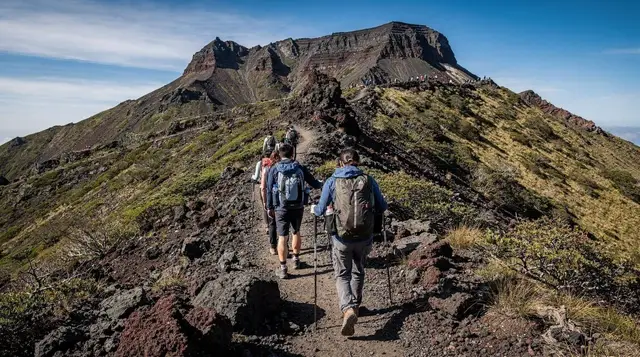
Hiking Hallasan: Complete Guide
Compare all four Hallasan trails — Seongpanak, Gwaneumsa, Yeongsil, Eorimok — by distance, difficulty, reservation rules, and what each one delivers.

Hallasan: Seongpanak Trail
Seongpanak is the longer but gentler of Hallasan's two summit trails — 9.6km one way, reservation required, 8-9 hours round trip.

Hallasan: Gwaneumsa Trail
Gwaneumsa is the shorter but steeper of Hallasan's two summit trails — 8.7km one way, rockier upper sections, reservation required.

Hallasan: Yeongsil Trail
Yeongsil climbs to Witse Oreum below Hallasan's crater rim — no summit reservation needed, dramatic rock formations, roughly 3.7km one way.
Ready to book? Top tours for this guide
We earn a small commission if you book through GetYourGuide — at no extra cost to you. Every tour is hand-picked and verified.
Jeju: Hiking Mt. Hallasan, South Korea's Highest Mountain
Jeju Island: Hallasan Mountain Winter Scenery Guided Tour
Jeju: Mt. Hallasan Small-Group Nature Hike & Lunch
Jeju: UNESCO Sites & Sunrise Peak Hiking Small Group Tour
Jeju South: Small Group Healing Tour w/Mt.Halla & Olle Trail
