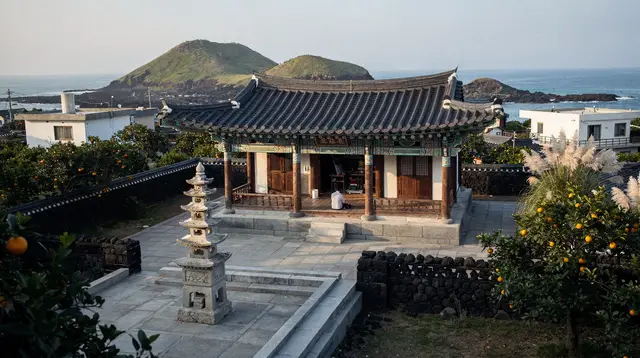
5 days in Jeju itinerary
Five days is where a Jeju trip stops feeling like a checklist and starts having room to breathe: the same east-to-west loop as a four-day trip, plus a full day carved out for Hallasan — South Korea’s highest peak — without having to choose between the mountain and the coast. It suits travelers who want at least one genuinely active day mixed into an otherwise sightseeing-paced trip.
| Where | Jeju City, East Jeju, Seogwipo, Hallasan, West Jeju |
| Duration | 5 days, 4 nights |
| Cost | around ₩800,000-1,050,000/person (~US$590-780), excl. flights |
| Getting there | CJU airport, rental car (IDP required) |
| Book ahead | Hallasan trail reservation — mandatory, online only |
The five days at a glance
| Day | Region | Highlight | Overnight |
|---|---|---|---|
| 1 | Jeju City → East Jeju | Manjanggul lava tube | Seongsan |
| 2 | Seongsan sunrise | Seongsan Ilchulbong, Seopjikoji, optional Udo | Seongsan/Seogwipo |
| 3 | South to Seogwipo | Maeil Olle Market, waterfalls | Seogwipo |
| 4 | Hallasan | Seongpanak or Gwaneumsa summit trail | Seogwipo |
| 5 | West Jeju → CJU | Osulloc, Sanbangsan | Departure |
Who five days suits
This length works well for returning visitors who’ve already done the highlights and want depth instead, couples who prefer two nights in a favorite region rather than moving daily, and anyone specifically hoping to summit Hallasan without treating it as the only thing on the trip. It’s still a bit tight for a proper Udo Island add-on or the full Olle Trail experience — both fit more comfortably into the 7-day itinerary.
Visa logistics are usually simple for this length of stay: US, EU, UK, Canadian, and Australian passport holders get 30 days visa-free on a direct CJU flight, with the K-ETA exemption for the same groups running through December 2026. The main advance-booking task is Hallasan’s trail reservation, which has to be made online before the trip — walk-up hiking isn’t permitted on either summit route.
Day 1: Jeju City and the drive east
Land at CJU, collect a rental car in Yongdam (an International Driving Permit is required), and spend the first hours in Jeju City — Dongmun Traditional Market for lunch, Yongduam Rock for a short walk. By mid-afternoon, drive east 50-70 minutes to Manjanggul lava tube (entry ~₩4,000, 40-60 minute walk, constant 11-21°C underground). Overnight in Seongsan, where guesthouse rooms run ₩60,000-90,000/night.
Agency counters and shuttle stops for rental pickup sit within a five-minute walk of arrivals in Yongdam, and English-language service is standard at the larger chains — bring your home driver’s license plus the International Driving Permit, since Korea checks for both at pickup without exception. Naver Map or Kakao Map are worth downloading before you land; Google Maps has meaningful gaps for turn-by-turn driving directions on Jeju.
Day 2: Seongsan sunrise, Seopjikoji, and Udo (optional)
Arrive at Seongsan Ilchulbong 30-45 minutes before sunrise to beat the crowd; the climb takes 20-40 minutes on paved steps (entry ~₩5,000), and exact gate times shift seasonally so check the current sunrise time the night before. Afterward, walk to nearby Seopjikoji for the grassy headland — genuinely quieter once the sunrise crowd disperses toward breakfast. With a full extra day available on this itinerary, a half-day Udo Island detour fits naturally here if the ferry schedule and sea conditions cooperate — Jeju: Eastern Jeju UNESCO Spots Day Tour bundles Seongsan with other east-coast stops if you’d rather not self-drive this segment. Overnight again in Seongsan or move to Seogwipo if you’re skipping Udo.
Seongsan’s harbor-facing restaurants are worth two nights in a row for a reason: jeonbokjuk (abalone porridge) and same-day sashimi here are noticeably different from the black-pork-heavy menus elsewhere on the island, and ₩15,000-25,000 per person buys a properly filling meal.
Day 3: South to Seogwipo and the waterfalls
Drive south to Seogwipo — about an hour from Seongsan — for the Maeil Olle Market and an afternoon split between Cheonjiyeon Waterfall (entry ~₩2,000; details in the Cheonjiyeon Waterfall guide) and Jeongbang Waterfall, which drops directly into the ocean. Jeju: Western and Southern Sightseeing Day Tour is a fair substitute for a chunk of this day if driving fatigue is setting in by day three. Seogwipo’s haenyeo-run seafood restaurants and its abundance of galchijorim (braised beltfish) are worth building dinner around here specifically. Overnight in Seogwipo, ₩90,000-130,000/night for a mid-range room.
Day 4: Hallasan
This is the itinerary’s most physically demanding day, so start early. The Seongpanak trail (9.6km one way, gentler grade, 8-9 hours round trip) and the Gwaneumsa trail (8.7km one way, steeper, 7.5-9 hours round trip) are the only two routes reaching the crater rim, and both require an advance online reservation with a strict gate cutoff time — full comparisons are in the Seongpanak Trail guide and Gwaneumsa Trail guide. If a full summit isn’t the goal, the Yeongsil trail climbs to Witse Oreum below the crater rim in about 3-4 hours round trip with no reservation needed and some of the mountain’s most dramatic rock scenery — see the Yeongsil Trail guide.
South-West Jeju Essentials: Hallasan & UNESCO Highlights is worth considering if you’d rather have a guide manage the reservation and transport logistics around the mountain. Hallasan National Park sits 30-45 minutes from either Jeju City or Seogwipo, so basing in Seogwipo for this day keeps the drive short. Stay in Seogwipo again tonight — you’ll want an easy dinner and an early night after a full trail day.
Day 5: West Jeju and departure
With one hiking-recovery morning built in, drive west toward West Jeju — 45-60 minutes from Seogwipo — for a gentler final day. Osulloc Tea Museum’s green tea fields make an easy, low-effort stop, and Sanbangsan’s grotto temple and the nearby Yongmeori coastal cliffs round out the region’s signature sights (Sanbangsan entry ~₩2,500). Jeju: Haenyeo Culture Experience with Seafood Tasting is a lower-effort way to close the trip with a cultural experience rather than more walking, if your legs need the break after Hallasan.
From Aewol or wherever you end up on the west coast, it’s a 20-45 minute drive back to CJU depending on exact location. Return the rental car with a full tank and budget 20-30 minutes for the return process. If there’s time before your flight, Hamdeok’s Seoubong Beach makes a scenic last coastal stop on the way back toward the airport.
Eating your way through five regions
Each stop on this route has a distinct food identity. Jeju City’s Dongmun Market and its black-pork street are the place for heukdwaeji, grilled tableside. The east coast, especially Seongsan’s harbor, leans toward abalone and fresh seafood. Seogwipo mixes both traditions with a stronger night-market feel at the Maeil Olle Market after dark. West Jeju, particularly Aewol, is where the island’s cafe culture concentrates, worth a slow coffee rather than a rushed one between sights. Momguk (a seaweed-and-pork soup unique to Jeju) and galchijorim (braised beltfish) are worth actively seeking out if black pork feels repetitive by day three.
Booking the Hallasan reservation
Since 2019, both summit trails require an advance online reservation through the national park’s booking system, with a daily hiker quota and an assigned starting-time window rather than a fixed single departure time. Reservations typically open a set number of weeks ahead and popular dates — weekends, holidays, peak foliage weeks in October — can fill within days of opening. Book as soon as your travel dates are confirmed rather than waiting until closer to the trip; there’s no reliable way to summit Hallasan on short notice if the reservation system shows your date as full.
Gate cutoff times vary seasonally and are enforced strictly at the trailhead checkpoint — rangers do turn back hikers who arrive after the cutoff, regardless of how far they’ve already traveled that morning. Confirm the current cutoff time for your specific date when you make the reservation, and plan to arrive at the trailhead with margin rather than right at the deadline.
If it rains
Manjanggul (day one) is a reliable underground fallback regardless of surface weather. If Hallasan’s reservation day arrives with poor forecast, both summit trails can close entirely in high wind or heavy rain — rangers enforce this at the gate, and no refund workaround exists beyond rebooking, so build a spare day into a longer trip if the summit specifically matters to you, or accept the Yeongsil trail as a lower-stakes alternative that’s less likely to be affected.
Getting around over five days
A rental car covers this loop most efficiently — roughly 200-220km across five days including the Hallasan access road. Fuel runs approximately ₩35,000-45,000 total. Naver Map or Kakao Map are the navigation apps to use; Google Maps has meaningful gaps for driving directions in Korea. An eSIM or pocket wifi arranged before landing avoids fumbling with connectivity at the rental counter.
Insurance terms vary meaningfully between rental agencies on Jeju, and coverage disputes over scratches and minor damage are a genuinely common complaint among visitors — photograph the car from all angles at pickup, and confirm exactly what the collision damage waiver covers and what the deductible is before signing anything.
Budget for five days
A realistic mid-range daily budget runs ₩100,000-140,000 per person for food, entry fees, and local transport, before lodging and the car. Entry fees stay modest: Manjanggul ₩4,000, Seongsan Ilchulbong ₩5,000, Cheonjiyeon ₩2,000, Sanbangsan ₩2,500 — the Hallasan trails themselves are free to hike once reserved. The bigger costs are four nights of mid-range lodging (₩320,000-450,000 total) and a compact rental car across five days (₩250,000-350,000 in low season).
Rough per-person total for five days, mid-range and split between two travelers: ₩800,000-1,050,000 (~US$590-780), excluding flights to Jeju. Pack trail snacks and extra water for the Hallasan day specifically — the summit huts sell limited food at a markup, and running low on water partway up either trail is a genuinely common mistake first-time hikers make.
Where to stay
Basing two nights in Seogwipo (days three and four) keeps the Hallasan access drive short and avoids an extra hotel move on the trip’s most tiring day. Seongsan for the first two nights and somewhere on the west coast for the last night rounds out a three-base plan that balances driving time against packing fatigue reasonably well.
Seogwipo’s lodging range is the widest on this route — dorm beds from ₩30,000 up to full resort rooms in nearby Jungmun at ₩250,000+/night — which makes it a natural place to spend a little more if you want genuine rest before the Hallasan day. Seongsan’s guesthouse supply is the smallest of the regions on this loop, so book those two nights earliest, especially around weekends or bloom-season weeks.
Practical notes for this trip
An eSIM or pocket wifi device, arranged before landing rather than after, solves most of the navigation and translation friction on a trip this length. Tap water is safe to drink island-wide, so a refillable bottle is worth packing, especially given how much water the Hallasan day alone requires. Tipping isn’t customary anywhere in South Korea, so none of the prices above need an extra amount added on top. Pack layers rather than a single jacket — Manjanggul’s cave temperature, Hallasan’s summit wind, and coastal breezes at Seongsan and Seopjikoji all run noticeably cooler than the daytime air at sea level.
What to skip on a five-day trip
A full Udo Island day (rather than a rushed half-day add-on) still doesn’t comfortably fit here without cutting either the Hallasan day or a coastal region short — it’s better placed in the 7-day itinerary. Attempting both Hallasan trails in one trip is also unnecessary; pick one based on your fitness level and save the other for a return visit.
Also skip scheduling anything demanding for the evening of the Hallasan day beyond dinner — a common mistake is booking a sunset photography stop or a long dinner drive immediately after coming down from a 19km round-trip hike, which tends to turn a satisfying day into an exhausting one.
Choosing a Hallasan trail: more than just distance
The day-four decision between Seongpanak and Gwaneumsa deserves more thought than picking whichever trailhead is closer. Seongpanak’s gentler, more gradual grade suits hikers who prefer a longer but steadier climb and want the lower risk of knee strain on the descent; Gwaneumsa’s steeper, rockier upper section suits hikers with more scrambling experience who’d rather finish a shorter distance even if each kilometer is harder.
Neither trail is objectively easier once total effort is counted — the Hallasan hiking guide has a fuller overview of both, and the individual Seongpanak and Gwaneumsa trail guides break down water stations, shelter huts, and typical pace by section. Whichever you choose, the hiking gear and safety guide is worth reading the week before the trip, not the night before — proper footwear and layering decisions are easier to make with time to actually shop if something’s missing.
Eating around the Hallasan day
Day four’s physical demands change what makes sense to eat on days three and five as much as on the hike itself. The night before, a carb-heavy but not overly rich dinner in Seogwipo sets up better than a heavy black-pork feast — save the full black pork BBQ experience for day three’s lunch or day five’s celebratory dinner instead, once the legs have recovered. Pack trail snacks rather than relying on the summit huts, which sell a limited selection at a markup; the Jeju street food guide has portable options from Seogwipo’s markets that travel well in a daypack. Once the hike is done, Seogwipo’s haenyeo-run restaurants and their abalone and seafood dishes make a genuinely well-earned reward dinner.
If the Hallasan reservation falls through
Occasionally a specific date shows as fully booked by the time you check, especially for weekends or October foliage weeks. If that happens, check the reservation system daily in the run-up to the trip — cancellations do open up slots, sometimes just a day or two before. Failing that, the Yeongsil trail to Witse Oreum needs no reservation at all and delivers dramatic rock scenery in about 3-4 hours round trip, a genuinely good fallback rather than a consolation prize if the summit trails are unavailable for your dates.
Frequently asked questions about the 5-day Jeju itinerary
Do I need to book the Hallasan trail in advance?
Yes — both summit trails (Seongpanak and Gwaneumsa) require an online reservation with a daily hiker quota, and walk-up hiking isn’t permitted. Book as soon as your dates are fixed, since popular days fill up.
What if I’m not confident about a full-day hike?
The Yeongsil trail reaches Witse Oreum, a viewpoint below the crater rim, in about 3-4 hours round trip with no reservation needed — a good lower-commitment alternative that still delivers dramatic mountain scenery.
Is five days enough to add Udo Island properly?
Not comfortably alongside a full Hallasan day and the rest of the loop. A rushed half-day add-on is possible on day two, but a proper Udo visit is better suited to the 7-day version of this trip.
Which Hallasan trail should I choose?
Seongpanak is longer (9.6km one way) with a gentler grade; Gwaneumsa is shorter (8.7km) but steeper with rockier upper sections. Total effort ends up similar — choose based on whether you prefer a longer, gentler climb or a shorter, steeper one.
What happens if Hallasan is closed for weather on my scheduled day?
Reservations for that day are void and non-transferable to another date without rebooking, which is why building a full-trip weather buffer matters if summiting is a priority rather than a nice-to-have.
Can this itinerary work without a rental car?
It’s more difficult than the shorter versions specifically because of Hallasan — public transport to the trailheads exists but with limited frequency, and missing an early bus can mean missing the reservation window entirely.
What’s the best season for this route?
May-June and September-October give the clearest Hallasan summit weather; October also offers the best island-wide visibility for the coastal portions of the trip.
How tired will I be after the Hallasan day?
Plan for genuine fatigue — 8-9 hours round trip with significant elevation gain is a full workout even for regular hikers. Keep day five light on purpose rather than scheduling another demanding activity immediately after.
Should I add Udo instead of skipping it, even if it’s rushed?
Only if the ferry schedule genuinely allows a half-day window on day two without pushing sunrise or the Seopjikoji walk out of the plan. If in doubt, skip it and treat this trip as the scouting run for a future 7-day visit.
What should I pack specifically for the Hallasan day?
Layered clothing, a headlamp if you’re starting before full daylight, more water than feels necessary, trail snacks, and proper hiking shoes — sandals or fashion sneakers are a common and avoidable mistake on both summit trails.
Is Seongpanak or Gwaneumsa better for a first-time Hallasan hiker?
Seongpanak’s gentler, more gradual grade generally suits first-timers better, though it’s also longer — see the trail comparison above for the fuller trade-off between distance and steepness.
What should I eat the night before the Hallasan hike?
Something carb-heavy but not overly rich works best — save a full black-pork BBQ feast for the day before or after, once the legs aren’t facing an 8-9 hour hike the next morning.
Related guides
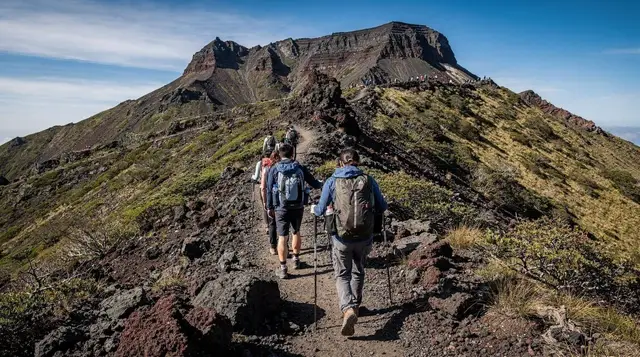
Hiking Hallasan: Complete Guide
Compare all four Hallasan trails — Seongpanak, Gwaneumsa, Yeongsil, Eorimok — by distance, difficulty, reservation rules, and what each one delivers.

Hallasan: Seongpanak Trail
Seongpanak is the longer but gentler of Hallasan's two summit trails — 9.6km one way, reservation required, 8-9 hours round trip.

East Jeju day tour
What an east Jeju day tour actually covers — Seongsan, Manjanggul, Udo add-ons — with realistic timing, prices, and self-drive comparisons.

Hallabong and Jeju citrus: what to know before buying
Hallabong and Jeju's citrus varieties explained — season, real prices, where to buy quality fruit, and how to avoid overpriced tourist-shop tangerines.
Ready to book? Top tours for this guide
We earn a small commission if you book through GetYourGuide — at no extra cost to you. Every tour is hand-picked and verified.
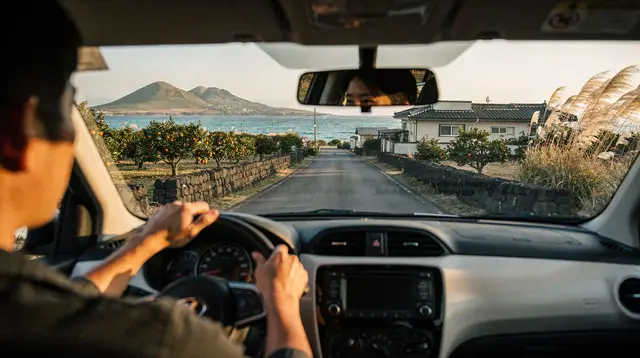
Jeju: UNESCO Day Tour for Cruise Guests
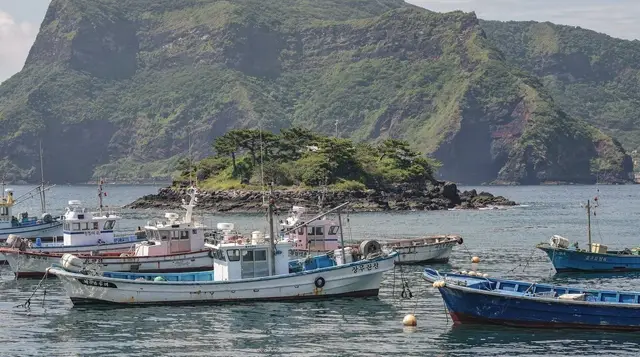
Jeju: Highlights Day Trip (East Course)
Jeju Island: Full Day Tour for Cruise Ship Passengers
Jeju: Small Group UNESCO Highlights Tour for Cruise Guests

Jeju East: Cherry Blossom Early Bird Tour with Hotel Pickup