
Hiking Hallasan: Complete Guide
Which Hallasan trail should I choose?
Seongpanak or Gwaneumsa if you want the summit crater rim (both need a reservation); Yeongsil for the most dramatic scenery on a shorter, no-reservation hike; Eorimok for the gentlest introduction to the mountain. Most first-timers pick Seongpanak.
Hallasan has four established trails, and confusion about which one to pick is one of the most common planning mistakes visitors make before hiking South Korea’s highest peak. Only two of the four reach the actual summit crater rim; the other two stop at a viewpoint lower on the mountain. This guide compares all four directly so you can choose based on your fitness, time, and whether the crater lake view specifically matters to your trip.
The four trails at a glance
| Trail | Distance (one way) | Reaches summit? | Reservation needed? | Difficulty |
|---|---|---|---|---|
| Seongpanak | 9.6km | Yes | Yes | Long but gentler grade |
| Gwaneumsa | 8.7km | Yes | Yes | Shorter but steeper, rockier |
| Yeongsil | 3.7km | No (Witse Oreum) | No | Moderate, dramatic rock scenery |
| Eorimok | 4.7km | No (Witse Oreum) | No | Gentlest of the four |
Full detail on each: Seongpanak, Gwaneumsa, Yeongsil, Eorimok.
If you want the summit: Seongpanak or Gwaneumsa
These are the only two trails that reach Baengnokdam, the crater lake at Hallasan’s 1,947m summit, and they’re the only two subject to the online reservation system introduced in 2019 — a daily hiker quota with an assigned starting-time window, enforced at checkpoints along the route. Seongpanak is longer (9.6km one way) but has a steadier, more forgiving grade, making it the default recommendation for a first Hallasan summit. Gwaneumsa is shorter (8.7km) but climbs more steeply with rockier, more technical sections in its upper third — a fair trade of distance for difficulty rather than a genuinely easier alternative.
Both trails take roughly 8-9 hours round trip for most hikers, require an early start due to gate cutoff times that vary seasonally, and offer no guaranteed view of the crater lake itself — Baengnokdam is frequently dry outside wet periods, and cloud cover often obscures the summit regardless of season. If either summit trail shows no reservation availability on your dates, checking the other is worth doing before giving up on a summit attempt for that trip.
If you want scenery without the reservation: Yeongsil or Eorimok
Neither trail reaches the crater rim, and neither requires the summit reservation system, which makes both realistic same-day, no-advance-booking options. Yeongsil climbs past the Five Hundred Generals (Obaekgoji), a striking ridge of jagged volcanic rock pillars, before reaching Witse Oreum — widely considered the most visually dramatic short hike on the mountain. Eorimok approaches Witse Oreum from a different angle with a gentler, steadier grade and less dramatic but still rewarding forest and open-shoulder scenery, generally recommended as the easiest of the four trails overall.
Both are half-day hikes (3-5 hours round trip), which opens up pairing one with another activity the same day, or hiking one as a lower-commitment warm-up before a summit attempt later in the trip.
Guided options
For visitors who’d rather not manage the reservation system, trailhead logistics, and gear independently, Jeju: Hiking Mt. Hallasan, South Korea’s Highest Mountain and Jeju: Mt. Hallasan Small-Group Nature Hike & Lunch both bundle transport, a guide, and lunch, typically running on whichever summit trail has availability that day. For the winter season specifically, Jeju Island: Hallasan Mountain Winter Scenery Guided Tour handles cold-weather gear and permit logistics.
Weather: the variable that matters most
Hallasan generates its own weather at elevation, and a clear forecast for the coast doesn’t guarantee clear conditions at 1,947m. Check the mountain-specific forecast, not just the general Jeju forecast, on the morning of any planned hike. This matters even more for the summit trails, where the entire point of the extra distance and reservation hassle is often the crater view — a summit reached in fog delivers the achievement but little of the visual reward.
Best season to hike
May-June and September-October generally offer the most stable, clearest conditions across all four trails. October specifically adds autumn foliage to the lower and mid-elevation sections, making it Hallasan’s most popular hiking month — and consequently the month when summit trail reservation quotas fill fastest. Winter (roughly December-March) brings snow and ice to all four trails, with crampons effectively required on the upper sections of the summit routes, and occasional trail closures after storms. Summer brings its own risk: monsoon rain in July and typhoon exposure from late August into September can force last-minute cancellations regardless of which trail you’ve booked. See the Jeju winter guide and Jeju autumn foliage guide for season-specific planning.
What to bring on any Hallasan trail
Layers matter on all four trails — temperatures at elevation run noticeably cooler and windier than the coast, and exposed upper sections catch wind that lower forested trail doesn’t. Proper hiking shoes are non-negotiable, particularly for Gwaneumsa’s rockier upper section, and no trail has food service, so carry all water and food for the full hike. The Jeju hiking gear and safety guide covers a complete seasonal packing list and safety notes for hiking on Hallasan.
Getting to the trailheads
Seongpanak and Gwaneumsa trailheads sit on the eastern and northern sides of the mountain respectively, both within 25-40 minutes of Jeju City. Yeongsil and Eorimok trailheads sit on the western side, roughly 40-50 minutes from Jeju City and more convenient from west Jeju towns. Public bus service reaches all four trailheads but on limited schedules — a rental car gives the most control over hitting reservation windows and managing your own return timing. The car rental guide covers logistics if you’re weighing that option.
Combining a Hallasan hike with oreum climbs
If a full summit day doesn’t fit your itinerary, or you want a lower-key hike to add to a Hallasan-focused trip, Jeju’s many smaller volcanic cones (oreums) offer shorter, no-reservation alternatives scattered across the island, some climbable in under an hour. See the best oreums guide and Geumun-oreum crater hike for options beyond Hallasan itself.
Cost comparison across all four trails
None of the four trails charges a hiking fee, and the summit trail reservation system currently carries no separate cost beyond the booking itself. The real cost differences come down to trailhead access: Gwaneumsa is cheapest to reach by taxi from Jeju City given its proximity, Seongpanak is a moderate step up, and Yeongsil and Eorimok on the western side cost the most by taxi given the greater distance — though a rental car largely equalizes this if you’re already driving for the rest of your trip. Winter crampon rental, where needed, runs a consistent ₩5,000-10,000 (about $4-7) regardless of which trail you choose. Guided tours cost meaningfully more than independent hiking but remove reservation and navigation logistics entirely.
Common mistakes across all four trails
A few mistakes show up regardless of which trail you pick. Checking only the coastal Jeju forecast rather than a mountain-specific one leads to unpleasant surprises at elevation on any of the four routes. Underestimating descent time — assuming the way down will be quick because it’s “downhill” — causes gate-related trouble on the summit trails and unnecessary fatigue on all four. And treating any of the four as interchangeable without checking what each one actually delivers (crater lake access, dramatic rock formations, gentle forest walking) leads to a mismatched choice and, sometimes, real disappointment when the hike doesn’t match the hiker’s expectations.
A realistic multi-day Hallasan plan
If your trip allows more than one day around Hallasan, a sensible sequence is a lighter trail first — Yeongsil or Eorimok — to acclimatize to the elevation and terrain before attempting a full summit day on Seongpanak or Gwaneumsa later in the trip. This isn’t strictly necessary for reasonably fit hikers, but it does give you a real sense of trail conditions, weather patterns, and your own pacing before committing to the longer, reservation-bound summit attempt. Alternatively, if a summit hike doesn’t fit your schedule at all, combining Yeongsil and Eorimok back to back (or as a one-way traverse between the two trailheads) delivers a genuinely full Hallasan experience without ever touching the reservation system.
Choosing based on your travel style
For a first-time visitor with one dedicated hiking day and reasonable fitness, Seongpanak remains the default recommendation — it delivers the full summit achievement with the most forgiving grade of the two options that reach it. For an experienced hiker who wants a shorter, more technically engaging route and doesn’t mind (or actively enjoys) steeper terrain, Gwaneumsa is a legitimate deliberate choice, not just a fallback when Seongpanak is booked out. For visitors with limited time, traveling with less experienced companions, or simply wanting dramatic scenery without a full-day commitment, Yeongsil’s rock formations deliver an outsized visual reward for a half-day investment. For families with children or hikers easing into higher-elevation exercise, Eorimok’s gentler, more sustained forest walking offers the most approachable introduction to the mountain.
What each trail is genuinely known for
If you ask experienced Jeju hikers to sum up each trail in one phrase, Seongpanak gets described as “the reliable long way up,” Gwaneumsa as “the shorter, harder way up,” Yeongsil as “the trail for the rock formations,” and Eorimok as “the easy forest trail.” These shorthand reputations are broadly accurate and a useful gut-check if you’re deciding quickly: match the phrase to what you actually want from the day, rather than defaulting to whichever trail is most frequently mentioned online without considering whether its specific character suits your priorities.
Booking logistics across all four trails
For the two summit trails, book your reservation as early as your schedule allows once your Jeju dates are fixed — particularly for weekend attempts in spring bloom season or October foliage season, when quotas can fill a week or more in advance. For Yeongsil and Eorimok, no reservation removes this planning pressure entirely, letting you decide the morning of, based on weather and how your legs feel after other Jeju activities. This flexibility is a genuine, underrated advantage of the two non-summit trails worth weighing seriously against the specific appeal of reaching the crater rim.
Traffic patterns across all four trails
Seongpanak sees the heaviest overall traffic given its default first-timer recommendation, followed by Yeongsil for its rock-formation photography appeal. Gwaneumsa and Eorimok generally see comparatively lighter foot traffic — Gwaneumsa because of its steeper, more demanding reputation, and Eorimok because visitors specifically chasing dramatic scenery gravitate to its Yeongsil neighbor instead. If crowd avoidance matters to your Hallasan plans, Gwaneumsa or Eorimok on a weekday generally deliver the quietest experience among the four options, though neither is ever truly empty during daylight hours in peak season.
Physical preparation before your trip
Regardless of which trail you choose, some physical preparation in the weeks before a Hallasan attempt pays off, particularly for the two summit trails. Regular walking or hiking at home, even on flat terrain, builds the baseline stamina that a multi-hour trail day demands, and a few practice hikes with the actual shoes and pack you plan to use on Hallasan help identify blister risks or gear issues before they become a problem on the mountain itself. This preparation matters less for Yeongsil and Eorimok’s shorter distances, but even there, reasonable baseline fitness makes the experience considerably more enjoyable than approaching it completely unprepared.
A decision framework if you’re still unsure
If you’re still deciding after reading through all four options, ask yourself three questions: do you specifically want to reach the crater rim (if yes, choose between Seongpanak and Gwaneumsa based on your tolerance for steepness vs. distance); how much time do you actually have available (a full day points toward a summit trail, a half-day toward Yeongsil or Eorimok); and what matters more to you, dramatic rock formations or gentle forest immersion (Yeongsil for the former, Eorimok for the latter, if you’ve ruled out a summit attempt). Answering these three questions honestly resolves the choice for the large majority of visitors without needing to weigh every possible detail covered in this guide.
Revisiting Hallasan on a future trip
Many repeat Jeju visitors deliberately hike a different Hallasan trail on each return trip, treating the mountain’s four routes as a multi-visit project rather than a single one-and-done hike. This is a genuinely satisfying way to build a relationship with the mountain over multiple trips — summit via Seongpanak on a first visit, the technical challenge of Gwaneumsa on a second, and the two shorter trails whenever a lighter hiking day fits the itinerary. There’s no requirement to see everything Hallasan offers in a single visit, and spreading the four trails across multiple trips is a perfectly reasonable, even preferable, approach for visitors who return to Jeju regularly.
Packing one bag for any of the four trails
If you’d rather pack once and adjust on the day rather than researching gear separately for each trail, a single flexible kit covers most scenarios: sturdy hiking shoes, a packable wind or rain shell, 1.5-2 liters of water, real food, a headlamp, and — checked specifically before a winter visit — rented crampons picked up near whichever trailhead you end up using. This one-bag approach works because the differences between the four trails are more about distance, grade, and reservation logistics than fundamentally different gear categories.
The bottom line
Hallasan rewards planning proportional to which trail you choose: heavy planning (reservation, gear, timing) for the two summit routes, and comparatively light planning (mainly a weather check) for the two shorter options. Whichever you pick, respecting the mountain’s real scale — even its “easy” trail involves genuine elevation and distance — is the single habit that separates an enjoyable Hallasan day from an unnecessarily difficult one.
Pairing a hike with nearby recovery options
After a demanding summit day, many hikers use the rest of the day, or the following morning, for lighter recovery activity rather than more sightseeing. A soak at a jjimjilbang or spa is a common choice near Jeju City, and an easy, low-effort evening exploring Seogwipo or Jeju City at a slow pace works well after either summit trail. If you’re planning a multi-day trip around Hallasan, budgeting a genuinely light day immediately after a summit attempt avoids stacking two demanding days back to back.
Frequently asked questions about hiking Hallasan
Which Hallasan trail is easiest?
Among the two summit trails, Seongpanak has the gentler grade despite being longer. Among the two non-summit trails, Eorimok is generally considered the easiest underfoot.
Which Hallasan trails need a reservation?
Only the two summit trails — Seongpanak and Gwaneumsa. Yeongsil and Eorimok, which stop at Witse Oreum below the crater, generally don’t require the same advance booking system.
Can I reach Baengnokdam crater lake from any trail?
Only via Seongpanak or Gwaneumsa. Yeongsil and Eorimok both end at Witse Oreum, a viewpoint below the actual crater rim, so the lake isn’t visible from those routes.
How many days does hiking Hallasan take?
A summit hike is a single, long day (8-9 hours). The two non-summit trails are half-day hikes (3-5 hours), so it’s possible to do both a summit trail and a shorter trail on separate days of the same trip.
Is Hallasan free to hike?
Yes — there’s no trail fee, only the reservation requirement for summit trails, which currently carries no separate charge. Costs come from transport to the trailhead and optional guided tours.
What’s the best season to hike Hallasan?
May-June and September-October generally offer the clearest weather and most stable trail conditions. October adds autumn foliage but is also the busiest month for reservations.
Do I need hiking experience to summit Hallasan?
Reasonable fitness matters more than technical hiking experience — the summit trails are long but not technical for most of their length, aside from rockier sections near the top of Gwaneumsa. Beginners with good preparation regularly complete Seongpanak.
Related guides

Hallasan: Seongpanak Trail
Seongpanak is the longer but gentler of Hallasan's two summit trails — 9.6km one way, reservation required, 8-9 hours round trip.

Hallasan: Eorimok Trail
Eorimok is the gentlest of Hallasan's four trails, climbing toward Witse Oreum from the west — no reservation, roughly 4.7km one way.

Hallasan: Gwaneumsa Trail
Gwaneumsa is the shorter but steeper of Hallasan's two summit trails — 8.7km one way, rockier upper sections, reservation required.

Hallasan: Yeongsil Trail
Yeongsil climbs to Witse Oreum below Hallasan's crater rim — no summit reservation needed, dramatic rock formations, roughly 3.7km one way.
Ready to book? Top tours for this guide
We earn a small commission if you book through GetYourGuide — at no extra cost to you. Every tour is hand-picked and verified.
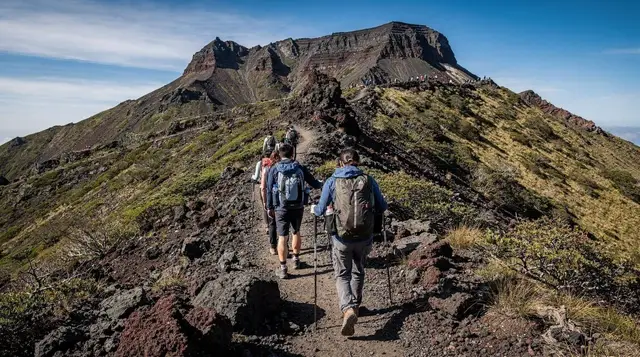
Jeju: Hiking Mt. Hallasan, South Korea's Highest Mountain
Jeju Island: Hallasan Mountain Winter Scenery Guided Tour
Jeju: Mt. Hallasan Small-Group Nature Hike & Lunch
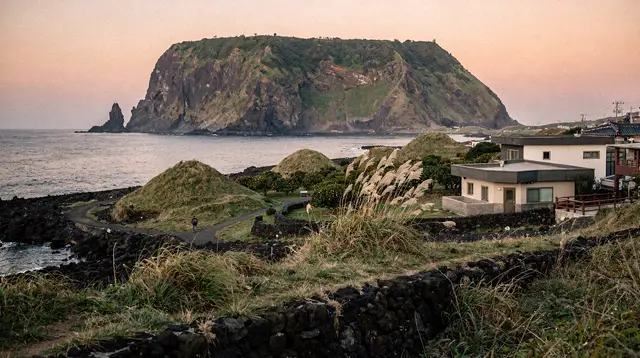
Jeju: UNESCO Sites & Sunrise Peak Hiking Small Group Tour
Jeju South: Small Group Healing Tour w/Mt.Halla & Olle Trail
