
Marado Island
Marado, South Korea's southernmost inhabited point, pairs a working lighthouse with a small community built around its southernmost-branded cafes.
Quick facts
Top tours and experiences
We earn a small commission if you book through GetYourGuide — at no extra cost to you. Every tour is hand-picked and verified.
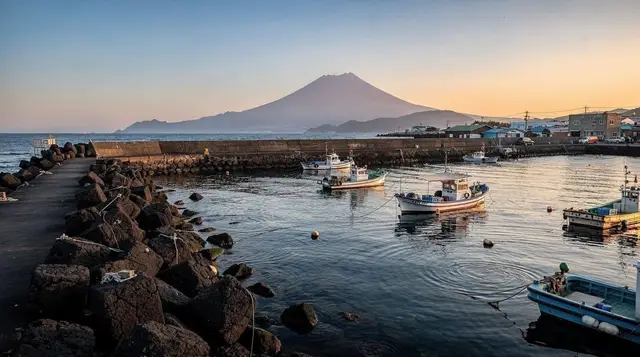
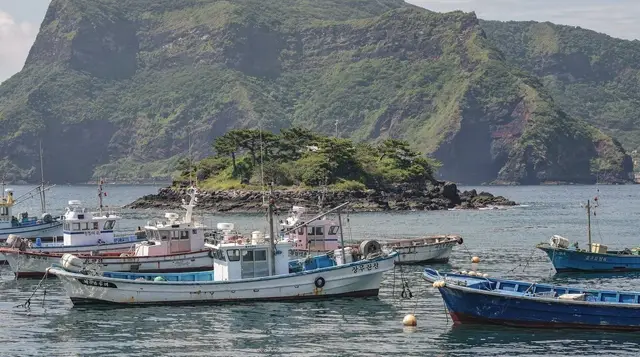
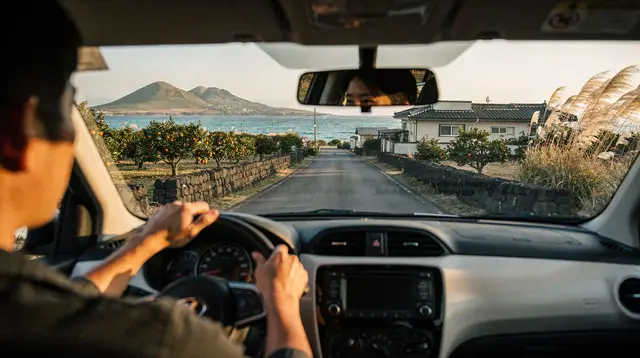
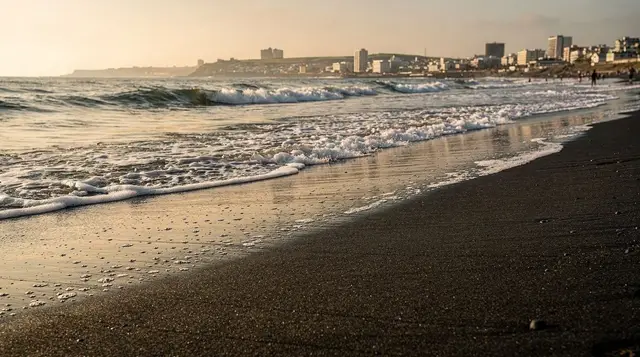
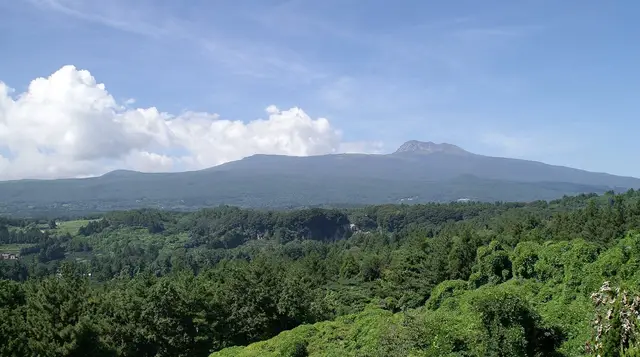

Marado is South Korea’s southernmost inhabited point, a small island reached by ferry from Moseulpo and dominated by a working lighthouse, a scattering of restaurants that lean hard into the “southernmost” branding, and little else — an honest description that’s also the point. Most visitors treat Marado as a symbolic stop rather than a destination with deep sightseeing, and that’s a fair way to approach it.
| Where | Ferry from Moseulpo Port, Jeju’s southwest tip |
| Cost | Ferry around ₩10,000-18,000 round trip |
| Time needed | 1-2 hours; the island is walkable in under an hour |
| Getting there | Moseulpo port, ~50-60 min from Jeju City by car |
| Best time | Any calm-sea day; clear weather for the best views |
Getting there
Marado is reached by ferry from Moseulpo port at Jeju’s southwestern tip, the same terminal used for Gapado, though the two islands require separate crossings rather than a combined route. The Marado crossing runs somewhat longer than the Gapado ferry, and like all islet crossings around Jeju, it’s weather-dependent — cancellations happen with limited notice in rough seas, most commonly in typhoon season (late August-September) and during winter storms.
The lighthouse
Marado’s lighthouse, built in 1915 and still active, marks the island’s most photographed spot and its practical reason for existing as a navigational point at Korea’s southern extreme. It’s not open for interior tours, but the exterior and surrounding cliff views are the main draw — a stark, wind-scoured setting that feels genuinely remote despite being only a short ferry ride from mainland Jeju.
Southernmost-branded restaurants
A handful of small restaurants on Marado market themselves explicitly around the island’s southernmost status — a “southernmost restaurant,” “southernmost café,” and similar branding that’s become something of a local in-joke as much as a marketing tactic. One particular quirk: jjajangmyeon (Korean-Chinese black bean noodles) became unusually associated with Marado after a well-known phone commercial filmed here years ago, and several restaurants still lean into serving it as a novelty “southernmost jjajangmyeon” specifically because of that cultural reference. It’s a fun, low-stakes food stop rather than a culinary destination in its own right.
Walking the island
Marado is small enough to walk end to end in well under an hour, with a loop path connecting the lighthouse, the small residential and restaurant cluster, and a small temple and church that both claim the “southernmost” title for their respective faiths. There’s genuinely not much more to do here beyond this walk and a meal — most visitors spend one to two hours on the island total before catching a return ferry.
Getting to Moseulpo
Moseulpo port sits roughly 50-60 minutes by car from Jeju City, closer to Seogwipo via the southern coast road. See the Moseulpo destination page for port logistics, food options while waiting for a ferry, and how to combine a Marado trip with the neighboring Gapado crossing.
Combining Marado with Gapado
Since both islands depart from the same Moseulpo terminal, many visitors combine a Marado visit with a Gapado stop in a single day — the Gapado & Marado day trip guide covers how to sequence the two separate ferry crossings without excessive waiting between sailings. Given how quickly Marado itself can be covered, pairing it with Gapado’s barley fields makes for a fuller, more varied day than visiting Marado alone.
Marado’s small resident community
Despite its tiny size and heavy dependence on day-trip tourism, Marado has a small permanent resident population who live year-round on the island, running the restaurants and maintaining the small infrastructure that supports visitors. Understanding this — that Marado is a genuine, if small, community rather than a purely manufactured tourist stop — is worth keeping in mind when visiting, treating the island with the same basic courtesy due any inhabited place rather than purely as a photo backdrop.
Photography at Marado
The lighthouse and the surrounding cliff edges offer the most striking photo opportunities on the island, particularly with the open ocean stretching uninterrupted toward the horizon in the direction away from mainland Jeju — a genuine sense of remoteness that photographs well even though the actual crossing time from Moseulpo is short. The “southernmost point” marker itself, a simple stone marker near the lighthouse, is a popular spot for a documentary-style photo confirming your visit, even though it’s a modest, unassuming structure rather than an elaborate monument.
Combining a Marado visit with the mainland side
Because Marado itself takes so little time to see, most visitors build their day around the mainland stops near Moseulpo — Sanbangsan, Yongmeori Coast, and Songaksan — using the Marado ferry crossing as one component of a broader southwest Jeju day rather than the day’s sole focus. This approach makes efficient use of the drive time required to reach this corner of the island in the first place.
Where to stay
Marado has minimal overnight accommodation, and nearly all visitors treat it as a short day-trip stop from Moseulpo rather than a base for a longer stay.
Budget for a Marado day trip
The round-trip ferry from Moseulpo runs in a similar range to the Gapado crossing, generally ₩10,000-18,000 depending on the operator. A jjajangmyeon meal at one of the southernmost-branded restaurants runs ₩8,000-12,000, comparable to mainland Korean-Chinese restaurant pricing. A short visit including the ferry and a meal comes to roughly ₩20,000-30,000 (about US$15-22) per person.
Seasonal notes
Marado is a reasonable visit in any season given how brief the stop typically is, though winter wind on this exposed island can be genuinely harsh, and clear-weather days offer noticeably better long-distance visibility from the lighthouse area. Summer brings the usual typhoon-season ferry disruption risk (late August-September) common to all of Jeju’s outlying islets.
The temple and church
Two small religious buildings on Marado, a Buddhist temple and a Catholic church, both claim to be the “southernmost” of their kind in Korea — a charming continuation of the island’s broader branding theme, and worth a brief look even for visitors without a particular religious interest, simply as an extension of the novelty that defines much of a Marado visit. Neither is a major architectural landmark, but both fit naturally into the short walking loop most visitors follow.
The commercial’s lasting cultural footprint
The phone commercial that popularized “southernmost jjajangmyeon” as a Marado catchphrase aired years ago, but its cultural impact has proven remarkably durable — Korean domestic tourists in particular often cite it as their reason for visiting, and the phrase itself has become a minor piece of shared cultural reference independent of anyone’s ability to recall the original advertisement. International visitors are less likely to know this backstory going in, which makes the prevalence of jjajangmyeon restaurants on such a small, remote island initially puzzling until the context is explained.
Wind and exposure
As Korea’s southernmost inhabited point, Marado sits fully exposed to open ocean on multiple sides, and this shows in the near-constant wind that visitors experience regardless of season — even a calm day on mainland Jeju can feel considerably breezier on Marado. This is worth factoring into what you wear, particularly for anyone planning to spend time at the lighthouse’s exposed clifftop areas rather than the more sheltered restaurant cluster.
A brief history of the lighthouse
Built in 1915 during the Japanese colonial period, Marado’s lighthouse has operated continuously for over a century, guiding shipping traffic through Korea’s southern waters long before the island had any tourism industry to speak of. Its continued active status, alongside its role as the island’s visual anchor, gives it a genuine functional importance beyond the photo-opportunity value most visitors come for.
A note on the “southernmost” branding
Nearly every business on Marado incorporates the southernmost theme into its name or marketing in some form — restaurants, the small shops, even informal signage. It’s worth taking in stride as a shared local joke and genuine point of civic pride rather than an overdone tourist gimmick; residents themselves clearly enjoy leaning into the distinction as much as visitors enjoy discovering it.
What visitors sometimes overlook
Beyond the lighthouse and the novelty restaurants, Marado’s quieter southern and eastern coastlines, away from the main cluster of buildings, offer a genuinely peaceful stretch of cliff and open sea with far fewer people than the areas immediately around the ferry dock. Most visitors, focused on the lighthouse and a meal, never wander this direction — a short detour rewards anyone willing to walk a bit further from the main path.
A comparison with Gapado
Where Gapado’s appeal centers on its barley fields and agricultural identity, Marado’s is built entirely around its symbolic status as Korea’s southernmost point and the small tourism economy (mostly restaurants) that’s grown up around that branding. Visitors doing both islands in one day will notice this contrast clearly: Gapado feels more like a working agricultural community that happens to welcome visitors, while Marado feels more directly oriented around the novelty value of its geographic distinction.
Seasickness considerations
The Marado crossing runs longer than the Gapado ferry and can feel choppier given its more exposed route to Korea’s open southern waters — visitors prone to seasickness may want to take precautions (medication, sitting toward the boat’s center, watching the horizon) more seriously here than on the shorter, calmer Udo crossing from Seongsan.
Practical logistics for a short visit
Because a Marado visit is genuinely brief for most people, timing your return ferry matters more here than on islands where you might linger longer — check the return schedule as soon as you arrive so you’re not caught off guard by a ferry departing sooner than expected, particularly since sailings to Marado run less frequently than to busier islets like Udo.
Marado in bad weather
Marado’s ferries are among the more weather-sensitive on the island precisely because the crossing runs longer and more exposed than the shorter Gapado or Udo routes — a forecast that still allows those crossings to run doesn’t automatically mean Marado’s will too. If a Marado visit specifically matters to your trip, build in a spare day rather than scheduling it for your only remaining free morning, and check conditions directly with the Moseulpo ticket counter rather than relying solely on a general weather app, since local staff often have a better sense of how a borderline forecast will actually play out for this specific route.
Marado versus a mainland southwest day
Visitors torn between a Marado crossing and simply spending more time on the southwest mainland near Moseulpo should weigh what they actually want: Marado delivers a genuine novelty (standing at Korea’s southernmost point) and open-ocean views unavailable on the mainland, but it costs a ferry crossing, a wait for the return sailing, and weather risk, for a stop most people finish in under two hours. A day spent instead on Sanbangsan, Yongmeori Coast, and Songaksan offers more sustained sightseeing per hour without any ferry dependency. Neither choice is wrong — it depends on whether the symbolic “southernmost point” matters enough to you to justify the logistics.
Shopping on Marado
Beyond the restaurants, a handful of small shops on Marado sell simple souvenirs — postcards, magnets, and locally themed goods leaning heavily on the “southernmost” branding. There’s no substantial shopping scene here, and most visitors treat a purchase, if they make one at all, as a quick memento of standing at Korea’s southernmost point rather than a planned part of the visit. Card payment is less reliably available than on the mainland, so carrying some cash covers both food and any small purchase without relying on a shop having a working card reader.
What a first-time visitor gets wrong
The most common misstep is treating Marado like a half-day island the way Udo is — arriving without checking the return ferry time and assuming there’s plenty to fill an afternoon. In reality, most of what Marado offers (the lighthouse, the walk, a jjajangmyeon meal) is genuinely covered in 60-90 minutes, and missing an early return sailing because you didn’t check the schedule on arrival can mean a longer-than-planned wait on an island with limited facilities to pass the time.
Reaching the port without a car
Moseulpo sits at the far southwest corner of the island, which makes it awkward for anyone without their own wheels. If you would rather not drive, the Jeju bus guide and the Kakao T taxi guide explain the two simplest alternatives. Travelers landing at the airport and heading straight to the southwest can also book a private transfer from the airport across the island, which removes the need to juggle connections before a ferry with a fixed departure. Anyone who prefers to drive will find the practical details in the car rental and IDP guide and the road trip tips.
Fitting Marado into a longer southwest day
Because the island itself is quick to cover, the crossing works best as one piece of a wider loop. The west Jeju itinerary and the west Jeju day tour guide show how the coast between Hyeopjae and the southwest tip can fill the rest of the day. If you would rather have someone else handle the sequencing and the driving, a full-day guided tour of the west and south of the island covers the mainland stops around Moseulpo while you keep the ferry for a separate day or a different trip. The private versus group day tours guide helps you decide which format suits you.
Other islets worth comparing
Marado is only one of several small islands off Jeju, and the Jeju islets overview places it alongside the others. The ferries to the islets guide and the islets ferry guide explain how the crossings differ. For a very different feel, Udo Island day trip offers a livelier, more varied outing, and anyone who wants a day on the water rather than on land can look at the sea fishing boat tours as another way to see the southern coast. If the weather turns and the ferry is cancelled, the rainy day activities article has ideas for filling the time, and the typhoon season guide explains why late-summer sailings are the least reliable.
Planning the rest of your trip
A Marado stop usually sits inside a longer visit to the island. The first-time planning guide and the how many days in Jeju guide help you decide how much room to leave for a short symbolic stop like this one. For a base closer to the southwest, the where to stay guide lists the areas to consider, and the Jeju safety guide covers sensible precautions for exposed coastal spots. Hungry visitors who want to try more local food after the jjajangmyeon can browse the Jeju street food guide.
Frequently asked questions about Marado
Is Marado really South Korea’s southernmost point?
Yes, it’s the country’s southernmost inhabited island, a distinction the local restaurants and businesses lean into heavily as their main marketing angle.
How long do I need for a Marado visit?
One to two hours is enough for most visitors — the island is small and walkable end to end in under an hour, with a meal and the lighthouse view rounding out a typical stop.
Can I go inside the lighthouse?
No, the interior isn’t open to visitors, but the exterior and surrounding cliff views are the main photo opportunity.
Why is jjajangmyeon associated with Marado?
A well-known phone commercial filmed on the island years ago tied jjajangmyeon to Marado in popular culture, and several restaurants still market a “southernmost jjajangmyeon” as a result.
Can I visit Marado and Gapado on the same day?
Yes, both depart from Moseulpo port, though as separate ferry crossings — check the day’s schedule to plan a realistic sequence.
Is Marado worth visiting if I’ve already seen Gapado?
Yes, for the novelty of standing at Korea’s southernmost point and the lighthouse views, though set expectations that it’s a short, symbolic stop rather than a full day’s worth of sightseeing.
Why is jjajangmyeon such a big deal on such a small island?
A well-known phone commercial filmed on Marado years ago tied the dish to the island in Korean popular culture, and the association has proven unusually durable, with several restaurants still marketing “southernmost jjajangmyeon” as a result.
Is Marado very windy?
Yes, as Korea’s southernmost exposed point, it experiences near-constant wind regardless of season — bring a windproof layer even on an otherwise calm-seeming day.
How often do ferries to Marado run?
Less frequently than the busier Udo route — check the current schedule at Moseulpo port and confirm your return sailing time as soon as you arrive.


