
Moseulpo
Moseulpo is Jeju's southwestern fishing port and the departure point for Gapado and Marado ferries, known for fresh horse mackerel.
Quick facts
Top tours and experiences
We earn a small commission if you book through GetYourGuide — at no extra cost to you. Every tour is hand-picked and verified.
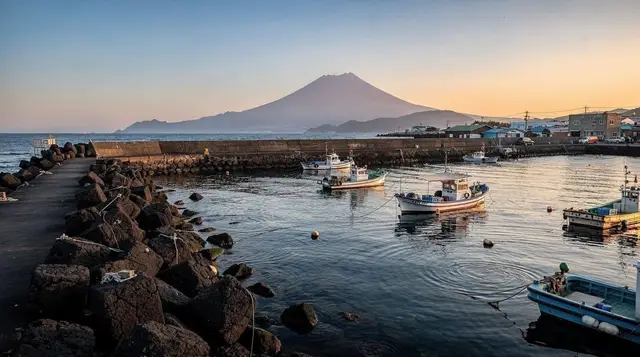
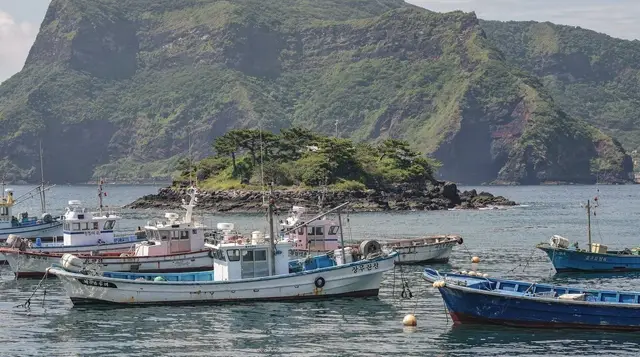
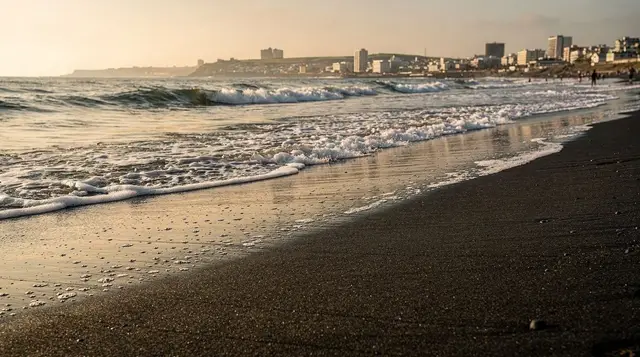

Moseulpo is a working fishing port at Jeju’s southwestern tip, and for most visitors it’s known first and foremost as the departure point for ferries to Gapado and Marado — the two islets off the island’s southernmost stretch of coast. It’s also, separately, one of the better places on Jeju to eat fresh horse mackerel (jeon-gaengi), a local specialty tied directly to the port’s fishing fleet.
| Where | Jeju’s southwest tip, ~30-40 min from Seogwipo |
| Cost | Ferries ₩10,000-15,000; horse mackerel meal ₩15,000-25,000 |
| Time needed | A few hours; a full day combined with an islet ferry |
| Getting there | Car or taxi, 50-60 min from CJU airport |
| Best time | Morning, ahead of the first Gapado/Marado ferries |
The ferry terminal
Moseulpo’s passenger terminal handles departures to both Gapado and Marado, though they run as separate crossings on separate schedules rather than a single combined route — check the day’s timetable in advance rather than assuming back-to-back sailings will line up conveniently. Ferries to Gapado take roughly 15 minutes; the Marado crossing runs somewhat longer. Both are weather-dependent, and cancellations happen with limited notice when seas turn rough, particularly in typhoon season (late August-September) and during winter storms. The Gapado & Marado day trip guide and the ferry schedules guide cover current timetables and how to sequence a same-day visit to both islets.
Horse mackerel and the local fishing culture
Moseulpo’s identity is built on its fishing fleet, and horse mackerel (called jeon-gaengi locally) caught off this stretch of coast has a genuine local reputation — a cluster of restaurants near the harbor specialize in it, served raw as hoe or grilled, at prices generally lower than equivalent seafood in more tourist-dense parts of the island. This is a working port first and a tourist stop second, and the honest recommendation is to eat here specifically because of that: the seafood reflects what the boats actually bring in, not a menu built around visitor expectations.
Alddreu Airfield
A short drive from the port, the ruins of Alddreu Airfield mark a somber piece of Jeju’s wartime history — a Japanese military airfield built during the colonial period using forced local labor, with concrete aircraft hangars still standing in the surrounding farmland. It’s a low-key, mostly self-guided historical site rather than a polished museum, worth a stop for anyone interested in the darker chapters of Jeju’s twentieth-century history alongside the more commonly told haenyeo and volcanic-landscape narratives. Songaksan’s wartime tunnels, a short drive further south, cover related history in more depth.
Getting here
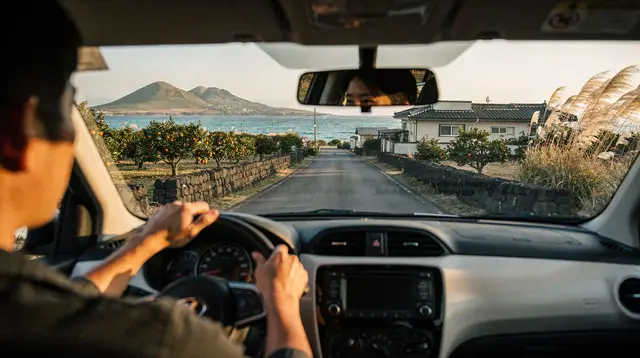
Moseulpo is about 50-60 minutes by car from CJU airport, among the longer drives to a west-coast town given its position at the island’s southwestern tip. From Seogwipo, expect roughly 30-40 minutes via the southern coast road. Public buses reach Moseulpo from both Jeju City and Seogwipo, but with a longer total journey time than driving; if you’re catching an early ferry to Gapado or Marado, a car or taxi gives more control over arrival time than relying on a bus connection.
Combining Moseulpo with an islet day trip
The natural itinerary here is straightforward: arrive at Moseulpo in the morning, catch the first available ferry to Gapado or Marado (or both, schedule permitting), spend a few hours on the islet, return by ferry, and have lunch at one of Moseulpo’s seafood restaurants before continuing your drive. Building slack into this plan matters — a delayed or cancelled morning ferry can push the whole day’s schedule, and it’s worth having a backup plan (a visit to nearby Songak or Sanbangsan) if the crossing doesn’t run.
Where to stay
Moseulpo has a modest range of guesthouses aimed primarily at ferry travelers wanting an early start the next morning, generally simple and inexpensive compared to the boutique properties further north. Most visitors don’t overnight here specifically, treating it instead as a transit point on a day trip from a base in Seogwipo or elsewhere in west Jeju.
Budget for a Moseulpo stop
Ferry tickets to Gapado or Marado run in a similar range to Udo’s crossing, generally ₩10,000-15,000 round trip depending on the operator. A horse mackerel meal at one of the port’s specialty restaurants runs ₩15,000-25,000 per person, occasionally more for larger sharing portions — reasonable for the quality given the direct-from-boat freshness. A half-day combining a ferry crossing and a seafood lunch comes to roughly ₩30,000-50,000 (about US$22-37) per person.
Seasonal notes
Spring and autumn generally bring the calmest ferry conditions and the most reliable schedules. Summer brings warmer water for anyone continuing on to swim at Gapado’s or Marado’s shores, alongside monsoon (July) and typhoon (late August-September) disruption risk. Winter seas can cancel ferries on short notice even on days that look calm from land — always check morning-of conditions before planning your day around a specific crossing.
Moseulpo’s place in Jeju’s fishing economy
Moseulpo ranks among Jeju’s more significant fishing ports, and its catch — particularly horse mackerel but also a range of other regional seafood — supplies restaurants across the island, not just the ones immediately at the harbor. Visiting during the early morning hours, when boats return and the catch is unloaded, gives a genuine sense of the working rhythm of the port that’s easy to miss if you only pass through midday en route to a ferry. This isn’t staged for tourists — it’s the actual daily operation of one of southwest Jeju’s main fishing communities.
Songaksan and Sanbangsan as extensions of a Moseulpo day
Moseulpo sits close enough to both Songaksan and Sanbangsan that a full day based around the port town can reasonably extend to cover either or both, particularly if an islet ferry doesn’t run and you need a backup plan. The Sanbangsan guide and the Songak destination page cover these nearby sights, both within a 10-15 minute drive of the port.
What Alddreu Airfield reveals about the area’s history
Beyond its role as a fishing port, Moseulpo’s surrounding area carries a heavier historical weight tied to Jeju’s colonial-era occupation — the Alddreu Airfield ruins, along with related wartime infrastructure at nearby Songaksan, mark this corner of the island as a site of significant, if under-visited, twentieth-century history. Visitors interested in this layer of Jeju’s past, beyond the natural landscapes and haenyeo culture more commonly foregrounded in travel content, will find Moseulpo and its surroundings a meaningful stop for that reason alone, independent of the ferry connections.
A realistic full-day itinerary from Moseulpo
Start early to catch the first ferry to Gapado, spend two to three hours exploring the flat island by foot or bike, return to Moseulpo for a late-morning horse mackerel lunch, then spend the afternoon at Songaksan’s coastal loop trail and the Alddreu Airfield ruins before heading back toward your accommodation. This sequencing uses the calmer morning sea conditions for the ferry crossing and saves the land-based sightseeing, which isn’t weather-dependent in the same way, for later in the day.
Getting around once you’re in Moseulpo
The port area itself is compact and walkable — the ferry terminal, the main seafood restaurant cluster, and the town’s small commercial center all sit within a few minutes’ walk of each other. A car becomes necessary again once you want to reach Songaksan, Sanbangsan, or continue elsewhere along the coast, since these sights are a short drive rather than a walk from the port itself.
Weather-watching as a local skill
Given how central ferry reliability is to Moseulpo’s function as an islet gateway, longtime residents and boat operators develop a practiced eye for reading local sea and sky conditions beyond just checking an official forecast — worth tapping into if you’re unsure whether a borderline-looking morning will actually produce a running ferry. Asking directly at the ticket counter or a nearby restaurant often gets a more immediately useful answer than app-based forecasts alone.
If the seafood side of the port appeals more than the islets, a boat fishing outing with a seafood lunch is another way to experience Jeju’s fishing culture from the water rather than from a restaurant table.
Buying seafood to take home
Some visitors buy fresh or dried seafood directly from vendors near Moseulpo’s harbor to take home or prepare themselves, an option worth considering if your accommodation has cooking facilities or you’re looking for a genuinely local souvenir. Dried fish products travel well and are commonly sold in vacuum-sealed packaging suitable for checked luggage; ask vendors specifically about products meant for travel if this interests you.
Restaurants beyond horse mackerel
While horse mackerel is Moseulpo’s signature dish, the port’s restaurant cluster also serves a broader range of fresh seafood — hoe (raw fish) platters, seafood stews, and grilled fish depending on the day’s catch. Menus tend to be seasonal and dependent on what came in that morning rather than fixed, which is both a limitation (don’t expect a specific dish to always be available) and an advantage (whatever is on offer tends to be genuinely fresh). Staff at smaller, less English-friendly establishments are generally happy to point at the day’s options if a menu isn’t translated.
Comparing Moseulpo to Seongsan as an islet gateway
Moseulpo and Seongsan serve as the two main gateway ports for Jeju’s outlying islets — Moseulpo for Gapado and Marado, Seongsan for Udo. Seongsan’s Udo ferry runs more frequently and with a shorter crossing time, making it the easier islet trip logistically; Moseulpo’s connections to Gapado and Marado involve a longer overall drive from Jeju City and somewhat less frequent sailings, but reward the extra effort with two distinct islet experiences in one area rather than just one.
The wider southwest coast context
Moseulpo anchors a stretch of southwest Jeju that includes some of the island’s most historically and geologically distinctive sights within a short radius — Sanbangsan’s bell-shaped dome, Yongmeori Coast’s layered cliffs, Songaksan’s wartime tunnels, and the Alddreu Airfield ruins all sit within 15-20 minutes of the port. Few visitors realize how concentrated this cluster is, often treating each site as a separate stop on different days rather than recognizing them as a coherent regional itinerary anchored by Moseulpo.
Buying seafood beyond the restaurant tables
Some of Moseulpo’s harbor-side vendors sell fresh or dried horse mackerel and other regional catch directly, an option worth considering if your accommodation has kitchen facilities or you simply want a genuinely local souvenir rather than a restaurant meal. Dried seafood packed for travel is a reasonably common purchase among domestic visitors here, and vendors are generally happy to point out which products are suited to carrying home versus eating immediately — ask directly if this interests you, since not everything on display travels equally well.
Backup plans when ferries don’t run
Because Moseulpo’s islet ferries are genuinely weather-dependent, it’s worth having a mainland backup plan built into any day that includes a Gapado or Marado crossing, rather than treating the ferry as guaranteed. Sanbangsan and Yongmeori Coast, both a short drive from the port, absorb a cancelled-ferry morning well — neither is weather-dependent in the same way, and both are substantial enough to fill the time a ferry would otherwise have taken. Songaksan’s coastal loop trail works similarly as a fallback that also doesn’t need calm seas to be worthwhile.
Moseulpo as a base versus a day-trip stop
A small number of travelers do choose to base themselves in Moseulpo for a night or two, usually specifically to catch the earliest possible islet ferry without an hour-plus drive beforehand, or to be close to Sanbangsan, Yongmeori Coast, and Songaksan for an unhurried southwest-focused stay. For most visitors, though, Seogwipo remains the more practical base — a wider range of accommodation, more dining variety, and a similarly short drive to Moseulpo the following morning. Basing in Moseulpo itself makes the most sense if an early ferry and a slower, less scheduled southwest exploration matter more to you than lodging variety.
Travelers who would rather not drive the southwest themselves can fold the area into a guided day tour of the west and south coasts, or hire a private one-day tour and set the pace and stops around the ferry timetable. Either option removes the question of early-morning parking and road navigation, though you should confirm that a given itinerary actually includes the port before booking.
Moseulpo at different times of day
Early morning, when the fishing fleet returns and the day’s catch is unloaded, gives the most authentic sense of Moseulpo as a working port rather than a tourist stop — worth timing a visit around if you want to see this side of the town rather than just passing through en route to a ferry. By contrast, midday around the ferry terminal is the busiest and least atmospheric window, dominated by queuing island-bound day-trippers rather than the port’s actual fishing rhythm.
Frequently asked questions about Moseulpo
Can I visit both Gapado and Marado from Moseulpo in one day?
Yes, both depart from the same terminal, though as separate crossings on separate schedules — check the day’s timetable to plan a realistic sequence without long waits between sailings.
Is Moseulpo worth visiting without taking an islet ferry?
Yes, primarily for the horse mackerel restaurants near the harbor — it’s a genuine, unpolished fishing-port experience distinct from the more touristic parts of west Jeju.
How far in advance should I book a Gapado or Marado ferry?
Same-day or day-before is usually sufficient outside peak summer weekends and holidays, though it’s worth checking current booking requirements, since some operators sell tickets only at the terminal.
Is Alddreu Airfield worth the detour?
For visitors interested in Jeju’s wartime and colonial-period history, yes — it’s a low-key, thought-provoking site, though not a polished museum experience.
What happens if the ferry to Gapado or Marado is cancelled?
Ferry operators typically resume the next available sailing once conditions improve, but in serious weather this can mean a genuinely delayed or scrapped crossing — build slack into your day and have a backup plan.
Do I need a car to reach Moseulpo?
A car or taxi is recommended given the drive time from Jeju City or the airport, particularly if you’re aiming for an early ferry departure.
Can I combine Moseulpo with Sanbangsan and Songaksan in one day?
Yes, all three sit within a 15-20 minute drive of each other, making a combined day covering the port, an islet ferry, and one or two of the nearby landmarks a realistic and efficient itinerary.
Is Moseulpo a good base for exploring southwest Jeju?
It’s a reasonable option specifically for its proximity to the ferry terminal and the concentration of nearby sights, though most visitors prefer basing in Seogwipo for a wider range of accommodation and dining options, treating Moseulpo as a day-trip stop instead.


