
Gapado Island
Gapado, a flat islet off Moseulpo, is known for its green-to-gold barley fields and a quiet, unhurried alternative to the busier Udo Island.
Quick facts
Top tours and experiences
We earn a small commission if you book through GetYourGuide — at no extra cost to you. Every tour is hand-picked and verified.
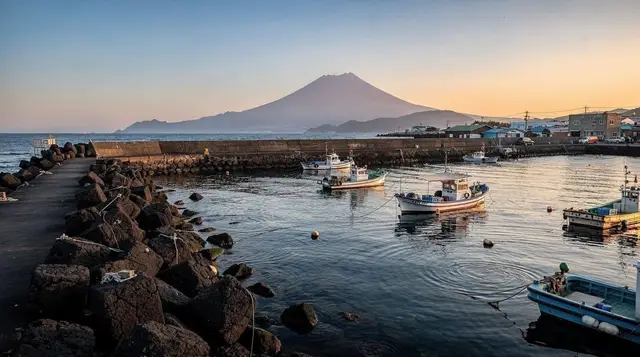
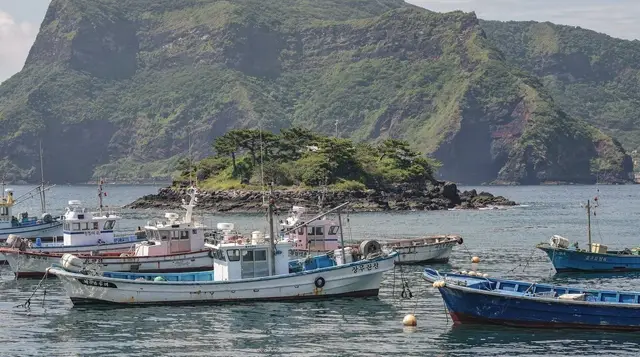
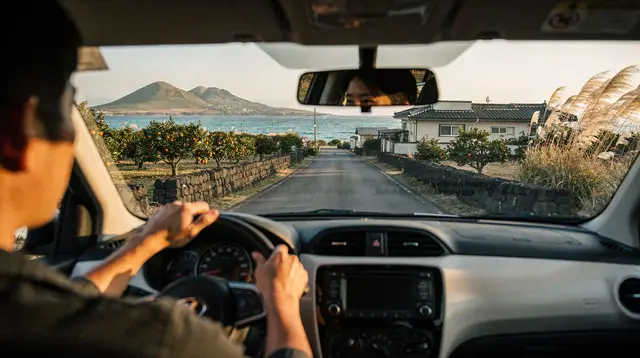
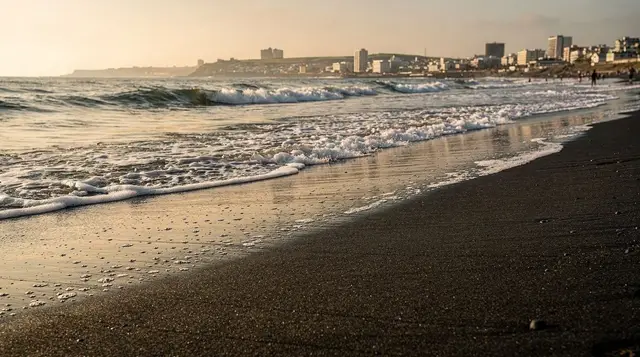
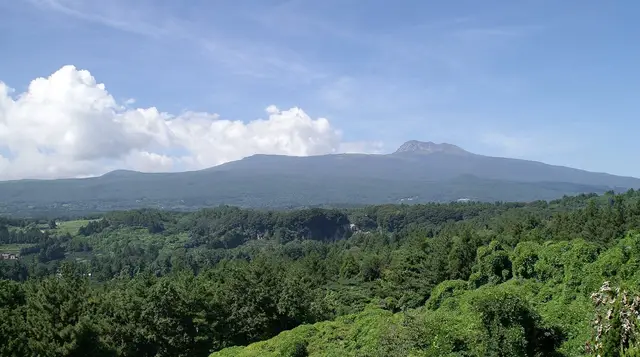

Gapado is a small, almost perfectly flat island off Jeju’s southwestern coast, reached by a short ferry from Moseulpo, and it offers a genuinely different experience from the busier Udo: no crowds of tour buses, no dense strip of cafés, just barley fields, a handful of small restaurants, and a walkable or cyclable loop that covers the whole island in an hour or two.
| Where | Off Jeju’s southwest tip, via Moseulpo Port |
| Cost | Ferry ₩10,000-15,000 round trip; bike rental a few thousand won |
| Time needed | Half a day; the loop takes 1-2 hours on foot or under an hour by bike |
| Getting there | ~15-min ferry from Moseulpo, itself 50-60 min by car from CJU |
| Best time | April-May for the barley bloom; any calm-sea day otherwise |
Getting there
Ferries to Gapado depart from Moseulpo port at Jeju’s southwestern tip, a roughly 15-minute crossing, with a more limited schedule than Udo’s more frequent departures — check current sailing times before planning your day around a specific return crossing. Like all Jeju islet ferries, service depends on sea conditions and can be cancelled with little notice in rough weather. The island’s highest point is barely 20 meters above sea level, making it one of the flattest inhabited islands in Korea, which is exactly why the barley-field cycling loop here feels so effortless compared to more varied terrain elsewhere.
The barley fields
Gapado’s defining feature is its barley cultivation — fields that turn a vivid green through winter and spring before ripening to gold ahead of the early-summer harvest, at their most photogenic from mid-April through May. A barley festival timed to the bloom draws a modest crowd of visitors specifically for this window, with the fields at their peak color forming an unusually striking, almost horizon-to-horizon landscape given the island’s flatness and lack of trees or buildings to break the view.
Cycling and walking the loop
The island’s full loop is walkable in an hour or two at an easy pace, or considerably faster by the bicycles available to rent near the ferry dock — given the completely flat terrain, this is one of the easiest cycling experiences in the whole Jeju archipelago, requiring none of the e-bike assistance that makes sense on Udo’s longer, more exposed loop. A handful of small restaurants near the dock serve simple meals, mostly seafood and barley-based dishes reflecting the island’s two main food traditions.
Getting to Moseulpo
Moseulpo port sits at Jeju’s southwestern tip, roughly 50-60 minutes by car from Jeju City, and closer to Seogwipo via the southern coast road. It’s the same departure port used for ferries to Marado, though the two islands require separate crossings rather than a single combined ticket — see the Moseulpo destination page for port logistics and nearby food options while you wait for a ferry.
If you would rather not drive yourself, a private transfer from the airport takes the parking and navigation question off your plate, and the airport transfers guide compares it with buses and taxis. Drivers will find the car rental and IDP guide useful, and the Kakao T taxi guide explains how to book a cab back to your base afterwards.
What to bring for a Gapado visit
Given the limited facilities on the island, it’s worth bringing sun protection (there’s minimal shade anywhere on Gapado), a light windbreaker regardless of season, and cash for the small restaurants and bike rental stands, since card acceptance can’t be assumed at every small vendor. Water is available for purchase near the ferry dock, but bringing your own is a reasonable precaution if you plan to spend the full duration between ferries exploring the island.
Combining Gapado with Marado
Because both islands depart from the same Moseulpo terminal, a single day covering both Gapado and Marado is a common and reasonable itinerary — the Gapado & Marado day trip guide covers how to sequence the two crossings without long dead time waiting for connecting ferries. Given how quickly each island can be covered on foot or by bike, a determined visitor can realistically see both in a single day, weather and schedules permitting.
Photography on Gapado
The island’s flat, treeless landscape and unbroken sightlines make it a rewarding subject for wide-angle landscape photography, particularly during barley season when the fields provide strong color and texture against the surrounding blue water. Because the terrain has so little vertical variation, framing shots that include some foreground interest (a fence line, a path, a building) helps avoid images that feel flat in a literal as well as compositional sense. Sunset and sunrise both work well here, given the island’s open horizon in nearly every direction.
Weather exposure on Gapado
Because there’s almost nothing on the island to block wind — no trees, few tall buildings — Gapado feels more exposed to weather than most Jeju destinations, including neighboring Udo, which at least has some elevation and vegetation to provide partial shelter. A windy day on mainland Jeju will likely feel considerably windier on Gapado, worth factoring into what you wear and how comfortable a full loop of the island will be.
Where to stay
Gapado has essentially no overnight accommodation aimed at tourists — nearly everyone visits as a day trip from Moseulpo or elsewhere in west Jeju, spending a few hours on the island before returning on an afternoon ferry.
Budget for a Gapado day trip
The round-trip ferry from Moseulpo runs in a similar range to Udo’s crossing, generally slightly less, typically ₩10,000-15,000. Bicycle rental near the dock is inexpensive given the island’s small size and flat terrain, usually a few thousand won for a couple of hours. A simple seafood or barley-based meal runs ₩10,000-18,000 per person. A relaxed half-day here, including the ferry, a bike rental, and lunch, comes to roughly ₩25,000-40,000 (about US$19-30) per person.
Seasonal notes
April-May is the standout season, for the barley fields at peak bloom and generally calm spring ferry conditions. Summer brings warmer weather but also the monsoon (July) and typhoon risk (late August-September) that disrupt ferry schedules across all of Jeju’s islets. Winter is quiet and cold, with the barley fields at their greenest but the exposed, treeless landscape making for a genuinely cold, windy walk.
The Gapado Barley Festival
Timed to the barley’s peak bloom in April, a local festival celebrates the island’s signature crop with food stalls, cultural performances, and organized walks through the fields — a genuinely local event rather than one built primarily for tourists, though visitors are welcome and it adds a lively contrast to Gapado’s normally quiet, understated character. Exact dates shift year to year based on the bloom’s timing, so check current scheduling if the festival specifically is your reason for visiting.
Why Gapado has no trees
One of the most immediately noticeable things about Gapado is the almost complete absence of trees — a combination of strong, near-constant coastal winds and generations of land use dedicated to barley cultivation rather than forestry. This treeless quality gives the island an unusual, almost otherworldly visual character, with unbroken sightlines across the barley fields to the sea in every direction, distinct from the more wooded landscapes found on Jeju’s main island and even on Udo.
Barley-based food
Beyond the general seafood available near the ferry dock, several small restaurants on Gapado serve dishes built specifically around the local barley crop — barley rice, barley-flour breads, and other preparations that reflect the island’s agricultural identity in the same way peanut treats reflect Udo’s. It’s a distinctive, if modest, food experience worth seeking out rather than defaulting to the more generic seafood options.
A slower pace than Udo
Visitors coming to Gapado directly after a Udo trip often remark on how much quieter and slower-paced the island feels by comparison — no e-bike rental stands doing brisk business, no queues for peanut ice cream, just a flat landscape and a handful of low buildings. This isn’t a shortcoming; it’s the entire appeal for visitors specifically seeking a contrast to Udo’s more developed tourism infrastructure. If you found Udo appealing but wanted fewer people around, Gapado delivers exactly that trade-off.
If Udo is still on your list, the Udo Island day trip guide lays out that loop, and an e-bike day on Udo with a speedboat back toward Seongsan pairs naturally with a quieter Gapado visit on a different day. For the wider picture of how the small islands compare, see the Jeju islets ferry guide and the ferries to the islets guide.
Planning around Gapado
Gapado fits easily into a west Jeju day: the west Jeju day tour guide and the west Jeju itinerary show what else sits along the same stretch of coast, and the west Jeju destination page gives the regional overview. Because the crossing depends on the sea, it helps to read about typhoon season in Jeju before fixing a date, and the Jeju islets overview puts Gapado alongside the other small islands so you can decide how much time each deserves.
A note on mobile connectivity
Mobile signal reaches Gapado reliably given its proximity to the main island, useful for checking return ferry times or looking up current information while exploring — one modern convenience that offsets some of the island’s otherwise deliberately old-fashioned, low-infrastructure character.
Toilets and basic facilities
Public restrooms exist near the ferry dock and at a few points along the loop, though they’re more basic than facilities on Udo — plan around this if you’re visiting with young children or have specific needs, since options thin out considerably once you’re away from the immediate dock area.
A model for sustainable island tourism
Gapado has occasionally been highlighted as an example of low-impact, sustainable tourism within the wider Jeju islet network — the absence of large-scale infrastructure development, the emphasis on agriculture over tourism as the island’s primary economic activity, and the relatively low visitor numbers all contribute to a lighter environmental footprint compared to more heavily developed destinations. Visitors who value this kind of low-impact travel experience will find Gapado’s understated character a genuine draw rather than a limitation.
Cycling versus walking
Given Gapado’s small size and completely flat terrain, the choice between walking and cycling comes down mostly to how much time you have and how much you want to linger at specific points along the loop — cycling covers the whole island in well under an hour, leaving more time for stops, while walking the full loop takes closer to two hours but allows for a slower, more observational pace through the barley fields.
Gapado versus Marado, side by side
Both islands share Moseulpo as a departure point, but they suit slightly different travelers: Gapado’s barley fields and easy flat loop favor a relaxed, scenic half-day, while Marado, Korea’s southernmost point, draws visitors chasing that specific “southernmost” milestone rather than a cycling experience. Combining both is common precisely because the crossings are short and depart from the same port, but if forced to choose one, Gapado generally offers the more visually rewarding hour on the water and on land.
Frequently asked questions about Gapado
How long does the ferry to Gapado take?
Roughly 15 minutes from Moseulpo port, Jeju’s southwestern departure point for both Gapado and Marado.
When is the best time to see the barley fields?
Mid-April through May, when the fields shift from green toward gold ahead of the early-summer harvest.
Is Gapado quieter than Udo?
Yes, considerably — Gapado sees a fraction of Udo’s visitor numbers and has far less tourist infrastructure, which is a large part of its appeal for visitors seeking a quieter islet experience.
Can I walk the whole island without a bike?
Yes, the flat terrain makes a full walking loop manageable in one to two hours, though bikes (available near the dock) make it faster and easier.
Can I visit Gapado and Marado on the same day?
Yes, both depart from Moseulpo, though as separate ferry crossings — check the day’s schedule to plan a realistic sequence between the two.
Is there food available on Gapado?
Yes, a handful of small restaurants near the ferry dock serve simple seafood and barley-based dishes, though selection is limited compared to mainland Jeju.
When is the Gapado Barley Festival held?
Timed to the barley’s peak bloom, typically in April, though exact dates shift year to year based on that season’s growing conditions — check current schedules if the festival is a specific reason for your visit.
Why doesn’t Gapado have trees?
Strong, near-constant coastal winds combined with generations of land dedicated to barley farming rather than forestry have kept the island essentially treeless, giving it a distinctive open, flat visual character.
Is Gapado worth visiting outside barley season?
Yes, though the visual impact is less dramatic — the flat, quiet landscape and slower pace compared to Udo remain appealing year-round, just without the vivid green-to-gold field color.


