
Healing Nature Tourism in Jeju
What is 'healing tourism' in Jeju?
A category of tourism, actively promoted by Korean tourism authorities, that frames time in Jeju's forests, coastline, and volcanic landscape as explicitly therapeutic — drawing on the broader Korean concept of forest bathing (sanlim-yok) and nature-based stress relief, distinct from medical wellness or spa tourism.
“Healing tourism” isn’t marketing fluff invented for a single tour listing — it’s a recognized category actively promoted by Korean tourism authorities, framing time spent in natural environments as explicitly therapeutic. Jeju, with its volcanic landscape, forest cover, and coastline, has become one of the country’s focal points for this kind of tourism, and the concept shows up across everything from official tourism board materials to individual guided tour products.
| Concept | nature immersion framed as therapeutic (sanlim-yok) |
| Where | Hallasan forest, Gotjawal, coastal Olle Trail |
| Cost | varies by tour; free if self-guided |
| Fitness level | generally gentle, accessible to most visitors |
| Best season | spring or autumn for comfort and scenery |
Where the concept comes from
Healing tourism in the Korean context draws heavily on sanlim-yok (forest bathing), a practice with roots in East Asian traditions of mindful time in forest environments, later adopted more formally in Japan as “shinrin-yoku” and popularized internationally. Korea has designated official healing forests and promotes nature-based wellness tourism as both a public health initiative and an economic tourism strategy, and Jeju’s terrain — extensive forest cover on Hallasan’s slopes, coastal walking routes, and volcanic geology — fits naturally into that promotional framework.
What “healing” experiences actually look like in practice
In bookable form, healing tourism in Jeju mostly translates into guided nature tours pitched at a gentler pace than standard sightseeing, often incorporating cultural elements alongside pure nature immersion. Jeju East: Small Group Healing Tour w/Woman Divers Show combines coastal nature scenery in eastern Jeju with a haenyeo (sea women) diving demonstration — pairing environmental immersion with the island’s distinctive cultural heritage. Jeju West: Small Group Healing Tour w/Caves & Dolphins takes a similar approach on the western side of the island, combining lava cave geology with dolphin-watching opportunities along the coast.
Is there evidence behind the “healing” framing?
General research on nature exposure and stress reduction does support real psychological and physiological benefits from time spent in green or natural environments — this isn’t purely invented marketing. However, claims specific to Jeju’s particular volcanic landscape delivering benefits beyond what any comparable natural environment would offer should be treated as promotional framing rather than site-specific medical evidence. The honest takeaway: spending unhurried time outdoors on Jeju is likely genuinely good for you, in the same general way that spending unhurried time outdoors most places is good for you — the “healing” branding is a marketing lens on a real but not uniquely Jeju-specific phenomenon.
Regional options for a self-guided version
If you’re based in east Jeju, a quiet walk near Geumun-oreum delivers a comparably immersive forest experience to a branded healing tour. If you’re in west Jeju, the coastal stretches covered in the Olle Trail overview offer a similar self-directed option.
You don’t need a branded tour to get the benefit
If the core appeal is simply unhurried nature immersion, independently walking a section of the Olle Trail, climbing one of Jeju’s more accessible oreums, or spending time on Hallasan’s lower forested trails delivers a comparable experience without needing to book a formally labeled “healing tour” product. The branded tours add value mainly through guiding, transport logistics, and — in cases like the two above — bundled cultural experiences you might not otherwise arrange independently, such as a timed haenyeo demonstration.
Combining healing tourism with the rest of a wellness itinerary
Healing nature tourism pairs naturally with the other components of a broader Jeju wellness trip — a temple meditation session for a more structured, seated counterpart to active nature immersion, or a spa or jjimjilbang visit as a restorative close to an active outdoor day. The wellness retreats guide covers how these pieces fit together into a fuller itinerary.
Best season for healing nature tourism
Spring and autumn offer the most comfortable conditions for extended time outdoors, with spring adding flowering landscapes and autumn adding foliage — both genuinely enhance the sensory experience these tours are built around. Summer heat and humidity can undercut the intended calming effect of an outdoor-heavy itinerary, and winter cold, while still workable for shorter excursions, limits how much unhurried outdoor time feels comfortable. See the Jeju month-by-month guide for detailed seasonal planning.
Who these tours suit
Healing tourism products suit visitors who want a structured but gentle introduction to Jeju’s natural and cultural landscape without independently researching trail logistics, transport, or timing for cultural elements like haenyeo demonstrations. They’re a reasonable middle ground between a fully independent nature walk and a packed standard sightseeing tour, particularly for visitors specifically seeking a slower, more reflective pace to part of their trip.
Korea’s healing forest initiative
South Korea’s forest service has designated a network of official “healing forests” (chiyu-ui-sup) across the country, complete with trained forest healing instructors and structured programs designed around the therapeutic use of forest environments — a formalized extension of the broader sanlim-yok concept. While the most prominent examples of this program sit on the mainland, Jeju’s extensive forest cover, particularly on Hallasan’s lower slopes and in areas like the Gotjawal forest zone (a distinctive volcanic forest ecosystem unique to Jeju), fits naturally within this national framework, and elements of it inform how healing tourism is marketed and structured on the island specifically.
Gotjawal: Jeju’s distinctive forest ecosystem
Gotjawal refers to a specific type of forest that grows on Jeju’s rugged, rocky lava fields — terrain too uneven and rocky for traditional agriculture, which left these areas as some of the island’s most intact and biodiverse forest ecosystems. Several Gotjawal areas host visitor-accessible walking paths, and their combination of dense vegetation, unusual volcanic rock terrain, and relatively cool, humid microclimate makes them a genuinely distinctive setting for the kind of slow, immersive nature walking that healing tourism promotes — a different sensory experience from Hallasan’s higher-elevation forest or the Olle Trail’s open coastal stretches.
How Jeju compares to other Asian healing tourism destinations
Jeju sits within a broader Asian trend of nature-and-wellness tourism that includes Japan’s shinrin-yoku forest bathing movement and various mountain and hot-spring wellness destinations across the region. What distinguishes Jeju within this landscape is the combination of volcanic geology, UNESCO-recognized natural sites, and a genuinely distinct human culture (haenyeo diving heritage, Jeju’s folk religious traditions) layered on top of the nature-immersion appeal — a broader package than a purely nature-focused destination offers, even if Jeju lacks the natural hot springs that anchor some competing destinations’ wellness tourism.
Realistic expectations for a first-time visitor
If you’re coming to Jeju specifically hoping for a structured, medically-framed wellness program, temper those expectations — what’s actually available leans more toward guided nature experiences with a wellness-oriented marketing frame than clinically structured therapeutic programs. That’s not a criticism; genuine value exists in slow-paced nature immersion regardless of how rigorously “therapeutic” the framing is, and many visitors report real relaxation benefits from these tours. Just go in understanding you’re booking a well-designed nature and culture experience with wellness branding, not a medical intervention.
Seasonal considerations for healing nature tourism
Spring’s mild temperatures and flowering landscapes align particularly well with the restorative framing of healing tourism, and many operators time specific tour itineraries around cherry blossom or canola flower season for exactly this reason. Autumn brings similarly favorable conditions with the added sensory element of foliage color, particularly in forested areas like Gotjawal or Hallasan’s lower slopes. Summer heat and humidity work against the intended calming effect of extended outdoor immersion, though shaded forest environments like Gotjawal offer somewhat more relief than fully exposed coastal or grassland settings. Winter, while quieter and often marketed around a different kind of stark, contemplative beauty, requires realistic expectations about cold exposure during any extended outdoor component.
The role of haenyeo culture in healing tourism narratives
Beyond the practical pairing of nature walks with haenyeo diving demonstrations covered earlier, haenyeo culture itself increasingly appears in healing tourism marketing as a symbol of resilience, community, and a deep, generations-long relationship with the natural environment — themes that resonate with the broader healing tourism framing even when a specific tour doesn’t include a live diving demonstration. This narrative use of haenyeo heritage reflects a genuine cultural touchstone rather than an invented marketing device, though it’s worth noting that haenyeo culture exists as a living tradition with its own significance independent of how tourism marketing chooses to frame it.
A grounded take on healing tourism marketing
It’s worth stating plainly: much of what’s marketed as “healing” tourism on Jeju is, at its core, well-executed nature and cultural tourism with a specific therapeutic framing layered on top. This doesn’t make it less valuable — genuine relaxation and restoration from slower-paced nature immersion is real — but visitors should approach the marketing language with the same healthy skepticism they’d apply to any tourism branding, rather than expecting the “healing” label to indicate a fundamentally different, more effective category of travel than a well-designed nature tour under any other name would deliver.
Practical ways to build healing tourism into your own itinerary
If a branded healing tour doesn’t fit your schedule or budget, replicating the core elements independently is entirely feasible: pick a genuinely scenic, less crowded natural area — a quieter oreum, a Gotjawal forest path, or a less-trafficked Olle Trail section — and deliberately slow your pace, spending more time simply observing surroundings than you might on a typical sightseeing stop. The specific “healing” framing doesn’t require a paid tour to access; it requires a mindset shift toward unhurried presence in a natural setting, which costs nothing beyond the time itself.
The environmental angle behind promoting healing tourism
Beyond individual visitor wellbeing, Korean tourism authorities have promoted healing tourism partly as a strategy to encourage more sustainable, lower-impact visitor behavior — slower travel through natural areas theoretically reduces the environmental strain compared to high-volume, rapid-turnover sightseeing at concentrated hotspots. Whether this environmental framing translates into measurably better outcomes for Jeju’s ecosystems is a more complex question than the tourism marketing typically addresses, but it’s worth knowing that the healing tourism concept carries this dual individual-and-environmental justification in official promotional contexts, not purely a personal wellness angle.
Who benefits most from this category of tourism
Visitors who arrive on Jeju already stressed from a packed travel schedule or a demanding work period tend to report the most noticeable benefit from deliberately slowing down through a healing-tourism-style day — the contrast with their prior pace amplifies the restorative effect. Visitors already traveling at a relaxed pace throughout their trip may notice less of a distinct shift, since unhurried nature time is already part of their general travel style rather than a specific intervention. Neither group is wrong to seek out these experiences, but understanding your own starting point helps calibrate how much of a difference a dedicated healing tour day is likely to make relative to your baseline travel pace.
Final practical notes
Approach healing nature tourism in Jeju as a genuine, worthwhile category within a broader trip rather than a magic bullet for relaxation — the actual mechanism behind its benefits is straightforward (slower pace, natural surroundings, reduced sensory overload) rather than anything uniquely tied to Jeju’s specific volcanic landscape. Book a guided option if the logistics or cultural elements (like a haenyeo demonstration) appeal to you, or replicate the core experience independently at no extra cost through slower, more deliberate time on any of the island’s natural trails.
A concept worth understanding, not just booking
Even for visitors who never book a formally branded healing tour, understanding the concept behind it adds useful context to how Jeju’s broader tourism identity has developed — a deliberate positioning around nature, slowness, and cultural depth that distinguishes the island’s marketing from more activity-dense, checklist-oriented destinations elsewhere in the region. Recognizing this framing helps explain why so much of Jeju’s tourism content, official and independent alike, leans on language around healing, restoration, and unhurried nature immersion, well beyond the specific guided tour products that carry the label most explicitly.
How this fits into planning a broader trip
If healing nature tourism’s core appeal — slower, more immersive nature time — resonates with you, consider building it in as a thread running through your whole Jeju trip rather than a single isolated activity: choosing a quieter oreum over the busiest option, allowing extra time at a waterfall rather than rushing to the next stop, or simply walking rather than driving between two nearby points when time allows. This distributed approach captures more of the underlying value than a single branded tour alone, without requiring you to abandon the rest of a more conventional sightseeing itinerary.
A note on managing your own expectations
Approach any healing-tourism-branded activity as one input into a relaxing trip rather than a guaranteed transformation delivered by a single tour or walk. Genuine restoration from a Jeju trip tends to come from the cumulative effect of a generally well-paced, varied itinerary rather than any single bookable experience, healing-branded or otherwise — a useful reminder before assigning outsized expectations to one specific tour product.
The bottom line
Healing nature tourism in Jeju is a real, officially recognized category with genuine roots in Korean nature-wellness traditions, even if some of the specific “healing” language leans more on marketing than clinical evidence. Whether you book a branded tour or simply slow your own pace independently, the underlying value — meaningful time in Jeju’s distinctive volcanic and coastal landscape — is available to any visitor willing to prioritize it.
Accessibility and physical demands
Most healing tourism products, whether branded tours or the self-guided version described above, are built around walking rather than strenuous physical exertion, which makes them accessible to a wider range of fitness levels and ages than Jeju’s more demanding hikes, such as the full Hallasan summit trails. That said, “gentle” is relative — a coastal walk or oreum climb still involves uneven terrain and, in some cases, meaningful elevation gain, so visitors with significant mobility limitations should check a specific tour’s physical demands rather than assuming every “healing” product is fully accessible. Flat, paved sections of the Olle Trail near towns are the most broadly accessible self-guided option for visitors who want the concept without any real physical challenge.
Guided tour versus independent walking: a quick comparison
| Guided healing tour | Independent walking | |
|---|---|---|
| Cost | tour price, incl. transport | free beyond your own transport |
| Logistics | handled for you | you plan the route and timing |
| Cultural elements | often bundled (e.g. haenyeo show) | up to you to arrange separately |
| Pace flexibility | fixed by the group/itinerary | fully your own |
| Best for | first-time visitors, tight schedules | visitors with a car and more time |
Neither option is objectively better — the guided version trades flexibility for convenience and bundled cultural context, while independent walking trades convenience for full control over pace and route.
Building a self-guided healing day
For visitors who want the substance without a branded product, a realistic self-guided healing day might combine a quiet morning walk through a Geumun-oreum or similar lower-traffic oreum with an unhurried afternoon along a section of the Olle Trail, closing with a slow meal rather than a rushed one. None of this requires booking anything, and it captures the core mechanism — slower pace, natural surroundings, reduced sensory overload — that the branded tours are built around.
Frequently asked questions about healing nature tourism in Jeju
Is healing tourism the same as forest bathing?
Related but broader — forest bathing (a Korean and Japanese concept involving mindful time in forest environments) is one specific practice within the wider healing tourism category, which also includes coastal walks, cultural immersion, and guided nature tours.
Is there scientific backing for healing tourism claims?
Some research supports stress-reduction benefits from time in natural environments generally, though claims specific to Jeju’s particular landscape beyond general nature-exposure benefits should be treated as marketing framing rather than site-specific medical evidence.
What kind of experiences fall under “healing tourism” in Jeju?
Guided nature walks, cultural immersion experiences like haenyeo diving demonstrations, coastal healing tours, and forest-based walking programs, often marketed with an explicit “healing” or wellness framing rather than as standard sightseeing.
Do I need to book a specific “healing tour” to get the benefit?
No — independently walking Olle Trail sections, hiking an oreum, or simply spending unhurried time in Jeju’s natural landscape delivers comparable nature-exposure benefits without needing a formally branded healing tour product.
Are healing tourism experiences suitable for all fitness levels?
Generally yes — most emphasize gentle walking and immersion over strenuous activity, making them accessible to a wide range of visitors, though always check the specific tour’s physical demands before booking.
What’s the connection between haenyeo culture and healing tourism?
Some healing tour itineraries incorporate haenyeo (sea women) diving demonstrations or cultural encounters as a way to connect nature immersion with Jeju’s distinctive human heritage, blending environmental and cultural elements in a single experience.
Related guides

Jeju Spa & Onsen Guide
Jeju has no natural hot springs, but jjimjilbang bathhouses and resort spas fill the gap — here's what's actually available on the island.
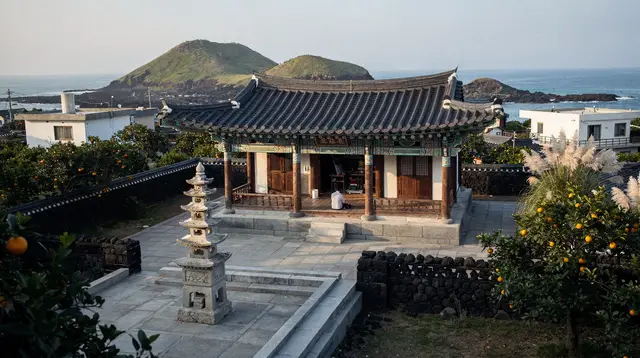
Temple Meditation in Jeju
Jeju's temple meditation experiences pair sea-view Buddhist temples with guided sessions led by monks — here's how they work and what to expect.

Jeju Wellness Retreats
Jeju's wellness retreat scene mixes guided healing tours, small resort programs, and multi-activity days combining hiking, meditation, and spa time.

Jeju airport transfers
Comparing every way from Jeju Airport (CJU) to your hotel — limousine bus, city bus, taxi, Kakao T, and private transfer, with real prices.
Ready to book? Top tours for this guide
We earn a small commission if you book through GetYourGuide — at no extra cost to you. Every tour is hand-picked and verified.