
Jeju Spa & Onsen Guide
Does Jeju have natural hot springs (onsen)?
No — unlike some volcanic regions, Jeju lacks natural geothermal hot springs. What the island offers instead are jjimjilbang (Korean-style public bathhouses with heated pools and sauna rooms) and resort or hotel spas, which serve a similar relaxation role without geothermal water.
| Natural hot springs | None — Jeju has no geothermal onsen |
| Jjimjilbang cost | around ₩10,000-15,000 entry |
| Resort spa cost | considerably higher, private treatment rooms |
| Where | jjimjilbang in Jeju City and Seogwipo; resort spas around Jungmun |
| Hours | many jjimjilbang operate 24 hours |
Despite Jeju’s volcanic origins, the island doesn’t have natural geothermal hot springs — a genuine surprise to visitors expecting an onsen-style experience similar to Japan’s volcanic hot spring towns. What Jeju does offer is a strong jjimjilbang (Korean bathhouse) culture and a growing number of resort and hotel spas, both of which fill the relaxation-and-bathing role that natural hot springs serve elsewhere, just without geothermal water.
Why Jeju has no onsen despite being volcanic
Onsen and other geothermal hot springs require specific hydrogeological conditions — active or recently active volcanic heat sources close enough to groundwater to naturally warm it to a usable temperature. Jeju’s volcanic activity, while real and geologically significant (it’s the basis for the island’s UNESCO Global Geopark status), hasn’t produced the kind of accessible geothermal water sources that support natural hot spring bathing elsewhere. This is worth setting expectations around clearly before your trip — searching for “Jeju onsen” will surface jjimjilbang and spa facilities using heated, non-geothermal water, not a natural hot spring experience.
What jjimjilbang actually are
A jjimjilbang is a distinctly Korean bathhouse and sauna format: typically multiple pools at different temperatures, dry and steam sauna rooms (sometimes themed with different heat sources like salt or charcoal), and communal relaxation areas where visitors in provided bathhouse uniforms can nap, eat, or socialize after bathing. The bathing pools themselves are gender-separated and nude, following standard Korean bathhouse etiquette; the broader lounge and sauna common areas outside the pools are typically mixed-gender and require wearing the provided uniform.
For visitors unfamiliar with the format, a jjimjilbang can feel like a genuinely different cultural experience from a Western spa — communal, unhurried, and often functioning as a social space for extended families or friend groups rather than purely a wellness treatment. Basic etiquette matters: shower thoroughly before entering the shared pools, keep noise reasonable in relaxation areas, and follow any posted rules around tattoos, which some facilities still restrict in the bathing areas.
Resort and hotel spas
Alongside jjimjilbang, Jeju’s larger resorts — particularly around Jungmun — offer more conventional Western-style spa facilities: private treatment rooms, massages, facials, and body treatments booked individually rather than as communal bathing. These run considerably more expensive than a jjimjilbang visit but offer a private, quieter experience closer to what international visitors typically expect from the word “spa.” Many incorporate local ingredients into treatments — green tea from Jeju’s Osulloc plantations, or hallabong citrus, are common local touches in resort spa menus.
Choosing between the two
If budget matters and you’re open to a genuinely Korean cultural experience, a jjimjilbang delivers real relaxation value at a fraction of a resort spa’s cost, plus the novelty of communal bathhouse culture. If privacy, a Western-style treatment format, or a specific massage or facial is what you’re after, a resort spa is the better fit despite the higher price. Neither is objectively “better” — they serve different expectations, and knowing which one you actually want before booking avoids a mismatched experience.
Where to find these facilities
Both Jeju City and Seogwipo have jjimjilbang serving their local populations and visitors alike, while resort spas concentrate around Jungmun. If budget planning matters for your trip, the Jeju budget guide covers how spa and bathhouse costs fit into a broader daily spending plan.
Combining spa or bathhouse time with other wellness activities
A jjimjilbang or spa visit pairs naturally with a slower, wellness-oriented day — after a hike, following a temple meditation session, or as a rest day between more active parts of a Jeju trip. See the temple meditation guide and healing nature tourism guide for other components of a wellness-focused itinerary, and the wellness retreats guide for multi-activity retreat options that sometimes bundle spa access with guided hikes or cultural experiences.
Practical tips
Bring your own toiletries if you have preferences, though most jjimjilbang provide basic soap and shampoo. Towels are typically provided or rentable for a small fee. If you have visible tattoos, calling ahead to check a specific facility’s policy saves an awkward turnaway at the door. For resort spas, booking ahead is generally necessary, particularly during peak season weekends when treatment slots fill quickly.
Common sauna room types explained
Larger jjimjilbang typically offer several distinct sauna rooms, each with a different heat source and claimed benefit, and understanding what’s on offer helps you get more out of a visit rather than randomly sampling rooms. A hwangto (yellow clay) room uses clay-lined walls said to emit beneficial minerals as it heats. A salt room lines the interior with salt blocks or crystals, marketed around respiratory benefits. An ice room, by contrast, offers a genuinely cold space for contrast therapy after the heat of other rooms — a common practice of alternating hot and cold that regulars build into a full jjimjilbang circuit. None of these claims should be taken as medically proven, but the varied sensory experience of moving between rooms is a real and enjoyable part of the format regardless of the specific marketed benefit.
Timing a jjimjilbang visit around your trip
Because many jjimjilbang operate 24 hours, they’re a flexible fit for almost any point in a Jeju itinerary — a relaxing evening activity after a day of sightseeing, an early-morning option before starting a day of hiking, or even, for budget travelers, an occasional substitute for a hotel night given the sleeping areas some facilities provide. This flexibility is a genuine practical advantage over resort spas, which typically operate within standard business hours and require advance booking for treatment slots rather than allowing spontaneous, any-hour visits.
Regional differences in Jeju’s spa and bathhouse offerings
Jeju City and Seogwipo both have jjimjilbang options, with Jeju City’s larger population generally supporting a slightly wider range of facilities. Resort-area spas cluster heavily around Jungmun, reflecting that area’s concentration of larger international hotel chains and resort properties. If you’re staying outside these hubs — in a smaller coastal town or rural area — expect fewer nearby options for either format, and factor in some travel time if a spa or bathhouse visit is a planned part of your trip rather than an impromptu stop.
Is a spa or bathhouse visit worth the time on a short trip?
For a short Jeju visit focused on sightseeing and hiking, a jjimjilbang or spa visit is a genuinely worthwhile way to spend a lower-energy evening or a planned rest day, particularly after a demanding hike like a Hallasan summit attempt, when the combination of heat, water, and rest genuinely helps with recovery. For a very short trip with a packed sightseeing agenda, it’s reasonable to skip this category entirely without feeling you’ve missed something essential — unlike some of Jeju’s signature natural attractions, spa and bathhouse time is a nice-to-have wellness addition rather than a core part of the island’s identity.
What to expect on arrival at a jjimjilbang
On entry, you’ll typically pay the admission fee at a front counter and receive a locker key or wristband along with a provided uniform for the mixed-gender common areas. Shoes come off at the entrance and are stored separately from the main locker area — a standard Korean practice that extends to many indoor spaces beyond bathhouses. From there, the bathing pool areas are accessed separately by gender, with clothing removed entirely before entering; the mixed-gender sauna rooms and relaxation areas require wearing the provided bathhouse uniform rather than street clothes or your own bathing suit.
How jjimjilbang culture reflects broader Korean social patterns
Jjimjilbang function as more than a simple wellness facility in Korean daily life — they’re a genuine social institution where families spend entire afternoons together, friend groups gather, and in some cases, budget travelers or people between housing situations use the overnight facilities as a low-cost place to sleep. Understanding this broader social role helps explain why jjimjilbang feel different in atmosphere from a Western-style spa, which tends toward a more purely transactional, individually-booked treatment model rather than an extended communal leisure destination.
Practical language and communication tips
English signage varies by facility, and while larger, more tourist-accustomed jjimjilbang tend to have clearer guidance, smaller neighborhood facilities may rely more heavily on Korean-only signage and staff with limited English. Having a translation app ready, or simply observing what other visitors are doing at each stage, generally gets you through the process without major difficulty even without shared language — the sequence (shoes off, uniform on, bathing separately by gender) is consistent enough across facilities that once you understand the pattern, navigating a new location becomes straightforward.
Combining a jjimjilbang visit with an overnight stay
Because many jjimjilbang operate around the clock and offer basic sleeping areas — shared floor space with heated flooring rather than private rooms — some budget-conscious travelers use a jjimjilbang visit as an occasional substitute for a hotel night, particularly if arriving on a late flight or needing a low-cost option for a single night. This isn’t a comfortable long-term accommodation strategy given the communal, no-privacy nature of the sleeping areas, but as an occasional, inexpensive option paired with the relaxation value of the bathing facilities themselves, it’s a genuinely practical choice some visitors build into a longer, budget-focused Jeju itinerary.
Choosing between a day visit and evening visit
Jjimjilbang generally feel different depending on time of day — daytime visits tend to draw families and a broader mix of visitors, while evening and late-night hours often see a shift toward regulars using the facility as a wind-down destination after work or a long day. Neither timing is objectively better for a first-time visitor, but evening visits after a full day of Jeju sightseeing or hiking tend to align most naturally with the facility’s intended relaxation purpose, letting you end your day with genuine physical recovery rather than fitting the visit in as a rushed midday stop between other activities.
A final honest assessment
For visitors genuinely curious about Korean bathhouse culture, a jjimjilbang visit is one of the more authentic, low-cost cultural experiences available on Jeju, offering real insight into everyday Korean leisure life beyond the tourist-facing attractions most visitors see. For visitors purely seeking a private, pampering spa experience without any interest in the communal cultural format, a resort spa is the more straightforward match for those specific expectations. Knowing which experience you actually want before choosing saves a potential mismatch between expectation and format.
Pairing a bathhouse visit with an active day
A jjimjilbang visit works particularly well after a demanding day on the Hallasan trails or a long walk along the Olle Trail, when genuine muscle recovery matters more than a purely leisurely soak. For a gentler pairing, see the temple meditation guide for a quieter, more contemplative complement to a spa visit rather than an intensely physical one.
What visitors most often get wrong
The single most common misconception among first-time visitors is expecting a genuine hot-spring experience specifically because Jeju is volcanic — worth restating clearly one more time: there are no natural geothermal hot springs on the island, and any facility using “onsen” language in its marketing is using it loosely rather than literally. The second most common misstep is underestimating jjimjilbang etiquette expectations, particularly around nudity in the bathing areas, which catches some first-time visitors off guard despite it being standard, unremarkable practice within Korean bathhouse culture. Reading through basic etiquette expectations before your first visit avoids any awkward surprise once you’re already there.
Combining spa culture with the rest of a Jeju trip
A jjimjilbang or resort spa visit works well bookended around more physically demanding parts of a Jeju trip — schedule it for the evening after a Hallasan hike, or as a deliberate rest day between a beach day and a full day of sightseeing. Treating spa or bathhouse time as an active part of your itinerary planning, rather than an afterthought squeezed in only if time allows, tends to produce a more balanced, genuinely restorative overall trip rather than one that runs continuously at high activity levels from arrival to departure.
Facilities to expect at larger jjimjilbang
Beyond the core bathing and sauna rooms, many of the larger jjimjilbang complexes include amenities that surprise first-time visitors expecting a purely bathing-focused facility: PC rooms, small cinema screens, arcade games, sleeping halls with heated floor mats, and sometimes a fitness area — reflecting the all-in-one leisure-destination model these facilities have evolved into over recent decades. Not every jjimjilbang includes all of these, and smaller neighborhood facilities tend to stick closer to a simpler bathing-and-sauna format, so checking what a specific location offers ahead of a visit helps set accurate expectations if any of these extra amenities specifically appeal to you.
A note on hygiene expectations
Korean bathhouse culture places genuine emphasis on thorough washing before entering shared pools, more so than some visitors’ home country norms might lead them to expect — a full shower with soap, not just a quick rinse, is the standard expectation before stepping into any communal bathing pool. This isn’t an arbitrary rule but a practical courtesy that keeps shared water genuinely clean for everyone using the facility, and following it without needing to be reminded is one of the easiest ways to blend in respectfully as a first-time visitor.
A closing thought
Coming to Jeju without a natural hot spring on the itinerary isn’t a real loss once you understand what’s genuinely on offer instead — a rich, distinctly Korean bathhouse culture and a growing resort spa scene that together cover the full range from budget communal relaxation to private pampering.
The bottom line
Jeju’s lack of natural hot springs is a genuine gap compared to some other volcanic destinations, but the jjimjilbang and resort spa culture that fills the space offers real, distinctive value in its own right — a communal, culturally rich bathing tradition on one end, and a more private, conventional spa experience on the other. Choosing between them comes down to what kind of relaxation experience you’re actually after, and there’s no wrong answer between the two.
Typical costs to budget
Jjimjilbang entry generally runs around ₩10,000-15,000 for standard admission, with sauna-room access and basic facilities included in that base price; extras like a scrub service or a private sleeping mat area, where offered, cost more on top. Resort and hotel spas price by treatment rather than a flat entry fee, and a single massage or facial typically costs several times a jjimjilbang’s full admission — expect resort spa pricing broadly in line with a mid-range international spa rather than a budget local rate. Neither format requires advance payment beyond the booking itself; jjimjilbang are pay-as-you-enter, while resort spas usually take a deposit or full payment at booking.
Packing for a jjimjilbang visit
Most jjimjilbang provide the essentials — a uniform for common areas, basic soap and shampoo, and towels either included or rentable for a small fee — so a spontaneous visit doesn’t require much preparation. Bringing your own hairbrush, a hair tie, and any skincare products you’re particular about is worth it if you have strong preferences, since on-site toiletries tend to be generic, basic brands. Flip-flops or sandals are useful for moving between the shoe-removal area and the bathing floors, though many facilities provide basic slippers as part of the entry package.
Booking a resort spa versus walking into a jjimjilbang
The booking process differs meaningfully between the two formats, and knowing this ahead of time avoids a wasted trip. Jjimjilbang operate on a walk-in basis with no reservation system — you simply arrive, pay at the counter, and enter, though very popular locations can occasionally have a short wait during peak evening hours. Resort spas, by contrast, function like any hotel spa internationally: treatments are booked in advance for a specific time slot, cancellation policies apply, and walking in without a reservation risks being told the day is fully booked, particularly on weekends during high season around Jungmun’s resort cluster. If a spa treatment is a planned highlight of your trip rather than a spontaneous add-on, book it as soon as your dates are fixed rather than waiting until you’re already on the island.
What first-time visitors misunderstand about the word “spa” here
International visitors sometimes assume “spa” on Jeju implies the same format found in Southeast Asia or the Middle East — a dedicated wellness resort built around natural thermal water. Jeju’s version is structurally different: the jjimjilbang tradition is a distinctly Korean cultural institution rooted in communal bathing and social space rather than medical or thermal tourism, while the resort spa category is closer to a standard international hotel spa using conventional heated water and imported treatment traditions rather than any local geothermal resource. Neither is lesser for not matching a preconceived idea of what a “spa” should be — but going in with accurate expectations, informed by the actual format on offer rather than a generic mental image, makes for a more satisfying visit either way.
How this fits with the rest of a Jeju itinerary
Because a jjimjilbang or spa visit works best as a lower-energy component of a trip rather than a headline activity, it pairs naturally with days already built around physical activity — an evening jjimjilbang visit after a long day on the Hallasan trails, or a resort spa treatment as a deliberate rest-day centerpiece between busier sightseeing days covered in the first-time planning guide. Travelers building a broader wellness-focused stretch of their trip should also see the wellness retreats guide, which covers how spa time fits alongside guided healing tours and temple sessions as part of a fuller wellness itinerary.
Getting to a bathhouse or spa without the stress
If you land late and want to head straight to a jjimjilbang or your resort, a private transfer from the airport removes the guesswork after a long flight. The airport transfers guide and the CJU airport guide explain the other options, and the Kakao T taxi guide helps for short evening rides to a bathhouse when you would rather not drive. If you plan to rent a car, the car rental and IDP guide covers what to sort out first.
Turning a sightseeing day into a spa evening
A good rhythm is a full day out followed by a long soak. A full-day private guided car tour lets you cover a lot of ground without driving, so you arrive at the bathhouse relaxed rather than tired from navigating. If you prefer to compare formats first, the private vs group day tours guide and the best day tours guide lay out the trade-offs.
Where to stay if spa time matters
Resort spas cluster around Jungmun, so choosing your base with that in mind saves transit time. The where to stay guide compares areas, and the Jungmun area culture walk is a pleasant daytime activity before an evening treatment. For a longer trip, the 5-day itinerary and the couples and honeymoon itinerary both leave room for a slow, restorative evening. Travelers who prefer a rainy-day plan can also read the rainy day activities blog post, since a bathhouse is a sensible indoor option when the weather turns.
Frequently asked questions about spas and bathhouses in Jeju
Are there real hot springs on Jeju?
No — Jeju has no natural geothermal hot springs despite its volcanic origin. Heated bathhouse water at jjimjilbang facilities is heated mechanically, not sourced from geothermal activity.
What is a jjimjilbang?
A Korean-style public bathhouse and sauna complex, typically with multiple heated pools, dry and steam sauna rooms, and communal relaxation areas — a distinctly Korean wellness format, separate from Japanese-style onsen.
Do I need to be nude in a jjimjilbang?
In the gender-separated bathing pool areas, yes — this is standard practice at Korean bathhouses. Common areas outside the pools (saunas, relaxation rooms, food areas) are mixed-gender and require the provided bathhouse clothing.
Are jjimjilbang tattoo-friendly?
Policies vary by facility; some Korean bathhouses have historically restricted visible tattoos, though attitudes have relaxed in many tourist-facing locations. Check the specific facility’s policy before visiting if this applies to you.
What’s the difference between a jjimjilbang and a hotel spa?
Jjimjilbang are communal, budget-friendly bathhouses open to the public; hotel and resort spas offer private treatment rooms, higher prices, and a more Western-style spa experience with massages and facials rather than communal bathing.
Can foreign visitors easily use a jjimjilbang?
Yes, generally — most facilities are used to a mix of visitors, though English signage can be limited at smaller local jjimjilbang; larger or more tourist-oriented facilities tend to have clearer guidance.
Related guides

Healing Nature Tourism in Jeju
'Healing tourism' is a specific, officially promoted category in Jeju — nature immersion framed as therapeutic, drawing on forest and coastal environments.
Temple Meditation in Jeju
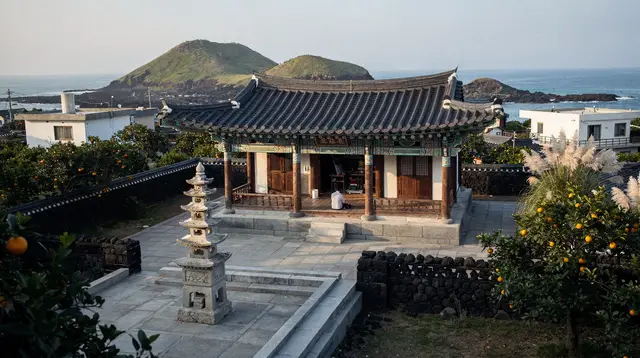
Jeju's temple meditation experiences pair sea-view Buddhist temples with guided sessions led by monks — here's how they work and what to expect.

Jeju Wellness Retreats
Jeju's wellness retreat scene mixes guided healing tours, small resort programs, and multi-activity days combining hiking, meditation, and spa time.

Jeju airport transfers
Comparing every way from Jeju Airport (CJU) to your hotel — limousine bus, city bus, taxi, Kakao T, and private transfer, with real prices.
Ready to book? Top tours for this guide
We earn a small commission if you book through GetYourGuide — at no extra cost to you. Every tour is hand-picked and verified.