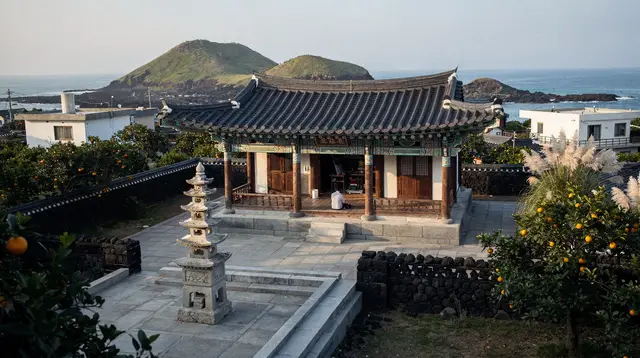
Temple Meditation in Jeju
Can visitors do temple meditation in Jeju without prior experience?
Yes — Jeju's temple meditation experiences are generally designed for visitors with no prior meditation background, led by a monk or temple guide who explains posture, breathing, and the format before the session begins. No Korean language or Buddhist background is required.
| Where | temples near Seogwipo, coastal views |
| Time needed | 1-2 hours |
| Cost | moderate, comparable to a mid-range guided activity |
| Experience needed | none — sessions are built for first-timers |
| Booking | recommended in advance, especially for a specific monk |
Jeju’s temple meditation experiences occupy a specific niche in the island’s wellness offerings: short, accessible sessions at working Buddhist temples, often with dramatic coastal views, led by an actual monk rather than a secularized wellness instructor. They’re a genuinely different kind of activity from a spa visit or a healing nature tour — quieter, more introspective, and rooted in an actual religious and cultural practice rather than manufactured for tourism.
What a session typically involves
Most visitor-oriented temple meditation sessions in Jeju run 1-2 hours and follow a similar structure: an introduction to basic seated meditation posture and breathing technique, a guided meditation period (often 20-40 minutes), and frequently a closing conversation or tea session with the leading monk. Some sessions incorporate walking meditation around the temple grounds, particularly at temples with striking coastal or garden settings, alternating between seated stillness and slow, deliberate movement.
The pace is genuinely slower than most Jeju activities — this isn’t designed to be squeezed between two other stops in a packed day. Visitors expecting a quick photo-op experience are often surprised by how much of the session is simply quiet, unstructured practice time rather than guided instruction throughout.
Do you need prior meditation experience?
No — these sessions are built for visitors with no background in meditation or Buddhism, and the introductory explanation covers what a first-timer needs to know about posture and breathing. That said, sitting relatively still for 20-40 minutes is a genuine physical and mental adjustment for people unaccustomed to it, and it’s worth going in with realistic expectations rather than assuming instant calm. Jeju: Meditation Above the Sea with a Head Monk is a specific example of this format — a session led directly by a temple’s head monk at a coastal location near Seogwipo, combining the meditation practice with the setting’s sea views.
Where these sessions happen
Several temples near Seogwipo host visitor-oriented meditation sessions, a natural fit given the area’s coastal cliffs and the way Buddhist temple architecture in this part of Jeju often takes advantage of ocean views. Availability and specific temple participation shift over time, so check current offerings rather than assuming a specific temple always runs sessions — some operate on a more occasional or seasonal basis than a fixed daily schedule.
What to wear and how to behave
These are active places of worship, not museum-style tourist attractions, and modest dress matters — shoulders and knees covered, nothing overly casual or revealing. Loose, comfortable clothing helps for the seated meditation posture itself. Photography rules vary by temple and by moment; ask before photographing during an active ceremony or the meditation session itself, and expect some areas to be off-limits to cameras entirely. Speaking quietly and moving deliberately around temple grounds is a basic courtesy that also happens to fit the meditative mood these sessions are trying to create.
How this differs from a mainland Korean templestay
Korea’s mainland temples are well known internationally for templestay programs — often overnight or multi-day immersive experiences including monastic schedules, meals, and multiple practice sessions. Jeju’s visitor meditation offerings are generally shorter and more focused: single sessions of a few hours rather than overnight commitments. This makes them considerably more accessible for visitors with limited time on the island, though it also means a less immersive, less comprehensive introduction to monastic life than a full templestay would provide. If a deeper multi-day experience specifically appeals, that’s more realistically found on the Korean mainland than on Jeju.
Temples as cultural sites beyond meditation
Even outside a formal meditation booking, several Jeju temples are worth visiting simply as cultural and architectural sites, similarly to Yakcheonsa Temple, which combines striking architecture with the same coastal setting that makes Seogwipo’s temples distinctive. If you’re building a broader culture-focused day, pairing a temple visit with stops covered in the Jeju museums guide or the haenyeo culture guide rounds out a fuller picture of the island’s cultural heritage beyond its natural scenery.
Combining temple meditation with the rest of a wellness-focused day
Temple meditation pairs naturally with other quieter, restorative activities rather than high-energy sightseeing. A visit to a nearby waterfall, a slow coastal walk, or a tea house afterward extends the reflective mood rather than jarring back into a packed itinerary immediately. See the Jeju wellness retreats guide and healing nature tourism guide for how to build a broader wellness-oriented day or trip around a temple session.
Cost and booking
Temple meditation sessions in Jeju are generally modestly priced compared to spa treatments or multi-stop day tours, reflecting their shorter duration and simpler format — expect a range roughly comparable to a mid-tier guided activity rather than a premium wellness retreat price point. Advance booking is recommended, particularly for sessions led by a specific, well-known monk, since group sizes tend to be kept small to preserve the quiet, personal atmosphere.
Buddhism’s place in Jeju’s cultural landscape
Buddhism has a long history on Jeju, though the island’s traditional folk religion — a distinct shamanistic tradition with its own pantheon of deities and rituals, separate in meaningful ways from mainland Korean shamanism — has historically coexisted alongside it rather than being fully displaced. Jeju’s temples reflect this layered religious history, and some incorporate elements or nearby shrines connected to local folk beliefs alongside standard Buddhist practice. Understanding this context adds depth to a temple visit beyond simply appreciating the architecture or the meditation session itself — you’re engaging with one thread of a genuinely distinct regional religious identity, not simply a generic “Korean Buddhist temple” experience interchangeable with any mainland equivalent.
Etiquette details worth knowing in advance
Beyond dress code, a few specific etiquette points matter at Jeju’s temples. Remove shoes before entering any indoor worship hall, and be prepared to sit on the floor rather than furniture during ceremonies or meditation sessions held indoors. If other visitors or practitioners are bowing or engaged in personal prayer nearby, keep a respectful distance and lower your voice further than you might think necessary. Many temples appreciate a small, voluntary donation, though this generally isn’t required for a booked meditation session that already includes a fee — ask your guide or the temple staff if you’re unsure what’s expected.
Cost breakdown
A typical single-session temple meditation experience bookable through tour platforms runs at a moderate price point — generally comparable to a mid-range guided cultural activity rather than a premium experience, reflecting the relatively simple format (no elaborate meals, transport, or multi-stop itinerary bundled in beyond the temple visit itself). Some experiences include light refreshments or tea as part of the closing portion of the session at no extra charge; confirm what’s included when booking if this matters to your planning.
Other temples beyond Seogwipo
While Seogwipo’s coastal temples are the most commonly featured in visitor-oriented meditation offerings, temples exist across the island, including near Jeju City and in more rural inland areas. These other locations are generally less set up for visitor meditation programs specifically, functioning more as active community places of worship without a formalized tourist-facing offering — worth visiting respectfully as a cultural stop, but less likely to have a bookable meditation session available in the way Seogwipo’s more visitor-oriented temples do.
Seasonal considerations for a temple visit
Spring and autumn generally offer the most comfortable conditions for temples with outdoor components — gardens, courtyards, or coastal viewpoints attached to the grounds — while summer heat and humidity can make an outdoor meditation component genuinely uncomfortable, particularly during the peak of midday. Winter cold matters less for indoor sessions but can affect any outdoor walking meditation portions, so dressing in layers regardless of season is sensible given how much time you might spend seated or standing outdoors depending on the specific temple’s format. Some temples adjust their visitor programming seasonally, occasionally pausing certain outdoor elements during typhoon season or extreme winter weather — check current scheduling if you’re planning around a specific date.
What makes Jeju’s coastal temples distinctive
Jeju’s temple architecture, particularly near Seogwipo, often takes deliberate advantage of the coastal setting in ways that differ from more inland or urban Korean temples — buildings and meditation platforms oriented to frame ocean views, with the sound of waves forming a genuine backdrop to seated meditation practice. This coastal integration is part of what makes the Jeju temple meditation experience feel distinct from a generic templestay elsewhere in the country; the setting itself becomes part of the practice rather than an incidental backdrop, and many visitors specifically cite the combination of the meditation format with the sea view as the most memorable part of the experience.
Combining a temple visit with reflection time afterward
Because these sessions tend to leave visitors in a genuinely different, quieter headspace than typical sightseeing, building in some unstructured time immediately afterward — rather than rushing straight into the next scheduled activity — lets the experience settle rather than being immediately overwritten by a jarring shift back into standard tourism pace. A short walk along the coast, a quiet coffee, or simply sitting with the experience for a while before moving on tends to leave visitors with a more lasting sense of the session’s value than treating it as one more item checked off an itinerary.
Booking and group size considerations
Sessions led by a specific head monk or featuring a particularly well-known temple often keep group sizes intentionally small — sometimes under ten participants — to preserve the personal, quiet atmosphere central to the experience. This means popular sessions can book out ahead of your intended date, particularly during peak travel season, and booking further in advance than you might for a standard sightseeing tour is a reasonable precaution if a specific session appeals to you. Larger, more general meditation offerings at bigger temples may have more flexible group sizes and availability.
Why some visitors find this the highlight of their trip
Among the wide range of activities available on Jeju, a genuinely well-run temple meditation session tends to stand out precisely because it asks something different of visitors than most tourism does — stillness rather than movement, quiet reflection rather than sightseeing and photography. Visitors who approach it with genuine openness, rather than treating it as one more box to check, often describe it afterward as an unexpectedly meaningful part of their trip, a contrast to the more transactional pace of typical vacation activities. This isn’t guaranteed for everyone, but it’s a common enough response to be worth taking the experience seriously rather than squeezing it in as an afterthought.
Comparing Jeju’s offering to a full retreat commitment
If, after trying a single temple meditation session, you find the practice genuinely resonates, know that Jeju’s format is intentionally a lighter introduction rather than the endpoint of what’s available in Korea more broadly. Mainland templestay programs offer a considerably deeper immersion — full monastic schedules, multiple daily practice sessions, communal vegetarian meals, and an overnight or multi-night stay within the temple grounds itself. Treating a Jeju session as a genuine but limited taste of this broader tradition, rather than assuming it represents the full depth of what Korean Buddhist meditation practice can offer, sets realistic expectations for anyone considering a deeper follow-up experience on a future trip to the mainland.
Final practical notes
Book ahead if a specific temple or monk-led session appeals to you, dress modestly, arrive with genuine openness rather than skepticism about the format, and resist the urge to check your phone during the session even if it feels awkward at first — the whole value of the experience comes from sustained, uninterrupted quiet, which a mid-session phone check undermines more than most participants initially realize.
Temple meditation as part of a slower Seogwipo stay
Because Seogwipo already carries a reputation as Jeju’s more relaxed, nature-oriented base compared to Jeju City, a temple meditation session fits naturally into a broader slow-paced stay there — paired with a waterfall visit, a quiet walk, or simply unstructured time rather than squeezed between two busier attractions. Visitors who structure at least part of their Seogwipo stay around this kind of unhurried, reflective pace tend to report a more cohesive, satisfying overall experience than those who treat the temple session as an isolated activity disconnected from the rest of their day’s pace.
Rounding out a wellness day
After a temple session, some visitors continue the slower pace with a jjimjilbang or spa visit before returning to more standard sightseeing the following day. If you’re staying in the Jungmun resort area rather than central Seogwipo, factor in the extra travel time to reach the coastal temples covered here, and see the first-time planning guide for how to balance a wellness-focused day against the rest of a broader itinerary.
Bringing the practice home
Some visitors find that a single temple meditation session on Jeju sparks a longer-term interest in meditation practice back home, even without continuing in a specifically Buddhist framework. The basic posture and breathing techniques introduced during a Jeju session translate directly to secular meditation apps or local meditation groups, meaning the experience can function as a genuine, low-pressure introduction to a practice with benefits well beyond the single afternoon spent at the temple itself — a meaningful souvenir in its own right, distinct from anything physical you might otherwise bring home from a trip.
A quieter alternative if temples aren’t your priority
If a formal meditation session doesn’t appeal but the general slower pace does, the healing nature tourism guide covers nature-based alternatives that deliver a similar restorative effect without the specifically religious or spiritual framing a temple visit carries.
A note on photography during your visit
Given the contemplative nature of these sessions, resist the urge to photograph continuously throughout — most temples are comfortable with a few respectful photos of the grounds before or after the meditation itself, but photographing during the actual seated practice, particularly of other participants or the monk leading the session, is generally discouraged and can disrupt the atmosphere for everyone present. Ask your guide what’s appropriate before assuming, and prioritize genuinely being present over documenting the experience for social media.
The bottom line
A Jeju temple meditation session offers a genuine, accessible introduction to a real spiritual practice set against some of the island’s most striking coastal scenery, without requiring prior experience or a significant time commitment. Approached with openness rather than as a quick photo-op activity, it’s one of the more distinctive, memorable experiences available on the island.
Frequently asked questions about temple meditation in Jeju
Do I need to be Buddhist to join a temple meditation session?
No — these sessions are open to visitors of any or no religious background and are typically framed as a cultural and wellness experience rather than a religious requirement.
How long does a typical session last?
Sessions generally run 1-2 hours, including an introduction to posture and breathing, guided meditation, and often a short talk or tea with the monk afterward.
What should I wear to a temple meditation session?
Modest, comfortable clothing that covers shoulders and knees, since these are active places of worship, not just tourist sites. Loose clothing helps for seated meditation postures.
Is temple meditation in Jeju different from a templestay elsewhere in Korea?
Jeju’s offerings are generally shorter, single-session experiences rather than the overnight or multi-day templestay programs found at some mainland temples, making them more accessible for visitors with limited time.
Which temples offer meditation experiences for visitors?
Several temples near Seogwipo run visitor-oriented sessions, often with sea views given the coastal geography of that part of the island; specific temple availability shifts, so check current offerings before planning around one location.
Is English available during the session?
Many visitor-oriented sessions include English explanation or a bilingual guide, particularly those bookable through tour platforms; confirm language support before booking if this matters to you.
The role of tea in a session’s closing portion
The closing tea or brief conversation with the leading monk, mentioned earlier as a common structural element, deserves a bit more attention than it usually gets in a quick overview. This isn’t a scripted, transactional add-on — it’s often the part of the session where participants can ask genuine questions about the practice, the temple’s history, or Buddhism more broadly, and monks leading visitor-oriented sessions are generally accustomed to fielding a wide range of questions from complete beginners. Approaching this closing portion with genuine curiosity, rather than rushing to leave once the formal meditation ends, often becomes the most personally memorable part of the whole experience for participants who engage with it.
What surprises first-time participants most
Beyond the physical adjustment of sitting still, many first-time participants are surprised by how much of the session’s value comes from the setting itself rather than the technique alone — the sound of waves against the coast, filtered through an open temple hall, does real work in sustaining focus that a purely indoor, urban meditation room can’t replicate. Participants who’ve tried meditation apps or secular classes at home sometimes describe the coastal temple setting as making the practice feel more natural or easier to sustain than expected, even without a deeper personal connection to Buddhism specifically. This isn’t universal — some visitors find the religious framing distracting rather than additive — but it’s common enough to be worth mentioning as a realistic expectation going in.
Group size and the personal nature of these sessions
Because visitor-oriented sessions, particularly those led by a specific head monk, tend to cap group sizes intentionally small, the experience often feels closer to a personal encounter than a typical tour-group activity. This has practical implications for booking: smaller capacity means sessions can sell out during peak travel periods, and it also means the atmosphere stays genuinely quiet and unhurried rather than diluted by a large crowd moving through on a fixed schedule. Larger, more general temple offerings without a specific named monk leading the session tend to have more flexible capacity, a reasonable fallback if your preferred small-group session is already booked.
How temple meditation compares to Jeju’s other slow-paced activities
Temple meditation sits at the quieter end of Jeju’s wellness spectrum, more introspective and structured than a jjimjilbang visit’s communal relaxation, and more spiritually grounded than a general guided healing tour’s nature-focused pacing. None of these three is objectively better — they serve different moods, and a visitor building a genuinely wellness-focused stretch of a Jeju trip often benefits from sampling more than one rather than assuming a single format covers the full range of what “slow travel” on Jeju can offer.
Choosing between a solo booking and a small group
Temple meditation sessions are bookable both as an individual joining a small mixed group and, at some temples, as a private session for a couple or family. A shared small-group session is typically the more affordable and more widely available option, and the collective quiet of meditating alongside a handful of strangers is, for many participants, part of the experience’s appeal rather than a drawback. A private booking suits travelers specifically wanting a fully personalized pace or a session timed around a particular schedule constraint, generally at a higher price point given the reduced group size subsidizing the monk’s time.
Planning temple meditation into a Seogwipo-based day
Given that most visitor-oriented sessions cluster near Seogwipo, a temple meditation booking works most efficiently as part of a day already based in or near that part of the island — combined with a waterfall visit or a quiet coastal walk either before or after the session, rather than requiring a special separate trip from elsewhere on Jeju. Visitors staying in Jungmun or central Jeju City should factor in the extra drive time to reach Seogwipo’s coastal temples.
Where to go before or after your session
A quiet session leaves room for the rest of the day, and the south coast offers plenty of gentle options. If you would rather not drive, a guided day tour of the southern UNESCO-listed sights can fill the hours around a morning or late-afternoon booking, though it works best when the meditation is not squeezed in between two tight tour stops. For a slower option on foot, the Seogwipo walking tour and the Jungmun culture walk keep the reflective mood going without much planning.
A few nearby ideas to weave in around the session:
- The Jusangjeolli cliff and the Yongmeori coast for sea views that echo the temple setting.
- The Jeongbang waterfall for a short, calm stop beside the water.
- A tea break at the Osulloc tea fields, a natural continuation of the closing tea with the monk.
- The haenyeo museum for the island’s other living tradition.
- The Olle trail overview if you want a longer coastal walk afterward.
If you are still deciding how many days to give the south of the island, the how many days in Jeju guide and the three-day itinerary show where a quiet half-day can fit. Travelers arriving without a car can read the Jeju bus guide and the Kakao T taxi guide to plan the trip to and from a coastal temple. For a broader look at where to base yourself, see where to stay in Jeju.
Related guides

Healing Nature Tourism in Jeju
'Healing tourism' is a specific, officially promoted category in Jeju — nature immersion framed as therapeutic, drawing on forest and coastal environments.

Jeju Spa & Onsen Guide
Jeju has no natural hot springs, but jjimjilbang bathhouses and resort spas fill the gap — here's what's actually available on the island.

Jeju Wellness Retreats
Jeju's wellness retreat scene mixes guided healing tours, small resort programs, and multi-activity days combining hiking, meditation, and spa time.

Yakcheonsa Temple
Yakcheonsa is one of Asia's largest Buddhist temple halls, near Jungmun in Seogwipo — hours, etiquette, and how to combine it with a temple stay.
Ready to book? Top tours for this guide
We earn a small commission if you book through GetYourGuide — at no extra cost to you. Every tour is hand-picked and verified.