
Jeju Wellness Retreats
What does a Jeju wellness retreat actually involve?
Most Jeju wellness offerings aren't multi-day residential retreats in the Western sense — they're single-day or half-day guided healing tours combining light hiking, nature immersion, and sometimes temple or cultural elements, plus a smaller number of resort programs bundling spa access with wellness activities.
| Dominant format | single-day guided healing tours, not multi-day retreats |
| Physical demand | generally low-to-moderate |
| Cost | mid-range, comparable to other small-group day tours |
| Best season | spring or autumn for outdoor components |
| Best complement | jjimjilbang or spa on a separate day |
“Wellness retreat” conjures images of multi-day residential programs — silent mornings, structured meal plans, a fixed schedule of yoga and treatments. Jeju’s actual wellness offerings mostly don’t look like that. What’s genuinely available and widely bookable is a category of guided “healing tours” — single-day or half-day experiences combining light nature immersion, cultural stops, and sometimes temple or meditation elements — alongside a smaller number of more traditional multi-day programs at boutique accommodations.
The dominant format: guided healing tours
Jeju’s most accessible wellness offerings are day tours explicitly marketed around a “healing” theme, typically combining a gentle walk or short hike through scenic natural terrain with stops at culturally or spiritually significant sites. Jeju South: Small Group Healing Tour w/Mt.Halla & Olle Trail is a representative example — a small-group day combining lower-elevation Hallasan scenery with a section of the Olle Trail’s coastal walking network, pitched at a gentler pace than a full hiking-focused tour. These tours prioritize nature immersion and unhurried pacing over covering the maximum number of attractions in a day, which is the key distinction from a standard sightseeing tour.
Regional variants follow the same slow-paced logic. If you’re staying on the other side of the island, a western healing day built around caves and the coast or an eastern day that includes a haenyeo diver show lets you keep the same unhurried format without crossing the island. For the cultural background behind that diver show, see the haenyeo culture guide.
What makes these “wellness” rather than standard sightseeing
The framing difference matters: a standard day tour optimizes for seeing the most sites; a healing tour optimizes for a slower pace, smaller groups, and time built in for quiet reflection at scenic points rather than a checklist approach. In practice this often means fewer total stops, more walking time relative to driving time, and guides who build in unstructured moments rather than a tightly scripted itinerary. Whether this distinction feels meaningful to you personally is worth considering before booking — if you’d rather see more sites in a day, a standard tour may suit you better than a wellness-branded one.
Multi-day residential options
A smaller number of boutique guesthouses and wellness-focused accommodations on Jeju run more traditional multi-day retreat programs, sometimes incorporating yoga, meditation, and structured nature time across several days rather than a single outing. These are less standardized and less widely bookable through mainstream platforms than the single-day healing tours, and availability and program content vary considerably by operator — research a specific property directly if a residential retreat format is what you’re after, rather than assuming it’s a common, easily comparable category like hotel bookings.
If the quiet, reflective side is what draws you, a guided meditation session at a temple with the head monk is the most direct bookable option, and it pairs naturally with the Yakcheonsa temple guide if you want to see another temple setting on the same trip.
Related nature and hiking options
For visitors who’d rather build their own gentler nature day instead of booking a branded healing tour, the best oreums guide and Olle Trail overview both offer independently walkable, low-commitment alternatives that deliver a similar restorative pace without a guided booking.
Building your own wellness day (or trip)
Given how the market is structured, many visitors effectively build their own wellness itinerary by combining separately bookable elements: a guided healing tour or gentle hike one day, a temple meditation session another, and a jjimjilbang or resort spa visit to round things out. This a-la-carte approach is arguably more flexible than committing to a single multi-day program, and it lets you scale wellness time up or down around the rest of a Jeju trip rather than dedicating an entire visit to it.
Who these experiences suit best
Guided healing tours suit visitors who want genuine nature time without the planning burden or physical demands of independent hiking — no need to navigate trailhead logistics or worry about reservation systems, since the tour handles all of that. They’re a good fit for less experienced hikers, visitors traveling with family members of varying fitness levels, or anyone specifically seeking a calmer, less rushed day than typical sightseeing itineraries deliver.
Seasonal considerations
Spring and autumn offer the most comfortable conditions for the outdoor nature components most healing tours emphasize — mild temperatures, good light, and (in spring) flowering landscapes that add to the restorative mood. Summer heat and humidity can undercut the “relaxing” framing of an outdoor-heavy tour, and winter cold adds its own friction, though indoor elements like temple visits or spa time work regardless of season. See the Jeju month-by-month guide for broader seasonal planning.
Cost expectations
Guided healing tours are generally priced comparably to other small-group day tours on Jeju — mid-range relative to a basic bus tour and a fully private luxury excursion. Multi-day residential wellness programs, where they exist, run at a meaningfully higher price point given the accommodation and structured programming involved, closer to a boutique retreat stay than a day activity.
The rise of wellness tourism on Jeju
Wellness-framed tourism has grown noticeably across South Korea over the past decade, and Jeju — already positioned as the country’s premier nature-and-relaxation destination relative to Seoul’s urban intensity — has benefited disproportionately from this trend. Korean domestic tourists have long treated Jeju partly as a retreat destination from mainland city life, and international marketing has increasingly picked up on this framing, positioning the island’s natural landscape and slower pace as a distinct alternative to more activity-packed travel itineraries elsewhere in Asia. This context helps explain why “wellness” and “healing” language appears so frequently across Jeju’s tourism marketing, well beyond the specific guided tours covered above.
Domestic vs international visitor expectations
Korean domestic visitors booking a Jeju wellness experience often bring different reference points than international visitors — familiarity with jjimjilbang culture, prior exposure to Korean concepts of forest bathing and healing forests, and sometimes higher expectations around specific program structure given more developed domestic wellness tourism marketing. International visitors, by contrast, more often encounter these offerings for the first time through platforms bundling wellness-branded tours alongside standard sightseeing options, without necessarily understanding the broader cultural context. Neither audience is wrong to enjoy these experiences, but understanding this gap helps set realistic expectations about how “developed” or standardized a specific offering will feel compared to Western wellness retreat norms.
Sample multi-day wellness itinerary
A realistic multi-day wellness-focused stretch of a Jeju trip might combine a guided healing tour on one day, an independent, unhurried walk along an Olle Trail section or accessible oreum the next, a temple meditation session on a third day, and a jjimjilbang or resort spa visit to close things out — spread across your trip rather than crammed into consecutive days, since the whole point of this style of travel is a slower pace rather than an efficiently packed wellness itinerary that defeats its own purpose.
Seasonal timing for a wellness-focused trip
Spring and autumn are widely considered the best seasons for wellness-oriented travel to Jeju, given the comfortable temperatures that make outdoor components of healing tours genuinely pleasant rather than a source of discomfort to endure. Spring specifically adds flowering landscapes that enhance the restorative framing many tours lean on, while autumn’s clear air and mild temperatures make extended outdoor time comfortable well into the afternoon. Summer’s heat and humidity work against the intended calming effect of outdoor-heavy itineraries, though indoor components — temple visits, spa time — remain viable year-round. Winter, while quieter and cheaper, requires more deliberate layering for any outdoor healing tour component, and shorter daylight hours compress how much can reasonably be scheduled into a single day.
What to realistically budget for a wellness-focused day or trip
A single guided healing tour typically costs in a similar range to other small-group day tours on Jeju — moderate relative to a basic large-group bus tour and a fully private, luxury excursion. Layering in a temple meditation session, a spa or jjimjilbang visit, and perhaps one guided nature tour across a multi-day trip adds up to a meaningful but not extravagant wellness-focused budget, generally comparable to what you’d spend on an equivalent number of standard sightseeing day tours. The main added cost of a wellness-focused approach versus a packed sightseeing itinerary isn’t necessarily higher per-activity pricing — it’s simply doing fewer things per day, which some travelers experience as better value precisely because of the calmer pace, even if the per-day activity count is lower.
Setting honest expectations before booking
If you’re coming from a background with strong expectations of Western spa-resort-style wellness retreats — structured daily schedules, curated meal plans, a dedicated wellness campus — Jeju’s offerings will likely feel more improvisational and a-la-carte than that model suggests. This isn’t a shortfall so much as a different tradition: Korean wellness tourism, and Jeju’s version of it specifically, leans more on nature immersion and cultural experience than on the spa-resort model more common in parts of Southeast Asia or the United States. Visitors who adjust their expectations accordingly tend to report a more satisfying experience than those expecting a direct equivalent to a dedicated wellness resort stay.
Choosing between a group tour and a private arrangement
Most guided healing tours run as small-group experiences, generally a more affordable option than arranging a fully private version of the same itinerary. For visitors specifically prioritizing a quieter, more personalized pace — or traveling with a group that wants full control over timing and stops — a private version of a similar nature-and-culture itinerary can often be arranged directly with local guides or through platforms offering customizable private tours, at a correspondingly higher price. Neither option is inherently better; it depends on whether the modest cost savings and social element of a small group, or the flexibility and privacy of a custom arrangement, matters more for your specific trip.
Recovery-focused wellness after strenuous activity
A specific and genuinely practical use of Jeju’s wellness offerings is post-hike recovery — booking a spa or jjimjilbang visit, or a gentler healing tour, on the day following a demanding activity like a Hallasan summit attempt. The combination of heat, gentle movement, and rest genuinely helps with the muscle soreness and fatigue that follows a long mountain hike, and structuring your itinerary with this kind of recovery day built in — rather than stacking demanding activities back to back — tends to produce a more enjoyable overall trip, particularly for visitors combining serious hiking with a broader wellness interest.
A realistic plan for a wellness-focused Jeju trip
For a trip with a genuine wellness focus, consider structuring roughly a third of your days around slower-paced activities — a guided healing tour, a temple meditation session, independent time on a quiet trail, and a spa or jjimjilbang visit — while reserving the remaining days for more standard sightseeing and cultural exploration. This balanced approach avoids both the trap of an entirely rushed, checklist-driven itinerary and the opposite trap of an entire trip so slow-paced that you miss out on Jeju’s broader range of genuinely worthwhile sights and activities.
Final practical notes
Book guided healing tours and any specific meditation or spa appointments ahead of your trip where possible, particularly during peak season when small-group tour capacity fills quickly. Keep your expectations calibrated to what’s genuinely available — a-la-carte guided experiences and independent nature time rather than a fully packaged residential retreat program — and you’re likely to find real value in Jeju’s wellness offerings regardless of how the marketing language around them is framed.
Where these tours typically operate
The healing nature tourism guide covers the broader concept and specific tour examples in more depth, including options based in both east Jeju and west Jeju, so check which region’s itinerary better matches where you’re already spending time on your trip.
Wellness retreats for different traveler profiles
A solo traveler seeking quiet reflection, a couple looking for a shared slow-paced day away from a packed group itinerary, and a family wanting a gentler activity option for members with different energy levels or fitness can all find something suitable within Jeju’s wellness offerings, though the specific format worth choosing differs by group. Solo travelers often get the most out of a temple meditation session’s individually reflective format; couples frequently gravitate toward a shared guided healing tour or spa visit; families tend to do best with the gentler, more broadly paced healing tours rather than anything requiring sustained stillness or silence that younger children might struggle with.
What long-term visitors and repeat guests suggest
Visitors who’ve returned to Jeju multiple times often suggest treating wellness activities as a rotating element across trips rather than trying to sample everything on a single visit — a temple session on one trip, a different guided healing tour on the next, gradually building a fuller picture of what the island’s wellness scene offers without overloading any single itinerary. This mirrors the broader advice given throughout this guide: Jeju’s wellness offerings work best as a flexible, a-la-carte complement to a trip, not as a rigid program to complete in full on a first visit.
A note on managing expectations around group tour pacing
Even within the “healing tour” category, pacing varies by operator, and a tour marketed as gentle can still cover meaningful ground if the itinerary is ambitious. If a genuinely unhurried pace is your top priority, ask specific questions before booking — how many stops, how much walking, how much unstructured time is built in — rather than assuming the “healing” or “wellness” label alone guarantees the slow pace you’re picturing.
Fitting wellness into your overall trip length
If you’re mapping out how many days a wellness-inclusive trip actually needs, see the how many days in Jeju guide for a broader sense of pacing, and the Jeju budget guide for how these activities fit into overall trip costs alongside accommodation, food, and transport.
A closing thought
The most successful wellness-focused Jeju trips tend to be the ones where the traveler stays flexible about format rather than committing rigidly to a single vision of what a “retreat” should look like — sometimes that means a booked healing tour, sometimes an unplanned hour on a quiet beach, and sometimes simply an afternoon with nothing scheduled at all.
The bottom line
Jeju’s wellness scene is genuinely worthwhile but structurally different from a Western residential retreat model — expect a-la-carte guided experiences, spa and bathhouse culture, and temple offerings rather than a single all-inclusive wellness program. Approached with those realistic expectations, it’s a meaningful, easily customizable addition to almost any Jeju itinerary.
Frequently asked questions about Jeju wellness retreats
Are there multi-day residential wellness retreats on Jeju?
A limited number exist, mostly through boutique accommodations or wellness-focused guesthouses, but the more common and widely bookable format is a single-day guided healing tour rather than a full residential retreat program.
What’s included in a typical guided healing tour?
Usually a mix of light-to-moderate walking or hiking through natural scenery (such as Hallasan’s lower trails or coastal Olle Trail sections), stops at scenic or culturally significant sites, and sometimes a cultural element like a haenyeo demonstration.
Are these tours physically demanding?
Generally low-to-moderate — “healing tour” format prioritizes gentle nature immersion over strenuous hiking, making them accessible to visitors who want wellness benefits without a demanding physical challenge.
Can I combine a wellness retreat with a spa visit?
Yes — many visitors pair a guided healing tour with a separate spa or jjimjilbang visit on another day, rather than expecting a single tour to bundle both; check the jjimjilbang guide and spa guide for that half of the plan.
What’s the best season for a Jeju wellness trip?
Spring and autumn offer the most comfortable temperatures for the nature-based components of most wellness tours; summer heat and winter cold both add friction to the outdoor elements, though indoor spa and meditation components work year-round.
Is Korean language needed for these experiences?
No — tours bookable through international platforms typically include English-speaking guides or bilingual support; confirm language availability for any specific booking.
Traveling solo versus with a group for wellness activities
Solo travelers often find Jeju’s wellness offerings a particularly good fit, since a temple meditation session or a quiet trail walk doesn’t require coordinating pace or preferences with travel companions the way group sightseeing sometimes does. Couples and families can still access the same range of activities, though a guided healing tour’s small-group, shared-pace format generally works better for groups than a highly individual, contemplative activity like temple meditation, which some family members may find harder to sustain than others depending on age and temperament.
Vetting a specific healing tour before booking
Because “healing” and “wellness” branding is applied loosely across Jeju’s tour marketplace, it’s worth reading a specific tour’s actual itinerary closely rather than booking on the strength of the label alone. Useful questions to check before booking: how many total stops, what proportion of the day is walking versus driving, and whether the description mentions any unstructured or quiet time built in. A tour with eight stops crammed into a single day is a standard sightseeing tour with wellness branding attached, not a genuinely slower-paced healing experience, regardless of how it’s marketed.
Combining wellness activities with Jeju’s food culture
A wellness-focused day doesn’t need to mean restrictive eating — pairing a guided healing tour or temple session with a relaxed meal afterward, rather than a rushed one, extends the day’s unhurried mood naturally. Light, fresh options like the seafood covered in the abalone and seafood guide or a citrus-forward dessert stop pair well with the generally calmer pace of a wellness day, though there’s no strict rule here — the point is simply matching the meal’s pace to the rest of the day rather than squeezing in a rushed fast-food stop between wellness activities.
Who tends to skip Jeju’s wellness offerings, and why that’s reasonable
Visitors on a tight, sightseeing-dense first trip often reasonably skip the wellness category entirely, prioritizing headline nature sights and cultural landmarks over a dedicated slow day. This is a legitimate choice, not a missed opportunity — Jeju’s wellness offerings work best as a deliberate addition for visitors who specifically want that pacing, or as a component of a longer, multi-day trip with room to spare, rather than a mandatory box to check on every visit regardless of trip length or travel style.
A sample two-day wellness pairing
For visitors with limited time who still want a genuine taste of Jeju’s wellness scene, a workable two-day pairing combines a guided healing tour on the first day with a temple meditation session and jjimjilbang visit on the second — enough variety to sample the format’s range without dedicating an entire multi-day trip to wellness alone. This kind of compressed pairing works particularly well for visitors splitting their time between wellness activities and Jeju’s more standard sightseeing, rather than committing a full trip to one or the other.
Budgeting extra time for weather-dependent wellness activities
Outdoor components of guided healing tours are, like most of Jeju’s outdoor activities, weather-dependent, and a rainy or windy forecast can meaningfully reduce a session’s restorative quality even if the tour technically still runs. Checking the forecast a day or two ahead and, where possible, keeping some flexibility in your booking dates for weather-sensitive wellness activities produces a noticeably better experience than committing to a fixed date regardless of conditions.
How wellness tourism differs from Jeju’s headline nature sights
It’s worth being direct about where wellness-branded offerings sit relative to Jeju’s must-see nature attractions: a guided healing tour is a genuinely pleasant, restorative activity, but it isn’t a substitute for seeing Seongsan Ilchulbong or hiking Hallasan if those are on your list. Visitors with limited days should sequence wellness activities around, rather than instead of, the island’s headline sights, treating the wellness category as a genuine but supplementary layer to a broader Jeju itinerary rather than a replacement for it.
Related guides

Healing Nature Tourism in Jeju
'Healing tourism' is a specific, officially promoted category in Jeju — nature immersion framed as therapeutic, drawing on forest and coastal environments.

Jeju Spa & Onsen Guide
Jeju has no natural hot springs, but jjimjilbang bathhouses and resort spas fill the gap — here's what's actually available on the island.
Temple Meditation in Jeju
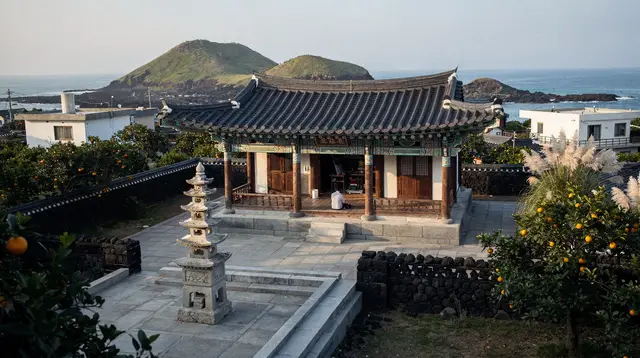
Jeju's temple meditation experiences pair sea-view Buddhist temples with guided sessions led by monks — here's how they work and what to expect.

Jeju airport transfers
Comparing every way from Jeju Airport (CJU) to your hotel — limousine bus, city bus, taxi, Kakao T, and private transfer, with real prices.
Ready to book? Top tours for this guide
We earn a small commission if you book through GetYourGuide — at no extra cost to you. Every tour is hand-picked and verified.