
Best Oreums to Hike in Jeju
What is an oreum?
A parasitic volcanic cone — a smaller eruption point formed on the flanks of Hallasan or independently across the island. Jeju has more than 360 of them, ranging from quick 20-minute grassy climbs to longer forested crater hikes, most offering panoramic views without Hallasan's permit system or distance.
Jeju has more than 360 oreums — parasitic volcanic cones formed by smaller eruption points scattered across the island, many on Hallasan’s flanks and many entirely independent of it. For visitors who want panoramic views and genuine volcanic landscape without Hallasan’s reservation system, distance, or full-day time commitment, oreums are the island’s most underrated hiking category, and picking the right one for your time budget and interest matters more than most first-time visitors realize.
| Where | Scattered island-wide — 360+ cones, most outside town centers |
| Cost | Free for the great majority; no reservation system |
| Time needed | 20 minutes (quick climbs) to 2.5 hours (Geumun-oreum) |
| Getting there | Rental car for most; a handful walkable from towns |
| Best time | Spring/autumn for comfort; early morning or evening in summer |
What actually varies between oreums
“Oreum” covers a huge range of hikes in practice. Some are barely more than a grassy hill with a short paved or dirt path to a summit ridge, climbable in 20 minutes. Others, like Geumun-oreum, have dense forested interiors and trails that take over two hours. Some sit right beside beaches or towns and require no transport planning; others are remote enough to need a rental car and careful route-finding. The common thread is the volcanic origin and the payoff — nearly all oreums deliver some form of panoramic view, whether over farmland, coastline, or (in the case of coastal cones like Seongsan Ilchulbong) the ocean itself.
Quick climbs (20-40 minutes)
Saebyeol Oreum, near the island’s center-east, is a commonly cited example of the quick, grassy-cone type: a short, well-worn path to an open summit with wide views, doable in under half an hour for most visitors. Many similar short oreums exist near towns across the island — a small hill near Hamdeok Beach, for instance, offers a comparable quick climb-and-view experience with essentially no planning required beyond showing up. These are the oreums worth adding almost casually to a day that already has other plans, since the time investment is minimal.
Sunrise hikes
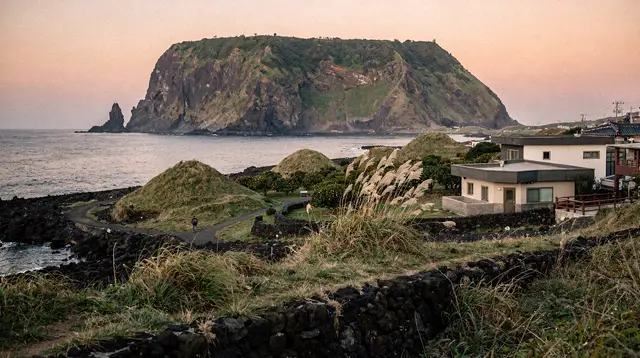
Seongsan Ilchulbong, known as Sunrise Peak, is Jeju’s most famous oreum specifically because of its sunrise appeal — a coastal volcanic tuff cone with a crater rim trail timed by many visitors to catch first light over the ocean. It’s also one of the busier hikes on the island given that fame, so expect crowds at peak sunrise times, particularly in high season. Jeju: UNESCO Sites & Sunrise Peak Hiking Small Group Tour covers this hike with transport included, useful for hitting an early sunrise start without arranging your own pre-dawn logistics. Full detail is in the Seongsan Ilchulbong sunrise hike guide.
Longer, more substantial hikes
Geumun-oreum stands apart as a longer, more ecologically significant climb — a forested UNESCO Geopark crater near Gujwa that fed the nearby Manjanggul lava tube system, with a trail running 1.5-2.5 hours rather than the quick-climb norm. Jeju: Geumun-oreum Volcanic Crater Hiking is a guided option that also handles the site’s occasional access restrictions. See the Geumun-oreum guide for the full breakdown.
Comparing oreum types at a glance
| Type | Example | Time | Best for |
|---|---|---|---|
| Quick grassy climb | Saebyeol Oreum | 20-30 min | Casual add-on, minimal planning |
| Sunrise coastal cone | Seongsan Ilchulbong | ~1-1.5 hrs round trip | Sunrise photography, iconic view |
| Longer forested crater | Geumun-oreum | 1.5-2.5 hrs | Ecology, UNESCO Geopark interest |
| Double-crater/photogenic | Yongnuni Oreum | ~30-45 min | Photographers, distinctive silhouette |
Oreums vs Hallasan
The practical appeal of oreums relative to Hallasan is straightforward: no reservation system, no gate cutoff times, generally shorter distances, and — for most oreums — no need for the technical hiking gear that Hallasan’s rockier summit trails demand. What oreums don’t offer is Hallasan’s scale: the highest oreums top out well below Hallasan’s 1,947m summit, and none delivers the specific crater-lake payoff of Baengnokdam. Think of oreum hiking as a complementary activity to a Hallasan trip, not a substitute for it — the complete Hallasan hiking guide covers that separate, larger undertaking.
Combining oreum hikes with the Olle Trail
Several Olle Trail routes pass near or intersect with oreums, making it possible to combine a coastal walk with a short side-climb for an elevated view over the same stretch of coastline you’ve been walking at sea level. The Olle Trail overview covers the broader 27-route network if you’re planning a day that mixes coastal walking with an oreum detour.
Best season for oreum hiking
Spring and autumn offer the most comfortable temperatures across the board, with autumn adding foliage interest to the more forested oreums and spring bringing wildflowers to the grassier ones. Summer heat is a genuine factor on exposed, shade-free grassy cones — many oreum summits have essentially no tree cover, so midday climbs in July and August can be uncomfortably hot despite the short duration. Winter oreum hikes are generally still doable and much quieter, though wind at exposed summits can be significant. See the Jeju month-by-month guide for detailed seasonal planning.
What to bring
For the quick, grassy climbs, normal walking shoes and sun protection are usually sufficient given the short duration and minimal technical terrain. For longer or forested oreums like Geumun-oreum, treat the packing list more like a proper hike — sturdier shoes, more water, and time buffer. The Jeju hiking gear and safety guide covers a complete seasonal list scaled to hike length.
Getting to oreums without frustration
Most oreums sit outside town centers with limited or no direct bus service, which makes a rental car or taxi the practical choice for visiting more than one or two in a day. A handful — like the small oreum beside Hamdeok Beach — are close enough to a town to walk to directly, but these are the exception. If you’re relying on public transport for your Jeju trip, prioritize oreums near towns you’re already visiting rather than trying to chase the most remote or scenic options. See the car rental guide and bus guide for transport planning.
More oreums worth knowing about
Beyond the handful covered in detail above, several other oreums come up regularly in local recommendations. Yongnuni Oreum, near the island’s east-central area, is known for a distinctive double-crater shape and is a favorite among photographers for its layered silhouette against the sky. Dangsanbong, a coastal oreum near the western shore, combines a short climb with genuine ocean views and is close enough to several west Jeju towns to add easily to a coastal day. Abu Oreum, a broad, gently sloped cone near the island’s center, has a wide, grassy crater rim walk that’s popular for its panoramic 360-degree views without a particularly steep ascent. None of these require the planning or reservation system that Hallasan does, and all reward the kind of casual, low-commitment exploration that makes oreum hiking such a flexible category.
Cultural significance of oreums
Beyond their geological interest, oreums hold genuine cultural weight in traditional Jeju life — many were historically used for grazing livestock, some carry shamanistic significance tied to Jeju’s distinct folk religious traditions (separate from mainland Korean Buddhism and shamanism in meaningful ways), and place names across the island often reference specific oreums as geographic landmarks predating modern tourism infrastructure. Dol hareubang (stone grandfather statues) and other traditional markers sometimes appear near oreum bases, a reminder that these landscape features were part of daily island life long before they became a hiking category for visitors.
Photography tips for oreum hikes
Golden hour — shortly after sunrise or before sunset — tends to deliver the most striking light for oreum photography, emphasizing the grassy texture and rolling silhouette that distinguishes these landforms from more dramatic mountain scenery. Wide-angle shots from the summit capturing multiple oreums in the same frame are a distinctly Jeju composition, since the island’s oreum density means several are often visible from any single vantage point. Autumn’s warm grass color and clear air tend to photograph especially well, while summer’s haze can mute the long-distance views that make oreum summits worthwhile in the first place.
Safety notes specific to oreum hiking
Because many oreums are less developed and less trafficked than major attractions, trail conditions can be rougher than expected — loose volcanic gravel, unmarked forks, and minimal signage are common on the less touristed climbs. Cattle grazing is still practiced on some oreums, and encountering livestock (or evidence of it) on a trail isn’t unusual; give animals a wide berth and stay on established paths. Because many oreums sit in remote, low-traffic areas, mobile signal can occasionally be weaker than in town centers — a minor consideration for solo hikers heading to lesser-known cones.
Building an oreum-focused day
Because most oreums take under an hour and require minimal advance planning, a genuinely rewarding Jeju day can be built entirely around climbing three or four different oreums in different parts of the island, comparing their distinct characters — a grassy quick-climb near the coast, a double-crater formation like Yongnuni, and perhaps a longer forested option like Geumun-oreum if time allows. This kind of self-directed oreum tour is rarely marketed as a packaged tour product precisely because it’s so easy to assemble independently with a rental car and a rough list of names, making it one of the more genuinely independent, off-the-shelf-tour-free ways to spend a day on Jeju.
Oreums as a lens on Jeju’s landscape
Once you’ve climbed a handful of oreums, the island’s broader landscape starts to read differently — what looks from a coastal road like a random low hill is very likely another oreum, and Jeju’s total count exceeding 360 means the landscape is genuinely riddled with these formations in a way that becomes apparent only once you’re specifically looking for them. This shift in perception is one of the more understated rewards of prioritizing oreum hiking during a Jeju visit: it changes how the whole island’s terrain reads for the rest of your trip, well beyond the specific summits you climb.
Seasonal strategy for oreum hiking
If your trip includes only a few days and you want to fit in multiple oreums, spring and autumn allow for a genuinely ambitious multi-oreum day without the summer heat cutting your energy short partway through. In summer, plan oreum climbs for early morning or late afternoon specifically, and treat midday as a break period rather than pushing through exposed, shadeless summits during the hottest hours. In winter, shorter daylight hours mean planning fewer oreums per day than you might manage in the long daylight of a Jeju summer, simply due to the reduced window of comfortable, well-lit hiking time.
Combining oreum hikes with other Jeju activities
Because most oreums take under an hour, they slot easily into an otherwise full day built around a different primary activity — a quick climb before or after a beach visit, a stop on the way between two towns, or a short break from a longer driving day exploring one of Jeju’s regions. This flexibility is arguably the single biggest practical advantage oreums have over most other Jeju activities, which typically require dedicating a more substantial block of time. Treating oreum hikes as flexible add-ons rather than standalone destinations tends to produce the most satisfying results for visitors with limited time.
A note on naming and local pronunciation
Oreum names on Jeju often derive from the island’s distinct dialect and local geographic features, and pronunciation can differ noticeably from standard mainland Korean in ways that occasionally trip up visitors trying to communicate a destination to a taxi driver or ask for directions. Having the name written down (in Korean script if possible, alongside the English transliteration) rather than relying purely on spoken pronunciation is a practical tip that applies as much to oreum names as to any of Jeju’s more unusually named landmarks.
A realistic first-timer’s oreum plan
If oreum hiking is new to you, start with one of the shorter, well-known options like Saebyeol Oreum to get a feel for the format — a quick, low-commitment climb that demonstrates what the category offers without requiring a big time investment. If that first climb resonates, expanding into a longer or more remote option like Geumun-oreum, or building an oreum-focused day around three or four different climbs, becomes an easy next step once you understand the general rhythm of these hikes: short approach, moderate climb, panoramic reward, quick descent.
Final practical notes
Given how many oreums exist and how varied their character is, treating this guide as a starting framework rather than an exhaustive list makes sense — plenty of worthwhile, lesser-known oreums exist beyond the handful named here, and locals and repeat visitors often have their own personal favorites discovered through casual exploration rather than guidebook recommendations. Part of the appeal of this hiking category is exactly that spirit of discovery, which a fixed list can only partially capture.
Oreum hiking as a lifelong Jeju travel habit
Repeat Jeju visitors sometimes describe collecting oreum summits the way other travelers might collect national park visits — a personal, ongoing project spread across multiple trips rather than something to complete on any single visit. Given the sheer number of oreums scattered across the island, this kind of long-term, unhurried approach fits the category naturally, and there’s genuine appeal in returning to Jeju over years and steadily building a more complete picture of the island’s volcanic landscape one modest climb at a time.
Oreums and the rest of your Jeju planning
If you’re relying on public transport rather than a rental car, cross-check any oreum you’re considering against the Jeju bus guide before committing, since coverage is genuinely limited outside the towns oreums are named after. For a broader sense of how oreum hiking fits into a wider trip, the how many days in Jeju guide and first-time planning guide both help calibrate how much time to set aside for this kind of flexible, low-commitment activity.
A note on choosing based on your base location
If you’re staying in east Jeju, Saebyeol Oreum and the various options near Seongsan are the most convenient without a long drive. If you’re based in west Jeju, Dangsanbong and the area’s other coastal oreums are the natural pick. Choosing oreums near wherever you’re already staying rather than driving across the island specifically to reach a particular summit generally produces a more relaxed, spontaneous experience, consistent with the low-commitment spirit that makes this hiking category appealing in the first place.
Frequently asked questions about hiking Jeju’s oreums
What is an oreum?
A parasitic volcanic cone — a smaller eruption point formed on the flanks of Hallasan or independently across the island. Jeju has more than 360 of them, ranging from quick 20-minute grassy climbs to longer forested crater hikes.
How many oreums does Jeju have?
More than 360, scattered across the island, ranging widely in size, accessibility, and hiking difficulty. Most are not developed for tourism and are simply part of the landscape.
Which oreum is best for a quick hike?
Saebyeol Oreum and similar grassy cones near the eastern part of the island typically take 20-30 minutes round trip and require no reservation or guide.
Do oreums require a permit like Hallasan?
No, the great majority of oreums have no reservation system or entry fee. A small number, such as Geumun-oreum, have ecological access restrictions that occasionally limit entry to guided groups.
What’s the difference between an oreum and Hallasan itself?
Hallasan is the island’s central shield volcano and highest peak; oreums are smaller, separate volcanic cones scattered across the island, many formed independently of Hallasan’s main eruptive history.
Can I see the sunrise from an oreum?
Yes — several oreums, particularly Seongsan Ilchulbong (Sunrise Peak) in the east, are specifically popular for sunrise hikes, though it involves an early, sometimes crowded start.
Are oreums suitable for kids or beginners?
Most of the shorter, grassy oreums are genuinely accessible for families and beginners; the longer forested crater hikes like Geumun-oreum require more stamina and time.
Do I need a car to reach oreums?
For most oreums, yes — many sit outside town centers with limited or no bus service, so a rental car or taxi is the practical way to reach them.
Related guides

Geumun-oreum Volcanic Crater Hike
Geumun-oreum is a forested UNESCO Geopark crater near Gujwa — longer and more ecologically protected than most oreum hikes on Jeju.
Hiking Hallasan: Complete Guide
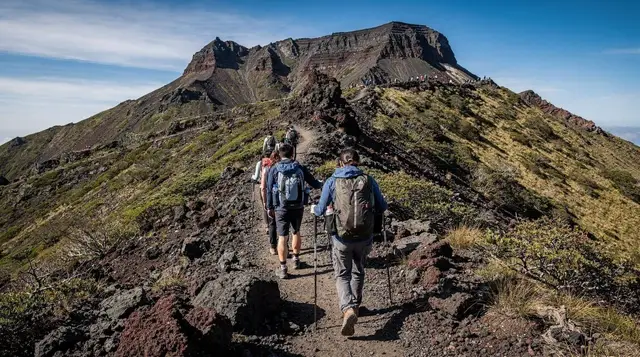
Compare all four Hallasan trails — Seongpanak, Gwaneumsa, Yeongsil, Eorimok — by distance, difficulty, reservation rules, and what each one delivers.

Hallasan: Seongpanak Trail
Seongpanak is the longer but gentler of Hallasan's two summit trails — 9.6km one way, reservation required, 8-9 hours round trip.

Jeju Olle Trail: Overview (27 Routes)
Jeju Olle Trail is a 27-route, 437km coastal walking network circling the island. Here's how the system works and which routes to prioritize.
Ready to book? Top tours for this guide
We earn a small commission if you book through GetYourGuide — at no extra cost to you. Every tour is hand-picked and verified.
Jeju: Hiking Mt. Hallasan, South Korea's Highest Mountain
Jeju Island: Hallasan Mountain Winter Scenery Guided Tour
Jeju: Mt. Hallasan Small-Group Nature Hike & Lunch
Jeju: UNESCO Sites & Sunrise Peak Hiking Small Group Tour
Jeju South: Small Group Healing Tour w/Mt.Halla & Olle Trail