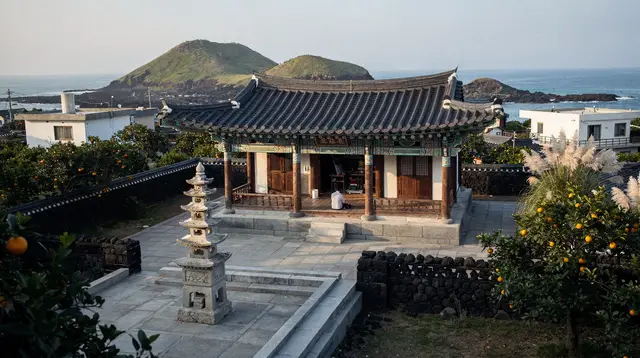
3 days in Jeju itinerary
Three days is the minimum for seeing Jeju as more than an airport stopover, and it’s genuinely enough time for one solid loop: a morning in Jeju City, a full day on the UNESCO-heavy east coast, and a closing day around Seogwipo’s waterfalls before flying out. It works best with a rental car — bus connections between regions exist but eat into the limited time — and it assumes one overnight change of base, from Jeju City to the Seongsan area, to avoid backtracking.
| Where | Jeju City, East Jeju/Seongsan, Seogwipo |
| Duration | 3 days, 2 nights |
| Cost | around ₩450,000-600,000/person (~US$335-445), excl. flights |
| Getting there | CJU airport, rental car (IDP required) or guided day tour |
| Best time | October for the clearest skies; spring has more variable rain |
The three days at a glance
| Day | Region | Highlight | Overnight |
|---|---|---|---|
| 1 | Jeju City → East Jeju | Dongmun Market, Manjanggul lava tube | Seongsan |
| 2 | Seongsan → Seogwipo | Sunrise at Seongsan Ilchulbong, Cheonjiyeon Waterfall | Seogwipo |
| 3 | Seogwipo → CJU | Jeongbang Waterfall, drive back to the airport | Departure |
Who three days actually suits
This pace suits a long weekend, a layover extension from a mainland Korea trip, or a first visit meant as a taster before a longer return. It does not suit anyone determined to add Hallasan’s summit trail or a full island loop — both need more days than this itinerary has room for. What it does deliver is Jeju’s three headline sights (Seongsan Ilchulbong, Manjanggul, and a waterfall) plus a market meal, without the exhausting one-night-per-region churn that a rushed version of this trip can become.
Most nationalities — US, EU, UK, Canada, Australia among them — get 30 days visa-free on a direct flight into CJU, and the K-ETA exemption for these same passport groups runs through December 2026, so entry logistics for a short trip like this are usually a non-issue. The main planning task is booking a rental car early if you’re arriving during a spring bloom weekend or a summer peak, when compact cars sell out days in advance.
Day 1: Jeju City and the drive east
Most flights land at CJU by mid-morning, so start in Jeju City itself: Dongmun Traditional Market for an early lunch of grilled mackerel or a bowl of gogi guksu (meat noodle soup), then a short walk to Yongduam Rock if the tide and light cooperate. Pick up a rental car near the airport in Yongdam — car counters cluster within a few minutes of arrivals, and an International Driving Permit is legally required to drive here.
By early afternoon, drive east toward East Jeju — a 50-70 minute trip depending on which site you’re aiming for first. Manjanggul lava tube is the natural first stop: entry runs about ₩4,000 (~US$3), and the walk through the public section takes 40-60 minutes in a constant 11-21°C underground, so bring a light jacket even in summer. If you’d rather not navigate rental-car logistics on day one, Jeju Island: 1 Day Private Tour covers the east-coast highlights with a driver instead. Overnight in Seongsan town — a guesthouse cluster aimed squarely at the sunrise-hiking crowd, with rooms from roughly ₩60,000-90,000/night (~US$45-67).
For dinner, Seongsan’s harbor-front strip has several restaurants serving jeonbokjuk (abalone porridge) and fresh sashimi pulled straight from the day’s catch — expect ₩15,000-25,000 per person. It’s a quieter, more local scene than the black-pork restaurants that dominate Jeju City, and worth the switch in cuisine for one night. If you land later than planned and skip the market lunch, most Seongsan guesthouses can point you toward a 24-hour convenience store for a backup meal — not glamorous, but useful after a long travel day.
Day 2: Seongsan sunrise to Seogwipo
Set an alarm: sunrise at Seongsan Ilchulbong is the single most worthwhile early start on the island, and arriving 30-45 minutes before sunrise is the only realistic way to beat the crowd on the crater-rim path. The climb itself takes 20-40 minutes on paved steps, entry is around ₩5,000, and exact gate times shift by season — check the current sunrise time rather than assuming a fixed hour. Afterward, walk (or short drive) to Seopjikoji, the grassy headland nearby, for a slower second look at the coastline once the crowds thin.
Jeju: Eastern Jeju UNESCO Spots Day Tour is a reasonable substitute for this whole morning if you’d rather not drive in the dark on unfamiliar coastal roads.
By late morning, drive south to Seogwipo — about an hour along the coast road. Seogwipo is noticeably milder than the east coast in most seasons, sheltered by Hallasan’s windbreak effect, and its Maeil Olle Market makes an easy lunch stop before an afternoon at Cheonjiyeon Waterfall, a 22m drop reached by a short paved walk through subtropical forest (entry ~₩2,000). The Cheonjiyeon Waterfall guide has current hours, including night-illumination dates in high season. Overnight in Seogwipo proper, where mid-range hotel rooms run ₩90,000-130,000/night (~US$67-97).
If the weather turns and Cheonjiyeon’s crowds feel like too much, Seogwipo has two other falls within a short drive — Cheonjeyeon, a three-tiered cascade with a mildly strenuous path, and Jeongbang, which drops directly into the ocean and needs almost no walking at all. Either one is a reasonable swap if you’d rather see a quieter waterfall than the busiest of the three. For dinner, look toward the Seogwipo Maeil Olle Market’s evening food stalls or a black-pork restaurant along the main strip near the market — both are easy walking distance from most mid-range hotels in the city center, so you can leave the rental car parked for the night.
Day 3: Seogwipo morning, then depart
Keep the final morning light: a walk along Seogwipo’s Jeongbang Waterfall — one of the few waterfalls in Asia that drops directly into the sea — takes under an hour including photos, and it’s on the way back toward the airport rather than a detour. From there it’s roughly an hour’s drive back to Jeju City and CJU, which is comfortable timing for an afternoon flight but tight for anything before noon — build in buffer for rental-car return, which can take 20-30 minutes at busy periods.
If you have an extra two or three hours before your flight, a stop in Yongdam at Yongyeon gorge works well; it’s a few minutes from the airport and the suspension bridge is lit in the evening, though a daytime walk is pleasant too. Jeju: Airport (CJU) Transfer Pick-up & Sending Service is worth booking if you’re not driving yourself and want a fixed pickup time rather than relying on a taxi queue at a busy departure hour.
Before returning the car, fill the tank — most rental agreements charge a inflated per-liter penalty rate for a car returned less than full, and gas stations near the airport in Yongdam are easy to find on the way back. Budget an extra 15 minutes for this stop if you haven’t planned it into your drive time.
If it rains on day one or two
Jeju’s weather is genuinely local — a dry morning in Jeju City doesn’t guarantee dry conditions on the east coast an hour later. If rain sets in on day one, Manjanggul is actually a good rainy-day stop since it’s fully underground; save the outdoor Seopjikoji walk for later if skies clear. If sunrise is rained out on day two, Seongsan Ilchulbong stays open and worth climbing later in the morning — the crater rim view holds up regardless of the hour, and a midday climb thins the pre-dawn crowd anyway. Cheonjiyeon Waterfall on day three is one of the few sights that looks better with recent rain, since spring flow noticeably increases the drop’s volume.
Getting around in three days
A rental car is the practical choice for this pace — public buses exist between Jeju City, Seongsan, and Seogwipo, but transfer waits and route indirectness can eat an hour or more per leg, which is expensive when you only have three days. If you’d rather not drive, plan around one or two guided day tours instead of trying to stitch bus routes together; the itinerary above works nearly as well with a driver as with a rental.
Renting at CJU airport is straightforward: agency counters and shuttle pickups cluster within a five-minute walk of arrivals in Yongdam, and English-language service is standard at the larger chains. Bring your home driver’s license plus an International Driving Permit — Korea does not accept a foreign license alone, and agencies do check at pickup. Insurance coverage varies significantly between agencies, so confirm exactly what’s included (collision damage waiver, deductible amount) before signing, since this is one of the more commonly disputed charges on Jeju car rentals.
Navigation apps built for Western markets (Google Maps) have gaps in Korea’s driving directions; Naver Map or Kakao Map are the two apps locals and most rental agencies recommend, and both have English-language modes that work well enough for point-to-point driving even without fluent Korean.
Practical notes for a first Jeju trip
An eSIM or a rental pocket wifi device at the airport solves the navigation-app problem above and is worth arranging before landing rather than after — airport counters exist but queues build up around peak arrival times. Tap water is safe to drink island-wide, so a refillable bottle cuts down on convenience-store plastic. Tipping isn’t customary anywhere in South Korea, including restaurants and drivers, so there’s no need to calculate an extra amount on top of any of the prices above.
Budget for three days
A realistic mid-range daily budget runs ₩100,000-130,000 per person (~US$74-96) for food, entry fees, and local transport, before accommodation and the rental car itself. Entry fees stay modest throughout — Manjanggul ₩4,000, Seongsan Ilchulbong ₩5,000, Cheonjiyeon ₩2,000 — so the bigger costs are two nights of mid-range lodging (₩150,000-220,000 total) and a compact rental car (roughly ₩50,000-70,000/day in low season, more in July-August and around spring blooms). Fuel for this loop’s roughly 150-180km of driving runs about ₩25,000-35,000 total.
Rough per-person total for the three days, mid-range style: ₩450,000-600,000 (~US$335-445) including two hotel nights, a shared rental car split between two travelers, meals, and entry fees, but excluding flights to Jeju. Traveling solo pushes the rental-car share up considerably, which is where a day tour like Jeju Island: Full-Day Customizable Private Guided Car Tour can actually come out cheaper than a solo rental once fuel and parking are factored in.
Where to stay
Splitting the two nights between Seongsan and Seogwipo avoids backtracking to Jeju City, which is the single biggest time-waster in a compressed itinerary like this. If you’d rather keep one base for simplicity, Seogwipo works reasonably as a hub for both the east-coast day and a shorter arrival/departure day, at the cost of a longer drive on day two.
Budget travelers can find dorm beds in both Seongsan and Seogwipo from around ₩30,000/night, while couples wanting a bit more comfort should expect ₩90,000-140,000/night for a clean mid-range room with a private bathroom in either town. Booking at least a few weeks ahead matters most for Seongsan specifically — its guesthouse supply is smaller than Seogwipo’s and fills up around weekends and holiday periods.
What to skip on a 3-day trip
Resist the temptation to add West Jeju or a Hallasan summit attempt to this itinerary — both deserve a dedicated day and squeezing them in usually means seeing everything at a rushed, unsatisfying pace. If west-coast cafes or tea fields are the priority, the West Jeju itinerary is a better starting point for a return trip.
It’s also worth skipping the temptation to add an Udo Island day trip onto this schedule. Udo needs a half or full day on its own once you factor in the ferry crossing from Seongsan’s port and the wait for a return sailing, and squeezing it into an already-packed three days usually means either missing the sunrise climb or cutting the waterfall day short. Save it for a longer trip — the 7-day Jeju itinerary has a natural slot for it.
A few widely advertised roadside attractions near Seongsan charge admission for manufactured “photo garden” experiences with little connection to Jeju’s actual landscape or culture — they’re easy to spot by the busloads of tour groups parked outside, and the free headland walk at Seopjikoji is a better use of the same hour.
Fitting in a taste of haenyeo culture
None of the three days above builds in dedicated time for Jeju’s haenyeo — the island’s famed free-diving women who harvest abalone, sea urchin, and octopus by hand without oxygen tanks, a tradition recognized by UNESCO as Intangible Cultural Heritage. If it interests you, the easiest way to work it in without disrupting the schedule is a stop at the haenyeo museum on day two while driving between Seongsan and Seogwipo, or simply ordering jeonbokjuk (abalone porridge) from a haenyeo-run harbor restaurant in Seongsan on night one, since much of what they catch reaches the table the same day. The haenyeo diving and culture guide and the explainer on who the haenyeo are are worth a quick read before the trip so the context isn’t lost on a rushed three-day pace.
Photographing this loop
If photography matters more than checking off every sight, prioritize two windows over the three days: the pre-dawn light on the Seongsan Ilchulbong crater climb, and the late-afternoon light at Seopjikoji once the sunrise crowd has thinned. Manjanggul’s lava tube photographs poorly with a phone camera alone — the underground lighting is dim and inconsistent, so a tripod-friendly camera or a willingness to accept grainy shots matters there. The Jeju photography spots guide and the sunrise and sunset photography guide both go deeper into exact timing if a three-day trip is really built around a handful of specific shots rather than general sightseeing.
If you land very early or very late
Flight timing changes what’s realistic on day one more than anything else in this itinerary. Landing before 9am means the Dongmun Market lunch and Yongduam Rock walk described above both fit comfortably before the drive east; landing after 1pm usually means skipping straight to the rental-car counter and heading for Manjanggul, with Jeju City’s market and rock left for the return trip on day three instead if there’s spare time before the flight. Either way, resist the urge to squeeze in an extra stop on a late arrival day — a tired first evening in Seongsan sets a bad tone for the sunrise start on day two, which is the one part of this itinerary that genuinely doesn’t forgive a late night beforehand.
Frequently asked questions about the 3-day Jeju itinerary
Is three days enough to see Jeju properly?
It’s enough for one solid loop covering Jeju City, the east coast’s UNESCO sites, and Seogwipo’s waterfalls — not enough to add Hallasan, the west coast, or an outlying islet without cutting something else.
Do I need a rental car for three days?
It’s strongly recommended. Bus routes exist but the connections between Jeju City, Seongsan, and Seogwipo are infrequent enough that a car (or a guided day tour) saves meaningful time on a short trip.
Should I stay in one hotel or move each night?
Moving once — from Jeju City or Seongsan to Seogwipo — avoids backtracking. Staying in a single base the whole time adds an hour or more of driving on the east-coast day.
What if it rains on the sunrise morning?
Seongsan Ilchulbong is still open and worth climbing later in the day if sunrise is rained out; the crater rim view holds up regardless of the hour, just without the sunrise colors.
Can this itinerary work without renting a car at all?
Yes, by substituting a guided day tour for the east-coast day and using buses or taxis for the Jeju City and Seogwipo portions, though it costs more flexibility than driving yourself.
Is three days too short for a honeymoon trip?
It’s workable for a short getaway but most honeymooners are better served by the longer Couples & Honeymoon Jeju itinerary, which has room for a slower pace.
What’s the best month to do this specific loop?
October gives the clearest skies for both the Seongsan sunrise and the Seogwipo waterfalls; spring (late March-May) works well too but with more variable rain.
How much luggage should I bring for three days?
Pack light — a carry-on-sized bag is enough for three days and avoids the hassle of loading and unloading a rental car’s trunk at two different hotels. Bring one layer warmer than the forecast suggests, since Manjanggul’s underground temperature and coastal wind at Seongsan both run cooler than the daytime air.
Is it worth extending to four days instead?
If your schedule allows it, yes — a fourth day gives enough room to add either West Jeju or a slower pace through the east coast without cutting anything from this three-day version. See the 4-day Jeju itinerary for how that extra day changes the route.
Do I need cash, or does Jeju take cards everywhere?
Cards and contactless payment work at the vast majority of restaurants, hotels, and buses. Cash is still useful for small market stalls in Dongmun and Seogwipo’s Maeil Olle Market, where card readers aren’t always at every stand.
Can I fit in a haenyeo experience on a three-day trip?
Yes, in a light way — a stop at the haenyeo museum on day two or a haenyeo-run seafood dinner in Seongsan on night one both fit without adding a dedicated day.
Is Manjanggul worth visiting if I’m short on time?
Yes — it’s a reliable rainy-day and heat-of-the-day stop since it’s fully underground and stays at a constant 11-21°C, and the public walking section takes under an hour round trip.
Related guides

Cheonjiyeon Waterfall
Cheonjiyeon Waterfall in Seogwipo: a 22m drop through subtropical forest, entry fees, opening hours, night illumination, and how it compares to Jeju's

Scuba diving in Jeju
Jeju is South Korea's best scuba diving destination, with soft coral reefs at Munseom and beginner-friendly dives near Seongsan Ilchulbong.

Bonte Museum
Bonte Museum near Andeok explained — the contemporary art collection, architecture-forward design, and whether it fits a family day near Jungmun.

Cheonjeyeon Waterfall
Cheonjeyeon Waterfall is three connected falls linked by a scenic trail and the arched Seonimgyo bridge. Entry fees, hours, and how it compares to Jeju's
Ready to book? Top tours for this guide
We earn a small commission if you book through GetYourGuide — at no extra cost to you. Every tour is hand-picked and verified.
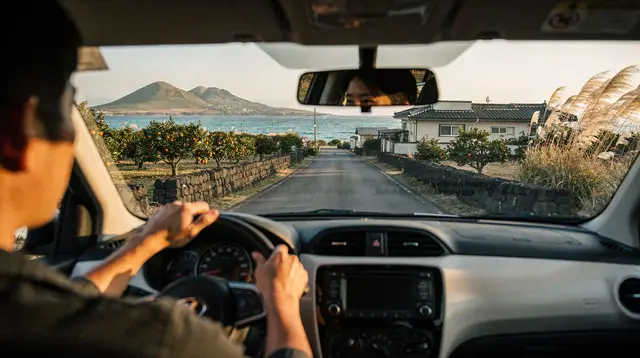
Jeju: UNESCO Day Tour for Cruise Guests
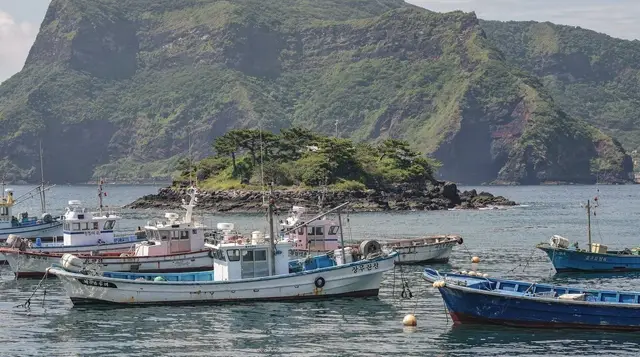
Jeju: Highlights Day Trip (East Course)
Jeju Island: Full Day Tour for Cruise Ship Passengers
Jeju: Small Group UNESCO Highlights Tour for Cruise Guests

Jeju East: Cherry Blossom Early Bird Tour with Hotel Pickup