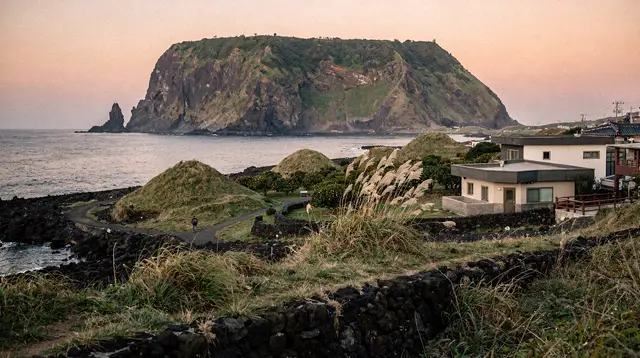
Scuba diving in Jeju
Is Jeju good for scuba diving?
Yes — Jeju is widely considered South Korea's best scuba diving destination, thanks to Munseom island's protected soft-coral reefs near Seogwipo and generally good visibility. Water temperature swings from around 26°C in summer to 14°C in winter, so a drysuit becomes necessary for cold-season diving even for certified divers.
Jeju has the best scuba diving in South Korea, and the reason is largely geological — the island’s volcanic coastline creates underwater terrain (lava tubes, wall drop-offs, boulder fields) that mainland Korean dive sites generally lack, combined with warm-current influence that supports soft coral growth unusual for this latitude. Diving here ranges from shallow, guided introductory sessions suitable for complete beginners to serious multi-dive trips for certified divers exploring Munseom’s protected marine reserve.
| Where | Munseom (off Seogwipo) and near Seongsan Ilchulbong |
| Cost | Around $65-90 for a no-certification introductory dive |
| Time needed | 1.5-2 hours for an introductory session |
| Water temp | 14°C (winter) to 27°C (summer) |
| Certification needed? | No, for shallow introductory dives; yes, for Munseom |
Munseom: Jeju’s signature dive site
Munseom is a small, uninhabited islet just off Seogwipo’s coast, designated a marine protected area specifically because of the soft coral communities and marine biodiversity found in its surrounding waters. It’s the site most experienced divers associate with Jeju specifically — walls and boulder formations descending to depths suited to both open-water and more advanced certification levels, with soft corals in colors (purple, orange, yellow) that surprise divers expecting a temperate-water dive site to look duller than a tropical one. Access is by boat from Seogwipo, typically arranged through local dive shops rather than as a walk-in beach dive.
Diving near Seongsan Ilchulbong
The east coast, near Seongsan Ilchulbong, offers a different and generally more beginner-accessible diving experience, with shallower sites suited to introductory “discover scuba” sessions that require no prior certification. A popular option for first-timers or travelers without certification who still want to try diving:
Jeju: Scuba Diving Experience near Seongsan IlchulbongThis runs about 1.5 hours and costs roughly $65, including basic instruction, equipment, and a guided shallow dive — a realistic way to experience Jeju’s underwater environment without committing to a full certification course. It pairs naturally with a Seongsan-area day that might also include the sunrise hike or a stop at nearby Woljeongri Beach.
Water temperature and what it means for gear
Jeju’s sea temperature swings more than a typical warm-water dive destination: roughly 24-27°C at the summer peak (July-September), dropping through autumn to around 18-20°C by November, and reaching the coldest point of 14-16°C in January-February before warming back up through spring. Summer diving is comfortable in a 3mm-5mm wetsuit; anything from late autumn through spring generally calls for a full 5mm-7mm wetsuit or, for winter diving, a drysuit — a meaningful gear and comfort difference from tropical diving destinations that stay warm year-round. Most dive shops rent appropriate gear for the season, but confirming drysuit availability and your own comfort with cold-water diving matters if you’re planning a winter trip specifically for diving.
Certification and beginner options
Divers without a PADI or equivalent certification aren’t excluded from Jeju’s diving scene — “discover scuba” or introductory sessions like the one above are shallow, closely supervised, and don’t require prior training, making them accessible to reasonably fit travelers regardless of diving experience. For anyone wanting to go further, several dive shops in the Seogwipo area offer full Open Water certification courses over several days, a reasonable option if diving becomes a genuine interest during a longer Jeju stay rather than a single tried-once activity. Certified divers should bring or verify certification cards before booking, since Munseom and other more advanced sites generally require proof of certification for anything beyond introductory depths.
Visibility and the best time to dive
Visibility around Jeju varies with season and recent weather, generally best in the late spring through early autumn window (May-October) when calmer seas and less runoff from rain keep the water clearer, and reduced during and after storm systems or the July monsoon period when rainfall increases coastal runoff. Winter visibility can actually be quite good on calm days, since reduced boat traffic and cooler water sometimes mean less biological turbidity, but rougher winter seas make diving conditions less predictable overall. Most dive shops will reschedule or cancel trips in genuinely poor conditions rather than run a dive with unsafe visibility or swell.
Marine life
Jeju’s waters support a broader range of marine life than many visitors expect from a temperate-latitude destination — soft corals at Munseom, various reef fish species, occasional larger pelagic visitors depending on season, and the volcanic rock formations themselves (arches, small caves, boulder fields) that make for interesting underwater terrain independent of marine life. It’s not a tropical reef in terms of coral density or fish diversity, but it’s meaningfully more varied than the flatter, sandier dive sites found on parts of the Korean mainland coast.
How Jeju diving compares to mainland Korea
South Korea’s mainland coastline offers diving too — around Busan, the east coast near Gangneung, and a scattering of other sites — but Jeju is consistently ranked as the country’s best by both local and visiting divers, largely because of the combination of clearer, warm-current-influenced water and the volcanic terrain’s underwater topography. Mainland sites tend toward flatter, sandier bottoms with less dramatic structure and, in many cases, lower average visibility. For a diver with limited time in Korea who wants to sample the country’s best underwater conditions, Jeju is the straightforward recommendation over any mainland alternative.
Cost of diving in Jeju
A shallow introductory dive with no certification required runs roughly $65-90 (₩85,000-120,000) for a session of 1-2 hours including equipment and basic instruction. A guided dive for certified divers at a site like Munseom typically costs more once boat transport and site fees are factored in, often ₩100,000-180,000 for a two-tank trip. A multi-day Open Water certification course runs considerably more, generally ₩400,000-600,000 depending on the shop and course length, reflecting the classroom time, pool sessions, and open-water dives required for certification.
How diving compares to snorkeling for a first water activity
If you’re unsure whether diving or a simpler activity suits you better, snorkeling offers a lower-commitment, lower-cost way to see some of Jeju’s clearer coastal water without equipment training or the depth and pressure considerations that come with scuba. Diving delivers meaningfully more — access to deeper sites, longer bottom time, and Munseom’s protected reef environment — but requires more time, cost, and at least a brief instructional session even for the shallow introductory dives. Travelers with limited time or budget who mainly want a quick, memorable water experience often do better starting with snorkeling and adding a scuba session only if the interest holds.
Combining diving with the rest of a Jeju trip
Diving trips based out of Seogwipo combine naturally with the wider Seogwipo sightseeing area — waterfalls, the Jungmun resort strip, and Olle Trail sections are all within a short drive of the dive shops that operate out of the harbor. Diving near Seongsan combines well with the east Jeju UNESCO cluster, making it realistic to pair a morning sunrise hike with an afternoon introductory dive in the same area.
Marine protected area rules at Munseom
Munseom’s status as a marine protected area comes with real restrictions rather than being a marketing label — fishing and the collection of marine life within the reserve are prohibited, and dive operators visiting the site are expected to follow no-touch, no-collection practices that keep the coral communities intact for future visits. This matters practically as much as environmentally: the soft coral growth that makes Munseom worth diving in the first place is slow-growing and easily damaged by careless fin kicks or handling, so dive briefings here place more emphasis on buoyancy control and keeping a respectful distance from the reef than a typical open-water dive site might.
Safety notes
Cold-water diving carries real risk if gear and preparation don’t match conditions — hypothermia risk increases meaningfully in anything below a 5mm wetsuit during Jeju’s cooler months, and divers should be honest with dive shops about their cold-water experience level before booking a winter trip. Boat traffic near dive sites, particularly close to Seogwipo’s harbor, is a standard consideration that reputable operators manage through flag markers and dive boat positioning. As with any scuba activity, diving within your certification level and listening to guide instructions on depth and bottom time limits matters more than the specific site — Munseom’s more advanced terrain has claimed a reputation for being unforgiving to divers who exceed their training level.
Haenyeo and the island’s older diving tradition
Long before recreational scuba diving arrived on Jeju, the island’s haenyeo — free-diving women who harvest abalone, conch, and seaweed without oxygen tanks — had already turned Jeju’s coastal waters into working dive sites, a tradition recognized by UNESCO as intangible cultural heritage. Scuba divers exploring Munseom or the Seongsan coast are, in a real sense, following waters the haenyeo have worked for generations, and it’s worth understanding that context rather than treating Jeju’s underwater environment as simply a recreational backdrop. Dive shop staff and boat operators can sometimes point out active haenyeo diving areas from the surface, which are generally avoided by recreational dive boats out of both safety and respect for working divers.
Choosing a dive shop
Most Jeju dive shops operate out of Seogwipo harbor or smaller ports near Seongsan, and the practical differences between them come down to group size, whether an English-speaking guide is available (a genuine consideration, since a meaningful share of shops cater primarily to a domestic Korean clientele), and how strictly they enforce depth and bottom-time limits relative to certification level. Asking about group size and language support before booking avoids the most common frustration reported by international visitors, and checking that equipment — particularly wetsuit or drysuit sizing — is available for larger or smaller builds is worth confirming ahead of a booking rather than discovering a mismatch on the dock.
Night diving and other specialty options
A smaller number of operators offer night dives, primarily around the summer months when water temperature makes an evening dive more comfortable, revealing a different set of marine life than a daytime dive at the same site. This is a niche option generally aimed at already-certified, experienced divers rather than first-timers, and it’s worth asking specifically if it interests you, since it isn’t advertised as prominently as standard daytime dive packages. Wreck diving is more limited around Jeju compared to some other Korean coastal areas, so divers specifically chasing wreck sites may find better options on the mainland.
Combining a dive trip with other water activities
A day built around diving pairs naturally with a lower-intensity water activity afterward rather than a second dive — a sea fishing boat trip or casual kayaking session makes a reasonable second activity without the physical demands of a second dive on the same day. If the goal is simply maximizing water time during a Jeju visit, alternating scuba with snorkeling on non-dive days is a practical way to stay in the water without the fatigue that back-to-back diving days can bring, particularly in colder-water months when thermal stress adds up.
Jeju diving costs at a glance
| Activity | Typical cost | Certification needed |
|---|---|---|
| Introductory shallow dive (Seongsan) | $65-90 (₩85,000-120,000) | No |
| Two-tank certified dive at Munseom | ₩100,000-180,000 | Yes |
| Multi-day Open Water certification | ₩400,000-600,000 | No (course itself certifies you) |
| Night dive (specialty, summer) | Varies by shop | Yes |
Packing and gear checklist for a Jeju dive trip
Most dive shops rent full gear, so packing light is realistic, but a few personal items make the day noticeably more comfortable. A swimsuit worn under your travel clothes saves changing-room time before a boat departure. Bring your own mask if you have a preferred fit, since rental masks are the piece of gear most likely to leak or fog for divers with an unusual face shape. A reef-safe sunscreen matters both for Munseom’s protected marine reserve and for your own comfort on the boat between dives, since standard sunscreen can wash off and affect water quality in a protected area. Certified divers should carry their certification card and logbook, since Munseom and other advanced sites generally check for proof before allowing access beyond introductory depths.
Combining a dive trip with the wider east coast
An introductory dive session near Seongsan runs short enough — about 1.5 hours including instruction — that it fits comfortably alongside a fuller east Jeju day. Many divers pair it with a morning at Seongsan Ilchulbong or an afternoon at Seopjikoji, treating the dive as one stop among several rather than the day’s sole activity. This is a meaningfully different pattern from a Munseom trip out of Seogwipo, which tends to anchor a half-day on its own given the boat transport and multi-tank format for certified divers.
Best beginner-friendly operators near Seongsan versus Seogwipo
Choosing between a Seongsan-based introductory dive and a Seogwipo-based Munseom trip mostly comes down to what else is on your itinerary that day. Seongsan operators cater more heavily to first-timers and pair naturally with a Seongsan Ilchulbong morning, while Seogwipo shops lean toward certified divers heading to Munseom and combine well with a broader Seogwipo day of waterfalls and Olle Trail walking. Neither side of the island is meaningfully better for beginners specifically — the choice is really about which region fits the rest of your day.
Getting to the dive sites
Seongsan and Seogwipo sit on opposite sides of the island from the airport, so how you travel shapes the day as much as the dive itself. A rental car gives the most freedom to match a boat departure, though it needs an international driving permit and some confidence on island roads; the road trip tips cover the practical side. Public transport works too, and the bus guide explains how far it will take you before a taxi becomes the easier choice. For the last stretch to a harbor, Kakao T taxis are straightforward. If you would rather not drive or juggle bus timetables on a dive morning, a private transfer to the Seongsan area keeps the logistics simple. Arriving from the airport? The airport guide and airport transfer options help you plan the first leg.
Planning your dive around season and weather
Because sea conditions drive everything, it helps to read your dates against the island’s seasons before locking in a booking. The month-by-month guide shows what each part of the year feels like on land, which usually mirrors what happens on the water. Late summer brings the risk of storms, so the typhoon season guide is worth reading if you travel then, and the water sports safety and seasons guide goes deeper on when each activity makes sense. Keep a flexible day in your itinerary: a cancelled boat trip is far less frustrating when you have another plan ready.
What to do on a non-diving day
Rest days are part of a good diving trip, and Jeju gives you plenty of ways to use them without getting back in the water. The volcanic origins that shape the underwater scenery are just as visible on land at Manjanggul lava tube and along the Jusangjeolli cliffs. To understand the culture of the sea-women mentioned above, the haenyeo culture guide and the haenyeo museum guide are natural companions to a dive trip. If you would like someone else to handle a gentler day on the east side, an eastern tour at a relaxed walking pace suits tired legs after a morning in the water, and the east Jeju day tour guide lays out the wider options. For a longer view of how to fit all this together, the east Jeju itinerary and the guide to how many days to spend are good starting points, and the packing tips cover what to bring beyond your dive gear.
Frequently asked questions about scuba diving in Jeju
Do I need certification to scuba dive in Jeju?
No — shallow introductory “discover scuba” sessions near Seongsan Ilchulbong require no prior certification and include basic instruction, though certified divers get access to deeper and more advanced sites like Munseom.
What is Munseom and why is it special for diving?
Munseom is a small protected islet off Seogwipo known for soft coral communities unusual at this latitude, widely considered Jeju’s — and South Korea’s — premier dive site for certified divers.
What’s the water temperature for diving in Jeju?
Roughly 24-27°C in summer (July-September), dropping to 14-16°C in the coldest winter months (January-February), which means wetsuit thickness or a drysuit needs to match the season.
How much does a beginner scuba experience cost in Jeju?
An introductory shallow dive with no certification required typically costs around $65-90 (₩85,000-120,000) including equipment and basic instruction.
When is the best time of year to dive in Jeju?
Late spring through early autumn (May-October) generally offers the best visibility and most comfortable water temperatures, though diving happens year-round with appropriate gear.
Is Jeju diving suitable for complete beginners?
Yes, through shallow introductory sessions that require no certification and include close supervision, though anyone wanting to explore deeper or more advanced sites like Munseom will need proper certification first.
Can I get PADI certified while visiting Jeju?
Yes, several dive shops based around Seogwipo offer full Open Water certification courses over several days, typically ₩400,000-600,000, a worthwhile option for a longer stay if diving becomes a genuine interest.
Related guides

Surfing in Jeju
Jungmun Saekdal Beach anchors Jeju's small but real surf scene, with the best swell arriving in autumn and winter and warmer, gentler waves in summer.

Jeju water sports: best seasons and safety
When Jeju's water sports are safe and enjoyable: water temperature by month, jellyfish season, rip currents and typhoon risks.

Jet skiing in Jeju
Jungmun Saekdal Beach has Jeju's biggest jet ski scene, with banana boat and donut boat rides also available in peak summer at Hamdeok and Woljeongri.

Sea fishing boat tours in Jeju
Jeju's sea fishing boat tours combine a few hours catching mackerel or squid with an onboard or dockside seafood lunch, no experience or license needed.
Ready to book? Top tours for this guide
We earn a small commission if you book through GetYourGuide — at no extra cost to you. Every tour is hand-picked and verified.