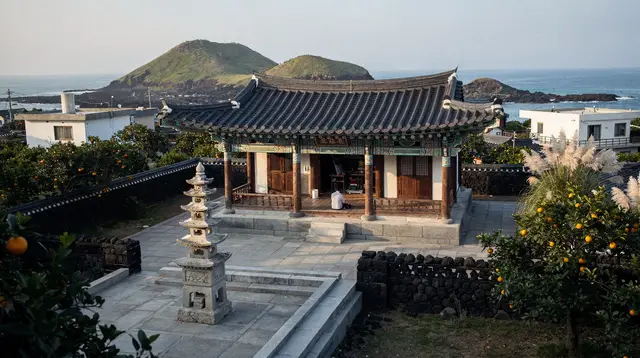
Food lovers' Jeju itinerary
Jeju’s food identity is distinct enough from mainland Korean cuisine to justify building an entire trip around it: heukdwaeji (a smaller, more marbled black pig breed unique to the island), haenyeo-harvested seafood eaten within hours of being caught, hallabong citrus, and a market culture that still runs on daily fish auctions rather than tourist schedules. This four-day itinerary treats each region’s food identity as the main event, with sightseeing built around meals rather than the other way around.
| Where | Jeju City, East Jeju, Seogwipo, West Jeju |
| Cost | ₩550,000-750,000/person for 4 days, excluding flights |
| Getting around | Rental car, IDP required |
| Best for | Food-focused travelers, market lovers, culinary photographers |
| Try | Heukdwaeji, jeonbokjuk, galchijorim, hallabong citrus |
Who this itinerary suits
This suits travelers who plan trips around what they’ll eat, market photographers, and anyone who’s already done a sightseeing-focused Jeju trip and wants a return visit with a different lens. It’s less suited to picky eaters — several of the itinerary’s highlights involve unfamiliar textures (raw abalone, fermented specialties) that reward an adventurous palate more than a cautious one.
Unlike a sightseeing loop that treats meals as a break between activities, this itinerary flips the priority — sights are the break between meals. That means fewer entry-fee stops overall and more time simply walking a market or sitting at a restaurant table, which changes the pacing of a Jeju trip more than most visitors expect going in.
Day-by-day summary
| Day | Region | Food focus | Overnight |
|---|---|---|---|
| 1 | Jeju City | Dongmun Market, black-pork district | Jeju City |
| 2 | East Jeju | Seongsan seafood, haenyeo culture | Seongsan |
| 3 | Seogwipo | Maeil Olle night market | Seogwipo |
| 4 | West Jeju | Tangerine farms, Osulloc tea fields | — |
Day 1: Jeju City’s markets and black-pork street
Start at Dongmun Traditional Market in Jeju City, the island’s largest and most tourist-accessible market — arrive hungry and graze rather than committing to one stall, since the range here (grilled skewers, fresh tangerines, hotteok pancakes, seafood pancakes) rewards sampling widely. The Dongmun Market food guide has a stall-by-stall breakdown, and the Dongmun Market culture guide covers the market’s history if that context adds to the visit. Morning is genuinely the better time to visit if you want to see the market at its most functional, before the afternoon tour-bus crowds arrive; vendors selling fresh catch and produce do their real business early, and the atmosphere shifts noticeably toward tourist-oriented snacks later in the day.
In the evening, head to the black-pork restaurant district often called Heukdwaeji Geori, where heukdwaeji is grilled tableside — expect ₩20,000-30,000 per person for a proper meal with side dishes, noticeably pricier than mainland Korean barbecue but genuinely different in flavor and texture thanks to the breed’s higher fat marbling.
Jeju’s black pig breed developed somewhat separately from mainland Korean pig farming, historically raised in a distinctive traditional method that’s mostly been phased out for modern hygiene standards, though the breed itself and its flavor profile remain distinct enough to notice even for casual diners. The Jeju black pork BBQ guide covers how to order and which cuts to try if the tableside menu feels overwhelming on a first visit, and the black pork vs mainland samgyeopsal comparison is worth a read if you want to understand exactly what makes the two different before your first bite.
Taste of Jeju: A Culinary Journey Through Traditional Market is worth booking for day one specifically if you want a guide to translate menus and point out which stalls are worth the queue versus which are aimed purely at tour groups. Overnight in Jeju City, mid-range rooms ₩80,000-120,000/night.
Day 2: East coast seafood and haenyeo culture
Drive east 50-70 minutes to East Jeju, where Seongsan’s harbor-facing restaurants specialize in jeonbokjuk (abalone porridge) and same-day sashimi — a genuinely different scene from Jeju City’s black-pork-heavy menus, and worth ₩15,000-25,000 per person for a proper meal. This is also the region most associated with haenyeo, Jeju’s UNESCO-recognized free-diving women who harvest abalone, conch, and seaweed by hand without oxygen tanks, some still diving into their seventies using techniques passed down through generations. The Jeju abalone and seafood guide and Jeju seafood markets guide both go deeper on what’s actually in season and where to find the freshest catch beyond Seongsan’s harbor strip.
Seongsan Ilchulbong itself (entry ~₩5,000) is worth a midday visit between meals if you haven’t already seen it on a previous trip — the crater rim view is a reasonable appetite-builder before an afternoon of eating, even without the pre-dawn sunrise crowd.
Jeju: Haenyeo Culture Experience with Seafood Tasting pairs a look at this heritage with a tasting of what haenyeo actually harvest, a more meaningful way to understand the culture than a photo stop alone. In the afternoon, Manjanggul lava tube (entry ~₩4,000) makes a good non-food break between meals. Overnight in Seongsan, guesthouse rooms ₩60,000-90,000/night.
Day 3: Seogwipo’s night market and waterfall-side dining
Drive south to Seogwipo — about an hour — for the Maeil Olle Market, which develops a stronger night-market feel after dark than Dongmun, with food stalls staying open later into the evening. Galchijorim (braised beltfish) and momguk (a seaweed-and-pork soup unique to Jeju) are two dishes worth actively seeking out here if black pork felt repetitive by day two. Fit in Cheonjiyeon Waterfall (entry ~₩2,000; details in the Cheonjiyeon Waterfall guide) in the late afternoon before the market’s evening rush.
Overnight in Seogwipo, mid-range rooms ₩90,000-130,000/night — the city’s food scene rewards an evening walk between the market and the harbor rather than driving between stops.
Day 4: West Jeju’s tangerine farms and tea culture
Drive west 45-60 minutes toward West Jeju for a tangerine or citrus-farm visit — hallabong, Jeju’s signature sweet citrus, is grown across small family farms here, several of which welcome visitors for picking during season. Jeju: Small Group Tour w/Pink Muhly & Tangerine Picking combines a picking experience with a scenic pink muhly grass stop if visiting in the right season (autumn). Round out the day at Osulloc Tea Museum’s green tea fields, with tastings and a shop for take-home tea.
Aewol’s cafe coast makes a good final stop if there’s time before the flight — a slower coffee culture that contrasts with the market-and-restaurant pace of the previous three days, and a reasonable way to close a food-focused trip on a calmer note. Drive back to Jeju City and CJU — 20-45 minutes depending on your exact starting point — for departure.
Extending to five days
An extra day fits naturally by adding Jungmun’s resort-strip dining for a contrast against the market-heavy pace of the other days, or by giving West Jeju’s tea and citrus culture a full day rather than an afternoon. Aewol’s cafe coast is also worth a half-day extension if coffee culture interests you as much as full meals — the town’s ocean-view cafes are as much a food-and-drink destination as any restaurant district on this itinerary.
If it rains
Markets in both Jeju City and Seogwipo have significant covered sections, making them reasonable rainy-day activities despite being partly outdoors. Restaurant-heavy days like this one are naturally more weather-resilient than a sightseeing-focused itinerary, since most of the planned activity is indoor dining regardless of conditions outside.
Practical notes for eating your way around Jeju
Cards and contactless payment work at the vast majority of restaurants, though cash remains useful at market stalls where card readers aren’t always available at every vendor — keep a mix of both. Tipping isn’t customary anywhere in South Korea, so restaurant bills don’t need anything added on top. If you have dietary restrictions beyond vegetarianism, research and translate them before arriving — English-language allergen information is inconsistent even at otherwise tourist-friendly restaurants in Jeju City and Seogwipo.
Getting around for a food-focused trip
A rental car remains useful for reaching each region’s distinct food identity within a short trip, though this itinerary involves less driving than a sightseeing-focused loop — roughly 130-160km across the four days. Within each region, walking between market stalls and nearby restaurants is the better way to actually experience the food scene rather than driving between individual stops.
Budget for four days of eating
Food is the primary expense on this itinerary rather than entry fees. Budget ₩15,000-30,000 per meal for a proper sit-down restaurant experience, plus ₩10,000-20,000 for market grazing across a day if you’re sampling multiple stalls rather than one full meal. A realistic daily food budget runs ₩60,000-90,000 per person (~US$44-67) if eating well at each meal, noticeably higher than a sightseeing-focused itinerary’s food costs since dining is the point rather than a break between activities.
Rough per-person total for four days, split between two travelers including lodging and a shared rental car: ₩550,000-750,000 (~US$405-555), excluding flights to Jeju. Tangerine and tea souvenirs from day four add a modest amount on top if you’re bringing food gifts home.
Seafood prices fluctuate more than other food costs on this itinerary depending on the day’s catch and season — abalone and certain shellfish can run notably higher during off-peak harvest periods, so treat the ₩15,000-25,000 seafood-meal estimate as a floor rather than a ceiling if you’re ordering premium items. Black pork prices are more stable year-round since it’s farmed rather than wild-caught.
Where to stay
Basing near each day’s food destination — Jeju City, then Seongsan, then Seogwipo — keeps evening walks to restaurants and night markets short rather than requiring a drive after a meal. If you’d rather minimize hotel moves, Seogwipo works reasonably as a two-night base for days two and three combined, accepting a longer drive to Seongsan on day two.
Look specifically for accommodation within walking distance of each region’s market — a hotel a five-minute walk from Dongmun Market or Seogwipo’s Maeil Olle Market means an evening food walk doesn’t require driving after a meal, which matters more on this itinerary than on a sightseeing-focused one where you’re typically driving between spread-out attractions anyway. Booking sites don’t always flag walking distance to a specific market by name, so it’s worth checking the map directly against the market’s actual location rather than trusting a listing’s “central” description alone.
What to skip on a food-focused trip
Resist the temptation to add a Hallasan summit hike or a full sightseeing loop to this itinerary — both compete directly with the unhurried, multiple-meals-per-day pace that makes a food trip work. If sightseeing matters equally to you, a longer combined trip using the 5-day itinerary as a base and layering in extra market stops is a better structure than trying to force both priorities into four days.
It’s also worth skipping the urge to schedule three full restaurant meals every single day — between the market grazing, restaurant dinners, and cafe stops, most travelers find their appetite and budget both wear out faster than expected by day three. Building in at least one lighter meal per day (a convenience-store snack, a simple noodle stall) keeps the trip sustainable rather than an exhausting parade of heavy meals.
Tourist-oriented restaurants directly outside major sightseeing spots (Seongsan, Manjanggul) tend to charge a premium for mediocre versions of Jeju specialties aimed at one-time visitors — walking two or three minutes further into the actual town center usually finds better food at lower prices.
Drinks worth trying alongside the meals
Jeju’s food identity extends to what’s in the glass, not just on the plate — local soju and makgeolli (rice wine) producers on the island use different water sources and, in some cases, local ingredients like hallabong citrus in flavored versions not found on the mainland. The Jeju soju and makgeolli guide covers what to look for on a menu and which local labels are worth seeking out over the mainland brands available everywhere else in Korea. Pairing a proper makgeolli with the black-pork dinner on day one, or a citrus-flavored version with the tangerine farm visit on day four, ties the drink into the same regional identity as the food itself.
Understanding Jeju’s food identity versus the mainland
Jeju’s cuisine developed with real geographic separation from the Korean peninsula, and it shows in ways that go beyond just heukdwaeji and haenyeo seafood. The island’s historic reliance on fishing and small-scale farming over rice cultivation shaped a food culture built around what the land and sea actually provided rather than mainland staples — more seaweed, more citrus, more reliance on foraged and wild ingredients like the nutmeg-yew nuts found in Bijarim Forest. Even dishes that share a name with mainland versions, like doenjang jjigae (fermented soybean stew), often use local variations in Jeju kitchens.
This is worth keeping in mind if you’ve eaten Korean food extensively on the mainland and expect Jeju to simply be a regional variation — some dishes genuinely don’t exist elsewhere in Korea, and treating this trip as an extension of a Seoul food tour rather than its own distinct culinary destination will undersell what’s actually on offer here.
Frequently asked questions about the Food Lovers’ Jeju itinerary
What’s the one dish I shouldn’t leave Jeju without trying?
Heukdwaeji (Jeju black pork) is the island’s signature dish and worth at least one proper sit-down meal, ideally in Jeju City’s black-pork restaurant district where the competition keeps quality high.
Is Jeju food expensive compared to mainland Korea?
Somewhat — heukdwaeji and fresh seafood run higher than mainland barbecue prices, partly reflecting the island’s smaller-scale black pig farming and the premium haenyeo-harvested seafood commands.
Are there vegetarian options on this itinerary?
Markets offer more vegetarian-friendly grazing (vegetable pancakes, tofu dishes) than the black-pork and seafood-focused restaurant meals — vegetarians may want to weight this itinerary more toward market days than restaurant-heavy evenings.
What is haenyeo culture, and why does it matter for food?
Haenyeo are Jeju’s traditional free-diving women, some still active into their 70s, who harvest abalone, conch, and seaweed without oxygen tanks. Much of the island’s seafood culture traces directly back to their harvest, making it a meaningful cultural layer beneath the food itself.
When is tangerine-picking season?
Hallabong and other citrus varieties are typically available for picking from autumn into winter, though exact dates shift year to year with the harvest — check current season status before booking a specific farm visit.
Should I book restaurants in advance?
Not typically for markets or casual restaurants, though the more well-known black-pork restaurants in Jeju City can have a wait during peak dinner hours — arriving slightly earlier than a typical dinner time helps.
Is this itinerary good for a solo traveler?
Yes, arguably better than for larger groups — markets in particular reward wandering and sampling at your own pace, and solo diners can order smaller portions at stalls that would be impractical for a full sit-down meal.
What’s the difference between Dongmun Market and Seogwipo’s Maeil Olle Market?
Dongmun in Jeju City is larger and more geared toward day-trip snacking; Seogwipo’s Maeil Olle Market develops a stronger night-market atmosphere after dark, with more stalls staying open into the evening for a proper dinner rather than just snacks.
Can I combine this itinerary with sightseeing without losing the food focus?
Yes, in moderation — the itinerary above already includes light sightseeing (Manjanggul, Seongsan, Cheonjiyeon) between meals, but adding a full day of unrelated sightseeing on top tends to crowd out the unhurried pace that makes a food trip worthwhile.
Are there cooking classes or food workshops on Jeju?
Some exist, particularly around traditional Jeju dishes and tea preparation near the Osulloc area — worth researching specific current offerings if a hands-on experience matters more to you than eating alone.
Is it rude to ask for recommendations at a market stall?
Not at all — vendors at Dongmun Market and Seogwipo’s Maeil Olle Market are generally used to visitors asking what’s good or what’s in a dish, even without shared language, and pointing plus a smile usually gets the conversation started fine.
Should I try Jeju’s local makgeolli or stick to what I know from the mainland?
Try the local versions if you can — Jeju’s makgeolli producers sometimes use local ingredients like hallabong citrus in flavored versions not available on the mainland, and the soju and makgeolli guide has specific labels worth seeking out.
What’s the biggest difference between Jeju black pork and mainland Korean barbecue?
Marbling and breed — heukdwaeji is a smaller, more fat-marbled black pig breed unique to the island, giving it a noticeably different texture and flavor from mainland samgyeopsal; the black pork comparison breaks down the specifics.
Related guides
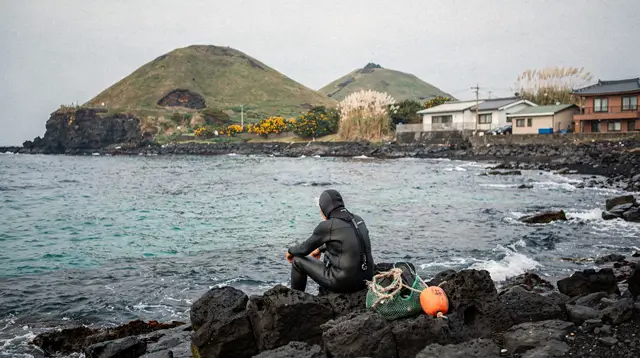
Haenyeo: Jeju's Sea Women
Who Jeju's haenyeo sea women are, where to see them dive, and how to experience this UNESCO-listed living tradition without turning it into a photo op.

Haenyeo Museum
A practical guide to Jeju's Haenyeo Museum in Gujwa — hours, admission, exhibits, and why it's the best single stop for understanding the sea women

Haenyeo photoshoot experience
Book a haenyeo photoshoot on Jeju: what the experience involves, cost, respectful etiquette, and how it fits alongside cultural sites like the Haenyeo

Jeju abalone and seafood: what to eat and where
Jeju's abalone and seafood tradition explained — jeonbok-juk, haenyeo-caught seafood, and where to eat it without overpaying at tourist restaurants.
Ready to book? Top tours for this guide
We earn a small commission if you book through GetYourGuide — at no extra cost to you. Every tour is hand-picked and verified.
Jeju: UNESCO Day Tour for Cruise Guests
Jeju: Highlights Day Trip (East Course)
Jeju Island: Full Day Tour for Cruise Ship Passengers
Jeju: Small Group UNESCO Highlights Tour for Cruise Guests

Jeju East: Cherry Blossom Early Bird Tour with Hotel Pickup