
Haenyeo photoshoot experience
What is a haenyeo photoshoot experience?
A guided photography session, sometimes with a wardrobe and posing element, built around Jeju's haenyeo (sea women) diving culture — either photographing real working divers respectfully from a distance, or a staged, costumed shoot referencing the tradition, depending on the specific tour.
A haenyeo photoshoot experience packages one of Jeju’s most distinctive cultural traditions — free-diving sea women who harvest abalone, sea urchin, and other seafood without oxygen tanks, a practice recognized by UNESCO as intangible cultural heritage — into a structured photography session for visitors. Exactly what that means in practice varies by tour: some arrange respectful photography of an actual working diving or selling demonstration, while others offer a staged, costumed shoot that references haenyeo dress and imagery without photographing divers mid-work. Understanding which kind of experience a specific tour offers matters both for setting expectations and for approaching the whole thing with appropriate respect.
| Format | Costumed portrait session, or guided viewing of a real demonstration — check the listing |
| Duration | Roughly one hour |
| Where | East coast, mainly around Seongsan and Hado |
| Best light | Early morning or late afternoon; overcast also works well |
| Pairs well with | Haenyeo Museum for context |
What the haenyeo tradition actually is
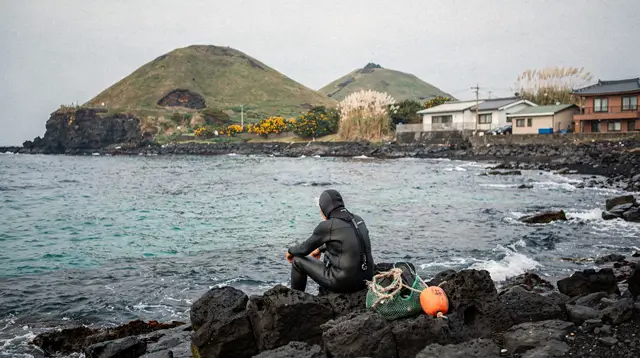
Haenyeo are women divers, historically concentrated on Jeju, who free-dive to depths of several meters without breathing equipment to harvest seafood, traditionally supporting their households and communities through this income for generations. The practice demands genuinely extraordinary lung capacity and endurance — some experienced divers can hold their breath for over a minute at depth, repeated across dozens of dives in a single working session — and it has functioned historically as a source of female economic independence uncommon in traditional East Asian societies.
UNESCO added haenyeo culture to its Representative List of Intangible Cultural Heritage in 2016, formal recognition of a tradition that was, even then, visibly declining as the active diver population aged. For a fuller account of the culture and its history, see the dedicated haenyeo diving and sea women culture guide.
What the photoshoot experience involves
Jeju: Haenyeo UNESCO Sea Women Photoshoot Experience runs as a roughly one-hour session, typically involving guidance from a photographer or cultural host, some element of traditional dress or props referencing haenyeo culture, and a scenic coastal setting appropriate to the theme. The specific format — whether it centers on you as the subject in costume, or on documentary-style photography of an actual haenyeo community — is worth confirming on the current tour listing before booking, since marketing language for cultural photo experiences can sometimes blur that distinction more than the actual product does.
Respectful photography of real divers
If your goal is to photograph or observe actual haenyeo at work rather than a staged experience, the baseline etiquette is straightforward: keep a respectful distance from divers actively working or coming ashore with their catch, ask before taking a close-up portrait of an individual diver, and don’t treat a working woman’s daily labor as a photo prop without her consent. Several coastal areas, particularly parts of the east coast around Seongsan and Hado, maintain visible haenyeo communities, and some offer scheduled demonstrations specifically set up for visitor viewing and photography — a structure that removes the ambiguity of approaching a working diver independently.
Cost and what’s included
Pricing for this kind of themed cultural photography experience typically sits above a simple entry ticket, reflecting the staffing, guidance, and in some cases costume or prop provision involved — check the current listing for exact pricing, since costs shift and vary by group size and season. Most experiences include the photography session itself and basic guidance; confirm separately whether edited digital photos, physical prints, or costume rental are included or charged as add-ons, since this varies by operator.
Pairing with a cultural context visit
A photoshoot experience pairs naturally with a visit to the Haenyeo Museum, which provides historical and cultural context — the tools, techniques, and social history behind the tradition — that deepens the meaning of a photo session considerably beyond a purely visual experience. For a food-focused complement, Jeju: Haenyeo Culture Experience with Seafood Tasting combines cultural context with a meal featuring haenyeo-harvested seafood, another way to engage with the tradition beyond photography alone.
How the tradition has changed over generations
Haenyeo numbers have fallen from tens of thousands of active divers at their mid-20th-century peak to a much smaller, aging population today, a decline driven by a combination of factors: the physical toll of a lifetime of cold-water free-diving, broader economic development on Jeju that opened other employment paths for women, and younger generations generally not choosing to continue a demanding, physically punishing trade.
Some coastal villages have responded with formal haenyeo schools and training programs aimed at recruiting and certifying new divers, with mixed but genuine results — a handful of younger women have taken up the practice in recent years, though nowhere near replacement numbers for the generation retiring. This context is worth carrying into any haenyeo-themed experience, since it explains why cultural tourism programs frame these visits as much around preservation as around entertainment.
What a demonstration typically looks like
Where a tour includes an actual haenyeo diving or selling demonstration rather than a purely staged photoshoot, the format usually involves divers surfacing from a working dive with their catch, sometimes narrated by a guide explaining technique, breathing methods, and the specific catch (abalone, sea urchin, various shellfish depending on season), followed by an opportunity to purchase or sample the seafood directly. These demonstrations run on the divers’ actual working schedule and weather conditions rather than a fixed tourist timetable, so some flexibility in timing is normal, and a demonstration can occasionally be shortened or adjusted based on sea conditions on a given day.
Costume and styling considerations
For photoshoot experiences that include costume elements, the wardrobe typically references traditional haenyeo diving suits and equipment (the mulsogamnyeong, a specialized wetsuit that replaced older cotton diving garments in the mid-20th century) in a respectful, non-caricatured way when run by operators with genuine community connections — worth a quick look at photos from the specific tour’s own listing to gauge how the experience is presented before booking, particularly if authenticity matters to your decision.
Best time and setting
Coastal light in the early morning or late afternoon generally produces the most flattering, least harshly contrasted photographs for this kind of session, consistent with photography timing advice across Jeju’s other coastal locations. Overcast days, somewhat counterintuitively, can also work well for portrait-style photography, since diffused light is more forgiving for skin tones and costume detail than the harsh, high-contrast light of a clear midday sun.
What the divers actually harvest
Depending on season, haenyeo catches typically include abalone (among the most economically valuable items and a genuine local delicacy), sea urchin, various species of shellfish, octopus, and edible seaweeds — a working knowledge that adds real texture to a photography or demonstration visit beyond the visual spectacle alone. Abalone in particular carries premium pricing in local restaurants specifically because of the skill and risk involved in harvesting it by free-diving rather than by any mechanized method, a detail that connects a photoshoot experience to the broader food culture covered in the Jeju abalone and seafood guide if you want to follow the tradition from harvest to plate.
Language and terminology worth knowing
“Haenyeo” (해녀) translates literally to “sea women,” and the term is specific to this Korean tradition rather than a general word for female divers — worth knowing if researching further, since some English-language sources use “sea women” and “haenyeo” somewhat interchangeably in ways that can be confusing when cross-referencing Korean and English sources. The traditional whistling sound haenyeo make when surfacing from a dive — sumbisori, a distinctive breathing technique that helps expel carbon dioxide efficiently after prolonged breath-holding — is itself sometimes highlighted as a specific point of interest during demonstrations, worth listening for if you attend one.
Is this cultural appropriation or genuine cultural exchange?
This is worth addressing directly rather than avoiding: a costumed photo experience referencing a specific, living cultural tradition sits in genuinely different territory from a generic tourist photo prop, and the answer depends heavily on how the specific tour is structured and staffed. Experiences run in partnership with or employing actual haenyeo community members, with proceeds supporting the tradition’s continuation, function closer to cultural exchange and economic support; a purely commercial costume-rental operation with no connection to the actual community is a thinner version of the same idea. Reading the specific tour’s description for details on local partnership, rather than assuming based on the general category of “haenyeo photoshoot,” is worth the extra few minutes before booking.
What to expect emotionally from the experience
Visitors sometimes arrive expecting a purely visual, souvenir-photo kind of activity and leave with a more emotional response than anticipated — hearing directly from an elderly diver about six decades of diving in cold water for a living, or watching a demonstration with the awareness that this specific tradition may not exist in its current form within another generation, tends to land differently than a standard tourist photo-op. This isn’t a reason to avoid the experience; if anything, it’s part of what makes it worth doing rather than skipping in favor of a purely scenic photo stop, but it’s worth going in with realistic expectations about the tone rather than treating it as pure entertainment.
Where haenyeo communities remain most visible
Beyond the organized photo and demonstration experiences, the broader haenyeo presence is most visible around fish markets and coastal villages on the east coast, where divers sell their catch directly, and at Hado village, sometimes cited as having one of the more active remaining haenyeo communities on the island. Visiting these areas independently, with basic respect for divers going about ordinary work, is a legitimate alternative or complement to a structured photo experience for travelers who prefer a less arranged encounter with the tradition.
Booking logistics and group size
Most haenyeo photoshoot and demonstration experiences run in small groups given the intimate, personal nature of the format, and booking ahead — rather than showing up hoping for a spot — is the more reliable approach, particularly in peak travel seasons (summer, spring bloom periods, and October) when tour capacity fills faster across the island generally. Confirming meeting point and timing the day before via the booking confirmation avoids the common problem of a coastal meeting point being harder to locate than a standard hotel-pickup tour.
Weather and cancellation policies
Because haenyeo diving demonstrations depend on actual sea conditions, some tours reserve the right to adjust or, in rare cases of genuinely hazardous weather, cancel a scheduled demonstration — worth checking the specific cancellation and rescheduling policy on the tour listing, particularly if visiting during typhoon season (late August-September) when weather-related adjustments are most likely. A purely staged, costume-based photoshoot experience is generally less weather-dependent, since it doesn’t rely on actual divers being in the water on a given day.
Combining with a broader east Jeju day
A haenyeo photoshoot or cultural experience combines naturally with a day covering Seongsan Ilchulbong and Seopjikoji, both on the same stretch of east coast where haenyeo communities remain active. For photographers building a broader itinerary around the island’s best locations and cultural subjects, see the Jeju photography spots guide for context on how this experience fits alongside the island’s landscape photography opportunities.
Frequently overlooked: the bulteok
Traditionally, haenyeo gathered at a bulteok — a communal fire pit near the shore, often walled with stacked volcanic stone — to warm up between dives, change out of wet diving suits, and share food and conversation with other divers. Several of these structures survive on Jeju today, some preserved as heritage sites and others still used informally by remaining active divers, and a few cultural tour itineraries incorporate a stop at a bulteok site as part of explaining the social, communal side of haenyeo life that a photograph of a diver in the water doesn’t fully capture on its own. If a guide mentions the bulteok during a demonstration or museum visit, it’s worth the extra few minutes of explanation — it’s one of the more overlooked but genuinely important pieces of the culture.
Why this tradition is worth documenting now
The realistic demographic picture is sobering: most active haenyeo today are in their 60s, 70s, and beyond, with relatively few younger women entering the profession given the physical demands and the availability of other economic opportunities on a modernizing island. Cultural tourism, including photography experiences like this one, plays a genuine if modest role in sustaining both income and visibility for the tradition during what may be its final generation of widespread active practice — a reason some travelers approach this experience with more weight than a typical photo-op, and a reasonable way to frame the visit if you’re deciding whether it’s worth the time and cost.
Comparing this to other Jeju photography experiences
Where a professional landscape photography session (covered in the wider Jeju photography spots guide) focuses on scenery and composition, a haenyeo-themed experience centers on cultural narrative and portraiture — a genuinely different kind of photography output, better suited to visitors interested in a personal, story-driven set of images than a purely scenic portfolio. Some visitors combine both across a multi-day trip: landscape-focused sessions at sunrise and sunset locations, and a haenyeo experience as a dedicated cultural centerpiece on a separate day, which avoids rushing either format.
A realistic plan
Book the photoshoot experience for a morning or late-afternoon slot to take advantage of better light, pair it with the Haenyeo Museum either before (for context) or after (to deepen what you just experienced), and consider a seafood meal featuring haenyeo-harvested ingredients to round out the day with a taste-based connection to the same tradition. This sequence turns what could be a single 30-60 minute photo session into a half-day of genuine cultural engagement.
Photoshoot vs. a real diving demonstration
It’s worth being precise about which product you’re booking, since the two are genuinely different experiences that happen to share the “haenyeo” name in their titles. A costumed photoshoot puts you, or your group, in front of the camera with haenyeo-referencing wardrobe and setting — the divers themselves aren’t necessarily part of it. A cultural demonstration, like Jeju: Eastern UNESCO Sites Tour with Haenyeo Diving Show, centers on watching real haenyeo surface with an actual catch, narrated by a guide. Neither is more “correct” than the other, but confirming which one a specific listing offers before booking avoids the most common source of disappointment with this category of experience.
Other ways to encounter the tradition
If a costumed photoshoot isn’t quite what you’re after, the broader haenyeo diving and sea women culture guide covers independently visiting active diving villages like Hado and the coastline near Seongsan, where real working dives happen on the divers’ own schedule. The Jeju photography spots guide also has a fuller list of coastal and cultural photo locations across the island beyond this one themed experience, useful if you’re building a broader photography-focused itinerary rather than a single booked session.
Related guides

Jeju Instagram spots
Jeju's best Instagram spots — themed cafes, pink muhly fields, Hello Kitty Island, and coastal viewpoints — with honest notes on what's worth the trip.

Best photography spots in Jeju
Jeju's best photography locations by region and time of day — waterfalls, basalt cliffs, sunrise peaks, and haenyeo culture, with gear and timing advice.

Jeju sunrise & sunset photography
The best sunrise and sunset photography spots on Jeju — Seongsan Ilchulbong, Seopjikoji, Yongduam, and west-coast beaches — with timing and gear advice.
Haenyeo: Jeju's Sea Women
Who Jeju's haenyeo sea women are, where to see them dive, and how to experience this UNESCO-listed living tradition without turning it into a photo op.
Ready to book? Top tours for this guide
We earn a small commission if you book through GetYourGuide — at no extra cost to you. Every tour is hand-picked and verified.