
Haenyeo: Jeju's Sea Women
What are Jeju's haenyeo?
Haenyeo are Jeju's female free-divers, mostly women in their 60s-80s, who harvest abalone, conch, and seaweed by holding their breath to depths of 5-10 meters without oxygen tanks. UNESCO added the tradition to its Intangible Cultural Heritage list in 2016. The Haenyeo Museum in Gujwa and scheduled diving demonstrations at Seongsan and Hado are the most reliable ways to learn about the culture respectfully.
Long before Jeju had an airport, a resort strip, or a single guided tour bus, its coastal economy ran on women who dove into cold water without equipment to bring up food and income. Haenyeo — literally “sea women” — are free-divers who work Jeju’s coastline in wetsuits and lead-weighted belts, holding their breath for one to two minutes at a stretch, sometimes 5-10 meters down, to gather abalone, conch, sea urchin, and seaweed. UNESCO inscribed the tradition on its Representative List of the Intangible Cultural Heritage of Humanity in 2016, recognizing both the physical skill involved and the unusual matrilineal economic structure it created on an island where men historically fished further offshore or worked the land.
| Where to look | Hado, Sehwa & Beophwan (northeast coast); shore below Seongsan Ilchulbong |
| Cost to watch | Free from public shoreline; scheduled cultural shows around ₩20,000–40,000 per person |
| Best time | Early morning, roughly April–October when seas are calmer |
| Guaranteed sighting | Only via a scheduled demonstration tour — working dives have no fixed showtime |
| Anchor stop | Haenyeo Museum, Gujwa (Hado-ri) |
A tradition built on necessity, not folklore
Haenyeo diving predates any tourism angle by centuries — written references go back to the Joseon dynasty, and the practice likely existed long before that as a subsistence activity in a place with thin volcanic soil and unreliable harvests. What makes Jeju’s version distinctive in a global context is scale and social structure: at its peak in the 1950s-60s, haenyeo work supported entire village economies, with women as primary earners and a “chief diver” (daepapsulmun or sangjapsulmun in the older village hierarchy) coordinating who dove where and how the catch was divided. Some Jeju women migrated seasonally to dive off the coasts of mainland Korea, Japan, and even briefly Russia’s Far East, following abalone and conch stocks — a detail that surprises most visitors expecting a purely local craft.
The physical technique itself has no modern equivalent taught in a classroom. Haenyeo learn from older divers, typically starting as teenagers in earlier generations, developing lung capacity and cold tolerance over years rather than through formal certification. The distinctive “sumbisori” — a high-pitched whistling exhale made on surfacing — isn’t decorative; it is how divers clear built-up carbon dioxide quickly enough to prepare for the next dive, and it is audible from a genuine surprising distance across calm water.
The equipment and technique in more detail
Modern haenyeo gear is deceptively simple compared to recreational scuba equipment: a full-body neoprene wetsuit (replacing the cotton mulsojungi suits used until the 1970s), a weighted belt to counteract the wetsuit’s buoyancy, a mask, swim fins, and gloves for handling sharp rocks and shellfish. There is no tank, no regulator, and no depth gauge — divers judge depth and time by feel and experience built over years. The tewak, a round buoy historically made from a dried gourd and now more often plastic, floats on the surface above a diver’s position, doubling as a resting point between dives and a marker that helps boats and fellow divers track where each woman is working.
A single haenyeo can make dozens of dives in a working session lasting several hours, descending 5-10 meters (some experienced divers go considerably deeper), staying under for 30 seconds to two minutes depending on depth and task, then surfacing with the sumbisori exhale before descending again. Diving happens in cold water year-round for many haenyeo, since shellfish don’t stop growing in winter — cold tolerance built up over decades is one of the physical adaptations researchers have studied in older haenyeo, whose resting metabolic rates and cold-water response differ measurably from non-diving populations of the same age.
How the catch is organized and sold
Haenyeo work is typically organized through village-level cooperatives (eochon-gye), which manage diving rights to specific stretches of coastline, coordinate which zones are worked on which days to avoid over-harvesting a single area, and often handle collective sale of the catch to local markets, restaurants, and processors. This cooperative structure is part of what gave haenyeo villages their historically unusual degree of female economic organization — decisions about diving schedules, catch division, and disputes were managed by the divers themselves rather than by male village authorities, a genuinely distinctive social arrangement within pre-modern Korean society more broadly.
Income from diving varies considerably by season, catch quality, and an individual diver’s skill and stamina, but for decades it represented the primary or sole income for many haenyeo households, particularly in villages where men worked seasonally elsewhere or where fishing alone couldn’t support a family. Today, with far fewer working divers and a shrinking customer base of restaurants and markets that rely specifically on haenyeo-caught (rather than farmed or imported) seafood, the economics have shifted, and diving income for most remaining haenyeo supplements pension income and family support rather than serving as a sole livelihood.
Where the haenyeo culture is still active today
Diving villages are scattered around the island, but concentration is heaviest along the northeast coast near Gujwa and the villages of Hado and Sehwa, where the Haenyeo Museum sits. This part of east Jeju remains the most reliable single region to combine museum context with an actual chance of seeing divers working the shallows on a given morning — though “reliable” is relative, since haenyeo dive on their own schedule, weather-dependent, and not for tourists’ convenience.
Further south, shoreline below Seongsan Ilchulbong and around Beophwan-dong also has active diving cooperatives, and some village seafood huts (haenyeo chon or haenyeo’s house restaurants) sell the day’s catch prepared simply — raw, in a spicy seafood salad (mulhoe), or grilled — right where it came out of the water. These huts are usually small, cash-friendly, seasonal, and not marked with English signage; asking a hotel or guesthouse host for the nearest one is more productive than searching online.
Scheduled demonstrations versus working dives
Because working dives happen whenever conditions and the individual diver’s plan allow, most visitors who want a guaranteed sighting choose an organized cultural demonstration instead. These are typically arranged through village cooperatives (eochon-gye) in partnership with local tourism boards or private operators, run on a fixed schedule (often once or twice daily, weather permitting), and usually include a short talk on the tradition followed by a live dive close to shore where the catch is shown and sometimes tasted on the spot.
Jeju: Eastern UNESCO Sites Tour with Haenyeo Diving Show pairs a scheduled demonstration with stops at nearby UNESCO-listed natural sites, which solves the single biggest logistical problem for independent visitors — knowing which day and which cove has a demonstration actually happening. It is a reasonable middle ground between hoping to stumble on a real working dive and doing nothing at all.
For a more immersive, food-forward version, Jeju: Haenyeo Culture Experience with Seafood Tasting combines a cultural introduction with a tasting of freshly harvested seafood, which is arguably the most honest way to encounter haenyeo work as a visitor — through the food that their diving actually produces, prepared the way it has been prepared locally for generations, rather than as a staged performance alone.
The physical toll of a lifetime of diving
Decades of repeated free-diving take a measurable physical toll, and haenyeo culture doesn’t romanticize this away — museum exhibits and academic studies alike document elevated rates of headaches, ear damage, and decompression-related conditions among lifelong divers, along with the general wear of physically demanding outdoor work continued well into old age. Researchers studying haenyeo physiology have found genuine adaptations — measurably different cold tolerance and diving reflexes compared to non-diving populations — but adaptation isn’t the same as immunity from harm, and many retired and older active haenyeo live with chronic pain or hearing loss attributable to their diving careers.
This physical reality is part of why some haenyeo, even those proud of the tradition and supportive of its UNESCO recognition, have mixed feelings about actively encouraging younger women into the profession purely for cultural preservation’s sake — it is not a nostalgic craft revival in the way weaving or pottery might be, but demanding physical labor with genuine long-term health costs, undertaken historically out of economic necessity rather than choice.
The photography question
Some tour products lean heavily into the visual drama of haenyeo in traditional or modern diving gear against Jeju’s volcanic coastline, and Jeju: Haenyeo Sea Women Photoshoot Experience is explicitly built around that — a posed photography session with a haenyeo guide or performer rather than documentary access to an actual working dive. It is worth knowing the distinction before booking: this is a portrait experience inspired by haenyeo heritage, not a chance to photograph unscripted harvest work. Both have their place, but conflating them leads to disappointed expectations on both sides.
If your goal is respectful documentary-style photography of a real, working diving village, the more productive approach is patience and low expectations: visit the Hado or Beophwan coastline in the early morning, keep a respectful distance, and accept that on many days there will be no dive at all due to weather, sea conditions, or simply because the divers you’d hoped to see have already finished for the day.
Why the tradition is shrinking, and what’s being done
Jeju’s haenyeo population has fallen from an estimated 20,000-plus in the 1960s to under 3,000 today, and the average age keeps climbing — most active divers are now in their 60s and 70s, with relatively few younger women entering the profession. Reasons cited locally include the physical demands and health risks (decompression-related conditions from decades of repeated free-diving are common among older haenyeo), more accessible alternative employment on an island with a growing tourism economy, and declining shellfish stocks from pollution and warming coastal waters that make the work less economically viable than it once was.
In response, Jeju’s provincial government and several NGOs run haenyeo schools and apprenticeship programs aimed at both preserving the technique and offering younger women (and occasionally interested outsiders) a structured way to learn it, alongside broader marine conservation efforts tied to protecting the shellfish and seaweed beds haenyeo depend on. The Haenyeo Museum itself functions partly as an advocacy space for these preservation efforts, not just a historical archive.
Haenyeo culture beyond the water
The influence of haenyeo work extends into other parts of Jeju’s cultural identity covered elsewhere on this site — the island’s distinct dialect includes vocabulary specific to diving conditions and sea terrain that doesn’t exist in standard Korean, and haenyeo social structures are one of the reasons Jeju is sometimes described, with some romanticizing, as a historically matriarchal or matrifocal society relative to the rest of Korea. The Jeju Folk Village and Seongeup Folk Village both include exhibits touching on haenyeo life within the broader context of pre-modern island living, though neither focuses on it as deeply as the dedicated museum in Gujwa.
Haenyeo also appear, sometimes controversially, in Jeju’s tourism marketing and occasionally in Korean television and film, which has both raised international awareness (helping the UNESCO listing case) and drawn some criticism locally for reducing a demanding, often physically damaging profession to a picturesque cultural symbol. Approaching the topic with that tension in mind — genuine respect for a difficult, disappearing occupation rather than pure photo-op curiosity — is the more honest way to engage with it as a visitor.
Practical notes for visiting diving villages
Diving activity is heaviest in warmer months (roughly April through October) when water temperatures make longer sessions viable, though some haenyeo dive in wetsuits year-round; expect little to no diving activity during rough weather, including the typhoon-prone period in late August and September. There is no admission fee to simply walk a diving village’s coastline and watch from shore, and no obligation to buy anything — though buying fresh seafood directly from a haenyeo’s stall, when available, is a straightforward way to support the tradition economically without needing to book a formal tour.
If you’re staying in Jeju City, Gujwa and Hado are roughly 30-40 minutes east by car; from Seogwipo, plan for closer to an hour along the coastal road. Public buses run to both areas but with limited frequency, so a rental car or taxi gives more flexibility for the early-morning timing that improves your odds of seeing an actual dive.
From the sea to the table
The most direct, least performative way to engage with haenyeo work as a visitor is simply to eat what they catch. Abalone (jeonbok) is the prestige item — priced accordingly at restaurants specifically because of the skill and risk involved in harvesting it by breath-hold alone — alongside sea urchin, conch, octopus, and seaweed sold fresh at coastal markets. The Jeju abalone and seafood guide and Jeju seafood markets guide both go deeper on where to find genuinely haenyeo-caught seafood rather than farmed or imported substitutes, which matters if supporting the tradition economically is part of why you’re seeking it out in the first place.
Haenyeo free-diving compared to recreational scuba diving
Visitors sometimes ask whether they can try haenyeo-style diving themselves. They can’t — it’s a professional livelihood learned over years, not a tourist activity — but Jeju does offer recreational diving for anyone curious about the island’s underwater volcanic terrain from the other direction.
| Haenyeo diving | Recreational scuba diving | |
|---|---|---|
| Equipment | Wetsuit and weighted belt, no tank | Full scuba set with air tank |
| Typical depth | 5–10m, breath-hold only | 10–30m+, tank-assisted |
| Who does it | Licensed haenyeo divers, professionally | Visitors, certified or first-timers |
| Can a tourist book it | No — it isn’t offered as an experience | Yes — see the Jeju scuba diving guide |
Supporting the tradition beyond a single visit
If a single visit leaves you wanting to support haenyeo culture more substantively than a photo or a meal, a few options exist beyond the obvious ones. Buying directly from a haenyeo-run seafood stall rather than a general market vendor puts money more directly into the diving community itself. The Haenyeo Museum’s gift shop channels some proceeds toward preservation and diver-welfare programs, and choosing a tour operator that works in genuine partnership with local diving cooperatives — rather than a purely commercial operation with no community connection — matters more than it might seem for a tradition this openly described, even by haenyeo themselves, as endangered.
Etiquette for visiting a diving village
Because haenyeo villages are working communities rather than staged attractions, a few practical courtesies go a long way. Keep well back from the tewak buoys and any diver actively surfacing or entering the water — you’re at the edge of someone’s workplace, not a viewing platform. Don’t call out to divers or wave them over for a photo; if you want a portrait shot rather than documentary distance photography, book Jeju: Haenyeo Sea Women Photoshoot Experience instead, which is built specifically for that. If a haenyeo is selling her catch at a stall near the water, buying something small is a more meaningful gesture of respect than a photo ever is, and it supports the tradition directly rather than passively.
Frequently asked questions about haenyeo
Can tourists watch haenyeo dive for free?
Yes, at several coastal villages where haenyeo still work, including Hado near the museum and the shore below Seongsan Ilchulbong, though sightings depend on weather, tides, and the divers’ own schedule — there is no fixed showtime for real working dives.
What is the difference between a real haenyeo dive and a tourist show?
Working dives happen on the divers’ own schedule for actual seafood harvest and are unannounced; scheduled cultural performances, often paired with a seafood tasting, are choreographed for visitors and run at set times, usually through a village cooperative or tour operator.
How old are most haenyeo today?
The average age is now in the mid-60s to low-70s, with active divers into their 80s. Jeju’s haenyeo numbered over 20,000 in the 1960s and fewer than 3,000 today, concentrated in villages like Hado, Sehwa, and Beophwan.
Is it okay to take photos of haenyeo?
Ask first when possible, especially for close-up shots as divers surface — many are elderly women focused on safety and breath after a dive, not posing for cameras. Photos from a respectful distance at organized demonstrations are generally welcome.
What do haenyeo actually catch?
Mainly abalone (jeonbok), turban shell (sora), sea urchin, octopus, and various seaweeds, sold fresh at coastal markets and to restaurants, or eaten immediately at haenyeo-run seafood huts (haenyeo chon) near diving villages.
Why don’t haenyeo use oxygen tanks?
Free-diving without tanks is the defining rule of the tradition, both culturally and, since the 1980s, by local regulation intended to protect shellfish stocks from over-harvesting that tank diving would make far easier.
Where is the best place to learn about haenyeo history?
The Haenyeo Museum in Gujwa (Hado-ri), purpose-built and free or near-free to enter, is the most complete single resource on the tradition’s history and its uncertain future.
Related guides

Haenyeo Museum
A practical guide to Jeju's Haenyeo Museum in Gujwa — hours, admission, exhibits, and why it's the best single stop for understanding the sea women

The Jeju 4.3 incident: history explained
What the Jeju 4.3 Incident was, why it still matters, and how to visit the Jeju 4.3 Peace Park and related sites respectfully and with proper context.

Jeju's best museums: a 100+ roundup
Jeju has over 100 museums, from serious art institutions to novelty theme collections — a practical guide to which ones actually deserve your time.

K-drama filming locations in Jeju
Where popular K-dramas filmed on Jeju, from When Life Gives You Tangerines to older classics — practical visiting info for each real-world location.
Ready to book? Top tours for this guide
We earn a small commission if you book through GetYourGuide — at no extra cost to you. Every tour is hand-picked and verified.
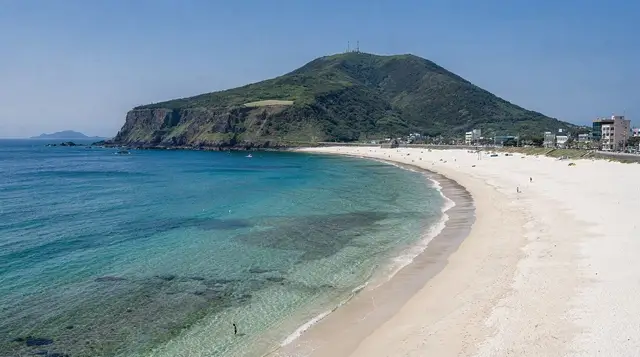
Jeju East: Small Group Healing Tour w/Woman Divers Show
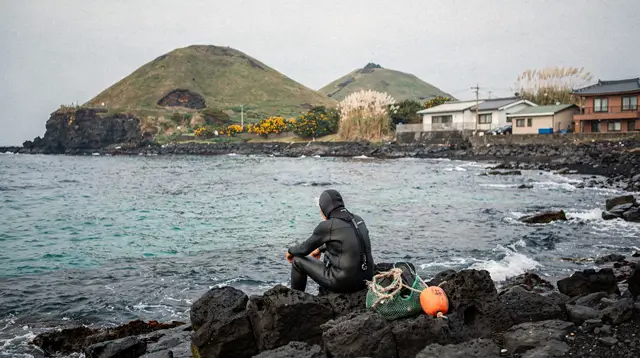
Jeju: Eastern UNESCO Sites Tour with Haenyeo Show
Jeju: Eastern UNESCO Join-in Tour (Seongsan, Haenyeo Show)
Jeju: 4.3 Incident History & Cultural Tour with a Guide
Jeju: 4.3 Incident History & Cultural Tour with a Guide (SW)