
Haenyeo Museum
What is the Haenyeo Museum and where is it?
The Haenyeo Museum is a purpose-built museum in Gujwa (Hado-ri), on Jeju's northeast coast, dedicated to the island's free-diving sea women. Admission is inexpensive (around ₩1,100, roughly US$0.80), it takes about an hour to see properly, and it's the most complete single resource on haenyeo history, equipment, and the tradition's UNESCO-listed status.
The Haenyeo Museum sits on Jeju’s northeast coast in Hado-ri, part of Gujwa, in one of the villages where the island’s free-diving sea women have worked longest and in greatest numbers. It is a small, purpose-built museum rather than a sprawling institution, but it does one job thoroughly: explaining, with real equipment, photographs, and reconstructed village scenes, what haenyeo diving actually involves and why UNESCO recognized it as Intangible Cultural Heritage in 2016.
| Where | Hado-ri, Gujwa, northeast Jeju |
| Cost | Around ₩1,100 for adults (roughly US$0.80) |
| Time needed | 45–60 minutes, longer with the coastal deck |
| Getting there | ~30–40 min from Jeju City by car; limited bus service |
| Closing day | Commonly Mondays — confirm before visiting |
Why this museum exists here specifically
Hado and the surrounding Gujwa coastline were chosen deliberately — this stretch of coast has one of Jeju’s highest concentrations of active diving cooperatives, and the museum was built with input from local haenyeo associations rather than as a purely academic project. That grounding shows in the exhibits: much of what’s on display was donated or lent by actual working and retired divers from nearby villages, not sourced from a generic historical collection.
The museum opened in the early 2000s as part of a broader push to document and preserve haenyeo culture before the generation of divers who learned the trade in childhood aged out entirely. That urgency is still visible in the exhibits’ framing — this is presented as an endangered living tradition, not a settled historical footnote.
What’s inside
Exhibition hall one: daily life and equipment
The ground floor covers the practical reality of haenyeo work: the evolution of diving gear from cotton swimsuits (mulsojungi) worn well into the 20th century to the neoprene wetsuits adopted from the 1970s onward, which extended safe diving time dramatically and changed the economics of the work. Display cases hold actual tools — the bitchang (metal hook for prying abalone off rocks), the mangsari (net bag for the catch), and the tewak (a buoyant marker float, historically made from dried gourd, that also serves as a rest point between dives). A reconstructed haenyeo home interior shows how diving income shaped domestic life in these villages.
Exhibition hall two: history and social structure
The second hall traces haenyeo history further back, including the seasonal migration some Jeju divers made to mainland Korea, Japan, and even Russia’s Far East in search of better catches — a detail many visitors don’t expect. It also covers the social hierarchy among divers (senior divers assigned to deeper, more productive spots) and the significant 1932 Jeju haenyeo anti-colonial protest, in which thousands of divers organized against Japanese colonial exploitation of their catch — one of the largest women-led collective actions in Korean history, and a point of local pride that connects haenyeo identity to broader Korean independence history.
Outdoor areas and viewing deck
Outside, a small memorial and viewing area overlooks the coastline where diving cooperatives still operate. It’s worth the extra 10-15 minutes even without a dive in progress, if only to see the actual working coast the museum’s exhibits describe, rather than leaving with only an indoor impression.
Exhibition hall three: the 1932 protest and modern legacy
A dedicated section expands on the 1932 protest movement referenced in the second hall, using period photographs, replica protest banners, and translated testimony to walk through how the demonstration unfolded — thousands of haenyeo across multiple villages coordinating collective action against colonial-era fishing cooperatives that were systematically underpaying divers for their catch. The exhibit connects this history forward to the mid-20th century decline in diver numbers and the eventual UNESCO recognition, framing the 1932 protest as an early example of the same self-organized, cooperative structure (eochon-gye) that still governs how villages manage diving rights and catch division today.
A smaller multimedia room plays recorded interviews with active and retired haenyeo, subtitled in Korean and English, discussing their working lives in their own words rather than through curatorial narration — often the most affecting part of the museum for visitors, since it replaces statistics about the tradition’s decline with individual voices describing specific dives, specific injuries, and specific reasons they did or didn’t want their daughters to follow them into the water.
Special exhibitions and the surrounding grounds
The museum periodically rotates temporary exhibitions alongside its permanent collection, sometimes focused on contemporary photography projects documenting haenyeo villages, sometimes on academic research into diving physiology, and occasionally on art installations responding to the tradition — worth checking the museum’s current program before visiting if a specific temporary exhibit is a draw. A small gift shop near the entrance sells haenyeo-themed books, postcards, and modest souvenirs, with proceeds generally supporting museum operations and, in some cases, diver welfare programs.
Just outside the main building, a section of preserved or replicated traditional haenyeo housing gives a physical sense of scale and domestic layout beyond the indoor reconstructed interior, and a small cafe near the entrance serves basic drinks and snacks — useful given the museum’s somewhat remote location relative to Jeju City’s wider food options.
Practical visiting information
Admission is nominal — around ₩1,100 for adults (roughly US$0.80), among the cheapest paid attractions anywhere on the island, with further discounts for children, students, and seniors. The museum typically opens around 9am and closes in the late afternoon, with a fixed closing day each week (commonly Mondays, though this shifts occasionally, so a quick check before visiting is worthwhile if it’s the sole stop on your route). Budget 45-60 minutes for the exhibition halls, more if you walk the coastal path outside.
English signage covers the major exhibits reasonably well, though some detailed historical panels remain Korean-only; a staffed information desk near the entrance can usually help fill gaps for visitors without a Korean speaker in the group.
Accessibility and visiting with limited mobility
The museum’s main exhibition halls are ground-level or accessible via ramps and elevators, making it reasonably manageable for visitors with limited mobility or strollers, unlike some of Jeju’s older or more rural cultural sites. The outdoor viewing deck and adjacent coastal path involve some uneven ground typical of a coastal site, so visitors with significant mobility limitations may want to treat the deck as optional rather than essential to a complete visit. Restrooms and rest areas are available within the main building.
Comparing a museum visit to visiting a diving village directly
It’s worth being honest about what the museum can and can’t substitute for. A museum visit guarantees a complete, curated introduction to haenyeo history regardless of weather or diving schedules, with the tradeoff that everything is necessarily mediated through exhibits, video, and static objects rather than direct observation. Visiting a working diving village directly — walking the coastline at Hado or Beophwan in early morning — offers a chance at unmediated, real contact with the tradition, but with no guarantee of actually seeing a dive on any given visit, given how weather- and schedule-dependent real diving work is.
Most visitors get the best of both by doing exactly what the museum’s own location invites: a museum visit followed immediately by a walk along the adjacent coastline, treating the exhibits as preparation for what you might (or might not) see just outside rather than as a complete substitute for it.
Combining a visit with a cultural experience
Because the museum documents the tradition rather than staging live performances, most visitors who want both context and a chance to see (or taste the results of) real diving work pair a museum visit with a separate scheduled experience. Jeju: Haenyeo Culture Experience with Seafood Tasting works well as a same-day pairing, since it operates in the same general area and adds a tasting of freshly harvested seafood the museum’s exhibits only describe in photographs.
For a broader itinerary, the full haenyeo culture guide on this site covers where to responsibly watch working divers, the difference between scheduled demonstrations and unscripted harvest dives, and the tradition’s uncertain future as the diving population ages.
What the museum gets right — and its limits
The museum is honest about the tradition’s decline: exhibits note the drop from an estimated 20,000-plus haenyeo in the 1960s to under 3,000 today, and the rising average age of active divers, without dressing it up as a simple success story of cultural preservation. That candor is worth appreciating, since it would be easy for a tourism-adjacent institution to present a rosier picture.
Its main limitation is scale — this is a focused, single-subject museum, not a comprehensive island history collection, and visitors wanting broader context on Jeju’s history should pair it with a stop at the island’s other major museums or the more general Jeju Folk Village, which situates haenyeo life within the wider context of pre-modern rural living.
Best time of year and day to visit
The museum itself operates year-round with consistent indoor conditions, so seasonal weather affects mainly the outdoor viewing deck and any chance of spotting a working dive rather than the core museum experience. Spring and autumn offer the most comfortable conditions for lingering outside afterward; summer brings heat and humidity that make the indoor exhibits more appealing than a long coastal walk, while winter’s wind can make the outdoor deck genuinely uncomfortable despite haenyeo themselves diving through it in wetsuits. Weekday mornings tend to be quieter than weekend afternoons, when domestic tour groups are more likely to overlap with independent visitors in the exhibition halls.
Nearby stops worth combining
Hado and the surrounding Gujwa coastline are close enough to several other east Jeju attractions to build a coherent half-day loop: Woljeongri Beach’s cafe strip is a short drive away for lunch, and Seongsan Ilchulbong is roughly 30-40 minutes further along the coast road, making it feasible to combine a morning at the museum with an afternoon at Seongsan on the same day. Travelers based further south in Seogwipo should budget closer to an hour each way, which makes the museum a better fit for a Jeju City-based day than a Seogwipo-based one.
Getting there
By car, the museum is roughly 30-40 minutes from central Jeju City along the coastal road through Gujwa, with free parking on site. Public buses connect Jeju City to Hado, but service is infrequent enough that a rental car, taxi, or Kakao T ride is the more time-efficient option for most visitors, especially those combining the museum with other east-coast stops in a single day.
If you want to see real diving, not just the museum
The museum explains the tradition; it doesn’t guarantee you’ll see it in action. For visitors who specifically want the chance of watching a real working dive rather than a curated exhibition, the companion haenyeo diving and sea women culture guide covers where working divers are most active (Hado, Sehwa, and the shore below Seongsan Ilchulbong), the difference between an unscheduled working dive and a scheduled cultural demonstration, and realistic expectations for timing your visit around it. Early morning is generally the better window if a real sighting matters to you, though there’s genuinely no guarantee on any given day.
Museum vs. a photoshoot experience
Visitors sometimes confuse the museum with a photo-forward experience, and it’s worth being clear about the difference before booking either. The museum is a fixed-price, self-guided (or lightly guided) exhibition — no costumes, no posed portraits, and no guarantee of seeing a diver at all. Jeju: Haenyeo Sea Women Photoshoot Experience is the opposite: a staged, hosted photography session built around haenyeo imagery, priced above a simple ticket and run on a booked time slot rather than open museum hours. Pairing the two — museum for context, photoshoot for the visual souvenir — is a common and sensible combination, but treat them as genuinely different products rather than interchangeable options.
A realistic verdict
For anyone interested in Jeju’s culture beyond scenery and food, the Haenyeo Museum is one of the highest-value, lowest-cost stops on the island — cheap, quick, well-curated for its size, and grounded in a real, still-living community rather than a purely historical reconstruction. It is not a full-day destination on its own, but as a 45-60 minute anchor for an east-coast cultural itinerary, it earns its place ahead of several more heavily marketed “museum” attractions elsewhere on Jeju.
Frequently asked questions about the Haenyeo Museum
How much does the Haenyeo Museum cost to enter?
Admission is nominal, around ₩1,100 for adults (roughly US$0.80), with discounts for children, students, and seniors — among the cheapest paid attractions on the island.
How long should I plan for a visit?
About 45-60 minutes for the main exhibition halls, longer if you linger at the outdoor viewing deck or walk down to the adjacent coastline, where diving may occasionally be visible.
Is signage in English?
Yes, most major exhibits have English translations alongside Korean, though some of the more detailed historical panels are Korean-only; a guided tour or the museum’s information desk can fill gaps if needed.
Can I see real haenyeo diving at the museum?
Not guaranteed — the museum sits near active diving villages, and there’s a chance of spotting divers from the outdoor deck or nearby coastline, but working dives happen on the divers’ own schedule, not the museum’s.
Is the museum suitable for children?
Yes, reasonably — exhibits include large-scale dioramas, real diving equipment, and video displays that hold younger visitors’ attention better than a text-heavy museum would.
How do I get to the Haenyeo Museum without a car?
Public buses run from Jeju City toward Gujwa and Hado, but service is infrequent; a rental car or taxi from Jeju City (roughly 30-40 minutes) or Seongsan is the more time-efficient option.
Related guides
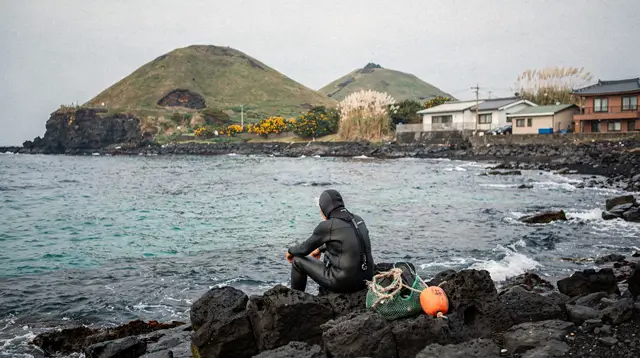
Haenyeo: Jeju's Sea Women
Who Jeju's haenyeo sea women are, where to see them dive, and how to experience this UNESCO-listed living tradition without turning it into a photo op.

Jeju Folk Village
A practical guide to Jeju Folk Village, the open-air museum in Pyoseon: reconstructed houses, admission, hours, and whether it's worth visiting.

The Jeju 4.3 incident: history explained
What the Jeju 4.3 Incident was, why it still matters, and how to visit the Jeju 4.3 Peace Park and related sites respectfully and with proper context.

Jeju's best museums: a 100+ roundup
Jeju has over 100 museums, from serious art institutions to novelty theme collections — a practical guide to which ones actually deserve your time.
Ready to book? Top tours for this guide
We earn a small commission if you book through GetYourGuide — at no extra cost to you. Every tour is hand-picked and verified.
Jeju East: Small Group Healing Tour w/Woman Divers Show
Jeju: Eastern UNESCO Sites Tour with Haenyeo Show
Jeju: Eastern UNESCO Join-in Tour (Seongsan, Haenyeo Show)
Jeju: 4.3 Incident History & Cultural Tour with a Guide
Jeju: 4.3 Incident History & Cultural Tour with a Guide (SW)