
East Jeju itinerary
Three focused days on East Jeju cover the region’s UNESCO trio — Seongsan Ilchulbong, Manjanggul lava tube, and Seopjikoji — plus a Udo Island day trip, without the time lost driving to and from other parts of the island. It suits travelers who’ve decided the east coast is where they want to spend most of their time, rather than a full-island loop trying to cover everything at once. The UNESCO sites day tour guide has more background on why this stretch of coast carries the Global Geopark designation, if that context interests you before diving into the itinerary itself.
| Where | Seongsan, Manjanggul, Seopjikoji, Udo Island |
| Cost | ₩350,000-480,000/person for 3 days, excluding flights |
| Getting around | Rental car, IDP required |
| Best for | Sunrise chasers, UNESCO completionists, island-hoppers |
| Watch | Marine forecast for the Udo ferry crossing |
Who this regional itinerary suits
This works well for sunrise chasers who want an unhurried early morning at Seongsan Ilchulbong rather than a rushed stop on a longer loop, UNESCO Global Geopark completionists, and anyone specifically drawn to Udo’s beaches and cycling routes. It’s a poor fit if West Jeju’s tea fields or a Hallasan summit matter equally to you — those need their own dedicated days, covered in the West Jeju itinerary and the longer 7-day itinerary.
Most visitors from the US, EU, UK, Canada, and Australia get 30 days visa-free on a direct CJU flight, with the K-ETA exemption for these same groups running through December 2026 — a non-issue for a short regional trip like this. The main planning task is watching the marine forecast for your Udo day, since ferry cancellations in rough weather are the single biggest risk to this itinerary’s schedule.
Day-by-day summary
| Day | Focus | Key stops | Overnight |
|---|---|---|---|
| 1 | Arrival | Jeju City, Manjanggul, Bijarim Forest | Seongsan |
| 2 | Sunrise & island | Seongsan Ilchulbong, Seopjikoji, Udo Island | Seongsan |
| 3 | Slow morning | Gimnyeong/Woljeongri, drive back | — |
Day 1: Jeju City arrival and Manjanggul
Land at CJU, collect a rental car in Yongdam (an International Driving Permit is required at pickup), and spend an hour or two in Jeju City before heading east — Dongmun Traditional Market makes an easy lunch stop. Rental agency counters cluster within a five-minute walk of arrivals in Yongdam, and English-language service is standard at the larger chains; bring your home driver’s license plus the International Driving Permit, since both are checked without exception.
By early afternoon, drive 50-70 minutes to East Jeju and Manjanggul lava tube, the longest in the country, formed by flowing lava roughly 200,000-300,000 years ago. Entry runs about ₩4,000, and the public section’s walk takes 40-60 minutes in a constant 11-21°C underground — pack a light layer even in midsummer. There’s no expressway shortcut to this region; the coastal road (1132) or the cross-island route 97 are the main options, both passing through agricultural land and small towns rather than tunneling through.
Jeju Island: Full-Day East Jeju Bus Tour with Entry Fees bundles Manjanggul with other east-coast stops and entry tickets if you’d rather not navigate the drive and parking on your first day. Continue to nearby Bijarim Forest (entry ~₩3,000) or Sangumburi Crater (entry ~₩4,000) in the late afternoon if time allows — both are quieter, flat-trail alternatives to the coastal crowds; the Bijarim Forest guide and Sangumburi Crater guide cover which suits your remaining energy better. Overnight in Seongsan town, where guesthouse rooms run ₩60,000-90,000/night (~US$45-67), positioning you for an early sunrise the next day.
Day 2: Seongsan sunrise, Seopjikoji, and Udo Island
Arrive at Seongsan Ilchulbong 30-45 minutes before sunrise — the only reliable way to see the crater rim without shoulder-to-shoulder crowds in peak season. The climb takes 20-40 minutes on paved steps, entry is around ₩5,000, and exact gate times shift seasonally, so check the current sunrise time the night before rather than assuming a fixed hour. The Seongsan Ilchulbong guide has month-by-month gate times and a more honest assessment of what the climb actually involves. Jeju: Eastern Jeju UNESCO Spots Day Tour covers this stretch with a guide if you’d rather not self-drive in the dark on coastal roads.
Afterward, walk or drive the short distance to Seopjikoji, a grassy headland with a lighthouse and sea cliffs, genuinely quieter once the sunrise crowd disperses. Depending on the season, canola or cosmos flower fields draw a heavier Korean domestic tourist crowd for photos, with a small fee to enter the flower fields when in bloom. By mid-morning, head to Seongsan’s ferry port for the crossing to Udo — the most-visited of Jeju’s outlying islets, flat and bikeable, ringed by beaches with an unusual coral-sand tint, named “cow island” for its shape when viewed from above.
Jeju: Udo Island E-Bike, Seongsan Ilchulbong & Speed Boat combines the ferry crossing with e-bike rental, a practical way to cover the island’s roughly 17km perimeter road without arranging a scooter locally. The round-trip ferry runs ₩8,500-10,500, plus rental costs ₩15,000-25,000 for a half-day; ferries cancel outright in rough seas, so build flexibility into this specific day. Udo’s peanut ice cream, sold at nearly every café on the island, is worth trying, and the island’s own small beaches — with a distinctive coral-sand tint different from the volcanic black sand common elsewhere on Jeju — are worth a swim stop in warmer months. The Udo Island day trip guide has the full ferry timetable pattern and a longer list of what to see beyond the perimeter loop if you want to plan stops in advance. Return to Seongsan by evening.
Day 3: A slower morning, then Jeju City
With the region’s headline sights covered, use the last morning for whatever got skipped — a return to Seopjikoji at a quieter hour, a longer wander through Bijarim Forest’s nutmeg-yew grove (some trees over 800 years old), or simply a slower breakfast in Seongsan town before the drive back. It’s roughly 50-70 minutes back to Jeju City and CJU, comfortable for an afternoon flight but tight for a morning one.
If you have a few spare hours before departure, a stop at Gimnyeong or Woljeongri — coastal towns 10-15 minutes apart along the northeast shore — makes a scenic last look at the region’s beach-town character before returning the rental car with a full tank in Yongdam.
Haenyeo culture along this coast
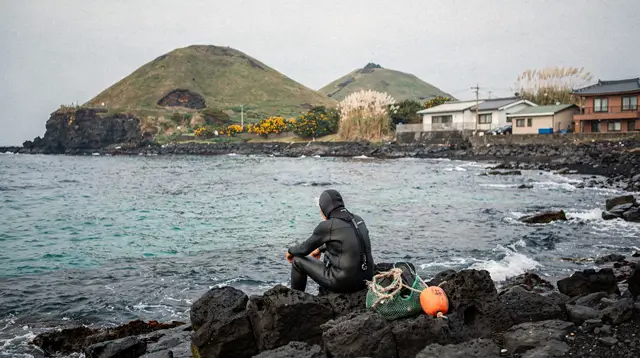
East Jeju is closely tied to haenyeo, the island’s UNESCO-recognized free-diving women who harvest abalone, conch, and seaweed by hand without oxygen tanks, some still diving into their seventies. Seongsan and the nearby coastal villages are among the areas where haenyeo culture is most visible, whether that’s a working diver bringing in the day’s catch or a dedicated cultural stop. The haenyeo diving and women’s culture guide and the haenyeo museum guide both go deeper on this heritage if it’s a priority beyond the UNESCO landmarks themselves, and pairing either with a seafood meal in Seongsan connects the culture directly to what’s on your plate.
Eating on the east coast
Seongsan’s harbor-facing restaurants specialize in jeonbokjuk (abalone porridge) and same-day sashimi, a noticeably different scene from the black-pork restaurants that dominate Jeju City. Expect ₩15,000-25,000 per person for a proper sit-down meal. Gimnyeong and Woljeongri, the beach towns further up the coast, have a growing cafe scene worth a stop if you’re not in a rush between sights — a slower alternative to grabbing a quick bite at Seongsan’s more tourist-oriented strip. On Udo itself, beyond the peanut ice cream, small seafood restaurants near the ferry terminal serve simple, fresh dishes at reasonable prices, since most of the island’s economy still runs on fishing rather than tourism alone.
If it rains
Manjanggul is a solid rainy-day stop since it’s fully underground regardless of surface weather — worth front-loading if day one’s forecast looks poor. If sunrise is rained out on day two, Seongsan Ilchulbong stays open and worth climbing later in the morning; the crater rim view holds up without the sunrise colors. Udo’s ferries are the piece most vulnerable to weather — check the morning sailing schedule directly rather than assuming it will run, and have a backup plan (extra time at Seopjikoji or Bijarim Forest) in case the crossing is cancelled.
Getting around East Jeju
A rental car remains the most practical option for this region — public buses run to Seongsan and Manjanggul from Jeju City, but frequency and coverage make covering multiple sites in a day difficult without one. Within East Jeju itself, distances are manageable: Seongsan to Manjanggul is about 20 minutes, Seongsan to the Udo ferry terminal is 5-10 minutes, and the northeast coastal towns are each 10-15 minutes apart. Naver Map or Kakao Map are the navigation apps to use; Google Maps has meaningful gaps for driving directions in Korea.
Wind is a bigger factor on this coast than in the more sheltered south — a calm morning elsewhere on the island doesn’t guarantee calm conditions at Seongsan or on the Udo crossing. Checking a forecast specific to the Seongsan/Udo area, rather than a general island-wide forecast, is worth the extra step if the ferry crossing or the sunrise climb is central to your plans.
Parking around Seongsan Ilchulbong fills quickly on clear-weather weekends and during the spring bloom season specifically — arriving for the sunrise climb solves this automatically since the lots are near-empty at that hour, but a later visit on a busy day sometimes means a short walk from an overflow lot rather than a spot right at the entrance. Fuel stations are sparser on this stretch of coast than around Jeju City, so it’s worth topping up before heading deep into the Seongsan area rather than assuming a station will be conveniently placed near your next stop.
Budget for three days in East Jeju
Entry fees stay modest throughout: Manjanggul ₩4,000, Seongsan Ilchulbong ₩5,000, Sangumburi and Bijarim Forest ₩3,000-4,000 each, and the Udo round-trip ferry ₩8,500-10,500 plus e-bike rental. A casual lunch in Seongsan town runs ₩10,000-15,000 per person, while a proper seafood dinner along the harbor runs ₩15,000-25,000. Altogether, a realistic mid-range daily budget for food, entry, and local transport comes to roughly ₩60,000-90,000 per person (~US$44-67), before lodging and the car — one of the more affordable regions on the island given how much of its appeal is outdoor and low-cost to access.
Rough per-person total for the three days, split between two travelers: ₩350,000-480,000 (~US$260-355), excluding flights to Jeju. A compact rental car for three days runs roughly ₩150,000-210,000 in low season, more during spring bloom weekends or the July-August peak, and fuel for this region’s relatively compact distances (under 100km total across three days) adds only ₩15,000-20,000.
Traveling solo raises the effective cost of the rental car noticeably since there’s no one to split it with — this is one of the itineraries where Jeju Island: Full-Day East Jeju Bus Tour with Entry Fees can work out close to comparable once fuel, parking, and insurance are factored into a solo rental.
Where to stay
Seongsan is the natural base for this entire itinerary — it puts you closest to the sunrise climb, the Udo ferry, and Manjanggul, all within a 20-minute drive. Its guesthouse scene caters specifically to the sunrise-hiking crowd, with rooms from ₩30,000 dorm beds up to ₩90,000-120,000 for a private mid-range room. Book ahead, especially around weekends — Seongsan’s lodging supply is smaller than Jeju City’s or Seogwipo’s, and it fills quickly during spring bloom season and Korean holiday weeks.
Extending to four or five days
If you have an extra day or two, this itinerary stretches naturally: add an overnight stay on Udo itself rather than a same-day return, giving you the island’s own sunrise or sunset without the pressure of a return-ferry deadline. Alternatively, a fourth day toward Jeju City’s lesser-known corners — a longer look at Dongmun Market, or an evening at Yongyeon gorge in Yongdam — rounds out the trip without requiring a full-island loop. Either extension keeps the compact, low-driving character that makes this regional itinerary appealing in the first place, rather than turning it into a scaled-down version of the 4-day itinerary.
What to skip on this itinerary
Resist adding a Hallasan summit attempt or a West Jeju detour to this trip — both need a full dedicated day of their own, and squeezing either in usually means rushing the region you actually came for. If west-coast cafes and tea fields are calling, treat this as a separate trip using the West Jeju itinerary as a starting point instead of trying to combine both regions in one short visit.
Some roadside attractions near Seongsan charge admission for manufactured “photo garden” experiences with little connection to Jeju’s actual landscape — easy to spot by the tour buses parked outside. The free headland walk at Seopjikoji is a better use of the same time and money.
It’s also worth skipping the temptation to rent a scooter independently on Udo rather than going through an established e-bike rental point — unlicensed scooter rentals near the ferry terminal are a recurring source of overpriced deals and poorly maintained equipment aimed squarely at day-trippers who won’t be back to complain.
Frequently asked questions about the East Jeju itinerary
Is three days enough for East Jeju specifically?
Yes — it covers Seongsan Ilchulbong, Manjanggul, Seopjikoji, and a full Udo Island day without feeling rushed, which is more attention than a full-island loop can give this region.
Do I need a rental car for East Jeju alone?
It helps considerably. Bus routes connect Jeju City to Seongsan and Manjanggul but with limited frequency, making a single focused day difficult without a car or a guided tour.
Can I do Udo without booking anything in advance?
Yes — ferries typically run on a walk-up basis outside peak season, though summer weekends get busy enough to warrant arriving at the port earlier in the day.
Is East Jeju better than West Jeju for a first-timer with limited time?
They offer different experiences — East Jeju has more concentrated headline sights (Seongsan, Manjanggul, Udo), while West Jeju is more about a slower coastal drive and cafe culture. Neither is objectively better; it depends on your priorities.
Can I photograph Seongsan Ilchulbong well without climbing it?
Yes — Seopjikoji’s headland and several coastal pull-offs give strong photo angles of the crater from a distance, useful if the climb itself doesn’t appeal but the view is still a priority.
What if the Udo ferry is cancelled?
Have a backup plan for that day — extra time at Seopjikoji, Bijarim Forest, or Sangumburi Crater all work as substitutes, since none depend on ferry weather.
Should I stay in Seongsan for all three nights, or move?
Staying in Seongsan the whole time is the simplest option and avoids unnecessary driving, since all three days’ sights sit within a short radius.
What’s the best month for this specific itinerary?
October gives the clearest skies for both the Seongsan sunrise and the Udo crossing. Spring (April-May) adds flower-field color at Seopjikoji but with more variable rain and ferry cancellations.
How windy does East Jeju actually get?
Noticeably windier than sheltered Seogwipo on the same day, since this coast faces open ocean on multiple sides. Winter visits can be genuinely blustery, and wind is usually the first thing to cancel a Udo ferry.
What should I pack specifically for this itinerary?
Comfortable closed shoes for the Seongsan climb, a light jacket for Manjanggul’s cool underground temperature, sunscreen for the exposed coastal walking, and a windbreaker layer for the Udo ferry crossing and e-bike ride.
Is this itinerary suitable as a standalone weekend trip?
Yes — three focused days on one region is a realistic long-weekend structure, and East Jeju’s compact geography (nothing more than a 20-minute drive apart) makes it especially efficient for a short visit.
Do I need to book Manjanggul tickets in advance?
Not typically — entry is generally available on arrival without a reservation, though arriving earlier in the day helps avoid the busiest tour-bus windows in peak season.
Can I see haenyeo divers in action on this itinerary?
Sometimes, though not guaranteed — working haenyeo dive on their own schedule around Seongsan and nearby coastal villages, so a dedicated cultural stop or museum visit is a more reliable way to engage with the culture than hoping to spot a diver in the water.
Is Bijarim Forest or Sangumburi Crater the better late-afternoon add on day one?
Bijarim Forest suits a slower, shaded walk through centuries-old nutmeg-yew trees; Sangumburi Crater is a quicker, more open crater-rim view — pick based on whether you want shade and quiet or a faster stop before dinner.
Related guides

East Jeju day tour
What an east Jeju day tour actually covers — Seongsan, Manjanggul, Udo add-ons — with realistic timing, prices, and self-drive comparisons.

Jeju UNESCO sites day tour
Comparing Jeju's UNESCO-labeled day tours — which sites they actually combine, realistic timing, and how to avoid a rushed itinerary.
Haenyeo: Jeju's Sea Women
Who Jeju's haenyeo sea women are, where to see them dive, and how to experience this UNESCO-listed living tradition without turning it into a photo op.

Manjanggul Lava Tube
Manjanggul is Korea's longest lava tube, a UNESCO site near Gimnyeong. Opening hours, entry fees, what the walkable section actually looks like.