
Jeju Hiking Gear & Safety
What's the single most important piece of hiking gear for Jeju?
Proper footwear with real grip and ankle support — Jeju's trails range from Hallasan's loose volcanic rock to the Olle Trail's uneven coastal terrain, and sneakers or sandals are the most common cause of avoidable discomfort and minor injury on the island's trails.
| Key gear | proper footwear with ankle support and grip |
| Winter essential | crampons for Hallasan summit trails (rentable) |
| Water | 1.5-2 liters minimum for a full Hallasan day |
| Emergency number | 119 (fire, rescue, ambulance), island-wide |
| Biggest risk | missing Hallasan’s enforced gate cutoff time |
Jeju’s hiking options span a genuinely wide range — from a 20-minute grassy oreum climb to a 9-hour Hallasan summit attempt — and the gear and safety priorities shift considerably depending on which end of that range you’re tackling. This guide covers what actually matters by trail type and season, rather than a generic packing list that over-prepares for an easy oreum and under-prepares for a Hallasan winter summit.
Footwear: the one thing worth spending on
Across every trail type on Jeju, proper footwear makes the biggest practical difference. Hallasan’s summit trails — particularly Gwaneumsa’s rocky upper section — genuinely punish sneakers and sandals with loose volcanic rock underfoot. The Olle Trail’s coastal sections mix paved paths with uneven rock near cliffs, where ankle support matters more than most walkers expect from a “coastal walk.” Even quick oreum climbs benefit from real shoes rather than sandals, given how often the paths include loose gravel or root-covered dirt. A mid-weight hiking shoe with decent tread covers the large majority of Jeju’s trail needs without requiring full mountaineering boots.
Layering for temperature swings
Jeju’s coastal temperature doesn’t reflect conditions at elevation or in exposed coastal wind. On Hallasan, expect the summit to run noticeably cooler and windier than the trailhead — a difference of several degrees plus wind chill is common even in summer. On the Olle Trail, exposed coastal stretches catch direct ocean wind that inland areas don’t experience. A packable wind or rain layer is worth carrying even on days that start warm and clear at sea level, since conditions change with both elevation and time of day.
Hallasan-specific gear (summit trails)
For a Seongpanak or Gwaneumsa summit attempt, pack for a genuine full-day hike: 1.5-2 liters of water minimum, real food (there’s no service anywhere on the trail), a headlamp in case your descent runs later than planned, and a basic first aid kit. In winter (roughly December-March), crampons are effectively mandatory for the upper sections of both summit trails — rentable near the trailheads rather than something you need to bring from home. Trekking poles genuinely help on Gwaneumsa’s steeper switchbacks and on long descents on either trail, where knee strain accumulates over the multi-hour return. See the complete Hallasan hiking guide for trail-specific detail.
Olle Trail-specific gear (coastal walking)
Sun protection matters more here than on any other Jeju hiking category — most Olle Trail routes run along exposed coastline with minimal shade for hours at a stretch. A hat, sunscreen, and sunglasses are genuinely more important on a full Olle Trail day than on a forested Hallasan trail. Water matters too, since services along the routes are sporadic rather than continuous — don’t assume you’ll pass a shop exactly when you need one. See the Olle Trail overview for route-specific planning.
Oreum-specific gear (short climbs)
For the large majority of quick, grassy oreum climbs, a lighter kit suffices: normal walking shoes, water for a short outing, and sun protection given how exposed most oreum summits are. For longer, more forested oreum hikes like Geumun-oreum, scale up toward Olle Trail-level preparation — more water, sturdier shoes, and a longer time buffer. See the best oreums guide and Geumun-oreum crater hike guide for specifics.
Weather checking — a genuine safety habit, not just comfort
Check the mountain-specific forecast for Hallasan (not just the general Jeju coastal forecast) before any summit attempt — cloud cover and localized weather at elevation differ meaningfully from conditions at sea level. For the Olle Trail and oreums, general Jeju forecasts are more directly applicable, but still check for wind advisories, since exposed coastal and summit sections amplify wind effects beyond what a simple temperature forecast suggests. Typhoon season (late August-September) and monsoon rain (July) both carry real cancellation and safety risk across all trail types — see the typhoon season guide for planning around that window.
Reservation and gate-time discipline
For Hallasan’s summit trails specifically, respecting the gate cutoff time isn’t optional — rangers enforce it, and it exists because descending in darkness on rocky mountain terrain is genuinely dangerous. If you’re behind schedule approaching a checkpoint, turn back rather than pushing forward hoping to make an exception; there generally isn’t one. This is the single most common safety-related mistake among underprepared Hallasan hikers: underestimating descent time and running into an enforced turnaround.
Mobile signal and emergency contacts
Mobile coverage is generally reliable across most of Jeju’s trail network, including much of Hallasan’s summit trails, though pockets of weak signal exist in dense forest sections and some valleys. Korea’s emergency number is 119 for fire, rescue, and ambulance services, operating island-wide. If hiking solo, telling someone your planned route and expected return time is a reasonable precaution regardless of trail difficulty, particularly for a full Hallasan summit day.
Guided options if you’d rather not manage gear and logistics alone
For Hallasan specifically, guided options such as Jeju: Hiking Mt. Hallasan, South Korea’s Highest Mountain and, for winter, Jeju Island: Hallasan Mountain Winter Scenery Guided Tour supply crampons and handle reservation logistics as part of the booking, which removes a genuine planning burden for visitors unfamiliar with the mountain’s systems.
A realistic packing checklist
For a Hallasan summit day: hiking shoes, layers including a wind/rain shell, 1.5-2 liters of water, real food, headlamp, first aid basics, crampons in winter, trekking poles (optional but useful). For an Olle Trail day: walking shoes with grip, sun hat and sunscreen, water, snacks, a phone with an offline map or downloaded route. For a quick oreum climb: normal shoes, water, sun protection — genuinely not much more than that for the shorter options.
Wildlife and insects to be aware of
Jeju’s trails are generally low-risk in terms of wildlife — there are no dangerous large mammals to worry about — but seasonal insects matter more than most visitors expect. Mosquitoes and other biting insects are common in forested lower sections of Hallasan and along shaded Olle Trail stretches during warmer months, making insect repellent a genuinely useful addition to a summer packing list. Snakes exist on the island but are rarely encountered by hikers staying on marked trails; standard caution (watching your footing on rocky or overgrown sections, not reaching blindly into vegetation) is sufficient for the vast majority of visitors. Grazing livestock on some oreums is a more common encounter than any wildlife hazard — give animals space and stay on established paths.
Travel insurance and medical preparedness
Given how physically demanding a Hallasan summit attempt genuinely is, travel insurance covering hiking activities and emergency medical evacuation is worth checking before a trip that includes a summit attempt, particularly for visitors without existing coverage that extends internationally. South Korea’s medical system is generally excellent and accessible, and Jeju has hospital facilities in both Jeju City and Seogwipo capable of handling most hiking-related injuries, but costs for foreign visitors without applicable insurance can add up quickly for anything beyond minor treatment.
Rental gear availability
Crampons for winter Hallasan hikes are rentable near the trailheads rather than something visitors need to source and pack from home, which meaningfully reduces the gear burden for a winter trip. Some rental shops near major trailheads and in Jeju City also offer broader hiking gear rental — poles, daypacks, and occasionally rain shells — for visitors who’d rather not travel with bulky equipment for a single hiking day. Availability and selection vary by shop and season, so it’s worth checking ahead rather than assuming a specific item will be available on the day.
A note on group hiking vs solo hiking
Hiking with at least one companion is generally the safer choice on Hallasan’s longer summit trails, given the genuine physical demands and the consequences of an injury or exhaustion incident far from the trailhead. Solo hiking is common and generally safe on well-traveled routes like Seongpanak, Olle Trail sections, and popular oreums, but carries more risk on quieter, less-trafficked trails. If hiking solo, sharing your planned route and expected return time with someone, and carrying a fully charged phone, are reasonable minimum precautions regardless of which trail you choose.
Packing differently for different Jeju hiking styles
A visitor planning only oreum climbs and Olle Trail walking can travel with a genuinely light kit — comfortable walking shoes, a sun hat, and a small daypack cover the large majority of needs, without any specialized mountain gear. A visitor planning a Hallasan summit attempt needs to pack meaningfully more seriously: proper hiking shoes with ankle support, layers for temperature swings of 10°C or more between trailhead and summit, and — for a winter attempt — crampons and possibly trekking poles. Recognizing which category your planned hiking falls into before you pack avoids both the discomfort of underpacking for a summit day and the unnecessary bulk of over-packing mountain gear for what turns out to be a series of easy oreum climbs.
Renting vs bringing your own gear
For visitors who hike infrequently at home, renting gear locally — particularly crampons for a winter Hallasan attempt — is generally more practical than purchasing equipment you’ll rarely use again. For more frequent hikers with their own well-fitted boots and preferred gear, bringing familiar equipment from home reduces the risk of discomfort from unfamiliar rental gear, particularly footwear, where fit matters enormously over a multi-hour hike. There’s no universally correct choice here; weigh your own hiking frequency and gear familiarity against the convenience of not traveling with bulky equipment.
A final honest note on safety culture
Jeju’s hiking infrastructure — reservation systems, marked trails, rescue services, generally reliable mobile coverage — reflects a well-managed, relatively low-risk hiking environment by global standards. This shouldn’t translate into complacency, particularly on Hallasan’s summit trails, where the combination of distance, elevation, and enforced gate times catches out visitors who treat the mountain too casually. Respecting the systems in place — reservations, gate cutoffs, seasonal closures — isn’t bureaucratic friction; it’s the accumulated result of managing a genuinely demanding mountain environment safely for large numbers of visitors with widely varying experience levels.
Clothing fabric choices that actually matter
Beyond the general layering principle, fabric choice makes a real practical difference on Jeju’s trails. Moisture-wicking synthetic or wool-blend base layers dry faster and stay more comfortable than cotton, which retains sweat and dries slowly — a genuine issue on longer, more strenuous hikes like a Hallasan summit attempt where you’ll sweat heavily on the ascent and then cool down rapidly at the exposed summit. A packable outer shell that blocks wind, even a light one, outperforms a heavier jacket you’re reluctant to pack because of its bulk, since you’re more likely to actually bring and use a compact layer than leave a bulky one behind.
Preparing children and less experienced hikers
If you’re hiking with children or companions newer to sustained physical activity, set realistic distance and time expectations before starting rather than assuming everyone will match an experienced hiker’s pace. Building in extra rest stops, carrying additional snacks specifically for energy dips, and choosing one of Hallasan’s shorter non-summit trails or a quick oreum climb over a full summit attempt are all reasonable adjustments that make hiking genuinely enjoyable rather than a forced march for less experienced members of your group.
A final gear check before any Jeju hike
Regardless of which trail you’ve chosen, run through the same basic check before setting out: proper footwear for the specific terrain, weather-appropriate layers checked against a mountain-specific (not just coastal) forecast, enough water and food for the planned duration plus a margin, and — for Hallasan’s summit trails specifically — a confirmed reservation and a realistic understanding of the gate cutoff time relative to your planned pace. This simple checklist, repeated before every hike regardless of how familiar the trail becomes, is the single most effective habit for staying safe and comfortable across Jeju’s entire range of hiking options.
Building good habits for future trips
If Jeju is your introduction to elevation hiking or multi-hour trail days more broadly, the gear and safety habits covered here — proper footwear, layering, checking a location-specific forecast, respecting posted cutoffs and closures — transfer directly to hiking destinations well beyond the island. Treating a Hallasan summit attempt as a genuine, if moderate, mountain hiking experience rather than a casual vacation activity is good practice regardless of where your next hiking trip takes you after Jeju.
Where this gear list applies most directly
This guide’s advice applies most directly to the four Hallasan trails — Seongpanak, Gwaneumsa, Yeongsil, and Eorimok — plus the Olle Trail and oreum hikes covered elsewhere on this site. If your trip also includes a sunrise attempt at Seongsan Ilchulbong, the same layering and footwear principles apply, scaled down given that hike’s shorter duration.
A note on packing light without under-preparing
There’s a genuine tension between packing light for a multi-activity Jeju trip and carrying enough gear for a demanding hike like a Hallasan summit attempt. The practical resolution most experienced travelers land on is packing a compact, dedicated hiking kit — lightweight shell, packable poles if used, a small first aid kit — that stays largely unused on non-hiking days but takes up minimal space and weight in a suitcase, rather than either over-packing generic gear for the whole trip or under-preparing for the one or two days that actually demand it.
Gear priorities by trail type: a quick comparison
| Oreum climb | Olle Trail day | Hallasan summit | |
|---|---|---|---|
| Footwear | normal walking shoes | grippy walking shoes | hiking shoes/boots with ankle support |
| Water | for a short outing | steady supply, sporadic shops | 1.5-2L minimum, no service |
| Sun protection | important, exposed summits | essential, hours of exposure | less critical on forested lower sections |
| Layers | rarely needed | light wind layer useful | full layering, temperature swings 10°C+ |
| Winter extras | none | none | crampons effectively mandatory |
Reading trail markers and signage
Jeju’s major trails — Hallasan’s four summit routes, the numbered Olle Trail courses, and marked oreum paths — use reasonably consistent signage with distance markers and, on Hallasan specifically, checkpoint boards showing remaining distance and estimated time to the next point. Olle Trail markers use a distinctive blue-and-orange ribbon-and-arrow system, useful for confirming you’re still on-route at junctions where the path isn’t obvious. Learning to recognize these systems before setting out, rather than relying purely on a phone app, is a useful backup given that battery life and signal aren’t guaranteed for a full-day hike.
Day pack essentials beyond the big items
Beyond footwear, layers, and water, a few smaller items round out a well-prepared day pack: a portable battery pack for your phone (useful for offline maps and photos on longer days), a lightweight dry bag or ziplock for electronics if rain is possible, and a few high-energy snacks (nuts, energy bars) that don’t require refrigeration or preparation. None of these are dealbreakers if forgotten, but they meaningfully improve comfort on a full-day Hallasan attempt or a long Olle Trail stretch where the nearest shop might be an hour away.
First aid and what to actually carry
A basic first aid kit for Jeju hiking doesn’t need to be elaborate: blister plasters (footwear-related blisters are the most common minor injury across all trail types), a small bandage and antiseptic wipes, any personal medication, and a whistle for the rare case of needing to signal for help on a quieter trail. For a Hallasan summit attempt specifically, adding a foil emergency blanket is a reasonable low-weight addition given how much cooler and windier the summit runs relative to the trailhead.
Frequently asked questions about Jeju hiking gear and safety
Do I need crampons to hike Jeju?
Only for Hallasan’s summit trails in winter (roughly December-March), when snow and ice make the upper sections genuinely hazardous without them. They’re not needed for the Olle Trail or most oreum hikes, and rentable near the Hallasan trailheads.
Is Hallasan dangerous?
Not inherently, but the summit trails are long (17-19km round trip), involve real elevation and rocky terrain, and have strict gate cutoff times — the main risks are exhaustion, getting caught by the cutoff, and being unprepared for temperature drops at elevation, not technical mountaineering hazards.
What should I do if the weather turns while hiking?
On Hallasan, turn back before the gate cutoff time regardless of how close you are to the summit — rangers enforce these for safety reasons. On the Olle Trail and oreums, seek shelter or return to the trailhead if conditions worsen significantly; most routes are short enough to abandon safely.
Are there mobile signal and emergency services on the trails?
Mobile coverage is generally reliable across most of Jeju’s trail network, including much of Hallasan, though pockets of weak signal exist in valleys and dense forest. Emergency services (119) operate island-wide.
What food and water should I carry?
For any hike over 2-3 hours, carry more water than feels necessary — there’s no food or water service on Hallasan’s trails or most oreums, and only sporadic shops along the Olle Trail. A rough guide is 1.5-2 liters per person for a full Hallasan summit day.
Do I need hiking poles?
Not essential but genuinely useful on Hallasan’s steeper sections (particularly Gwaneumsa) and helpful for knee strain on long descents anywhere on the island.
Is sun protection really necessary on forested trails?
Less critical on Hallasan’s forested lower sections or Geumun-oreum’s tree cover, but essential on the Olle Trail’s exposed coastal stretches and most open grassy oreums, where shade is minimal for hours at a time.
Related guides
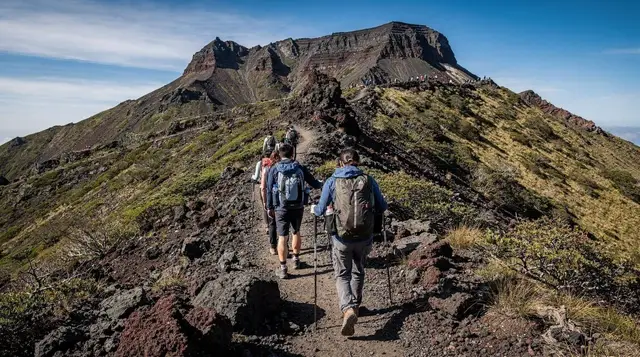
Hiking Hallasan: Complete Guide
Compare all four Hallasan trails — Seongpanak, Gwaneumsa, Yeongsil, Eorimok — by distance, difficulty, reservation rules, and what each one delivers.

Hallasan: Seongpanak Trail
Seongpanak is the longer but gentler of Hallasan's two summit trails — 9.6km one way, reservation required, 8-9 hours round trip.

Jeju Olle Trail: Overview (27 Routes)
Jeju Olle Trail is a 27-route, 437km coastal walking network circling the island. Here's how the system works and which routes to prioritize.

Best Oreums to Hike in Jeju
Jeju has over 360 oreums (volcanic cones). Here's how to pick which ones to climb, from 20-minute grassy hills to longer forested craters.
Ready to book? Top tours for this guide
We earn a small commission if you book through GetYourGuide — at no extra cost to you. Every tour is hand-picked and verified.
Jeju: Hiking Mt. Hallasan, South Korea's Highest Mountain
Jeju Island: Hallasan Mountain Winter Scenery Guided Tour
Jeju: Mt. Hallasan Small-Group Nature Hike & Lunch
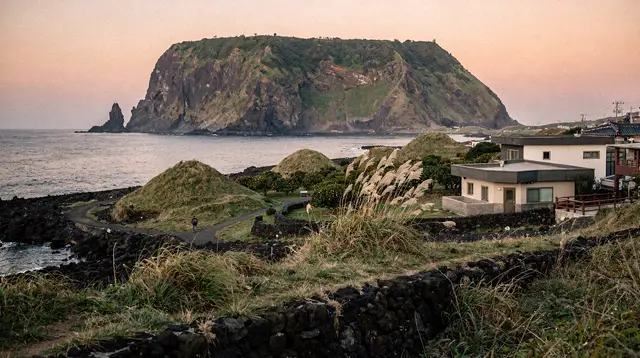
Jeju: UNESCO Sites & Sunrise Peak Hiking Small Group Tour
Jeju South: Small Group Healing Tour w/Mt.Halla & Olle Trail