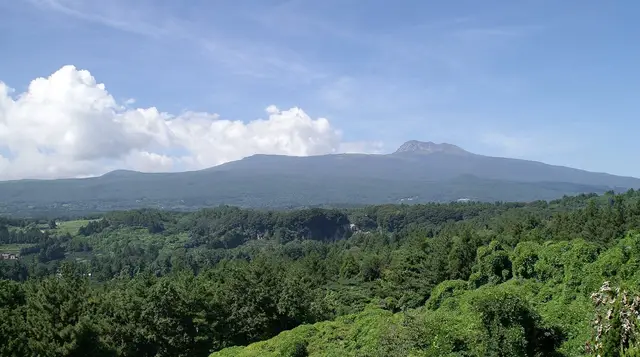
Best day tours in Jeju
What's the best day tour in Jeju?
There isn't a single best one — a shared bus tour (around ₩60,000-90,000) covers east or west Jeju's highlights cheaply, while a private guided car tour (₩150,000-250,000 for the vehicle, split between passengers) gives you flexible pacing and pickup. Pick based on group size and how much you value flexibility over cost.
Jeju’s tour market splits cleanly into three shapes: shared bus tours that loop a region’s main sites for a flat per-person fee, private car or van tours priced per vehicle rather than per head, and UNESCO-themed routes built around the island’s three natural heritage sites. None of them is objectively “best” — the right pick depends on group size, budget, and how much you care about setting your own pace versus having someone else handle the driving and parking. This guide walks through each shape in turn, with representative real tours and their actual prices, so you can match a format to your own trip rather than guessing from a listing title alone.
| Bus tour | Around ₩60,000-90,000/person, fixed itinerary |
| Private car/van | Around ₩150,000-280,000/vehicle, flexible stops |
| Time needed | 8-10 hours, door-to-door pickup |
| Lunch | Usually separate, ₩10,000-15,000 |
| Best booked | 3-5 days ahead; 1+ week in peak season |
Why take a tour instead of renting a car
A rental car is still the most flexible way to see Jeju, and most independent travelers should default to it (an International Driving Permit is required). But there are specific situations where a tour genuinely beats driving yourself: sunrise departures to Seongsan Ilchulbong in east Jeju where a shared vehicle means someone else navigates unfamiliar roads in the dark, solo travelers who don’t want to split a rental cost four ways for one day, and visitors without a permit who still want to cover ground beyond what buses reach easily. A tour also removes the parking-lot hunt at popular sites during peak season, which can eat 15-20 minutes at Seongsan or Manjanggul on a busy Saturday.
How the day-tour market breaks down
Bus tours (sometimes called “regular tours” on booking platforms) are the cheapest option, running roughly ₩60,000-90,000 per person for a full day with a fixed group itinerary and fixed departure times. Private car or van tours cost more in absolute terms — often ₩150,000-280,000 for the vehicle — but split between 2-4 passengers, the per-person cost can land close to a bus tour while adding flexibility on stops and timing. UNESCO-themed tours specifically bundle Seongsan Ilchulbong, Manjanggul Lava Tube, and sometimes Hallasan or Jusangjeolli Cliff into a single day built around the island’s three natural heritage designations.
East Jeju day tours
East Jeju’s day tours concentrate on the UNESCO trio near Seongsan plus Manjanggul and the inland craters. Jeju Island: Full-Day East Jeju Bus Tour with Entry Fees is the standard shared-bus option here, bundling stops with entry tickets included, which simplifies budgeting since you’re not paying separate admission at each gate. The full East Jeju day tour guide breaks down exact stops and compares it against driving the same loop yourself.
West and south Jeju day tours
West Jeju’s tours lean toward Hallim Park, Osulloc’s tea fields, and the Sanbangsan-Jusangjeolli coastal stretch in west Jeju, while south Jeju (the Seogwipo side) covers the waterfall circuit and Jungmun resort area. Jeju Island: Full-Day Customizable Private Guided Car Tour works for either region since the itinerary adjusts to what you actually want to see rather than following a fixed bus route. See the West Jeju day tour and South Jeju day tour guides for region-specific stop lists.
UNESCO-themed tours
For visitors who want to specifically tick off Jeju’s UNESCO Global Geopark and World Natural Heritage sites in the fewest number of days, dedicated UNESCO tours combine Seongsan, Manjanggul, and sometimes Hallasan into one route rather than splitting them across east and south itineraries. The UNESCO sites day tour guide covers which combination of sites each operator’s route actually includes — this varies more than the marketing copy suggests, so check the stop list rather than the tour name alone.
Private full-day tours
If your group is 2-4 people, or you have specific priorities (a particular waterfall, extra time at a photography spot, skipping a stop that doesn’t interest you), a private tour makes the per-stop time budget yours to control. Jeju Island: 1 Day Private Tour is a flexible full-island option that a driver-guide customizes around your priority list rather than a fixed template. The tradeoff is cost: a private vehicle runs roughly double or triple a shared bus seat, even split among passengers. The private vs group tours guide walks through the actual cost math for different group sizes.
What a typical tour day actually feels like
Most bus tours run a similar rhythm regardless of region: an 8:00-9:00 a.m. pickup at your hotel or a central meeting point, a 45-60 minute drive to the first stop while the guide runs through the day’s plan and some background on Jeju’s volcanic geology, then a sequence of 60-90 minute stops separated by 20-30 minute drives. Lunch lands roughly in the middle of the day, often at a set-menu restaurant the operator has an arrangement with rather than a spot you’d necessarily choose independently — food is generally decent but rarely a highlight in itself. The afternoon repeats the stop-drive rhythm before a return drop-off in the early evening, typically 5:00-6:30 p.m. depending on the route length and how much the day has run to schedule.
Group size and who you’ll be traveling with
“Small group” is a marketing term used loosely across the industry, and it’s worth checking the actual capacity listed for a tour rather than trusting the label alone — a “small group” tour can range from 8 people in a van to 30-plus in a full coach, and the experience differs meaningfully between those. Larger buses mean slower boarding and disembarking at each stop, and less flexibility if the group runs behind schedule. If a specific number matters to you, most listings state vehicle type (van versus full-size bus) even when they don’t state passenger count directly, which is a reasonable proxy.
Refunds, cancellations, and rebooking
Weather-related cancellations are the most common reason a Jeju day tour changes plans, particularly during typhoon season (late August-September) and occasional winter storms. Most booking platforms offer a full refund or free rebooking for operator-initiated cancellations, but the policy for traveler-initiated changes (you decide not to go) is usually stricter, with cutoffs ranging from 24 hours to a few days before departure depending on the listing. Read the specific cancellation policy before booking if your travel dates carry any weather risk, rather than assuming standard refund terms apply.
How Jeju’s tour market differs from mainland Korea
Compared to Seoul or Busan, where day tours often center on a single dense area with strong public transit as a backup option, Jeju’s attractions are more spread out and public transit between them is thinner, which makes tours (or a rental car) more genuinely useful here than in mainland tourist hubs where independent travel is easier to piece together. This is also why Jeju’s tour market skews slightly more expensive per stop than comparable mainland day tours — the driving distances and lower population density mean higher per-tour operating costs for operators.
Traveling with kids or older family members on a group tour
Group bus tours generally accommodate families reasonably well, though the fixed pace can be a mismatch for very young children who need unscheduled breaks, or older travelers who move more slowly at each stop. If your group includes either, check whether the specific tour’s stop list involves stairs or uneven terrain (Seongsan’s crater climb, for instance) and consider whether a private tour’s adjustable pacing — covered in the private vs group day tours guide — better fits your group’s actual needs. The Jeju with kids guide covers family-specific attraction options in more depth.
What’s usually included (and what isn’t)
Transport and a guide are standard across nearly every tour type. Entry tickets are inconsistent — some bus tours bundle admission to Seongsan, Manjanggul, or Hallim Park directly into the price; others leave you to pay at the gate (typically ₩3,000-5,000 per site). Lunch is almost always separate, paid on the day at a restaurant the group stops at, usually ₩10,000-15,000 for a set meal. Read the specific listing’s inclusions section before assuming everything is bundled — the price difference between “with entry fees” and “transport only” versions of similar-looking tours can be ₩10,000-15,000 per person.
Booking tips and timing
Book 3-5 days ahead in shoulder season, and a full week or more during cherry blossom weeks (late March-April), October, and summer weekends, when the popular routes sell out. Morning departures (typically 8:00-9:00 a.m. pickup) are standard; sunrise-specific tours to Seongsan leave well before dawn and have their own separate booking category rather than being an add-on to a regular day tour. Confirm the pickup location — most operators cover Jeju City and Seogwipo hotels, but not every guesthouse in smaller towns.
Realistic budget for a day tour
A shared bus tour with entry fees included runs ₩60,000-90,000 per person, plus ₩10,000-15,000 for lunch — call it ₩80,000-105,000 (roughly US$59-78) total for the day. A private full-day car tour for two people splits a ₩180,000-250,000 vehicle fee to roughly ₩90,000-125,000 per person before lunch, closing most of the gap with a bus tour while adding flexibility — the math favors private tours more as group size grows toward 3-4 people. For a family or larger group planning a full trip, the budget calculator tool helps estimate total trip costs including tours.
Choosing between the options
If you’re solo or in a pair, don’t have a car, and want the cheapest option, a shared bus tour covering your target region is the straightforward choice — browse the full day-trips section for region-by-region options. If you’re a family or group of 3-4 with specific must-see stops or an odd schedule (an early sunrise start, or wanting extra time at one particular site), a private tour’s flexibility usually justifies the added cost. If you’re arriving without your own multi-day itinerary at all, see is a Jeju day trip from Seoul worth it. If you’re island-hopping and time-limited — for example, arriving on a cruise — see the dedicated shore excursions guide, which covers tours built specifically around limited port time.
A note on tour quality
Not every operator on a booking platform runs the same quality of tour despite similar-looking itineraries and prices. Check recent reviews for group size (a “small group” tour that’s actually 30+ people defeats much of the point), guide language ability, and whether the route matches what’s advertised — some budget tours pad the schedule with a jewelry or ginseng shop stop that eats 30-45 minutes without much benefit to visitors.
Insurance, safety, and what operators are actually liable for
Reputable operators carry liability insurance covering the vehicle and guided activities, but this doesn’t extend to personal travel insurance for medical issues or trip interruption — a separate travel insurance policy is worth having regardless of which tour type you choose, particularly for activities involving any hiking (Seongsan’s climb, Hallasan viewpoints) where uneven terrain carries some fall risk. Guides are generally trained in basic first aid, but for anything beyond minor issues, Jeju has hospitals in both Jeju City and Seogwipo capable of handling more serious situations, and tour operators can direct you there if needed.
Payment methods and currency
Most tours booked through international platforms are paid in advance online in your home currency, with no cash needed on the day beyond lunch and any optional add-ons like souvenir purchases. If you’re booking directly with a local operator rather than through a platform, confirm whether they accept card payment on the day — some smaller operators, particularly for private tours arranged informally, still prefer cash in Korean won. Either way, carrying a modest amount of cash (₩30,000-50,000) for lunch and incidentals is a reasonable habit regardless of how the tour itself is paid.
A quick reference for first-time visitors
If this is your first Jeju trip and you’re unsure where to start, a single east Jeju bus tour on day one (covering Seongsan and Manjanggul) is a reasonable way to get oriented to the island’s geography and volcanic geology before deciding whether to rent a car for the remaining days. Many first-time visitors find that a guided first day, followed by self-driven exploration once they’ve seen how the island’s roads and distances actually work, strikes a good balance between convenience and independence. The first-time Jeju planning guide covers this broader sequencing question in more depth.
Language and communication on group tours
International-platform tours run with English-speaking guides as standard, but the depth of that English varies — some guides deliver polished, detailed commentary, while others handle logistics fluently but keep cultural or historical explanations brief. If deep commentary on Jeju’s volcanic geology, haenyeo culture, or the island’s history matters to you specifically, checking recent reviews for comments on guide communication is worth the extra few minutes before booking, since a listing’s language tag alone doesn’t capture that nuance.
Combining a tour day with self-driven days
A common and sensible pattern for first-time visitors is to book one guided day tour early in the trip, then rent a car for the remaining days once the island’s geography and driving patterns feel more familiar. This sequencing works because the hardest part of self-driving Jeju for a first-timer isn’t the driving itself — it’s not knowing which regions cluster together, how long transfers actually take, or which sites need advance booking.
A single guided day, particularly one covering a UNESCO-heavy east Jeju route, gives you that context from a guide who explains it along the way, making the subsequent self-driven days noticeably less stressful to plan. Travelers taking this approach should still book their rental car separately in advance — see the car rental and IDP guide — since combining a tour and a rental within the same trip requires no special coordination beyond having both bookings confirmed for non-overlapping days.
When a private tour clearly wins over a bus tour
Beyond the group-size math already covered, a handful of specific situations make a private tour worth the added cost even for smaller groups: traveling with an older family member or anyone with mobility limitations who needs slower pacing at each stop; wanting extra time at one specific site (a longer Seongsan photography session, for instance) without a fixed group schedule cutting it short; or building a day around a niche interest — a specific waterfall, a particular café, a photography-focused route — that no standard bus itinerary covers. In each of these cases, the flexibility itself is the product being purchased, not just the transport, and it’s worth weighing that against the roughly double-to-triple cost per person compared to a shared bus seat.
Tour type comparison
| Format | Cost | Flexibility | Best for |
|---|---|---|---|
| Shared bus tour | ₩60,000-90,000/person | Fixed stops and timing | Solo/pairs, budget-conscious |
| Private car/van tour | ₩150,000-280,000/vehicle | Fully customizable | Groups of 2-4, specific priorities |
| UNESCO-themed tour | ₩60,000-100,000/person | Fixed, geopark-focused | First-timers ticking off heritage sites |
| Sunrise-specific tour | Varies, often bundled | Fixed pre-dawn departure | Seongsan sunrise without a solo dark drive |
Choosing a tour based on your itinerary stage
Timing a tour within a longer trip matters as much as picking the right format. Visitors following a first-timer Jeju itinerary often benefit from scheduling a guided day early in the trip — it builds geographic familiarity that makes any later self-driving days easier. For a 3-day itinerary or shorter trip, a single well-chosen bus tour covering one region efficiently often beats trying to combine two half-day tours, since transfer time between operators eats into actual sightseeing. Longer stays, like a 7-day itinerary, have more room to mix a guided day with several self-driven days, getting the benefits of both formats.
Frequently asked questions about Jeju day tours
Do I need to book a day tour in advance, or can I book same-day?
Popular bus tours and UNESCO-themed routes fill up 1-3 days ahead in peak season (spring bloom weeks, October, summer weekends). Private car tours are more flexible and can sometimes be booked the day before, but booking 3-5 days out gives more vehicle and guide choice.
Are Jeju day tours worth it if I already have a rental car?
Usually not for the exact same route — you’d be paying for something you can drive yourself. They make more sense for specific niches: sunrise departures where a group vehicle beats a solo pre-dawn drive, UNESCO sites with tricky parking, or days you’d rather not navigate at all.
What’s included in a typical bus tour price?
Transport and a guide, and often entry tickets to major stops (check the listing — some bundle Seongsan or Manjanggul admission, others don’t). Lunch is usually separate and paid on the day, typically ₩10,000-15,000.
How many stops does a full-day tour typically cover?
Most east or west Jeju bus tours cover 4-6 stops across 8-10 hours, including a lunch break. Cramming in more than that tends to mean rushed 15-20 minute visits rather than time to actually walk a site.
Can I do a day tour without speaking Korean?
Yes — the tours listed on booking platforms aimed at international visitors run in English (sometimes with other language options), and guides are used to explaining sites for foreign travelers.
What happens if weather cancels part of the tour?
Operators usually swap an outdoor stop (like a crater hike) for an indoor alternative rather than cancelling outright, though heavy rain or high wind can shorten a route. Confirm the operator’s weather policy before booking if you’re traveling in typhoon season (late August-September).
Can I cancel or change a booked day tour?
Most platforms allow free cancellation up to 24-72 hours before departure, though this varies by listing. Operator-initiated cancellations (usually weather) are typically refunded in full or offered a free rebooking.
Are Jeju day tours more expensive than similar tours in mainland Korea?
Slightly, on a per-stop basis — Jeju’s attractions are more spread out and public transit thinner than in Seoul or Busan, which pushes operator costs (and prices) up somewhat compared to mainland day tours covering a similarly dense area.
Related guides

Private vs group day tours in Jeju
When a private car tour beats a shared bus tour in Jeju, with real per-person cost math for solo travelers, couples, and groups of four.

Shore excursions for cruise passengers in Jeju
How to pick a Jeju shore excursion that actually fits your cruise ship's port window, with realistic timing from Gangjeong and Jeju port.

East Jeju day tour
What an east Jeju day tour actually covers — Seongsan, Manjanggul, Udo add-ons — with realistic timing, prices, and self-drive comparisons.

Is a Jeju day trip from Seoul worth it?
The real math on flying from Seoul to Jeju for a single day — flight times, ground time, and whether an overnight trip makes more sense.
Ready to book? Top tours for this guide
We earn a small commission if you book through GetYourGuide — at no extra cost to you. Every tour is hand-picked and verified.
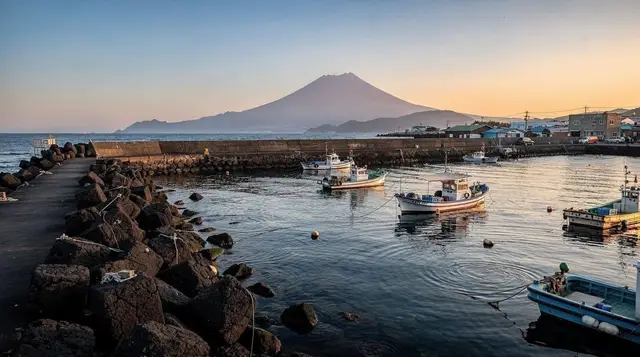
Jeju Island: Full-Day East Jeju Bus Tour with Entry Fees
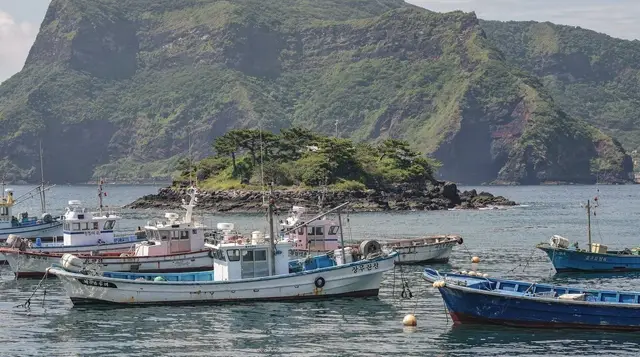
Jeju Island: Full-Day Customizable Private Guided Car Tour
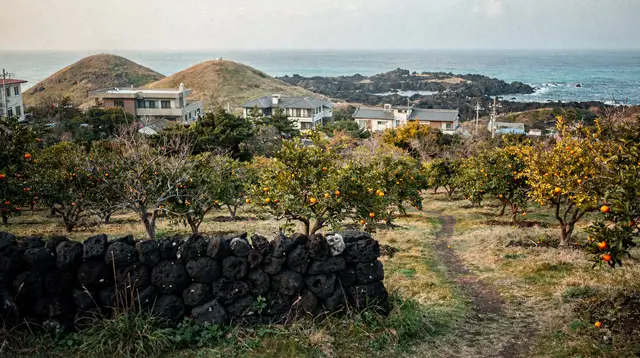
Jeju Island: Southern UNESCO Spots Day Tour
Jeju Island: Customized Private Full-Day Van Tour

Jeju Island: Eastern Tour for Leisurely Walkers