
Best oreums to climb in Jeju
Jeju has over 360 oreums — parasitic volcanic cones scattered across the island, formed by secondary eruptions around the main Hallasan volcano. Most visitors never climb a single one, spending their entire trip fixated on Hallasan’s summit trails or the famous Seongsan Ilchulbong crater. That’s a missed opportunity: oreums require no reservation, no permit, and typically take 30 minutes to two hours round trip, making them the easiest way to get a genuine volcanic hiking experience without the planning overhead Hallasan demands.
| Cost | Free (Geumun-oreum reservation is also free) |
| Time needed | 30 min–2 hrs round trip per oreum |
| Permit | None, except Geumun-oreum (advance reservation) |
| Best time | Early morning or late afternoon; avoid midday in summer |
| Getting there | Car recommended; most oreums sit off the main bus routes |
What an oreum actually is
An oreum (오름) is a small, usually grass-covered volcanic cone that erupted separately from — but around the same general period as — Hallasan’s main volcanic activity. Most are between 100 and 400 meters in relative height, dramatically shorter than Hallasan’s roughly 1,950-meter summit, and many have grassy, treeless slopes that give unobstructed 360-degree views from the top, something Hallasan’s forested lower trails don’t offer until you’re well above the treeline. Some oreums have intact crater bowls at their summit, similar in shape to Seongsan Ilchulbong but usually far less crowded and completely free to visit.
Geumun-oreum: the UNESCO-listed standout
Geumun-oreum is the most ecologically significant oreum on the island, part of the Hallasan Biosphere Reserve and Jeju’s broader UNESCO Global Geopark designation. Unlike most oreums, it requires advance reservation due to conservation management, and access is limited to a set number of daily visitors on guided or self-guided routes through its old-growth forest and volcanic crater. The extra planning is worth it — the crater interior here is genuinely different from other oreums, with denser forest cover and a more preserved ecological character. Jeju: Geumun-oreum Volcanic Crater Hiking handles the reservation and guiding for visitors who don’t want to manage the booking process themselves.
Saebyeol Oreum: sunset and grass slopes
Saebyeol Oreum, near the island’s western-central area, is known for its grassy, star-shaped slope pattern (the name translates roughly to “star oreum”) and is one of the more popular sunset viewpoints among locals, though it draws far fewer tourists than the east coast’s Ilchulbong. The climb is short — typically under 30 minutes to the summit ridge — and the open grassland gives sweeping views across the surrounding farmland toward the coast, making it a good pick if you want an oreum experience without a long commitment.
Sangumburi Crater: flat-bottomed and grassy
Technically classified slightly differently from a typical cone-shaped oreum, Sangumburi is a large, flat-bottomed volcanic crater with a distinctive grassland floor rather than a raised peak. It’s an easy, mostly flat walk around the rim rather than a steep climb, making it accessible for visitors who want the volcanic landscape experience without significant elevation gain. Autumn, when the grass turns a golden-brown, is the most photogenic season here.
Yongnuni Oreum and Dangsanbong: quieter east coast options
For visitors basing themselves on the east coast near Seongsan, Yongnuni Oreum offers a double-crater formation with genuinely striking views back toward Ilchulbong itself — a good vantage point if you want to photograph the famous sunrise peak from a distance rather than joining the crowds on its own summit. Dangsanbong, near Hallim on the west coast, is a smaller coastal oreum with ocean views and considerably less foot traffic than the island’s more famous options.
What to bring and expect
Most oreums are unshaded grassland climbs, so sun exposure is a bigger practical concern than technical difficulty — bring water and sun protection even for a 30-minute climb, particularly in summer. Trails are generally well-maintained dirt or stepped paths without technical scrambling, making oreums accessible to most fitness levels, though some (Geumun-oreum in particular) have muddier forest sections after rain. Unlike Hallasan’s summit trails, there’s no gate cutoff time to worry about on most oreums — you can climb at your own pace and time of day, within the site’s general opening hours.
Yongduam Dragon Rock area and lesser-known cones
Beyond the handful of well-known names covered above, Jeju’s oreum count runs past 360, meaning even dedicated hiking enthusiasts who make oreums a repeat focus of multiple trips will still have new ones to discover years in. Clusters near the island’s central highlands, away from the coastal tourist circuit, tend to see almost no foreign visitors at all, and local hiking clubs often maintain informal, well-worn paths on cones that don’t appear in most English-language guides. If you’re the type of traveler who enjoys research as part of the trip itself, cross-referencing Korean-language hiking blogs and forums (translated, if needed) can turn up specific recommendations well beyond the standard shortlist most guides repeat.
Seasonal differences in oreum hiking
Oreums change character considerably by season in a way that’s worth planning around if you have flexibility. Spring brings wildflowers and fresh green grass to most grassland oreums, while autumn turns the same slopes a golden-brown that photographs beautifully in low afternoon light, particularly at Sangumburi. Winter oreum hiking is genuinely pleasant on clear, cold days — with far fewer people and crisp long-distance visibility — though wind exposure on unshaded summits can make it feel considerably colder than the general island forecast suggests. Summer hiking is the least comfortable option, given the combination of full sun exposure on unshaded grassland and Jeju’s high summer humidity, so an early morning or late afternoon climb is worth prioritizing if you’re visiting between June and August.
Combining oreums with a broader hiking day
Because most oreums take under two hours round trip, they pair naturally with other activities on the same day rather than requiring a dedicated outing. If you’re staying near Hallasan and want a lower-commitment hiking day between summit attempts, the Hallasan permit system guide explains how the reservation process for the two summit trails works, so you can plan a rest-day oreum hike around your booked summit slot. For a broader roundup of scenic and photogenic stops across the island that pair well with an oreum-focused itinerary, see the top 10 photo spots in Jeju.
How oreums shaped Jeju’s traditional land use
Beyond their hiking appeal, oreums have historically played a practical role in Jeju’s agricultural and pastoral land use, serving as boundary markers between villages and, in some cases, as traditional grazing land for the horses and cattle that have long been part of the island’s rural economy. Some oreums still show visible traces of this traditional use — worn grazing paths, stone boundary walls at their base — giving an attentive hiker a small window into the island’s agricultural history alongside the geological interest of the volcanic landform itself. This layered history is part of what distinguishes oreum hiking from a purely scenic nature walk: you’re moving through a landscape that’s been continuously used and shaped by human activity for centuries, not an untouched wilderness.
Oreums as Jeju’s hidden gems
Because oreums require no booking and see a fraction of the foot traffic that Hallasan or Ilchulbong attract, they’re consistently among the destinations locals recommend to visitors looking to get off the standard tourist circuit. The broader guide to Jeju’s hidden gems off the beaten path covers several lesser-known oreums and viewpoints beyond the handful covered here, if you want to keep exploring past the most commonly recommended options. For destination-level planning around where these hikes cluster geographically, both East Jeju and Hallasan National Park have several accessible oreums within a short drive of other major attractions.
A realistic oreum itinerary for a multi-day stay
If oreums are a genuine priority for your trip rather than an afterthought, a realistic approach is to pick two or three across different regions rather than trying to summit as many as possible in a single rushed day. Pairing one coastal or eastern oreum (Saebyeol or Yongnuni) with one central-highland option near Hallasan gives a meaningfully varied sense of how the landscape and views shift depending on an oreum’s specific location relative to the coast and the main volcano. Spacing these across separate days, ideally combined with other regional activities rather than back-to-back climbing, keeps the experience from feeling repetitive despite the fundamentally similar climb format each oreum shares.
Oreum hiking by season at a glance
| Season | Conditions | Crowd level | Notes |
|---|---|---|---|
| Spring | Wildflowers, fresh green grass | Low-moderate | Mild temperatures, comfortable climbing |
| Summer | Full sun, high humidity | Moderate | Climb early morning or late afternoon |
| Autumn | Golden-brown grass, best light | Low-moderate | Best photography season, especially Sangumburi |
| Winter | Clear, cold, windy on exposed summits | Low | Crisp visibility but colder than the forecast suggests |
Footwear and fitness expectations
Because oreums vary so much in exact terrain — grassy stepped paths on most, muddier forest sections at Geumun-oreum, a flat gravel rim at Sangumburi — the right footwear depends slightly on which one you’re climbing, though sturdy trail shoes or trainers with decent grip cover nearly every case. Fitness-wise, most oreums are genuinely approachable for anyone who can manage a 30-60 minute uphill walk without stopping to rest every few minutes; the grassy slopes are steeper than they look in photos but rarely require scrambling or handholds.
Travelers uncertain whether Hallasan’s full-day summit trails are realistic for their fitness level often use an oreum as a useful test run first — if a 45-minute oreum climb feels comfortable, a longer Hallasan trail is a reasonable next step; if it feels genuinely taxing, the Hallasan permit guide is worth reading with realistic expectations about which trail suits your fitness level.
Combining an oreum with a car-based day loop
Because most oreums sit just off the main coastal or interior roads rather than requiring a dedicated detour, they slot naturally into a car-based day that’s already headed in that general direction. A morning at Hallasan National Park followed by an afternoon oreum climb nearby, or an East Jeju coastal day with Yongnuni Oreum worked in before or after Seongsan Ilchulbong, both keep driving time efficient rather than backtracking across the island specifically for one hike.
Where to read more before you go
Each of the oreums above has a fuller write-up if you want trail-level detail. The Geumun-oreum crater hike guide walks through the reservation-based forest route, while Saebyeol Oreum and Sangumburi Crater each have their own page for the grassland and rim-walk experiences. For the wider picture of how oreums fit together as a hiking category, the oreum hiking guide is the natural next read.
Since sun, wind and muddy sections are the main practical issues, the Jeju hiking gear and safety guide is worth a look before you pack. And if an oreum climb leaves you wanting something bigger, the Hallasan hiking guide compares the summit trails, while Seongsan Ilchulbong makes a good contrast to the quieter views from Yongnuni.
When a guided option makes sense
Going independently is the norm for oreums, but a guided day can take the logistics off your hands, especially if you don’t want to drive. For the Hallasan side of a hiking trip, a small-group nature hike on Hallasan with lunch included is one way to step up from an oreum without handling the planning yourself. Travelers who prefer to start early and catch the light from a high point may also look at a small-group sunrise hike in the UNESCO-listed highlands, which suits the same early-morning rhythm that works so well for oreums.
Frequently asked questions about climbing oreums in Jeju
Do I need a permit to climb an oreum?
Most oreums require no permit or reservation — you can visit and climb freely during general daylight hours. Geumun-oreum is the main exception, requiring advance reservation due to conservation management.
How long does it take to climb an oreum?
Most oreums take between 30 minutes and two hours round trip, considerably shorter than Hallasan’s full-day summit trails.
Which oreum has the best views?
Saebyeol Oreum and Yongnuni Oreum are both popular for their open, unobstructed views — Saebyeol for sunset and grassland scenery, Yongnuni for a distant view back toward Seongsan Ilchulbong.
Is Sangumburi Crater the same as an oreum?
It’s closely related — a large, flat-bottomed volcanic crater rather than a raised cone, offering an easier, flatter walking experience than a typical oreum climb.
What should I bring to climb an oreum?
Water and sun protection are the main essentials, since most oreums are open grassland with little shade. Proper walking shoes help on muddier forest sections, particularly at Geumun-oreum after rain.
Are oreums suitable for beginners?
Yes — most require no technical hiking skill and take under an hour, making them accessible to most fitness levels and a good introduction to Jeju’s volcanic landscape without Hallasan’s full commitment.
Can I use an oreum climb to test my fitness for Hallasan?
Yes, reasonably well — if a 45-60 minute oreum climb feels comfortable, Hallasan’s longer summit trails are a realistic next step. If it feels genuinely taxing, plan around that before committing to a full-day Hallasan reservation.
Related guides

Best Oreums to Hike in Jeju
Jeju has over 360 oreums (volcanic cones). Here's how to pick which ones to climb, from 20-minute grassy hills to longer forested craters.

Geumun-oreum Volcanic Crater Hike
Geumun-oreum is a forested UNESCO Geopark crater near Gujwa — longer and more ecologically protected than most oreum hikes on Jeju.
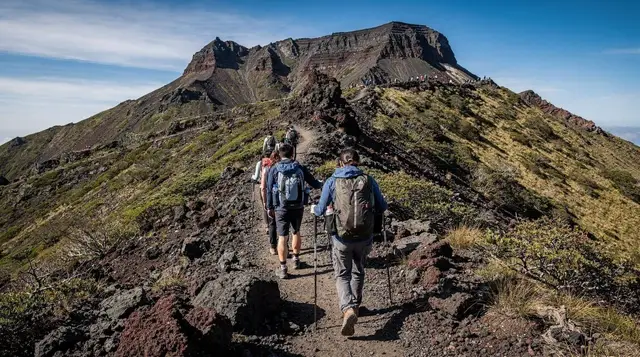
Hiking Hallasan: Complete Guide
Compare all four Hallasan trails — Seongpanak, Gwaneumsa, Yeongsil, Eorimok — by distance, difficulty, reservation rules, and what each one delivers.

Hallasan: Seongpanak Trail
Seongpanak is the longer but gentler of Hallasan's two summit trails — 9.6km one way, reservation required, 8-9 hours round trip.