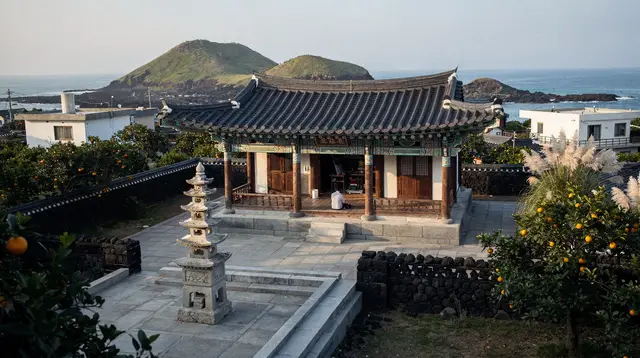
Olle Trail multi-day itinerary
The Olle Trail is Jeju’s long-distance coastal walking network — 27 numbered routes circling nearly the entire island, ranging roughly 10-20km per stage — and walking a connected stretch of it is a fundamentally different way to see Jeju than driving between attractions. This seven-day itinerary links several accessible stages along the south and east coasts, using local buses to shuttle between trailheads rather than a rental car, which the trail’s point-to-point design doesn’t suit anyway.
| Where | Seogwipo, East Jeju/Seongsan, Udo, West Jeju/Aewol |
| Duration | 7 days, 6 nights |
| Cost | around ₩650,000-900,000/person (~US$480-665), excl. flights |
| Getting there | CJU airport, no car — local buses between trailheads |
| Daily distance | roughly 10-20km per stage, one rest day built in |
The seven days at a glance
| Day | Stage | Highlight | Overnight |
|---|---|---|---|
| 1 | Seogwipo coastal stage | Cheonjiyeon Waterfall | Seogwipo |
| 2 | Seogwipo harder stage | Jusangjeolli cliffs | Seogwipo |
| 3 | Rest day or short stage | Recovery | Seogwipo |
| 4 | Bus transfer east | Seongsan Ilchulbong, Seopjikoji | Seongsan |
| 5 | Udo Island loop | Udo’s own Olle route | Seongsan |
| 6 | Bus transfer west | Aewol coastal stage | Aewol |
| 7 | Final short stage | Departure | Departure |
Who this itinerary suits
This suits long-distance walkers already comfortable with multi-day hiking logistics, slow travelers who want Jeju’s coastline at walking pace rather than through a car window, and anyone specifically drawn to a car-free trip. It’s a poor fit for casual walkers — daily stages of 10-20km add up to real cumulative fatigue by day four or five — or anyone who wants Hallasan’s summit included; that’s a separate mountain trail system, not part of the Olle network, and better covered in the hiking and adventure itinerary.
If a guided introduction appeals more than fully independent route-finding, Jeju: Sunset Tour Olle Trail Walking Tour with Hotel Pickup covers a single evening stage with transport included, a reasonable way to sample the trail before committing to a full week of independent walking.
Day 1: Arrival and Seogwipo’s coastal stage
Land at CJU and take a bus directly to Seogwipo rather than renting a car — roughly an hour by public bus. Use the afternoon to walk a section of the Olle route through Seogwipo’s coastal stretch, passing Cheonjiyeon Waterfall along the way (entry ~₩2,000; see the Cheonjiyeon Waterfall guide). This stage is relatively short and flat, a reasonable introduction before longer days later in the week. Overnight in Seogwipo, mid-range rooms ₩90,000-130,000/night.
Day 2: Seogwipo’s harder stage toward Jusangjeolli
A more demanding stage today, passing Jusangjeolli’s columnar basalt cliffs and continuing along a mix of coastal path and small fishing-town streets. Budget 5-6 hours of walking including rest stops, and start early to avoid the midday heat in summer. Jeju South: Small Group Healing Tour w/Mt.Halla & Olle Trail is worth considering as an alternative for this specific day if your legs need a lower-effort option partway through the week. Return to Seogwipo by bus if the stage doesn’t end near your accommodation, or move overnight lodging closer to the trail’s endpoint.
Day 3: Rest day, or a shorter stage
Multi-day walking trips benefit from a deliberate lighter day roughly every third day — use this one for laundry, sore muscles, and a slower look at whatever Seogwipo has left unexplored, or a shorter 5-8km stage if you’re feeling strong. This is also a sensible day to reassess the rest of the week’s route based on how your body is handling the cumulative distance so far.
Day 4: Bus transfer east, then coastal walking near Seongsan
Take a bus east toward East Jeju — the Olle Trail’s eastern stages run near Seongsan Ilchulbong and Seopjikoji, among the most scenic sections of the entire network. The crater-rim climb itself (entry ~₩5,000, 20-40 minutes) is a worthwhile detour from the coastal path rather than a substitute for it. The Seongsan Ilchulbong guide has current gate times if you want to time this stage around sunrise specifically. Overnight in Seongsan, guesthouse rooms ₩60,000-90,000/night.
Day 5: Udo Island’s own Olle route
Udo has its own dedicated Olle Trail route circling the small island — flatter and shorter than the mainland stages, making it a good change of pace after four days of longer coastal walking. Take the ferry from Seongsan’s port (round trip ₩8,500-10,500), walk the island’s roughly 11km loop at an unhurried pace, and try the peanut ice cream sold at nearly every café along the way. Ferries cancel outright in rough seas, so check the morning sailing schedule before committing to this as a fixed plan. Return to Seongsan by evening.
Day 6: Bus transfer west, coastal stage near Aewol
A longer bus transfer today — toward West Jeju and a coastal Olle stage passing near Aewol’s cafe strip. This stage rewards timing a stop at one of Aewol’s ocean-view cafes partway through rather than walking straight through without a break — arguably the most relaxed of the week’s stages given the built-in cafe culture along the route. Overnight in Aewol, ₩80,000-120,000/night.
Day 7: Final short stage, then depart
Keep the last day light — a shorter final stretch of coastal walking near Aewol, or simply a slow morning if the week’s cumulative distance has caught up with you. It’s a straightforward bus ride from Aewol back to CJU, roughly 30-40 minutes. Budget extra time for the bus schedule compared to a rental car’s flexibility, and confirm the return route the night before rather than assuming a bus will be immediately available.
Practical notes for a walking-based trip
Pack lighter than you think you need — carrying a full pack over 10-20km daily stages is a different proposition from a single day hike, and most Olle Trail walkers do better with a daypack and lodging that doesn’t require lugging a large suitcase along the route itself. Tap water is safe to drink island-wide, so refilling a bottle at trailside convenience stores or restaurants along the way keeps pack weight down. Sun protection matters more on the Olle Trail’s exposed coastal stretches than on Hallasan’s more forested trails, since long sections have little to no shade.
If it rains
Olle Trail stages stay open in light rain, though the coastal sections can turn slippery on rock and uneven terrain — proper footwear with grip matters more on this itinerary than on a driving-based one. If a specific day’s forecast looks genuinely severe (heavy rain, high wind), treat it as this week’s rest day instead of pushing through, and shift the planned rest day to whichever day has better conditions.
Getting around without a car
This itinerary deliberately skips a rental car — the Olle Trail’s point-to-point design means you often end a day’s walk somewhere different from where you started, which suits public buses and taxis better than a car you’d need to shuttle back to retrieve. Bus frequency along the south coast (Seogwipo area) and toward Seongsan is reasonable; the west-coast route toward Aewol is generally reliable too. Naver Map or Kakao Map both have bus-schedule integration worth using to confirm timing before each day’s transfer.
An eSIM or pocket wifi device is genuinely useful for this itinerary specifically, since checking real-time bus arrivals and confirming trail conditions requires reliable data more than a car-based trip does — arrange one before landing rather than searching for connectivity mid-trail.
Budget for seven days of trail walking
This is one of the more affordable Jeju itineraries specifically because trail access itself is free and there’s no rental car cost. Bus fares total under ₩20,000 for the week’s transfers, and the Udo ferry plus day adds ₩8,500-10,500. Food costs run ₩50,000-70,000/day per person if eating at trailside restaurants and markets rather than resort dining. A realistic per-person total for seven days, excluding flights to Jeju: ₩650,000-900,000 (~US$480-665), including six nights of budget-to-mid-range lodging.
Guesthouses that specifically cater to Olle Trail walkers exist along several stages — often smaller, family-run places used to hikers arriving tired and needing an early breakfast before the next day’s stage. These are worth seeking out over a generic hotel where possible, since they tend to have better local knowledge of current trail conditions and bus timing than a standard tourist-oriented property.
Where to stay along the route
Rather than one fixed base, this itinerary naturally moves with the trail — Seogwipo for the first three nights, Seongsan for two, and the west coast for the last two. Booking each leg’s accommodation near that day’s trail endpoint (rather than a fixed distance away) saves meaningful walking time at the end of an already long day. Seongsan’s guesthouse supply is the smallest of the three regions, so book those nights earliest.
For travelers who’d rather not manage six changes of address over seven days, a more conservative version bases in Seogwipo for the first half of the week (accepting a bus transfer to reach each day’s trail start) and moves only once, to the east coast, for the second half — less efficient in walking terms but considerably simpler in lodging logistics.
What to skip on a trail-walking trip
Don’t try to combine a full Hallasan summit attempt with this itinerary — it’s a separate trail system entirely, physically demanding in its own right, and stacking it onto an already cumulative multi-day walking trip risks real overuse injury. Resist the urge to walk every stage at maximum daily distance; the built-in rest day on day three exists for a reason, and pushing through fatigue on a multi-day walking trip is how minor foot and joint issues turn into trip-ending ones.
It’s also worth skipping brand-new footwear for this trip — breaking in shoes on the trail itself is a common and entirely avoidable cause of blisters that can derail several days of an otherwise well-planned walking itinerary. Test any new gear on shorter walks well before departure.
Why walk the trail instead of driving between the same sights
A car-based itinerary covering similar ground reaches each destination faster, but it misses what makes the Olle Trail distinctive: the connective coastline between headline sights, which most driving itineraries skip entirely. Small fishing harbors, unmarked coastal rock formations, and the stretches of farmland meeting the sea that the trail winds through don’t have their own names or entry fees, and a car itinerary has no reason to stop for them. Walking the trail means experiencing Jeju’s coastline as a continuous thing rather than a series of discrete, ticketed attractions connected by featureless road.
This trade-off comes at a real cost in coverage — a week of walking reaches a fraction of the island that a week of driving would cover — so the itinerary above is best understood as depth over breadth, appealing specifically to travelers who’ve already done a faster Jeju trip or who prioritize the walking experience itself over maximizing sights seen.
Foot care over seven consecutive walking days
Cumulative fatigue, not any single stage’s distance, is what actually derails a multi-day Olle Trail trip. Blisters that would be a minor annoyance on a one-day hike can genuinely end a trip if they force a stop on day two of seven, so foot care deserves more attention here than on a typical Jeju itinerary built around driving. The hiking gear and safety guide has broader trail-safety advice that applies here too, even though it’s written with Hallasan in mind — broken-in shoes, moisture-wicking socks (not cotton), and treating any hot spot immediately rather than pushing through it are the basics that matter most. Carrying blister plasters and a small first-aid kit from day one, rather than assuming you won’t need them, is worth the negligible extra pack weight.
Eating well without a rental car
Trail-based travel changes where and how you eat compared to a car-based Jeju trip — meals need to happen near the day’s trail rather than wherever looks best on a map, and trailside convenience stores and small local restaurants do more of the work than markets you’d specifically drive to. Seogwipo’s Maeil Olle Market, on the route for the first three days, is the exception — a proper food destination rather than just a convenient stop, and the Dongmun-style market food guide gives a sense of what to look for even though it’s written about Jeju City’s market specifically. The Jeju seafood markets guide and the street food guide both have portable, trail-friendly options worth seeking out over a sit-down restaurant on the days when time or energy is limited.
Frequently asked questions about the Olle Trail multi-day itinerary
How fit do I need to be for this itinerary?
Comfortable with consecutive days of 10-20km walking on uneven terrain — this is more demanding cumulatively than a single day hike, even though no individual stage matches Hallasan’s elevation gain.
Do I need special gear for the Olle Trail?
Broken-in walking or light hiking shoes with grip, a daypack, sun protection, and more water than feels necessary for coastal stages with limited shade — proper footwear matters more here than technical hiking gear.
Can I do a shorter version of this itinerary?
Yes — three or four days covering just the Seogwipo or east-coast stages works well as a standalone trip if a full week isn’t available; treat this itinerary’s day groupings as modular sections you can select from.
How many Olle Trail routes are there in total?
27 numbered routes circle nearly the entire island, far more than this seven-day itinerary can cover — treat this as an introduction to a handful of accessible stages rather than a complete Olle Trail experience.
Is the Olle Trail well-marked?
Yes, with distinctive blue-and-orange ribbon markers and painted symbols at regular intervals along official routes, generally easy to follow even without fluent Korean.
What happens if I can’t finish a stage due to fatigue or weather?
Most stages have bus access at intermediate points, not just the official start and end — checking the route map for these access points before setting out gives you an exit option if needed partway through.
Is this itinerary safe to do solo?
Generally yes — the trail is well-used and marked, though telling someone your planned stage and expected finish time is sensible practice, particularly on the longer or more remote coastal stretches.
How does the Olle Trail differ from Hallasan’s hiking trails?
The Olle Trail is a coastal, largely flat-to-rolling walking network spread across the island’s perimeter; Hallasan’s trails are a separate mountain system with genuine elevation gain leading to a summit crater rim. They’re complementary rather than overlapping experiences.
What’s the best season for multi-day Olle Trail walking?
October and April-May offer the most comfortable temperatures for consecutive walking days. Summer’s heat and humidity make long daily stages considerably more taxing, and typhoon season (late August-September) brings a higher risk of trail closures.
Should I carry cash for trailside stops?
A mix of cash and card is sensible — most restaurants and larger stores along the route take cards, but smaller trailside stalls and rural bus fares sometimes work more smoothly with cash on hand.
Can I bring a support vehicle or have luggage transferred between stops?
Some travelers arrange this informally with guesthouses, but it isn’t a standard built-in service on Jeju the way it is on some European long-distance trails — most Olle Trail walkers simply carry a daypack and keep larger luggage at a fixed base for a few nights before moving it themselves via bus or taxi.
How does this itinerary compare to a car-based Jeju trip in terms of what you actually see?
It covers noticeably less ground geographically but far more of the connective coastline between headline sights — a genuine trade-off between breadth and depth rather than simply a slower version of the same trip.
What’s the single biggest cause of trip-ending problems on a multi-day walk like this?
Foot issues — usually blisters from new or poorly broken-in shoes — cause more disruption than fatigue, weather, or bus logistics combined. Break in shoes well before departure and treat any hot spot immediately.
Where should I eat if I’m not near a market on a given day?
Trailside convenience stores and small local restaurants fill most gaps between markets — see the street food guide for portable options that travel well between stages.
Related guides

Jeju Olle Trail: Overview (27 Routes)
Jeju Olle Trail is a 27-route, 437km coastal walking network circling the island. Here's how the system works and which routes to prioritize.

Olle Trail Course 10 (Sanbangsan–Songaksan)
Course 10 runs from Sanbangsan to Songaksan through Jeju's dramatic southwest — coastal cliffs, a volcanic mountain backdrop, roughly 15.6km.

Olle Trail Course 7 (Seogwipo)
Course 7 is one of Jeju Olle Trail's most popular routes — coastal cliffs near Seogwipo, roughly 17.6km, well-marked and beginner-friendly.
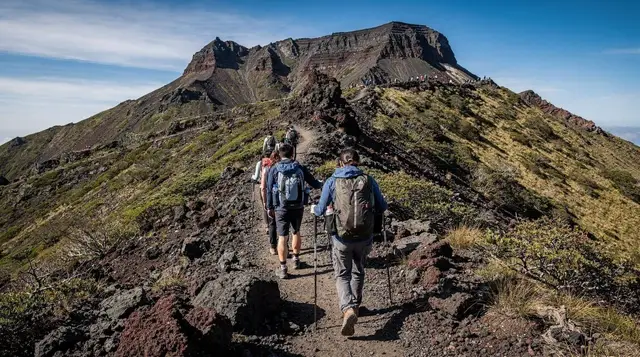
Hiking Hallasan: Complete Guide
Compare all four Hallasan trails — Seongpanak, Gwaneumsa, Yeongsil, Eorimok — by distance, difficulty, reservation rules, and what each one delivers.
Ready to book? Top tours for this guide
We earn a small commission if you book through GetYourGuide — at no extra cost to you. Every tour is hand-picked and verified.
Jeju: UNESCO Day Tour for Cruise Guests
Jeju: Highlights Day Trip (East Course)
Jeju Island: Full Day Tour for Cruise Ship Passengers
Jeju: Small Group UNESCO Highlights Tour for Cruise Guests

Jeju East: Cherry Blossom Early Bird Tour with Hotel Pickup