
Seongeup Folk Village
What is Seongeup Folk Village and is it a real village?
Seongeup is a genuine historic village inland from Seongsan, designated one of Korea's Important Folklore Materials, where some residents still live in traditional stone-walled, thatch-roofed houses. Unlike the purpose-built Jeju Folk Village Museum, Seongeup is an original settlement, free to walk through, with a handful of houses and sites open for closer viewing.
Seongeup sits inland from Seongsan, on the flat volcanic plain between Jeju’s east coast and the Hallasan foothills, and it is one of the few places on the island where “historic village” doesn’t mean a museum reconstruction. Designated one of Korea’s Important Folklore Materials, Seongeup was the administrative seat of Jeju’s eastern district (Jeongui-hyeon) for roughly 500 years under the Joseon dynasty, and its core lanes, stone walls, and a number of individual houses date to that period rather than being rebuilt for visitors — a genuinely rare thing on an island where most traditional architecture was lost to modernization, war, and the mid-20th-century upheavals covered in Jeju’s 4.3 history.
| Where | Inland east Jeju, 20-30 min from Seongsan Ilchulbong |
| Cost | Free to walk; ₩1,000-2,000 for some house interiors |
| Time needed | 1-2 hours |
| What it is | A real, still-inhabited historic village |
| Getting there | Rental car or tour; limited bus service |
A working village, not an exhibit
The key distinction to understand before visiting is that Seongeup is inhabited today. Some residents live in traditional thatched, stone-walled houses that are also open to public viewing during set hours, a genuinely unusual arrangement that means visitors are walking through both a heritage site and someone’s actual neighborhood at the same time. This isn’t a criticism — it’s the source of Seongeup’s value as a destination — but it does call for a different kind of visitor behavior than a standard museum: quieter voices in residential lanes, more caution about where photography is appropriate, and respect for boundaries around clearly private spaces even when a house is nominally open.
The village retains its original defensive stone wall layout in sections, along with narrow lanes designed to break prevailing winds — the same practical logic behind the low, loosely-stacked basalt walls seen in reconstructed form at Jeju Folk Village Museum, except here the walls have actually stood in place for centuries rather than being rebuilt to specification.
What to see
A handful of designated “folk houses” (minsokjip) within the village are open to visitors, each preserved or restored to show a specific historical function or social class — a magistrate’s residence, a farming household, and outbuildings used for grain storage and livestock. Small entry fees, typically ₩1,000-2,000, apply to some of these individual houses; walking the public lanes themselves is free.
Several ancient trees within the village, some centuries old and locally significant enough to have their own protective status, mark points that were historically important to village life — meeting points, ritual sites, or simply long-standing landmarks that predate most of the surrounding structures. The village’s old government office site, connected to Jeongui-hyeon’s administrative history, gives a sense of Seongeup’s former importance as a regional seat, a role it lost as Jeju City and Seogwipo grew into the island’s dominant urban centers.
Local artisans and residents sell crafts, traditional liquor (Jeju’s regional makgeolli variants), and produce along some of the main lanes — a more genuine version of the “traditional market” experience than some staged reconstructions elsewhere, precisely because the sellers are actual village residents rather than costumed demonstrators.
Jeongui-hyeon’s administrative history in more depth
Seongeup’s five centuries as the seat of Jeongui-hyeon, one of Jeju’s three historical administrative districts (alongside Jeju-mok and Daejeong-hyeon, the same three towns connected to the origin of the dol hareubang statues), gave it a role in Jeju’s pre-modern governance well beyond its current quiet appearance. The old government office site preserved within the village once handled local taxation, judicial matters, and administrative communication with the main Jeju-mok government further north, and its relative remoteness from the coast — Seongeup sits inland, away from the vulnerabilities of a coastal settlement — was a deliberate defensive choice common to inland administrative towns across the Korean peninsula during periods of coastal raiding threat.
The eventual shift of administrative and economic weight toward the coastal cities, particularly as Jeju City and Seogwipo grew through the 20th century around ports, airports, and modern infrastructure, left Seongeup as a comparatively frozen-in-place settlement — not abandoned, but no longer central to the island’s administrative or economic life, which paradoxically is part of why so much of its historic fabric survived rather than being redeveloped.
Local food and drink specific to Seongeup
A handful of small local eateries and shops along Seongeup’s main road serve regional specialties tied to the surrounding agricultural land, including dishes built around the black pig varieties historically raised in this part of the island and simple noodle or porridge dishes suited to a quick stop between walking the village’s lanes. Seongeup’s version of Jeju makgeolli, brewed locally in small quantities, is sold at some shops along the main lanes and by residents directly — a more artisanal, small-batch product than the more widely distributed commercial Jeju makgeolli brands found in convenience stores island-wide.
Seongeup versus Jeju Folk Village Museum
The comparison to Jeju Folk Village Museum, about 20-30 minutes away in Pyoseon, comes up constantly, and the honest answer is that they’re not really substitutes for each other. Jeju Folk Village Museum offers breadth — more than 100 buildings organized into mountain, hill, and coastal zones, clearer English interpretive signage, and demonstrations scheduled for visitor convenience. Seongeup offers depth of place — an actual centuries-old settlement where the stone walls are original, the trees are genuinely old, and daily life continues around the historic core rather than stopping at closing time.
Visitors with a full day for southeast-coast culture can reasonably do both; those choosing one should pick Jeju Folk Village Museum for comprehensive interpretive content and families wanting demonstrations, and Seongeup for a quieter, more atmospheric visit and a stronger sense of historical continuity.
The surrounding stone-walled fields
Beyond the village core, Seongeup sits amid an extensive network of stone-walled agricultural fields — a landscape feature found across rural Jeju but especially well-preserved and visually striking in this inland area, where fields are bounded by the same loosely-stacked, wind-permeable basalt wall construction seen in the village’s house walls. These walls (batdam) served a practical purpose, marking property boundaries and providing some wind protection for crops in an environment with few natural windbreaks, and their sheer extent — reportedly totaling thousands of kilometers island-wide when combined — has led to informal comparisons with other iconic linear landscape features, sometimes described locally as Jeju’s own version of a “black dragon” winding across the countryside given the walls’ dark volcanic stone and undulating layout across the terrain.
Walking or driving the roads around Seongeup beyond the village’s immediate core gives a good sense of this agricultural landscape, still actively farmed today, growing crops suited to Jeju’s volcanic soil including buckwheat, barley, and increasingly, greenhouse vegetables — a working agricultural backdrop that contextualizes the village’s historical identity as an administrative center for a farming region, rather than a fishing or trading town like some of Jeju’s coastal settlements.
Practical visiting information
Seongeup has no single ticket gate or fixed operating hours in the way a conventional museum does — it’s a village, and its public lanes are accessible essentially anytime, though visiting during daylight hours (roughly 9am-5pm) is both more practical for seeing house interiors that keep set hours and more respectful of residents’ routines outside that window. Plan for 1-2 hours to cover the main lanes and a couple of house interiors, longer if you wander into the surrounding stone-walled agricultural fields, which are themselves a distinctive feature of the Jeju landscape.
Parking is available near the main entrance area, and the village is walkable in full from there. There is no on-site restaurant comparable to the museum at Pyoseon, though small local eateries and shops along the main road serve basic food and drink.
Nearby stops
Seongeup’s inland location puts it within reach of several other east-coast attractions: Seongsan Ilchulbong is roughly 20-30 minutes northeast, and Jeju Folk Village Museum a similar distance southwest in Pyoseon. For visitors building a culture-focused day rather than a nature-focused one, combining Seongeup with a stop at the dol hareubang guide’s recommended sites, or a detour to the haenyeo villages further up the east coast, builds a coherent half-day loop centered on traditional Jeju life before the island’s tourism-driven development.
Getting there
By car, Seongeup is roughly 30-40 minutes from Seogwipo and a similar distance from east Jeju’s coastal towns near Seongsan. From Jeju City, expect closer to 45-60 minutes via the cross-island route. Public buses connect Seongeup to both Jeju City and Seogwipo, but with limited frequency, so a rental car or organized tour remains the more practical option for most itineraries that include it alongside other southeast-coast stops.
Visiting respectfully as a residential heritage site
Because Seongeup remains inhabited, the etiquette expectations differ meaningfully from a standard attraction. Avoid entering any structure or yard not clearly marked as open to visitors, even if a gate appears unlocked — this is someone’s home, not an unstaffed exhibit. Keep conversation and noise levels moderate in the narrower residential lanes, particularly in the early morning and evening when residents are going about ordinary daily routines rather than expecting visitor traffic. Photography of the architecture, lanes, and open-house interiors is generally welcome; photographing residents directly, especially without asking, is not appropriate regardless of how picturesque a moment might look through a camera.
This is, in a sense, the tradeoff for what makes Seongeup valuable in the first place — the authenticity that comes from real, continuous habitation also means visitors are guests in an actual community rather than customers at a purpose-built attraction, and behaving accordingly is part of what allows this kind of heritage site to remain both genuinely lived-in and open to outside visitors long-term.
An honest take
Seongeup rewards visitors who want atmosphere and authenticity over polish and interpretive convenience. It won’t have the clean signage or demonstration schedule of a purpose-built museum, and on a quiet weekday it can feel almost too ordinary — which is, in a sense, the point. This is what a genuinely old Jeju village looks like when it hasn’t been rebuilt for visitors, and that ordinariness is worth more to some travelers than any curated exhibit could be.
Seongeup versus Jeju Folk Village Museum, at a glance
| Seongeup | Jeju Folk Village Museum | |
|---|---|---|
| Type | Real, still-inhabited village | Purpose-built museum reconstruction |
| Buildings | A handful of original folk houses | 100+ buildings across multiple zones |
| Signage | Limited, sometimes Korean-only | Comprehensive, English-friendly |
| Demonstrations | None scheduled | Regular, timed for visitors |
| Atmosphere | Quiet, genuinely lived-in | Curated, family-friendly |
| Best for | Authenticity and quiet | Breadth and interpretive convenience |
Visiting Seongeup without a rental car
Public buses connect Seongeup to Jeju City and Seogwipo, but with limited frequency, making a rental car or organized tour the more reliable option for most itineraries. General east Jeju day tours that cover the wider inland-and-coastal circuit sometimes include a stop in this area — worth checking the exact itinerary before booking:
Jeju: East Full-Day Bus Tour with Entry Fees IncludedFor travelers specifically prioritizing Seongeup itself over a broader east Jeju loop, a rental car or a private taxi arrangement gives more control over how much time to spend in the village’s quieter lanes. If you would rather not drive, a private transfer to the Seongsan area can be paired with a request to continue inland to the village afterwards; confirm the routing with the operator before booking.
What to bring
Comfortable walking shoes matter more than any specialized gear, since the village’s lanes are unpaved in sections and can be uneven underfoot. Sun protection is worth carrying in warmer months, since shade is inconsistent across the open lanes and stone-walled fields. Cash in small denominations is useful for the individual house entry fees and for buying crafts or produce directly from residents, some of whom may not take cards for small purchases.
Seongeup and traditional Jeju cuisine
Beyond the black pork dishes and local makgeolli mentioned above, Seongeup’s food culture connects to a broader island tradition worth exploring further — the Jeju black pork BBQ guide covers the fuller story of the breed and where to find it prepared well elsewhere on the island, and the Jeju soju and makgeolli guide gives more context on the island’s traditional drinks beyond Seongeup’s small-batch version specifically.
Time of day and light
Late afternoon light suits Seongeup particularly well, softening the stone walls and thatched roofs and coinciding with a quieter period as day-tour groups thin out. Early morning offers a similarly calm alternative for visitors staying nearby overnight, with the added benefit of catching residents beginning their day before the village sees much foot traffic at all.
Combining Seongeup with a full east Jeju day
A realistic full day pairing Seongeup with the coast might start at Seongsan Ilchulbong for the climb, continue to Seopjikoji for a flatter coastal walk, and finish inland at Seongeup in the late afternoon when the village’s residential lanes are calmer and the light softer for photography. This sequencing front-loads the day’s more physically demanding stop and saves the slower, more contemplative village walk for when energy is lower — a more comfortable rhythm than the reverse. Travelers who want a different kind of east-coast day, with the village as a quieter add-on, can look at an e-bike day on Udo with a speedboat crossing from Seongsan and weigh whether the village fits before or after it.
Frequently asked questions about Seongeup Folk Village
Do people actually live in Seongeup Folk Village?
Yes — Seongeup is a real, inhabited village, not a museum built for tourism. Some residents live in traditional houses that are also open to visitors during set hours, which requires more visitor courtesy than a standard museum stop.
Is there an admission fee for Seongeup?
Walking through the village itself is free; a few individual traditional houses charge a small entry fee (often ₩1,000-2,000) to see the interior, and some working artisans sell crafts or local produce on site.
How long should I spend at Seongeup?
1-2 hours covers the main lanes, the folk village center, and a couple of house interiors; longer if you want to explore the surrounding stone-walled fields and lesser-visited lanes on foot.
Is Seongeup better than Jeju Folk Village Museum?
They serve different purposes — Seongeup offers authenticity of place and atmosphere as a real historic village, while Jeju Folk Village Museum offers broader, more curated interpretive content across more building types. Many visitors with time do both.
What should I be respectful of when visiting?
Some houses are private residences even when open for visits — avoid entering areas not clearly marked for visitors, keep noise down in residential lanes, and be mindful photographing residents going about daily life rather than posing.
Is Seongeup good to combine with other stops?
Yes — it sits roughly 20-30 minutes from Seongsan Ilchulbong and a similar distance from Jeju Folk Village Museum, making it easy to combine with either on a southeast-coast day.
Related guides

Jeju Folk Village
A practical guide to Jeju Folk Village, the open-air museum in Pyoseon: reconstructed houses, admission, hours, and whether it's worth visiting.
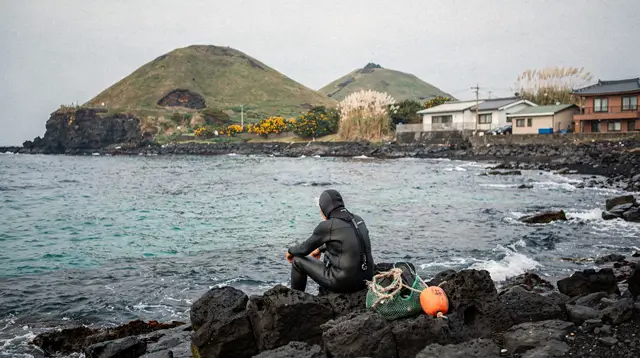
Haenyeo: Jeju's Sea Women
Who Jeju's haenyeo sea women are, where to see them dive, and how to experience this UNESCO-listed living tradition without turning it into a photo op.

The Jeju 4.3 incident: history explained
What the Jeju 4.3 Incident was, why it still matters, and how to visit the Jeju 4.3 Peace Park and related sites respectfully and with proper context.

Jeju's best museums: a 100+ roundup
Jeju has over 100 museums, from serious art institutions to novelty theme collections — a practical guide to which ones actually deserve your time.
Ready to book? Top tours for this guide
We earn a small commission if you book through GetYourGuide — at no extra cost to you. Every tour is hand-picked and verified.
Jeju East: Small Group Healing Tour w/Woman Divers Show
Jeju: Eastern UNESCO Sites Tour with Haenyeo Show
Jeju: Eastern UNESCO Join-in Tour (Seongsan, Haenyeo Show)
Jeju: 4.3 Incident History & Cultural Tour with a Guide
Jeju: 4.3 Incident History & Cultural Tour with a Guide (SW)