
Jeju's best museums: a 100+ roundup
Which Jeju museums are actually worth visiting?
Of Jeju's 100-plus museums, the Haenyeo Museum, Jeju National Museum, Arte Museum Jeju, and Jeju Museum of Contemporary Art stand out for genuine cultural or artistic substance. Most of the rest are small, privately run novelty or theme collections (teddy bears, glass art, chocolate) built primarily for tour-bus traffic rather than deep cultural interest.
Jeju is sometimes described, with only slight exaggeration, as having more museums per square kilometer than almost anywhere else in Korea — estimates put the total above 100, ranging from serious public institutions to small, privately operated novelty collections built explicitly for tour-bus itineraries. That volume makes an honest filter useful: most visitors have time for a handful of museums at most during a Jeju trip, and picking the right two or three matters more than trying to see a representative sample of the full 100-plus.
| Where | Clustered in west Jeju near Jungmun/Aewol, plus central Jeju City |
| Cost | Around ₩1,100–free for public institutions; ₩8,000–16,000 for private theme museums |
| Time needed | 45 min–1.5 hrs per museum; 2-4 museums is realistic for a full trip |
| Getting there | Rental car easiest given scattered locations and limited bus coverage |
| Best time | Anytime — a reliable weather-independent, rainy-day option |
Why Jeju has so many museums
The proliferation traces mostly to Jeju’s tourism development from the 1990s onward, when the island shifted from a honeymoon-and-nature destination into a broader domestic tourism hub for Korean visitors seeking varied day-trip activities beyond hiking and beaches. Combined with tax incentives for cultural and educational facilities and relatively available land outside the two main cities, this created ideal conditions for private operators to build single-theme museums — teddy bears, chocolate, glass art, trick-art optical illusions, and dozens of other niches — clustered particularly around west Jeju and the Jungmun resort area, where tour buses concentrate.
This isn’t necessarily a criticism; some of these theme museums are genuinely well-executed and popular with families specifically because they’re interactive and photogenic in ways a traditional collection often isn’t. But it does mean the museum landscape here skews heavily toward entertainment-adjacent attractions rather than substantive cultural or historical institutions, and it’s worth knowing which is which before allocating a day to museum-hopping.
The museums with genuine cultural substance
Haenyeo Museum
Covered in full in a dedicated guide, this purpose-built museum in Gujwa (Hado-ri) documents Jeju’s UNESCO-listed sea women diving tradition through real equipment, photographs, and historical context, grounded in input from actual diving communities rather than a generic historical collection. Admission is nominal, around ₩1,100, and a visit takes under an hour — among the best value-per-minute cultural stops on the island.
Jeju National Museum
Located in Jeju City, this is the most comprehensive single collection covering the island’s archaeology and history from prehistoric settlement through the Joseon period, typically free or very low-cost to enter. It’s not a flashy museum, but it provides useful grounding for visitors who then go on to see dol hareubang originals, Seongeup, or 4.3-related sites elsewhere on the island.
Arte Museum Jeju
Covered in a dedicated guide, this large-scale immersive digital art museum near Aewol uses projected media art across expansive dark exhibition rooms — a genuinely different format from a conventional museum, and one of the more visually striking, photogenic cultural attractions on the island, particularly popular with younger visitors and social-media-oriented travelers.
Jeju Museum of Contemporary Art
Located in the island’s interior near Jeoji, this museum focuses on contemporary Korean and international art, with the building’s architecture itself considered notable — a deliberate design choice that integrates the structure into the surrounding landscape rather than standing apart from it. It draws a smaller, more art-focused crowd than the theme museums, and is worth prioritizing for visitors specifically interested in contemporary art rather than folk history or novelty attractions.
Jeju Folk Village Museum and Seongeup
While covered in detail in their own dedicated guides, Jeju Folk Village Museum and Seongeup both belong firmly in the substantive-content category rather than the novelty tier, despite Jeju Folk Village technically being a reconstructed rather than original site. Between the two, Seongeup offers genuine historic authenticity as a still-inhabited village, while Jeju Folk Village Museum offers broader interpretive scope across more building types and social classes in a single organized visit.
Haenyeo culture beyond the dedicated museum
Beyond the Haenyeo Museum itself, several other institutions touch on haenyeo history as part of broader exhibits, including sections of the Jeju National Museum and occasional temporary exhibitions at other cultural venues. None replace a visit to the dedicated museum for depth, but they add useful context for visitors who encounter haenyeo themes at multiple stops across an itinerary, reinforcing how central this tradition is to the island’s broader cultural self-presentation.
The novelty and theme museums
Jeju’s private theme museum sector covers an unusually wide range of niches — teddy bears, chocolate, glass art, trick-art optical illusions, sex-themed sculpture parks aimed at an adult audience, African art, and dozens more. Quality and value vary enormously between them, and admission fees (typically ₩8,000-16,000 for adults) add up quickly if visiting several in one trip. Several of the better-regarded options in this category — trick-art and teddy bear formats in particular — genuinely work well for families with young children, since the interactivity holds attention in ways a traditional collection doesn’t. Others are thinner than their marketing suggests, built primarily to catch tour-bus groups with a scheduled stop between larger attractions rather than to reward an independently planned visit.
For visitors specifically interested in the Snoopy Garden — a themed attraction based on the Peanuts franchise, popular with families — it functions similarly to the other novelty museums: pleasant, well-executed for its niche, but not essential viewing for a culturally-focused itinerary.
How museum quality varies within the theme category
Not all of Jeju’s private theme museums deserve the same skepticism. Some, built by serious collectors or design-focused operators, offer genuinely substantial content within their niche — certain glass art and ceramics museums showcase internationally recognized work rather than tourist-grade craft pieces, and a handful of design-forward novelty museums have been recognized in architecture and design publications for their building itself, independent of the collection inside. The more useful filter isn’t “theme museum versus serious museum” as a blanket rule, but researching a specific museum’s reputation and reviews before committing admission money, since the range of quality within the theme-museum category itself is wide enough that generalizing risks missing some of the better options.
A general pattern worth knowing: museums that have operated for a decade or more with consistent positive reviews tend to have found a genuine audience beyond one-time tour-bus traffic, while newer, heavily marketed additions to Jeju’s museum landscape are more of a gamble, sometimes excellent, sometimes thin novelty built primarily to catch a viral social media moment rather than deliver lasting content.
Building a realistic museum itinerary
Most visitors on a week-long Jeju trip can reasonably fit 2-4 museum stops without letting them dominate an itinerary otherwise built around hiking, coastline, and food. A sensible combination for culturally-minded travelers pairs the Haenyeo Museum with the Jeju National Museum (both efficient, low-cost, high-substance stops in different parts of the island) and one larger-format experience — either Arte Museum Jeju for a modern, immersive art experience, or the Jeju Museum of Contemporary Art for a more traditional gallery visit.
Families traveling with children may reasonably weight the balance toward one or two well-chosen theme museums instead, since interactive, playful formats generally outperform text-heavy historical exhibits for younger visitors’ attention spans.
Museums connected to specific tour experiences
For visitors combining museum time with a broader cultural tour rather than independent visits, Jeju: Art Museum Walking Tour in Seogwipo covers several of Seogwipo’s art-focused stops in a single guided route, useful for visitors who prefer structured context over independent navigation. Jeju: Bonte Museum Entry Ticket covers one of the island’s notable contemporary art and design museums near Jungmun, a reasonable addition for visitors already in that area.
Museums as a weather-independent option
Jeju’s museum density has a practical upside beyond cultural interest: indoor museums are among the most reliable weather-independent activities available on an island where rain, wind, and occasional typhoon conditions can disrupt outdoor sightseeing plans for days at a stretch, particularly during the July monsoon and the late-August-to-September typhoon window. Building a loose mental list of two or three museums that align with your interests, kept in reserve rather than firmly scheduled, gives a useful fallback for a washed-out day that would otherwise mean an unproductive stretch waiting out weather at a hotel.
Jeju: Art Museum Walking Tour in Seogwipo and similar guided museum-focused tours are particularly useful as rainy-day bookings specifically because they’re indoor by design, unlike most Jeju day-tour products, which lean heavily toward outdoor natural sites.
A note on cost
Because so many of Jeju’s museums are privately operated and charge separate admission, costs can add up faster than visitors expect if museum-hopping becomes a full day’s activity — three or four theme museums at ₩10,000-15,000 each easily exceeds ₩40,000-50,000 per person before any meals or transport. Prioritizing based on genuine interest rather than trying to see several museums simply because they’re clustered nearby usually produces a more satisfying and better-value day.
Getting around Jeju’s museum districts
Museum clusters are heaviest in west Jeju near Jungmun and along the road toward Aewol, with a second concentration around central Jeju City for the more historically-focused institutions. A rental car makes museum-hopping across these clusters far more practical than public transport, given the scattered locations and limited bus frequency to some of the smaller private museums.
Comparing the top substantive museums
| Museum | Focus | Cost | Time needed |
|---|---|---|---|
| Haenyeo Museum | Sea women diving culture | ~₩1,100 | Under 1 hr |
| Jeju National Museum | Archaeology & history | Free–low | 1-1.5 hrs |
| Arte Museum Jeju | Immersive digital art | ₩15,000+ | 1-1.5 hrs |
| Jeju Museum of Contemporary Art | Contemporary art & architecture | ₩3,000-5,000 | 1 hr |
| Seongeup | Living historic village | Free–low | 1.5-2 hrs |
Museums to skip if time is tight
Given the sheer number of options, it’s worth naming the pattern that tends to disappoint rather than just the pattern that works well: single-gimmick museums built around one photo-worthy installation, minimal explanatory text, and an admission fee out of proportion to a 15-20 minute visit. These are most common in the densest tour-bus clusters near Jungmun, where foot traffic alone sustains a thin offering regardless of genuine quality. If a museum’s online reviews mention “nothing to do after the first room” more than once, treat that as a real signal rather than an outlier complaint, and redirect that slot in your itinerary toward one of the substantive options above or toward outdoor time instead.
Combining museums with a broader Seogwipo or Jungmun day
Because several of the stronger museums cluster around Seogwipo and the Jungmun resort area, it’s practical to fold a museum stop into a day already built around that region rather than treating it as a separate excursion. A morning at the Jeju Museum of Contemporary Art or a theme museum near Jungmun pairs naturally with an afternoon at Cheonjiyeon Waterfall or a walk through Seogwipo’s old town, keeping driving time down compared with a dedicated museum-only day crossing the island.
Frequently asked questions about Jeju’s museums
Why does Jeju have so many museums?
Jeju’s tourism boom from the 1990s onward, combined with tax incentives for cultural facilities and the island’s popularity with domestic Korean tourists seeking varied day-trip activities, led to a proliferation of privately run niche and novelty museums alongside a smaller number of serious public institutions.
Is the Jeju National Museum worth visiting?
Yes, particularly for visitors interested in the island’s archaeology and history from prehistoric settlement through the Joseon period; admission is typically free or very low-cost, and it provides useful context for other historical sites around the island.
What is Arte Museum Jeju?
Arte Museum Jeju is a large-scale immersive digital art museum near Aewol, using projected media art across expansive dark rooms — a different, tech-forward format from traditional museums, popular for its visual, photogenic exhibits.
Are the novelty theme museums worth visiting with kids?
Some are genuinely well-suited to families — teddy bear museums, trick-art museums, and similar interactive formats tend to hold children’s attention better than fine-art or historical collections, even if they offer less substantive cultural content.
How many museums can I realistically visit in one trip?
Most visitors on a week-long trip reasonably manage 2-4 museums without it dominating the itinerary; trying to check off more than that usually means sacrificing time better spent on Jeju’s natural landscapes.
Do Jeju museums typically charge admission?
Yes, most privately run theme and art museums charge admission, typically ₩8,000-16,000 for adults, while public institutions like the National Museum and the Haenyeo Museum charge nominal fees or are free.
Related guides
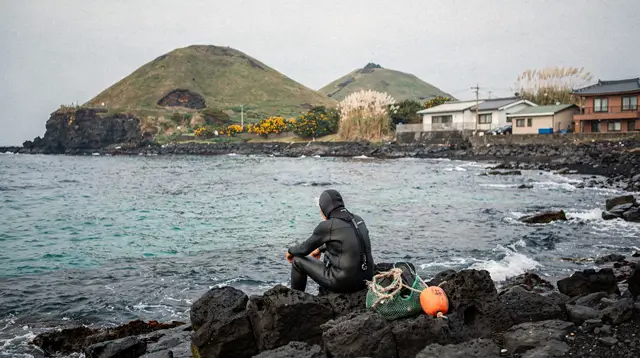
Haenyeo: Jeju's Sea Women
Who Jeju's haenyeo sea women are, where to see them dive, and how to experience this UNESCO-listed living tradition without turning it into a photo op.

The Jeju 4.3 incident: history explained
What the Jeju 4.3 Incident was, why it still matters, and how to visit the Jeju 4.3 Peace Park and related sites respectfully and with proper context.

K-drama filming locations in Jeju
Where popular K-dramas filmed on Jeju, from When Life Gives You Tangerines to older classics — practical visiting info for each real-world location.

Arte Museum Jeju
A visitor's guide to Arte Museum Jeju's immersive digital art rooms near Aewol — tickets, timing, and whether it's worth the admission price.
Ready to book? Top tours for this guide
We earn a small commission if you book through GetYourGuide — at no extra cost to you. Every tour is hand-picked and verified.
Jeju East: Small Group Healing Tour w/Woman Divers Show
Jeju: Eastern UNESCO Sites Tour with Haenyeo Show
Jeju: Eastern UNESCO Join-in Tour (Seongsan, Haenyeo Show)
Jeju: 4.3 Incident History & Cultural Tour with a Guide
Jeju: 4.3 Incident History & Cultural Tour with a Guide (SW)