
Sagye
Sagye is the village at the foot of Sanbangsan — home to the grotto temple, Yongmeori Coast's tuff cliffs, and some of Jeju's best sunset views.
Quick facts
Top tours and experiences
We earn a small commission if you book through GetYourGuide — at no extra cost to you. Every tour is hand-picked and verified.
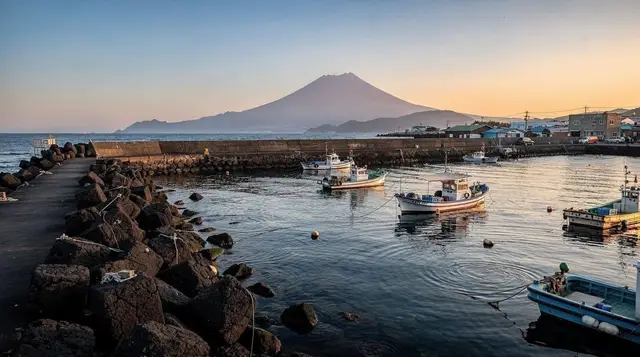
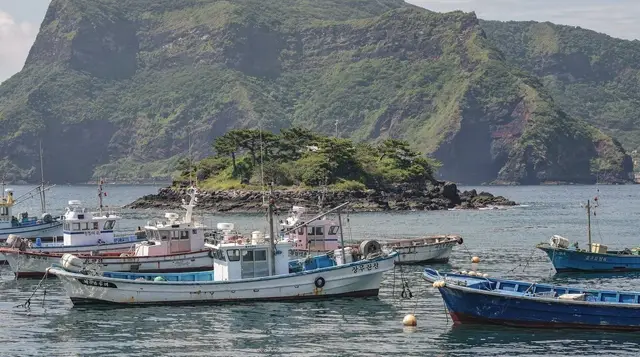
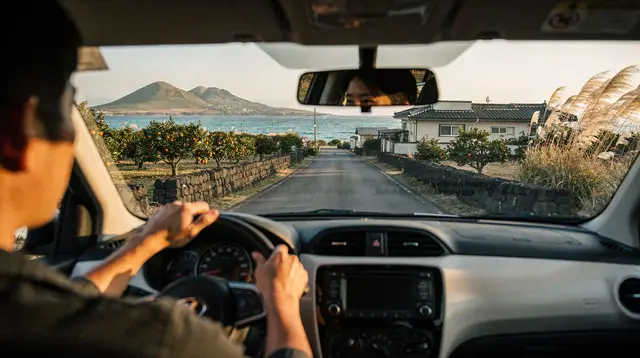
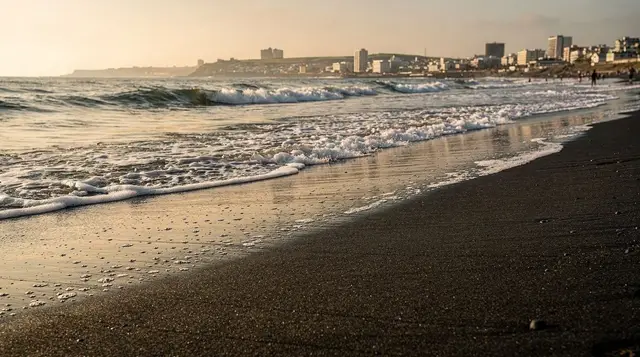
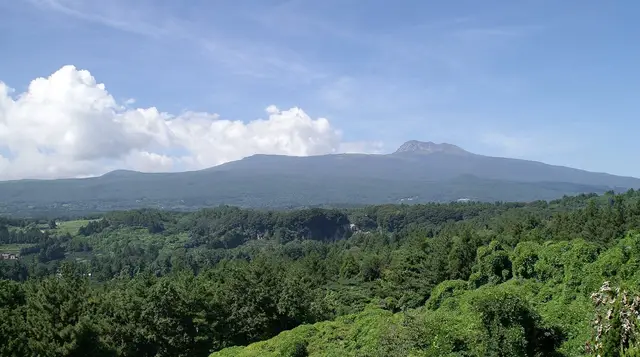

Sagye-ri is the small coastal village that sits directly beneath Sanbangsan, the striking lava-dome mountain that rises almost 400 meters straight out of the surrounding farmland on Jeju’s southwest coast. Between the mountain, the tuff-cliff coastline at its base, and views out to a pair of small islands offshore, Sagye packs a disproportionate amount of the island’s best photography and geology into a village most visitors drive through in an afternoon.
| Where | Southwest coast, foot of Sanbangsan |
| Cost | Sanbanggulsa under ₩3,000; Yongmeori ₩2,000-3,000 |
| Time needed | Half a day |
| Getting there | Car recommended, ~50-60 min from CJU airport |
| Best time | Late afternoon into sunset, checked against tide times |
Sanbangsan and Sanbanggulsa
Sanbangsan itself — a lava dome rather than a volcanic cone, formed by thick, slow-moving lava that solidified before it could spread — dominates the skyline of the entire southwest coast and is visible from as far as Andeok and Moseulpo. Partway up its slope sits Sanbanggulsa, a small Buddhist grotto temple built into a natural cave, with a Buddha statue and a spring inside the rock that’s considered sacred. The climb to the grotto is short but has real steps and some incline; entry to the temple grounds runs a modest fee, typically under ₩3,000. Full ascent hiking trails to Sanbangsan’s summit have historically been closed for erosion control — check current status before planning a summit attempt, as access has changed over the years. The Sanbangsan guide covers current trail status and viewpoint options.
Yongmeori Coast
At Sanbangsan’s base, Yongmeori Coast (“Dragon’s Head Coast”) is a stretch of layered tuff cliffs shaped by wave erosion into a form that, from certain angles, resembles a dragon’s head diving into the sea — hence the name. It’s one of the clearest visible demonstrations of Jeju’s volcanic sediment layers anywhere on the island, and a walking path along the base lets you get close to the formations at low tide. This is the key caveat: Yongmeori Coast access closes during high tide and rough seas for safety, sometimes with little advance notice, so a visit here needs some tide-table awareness rather than just showing up whenever suits your itinerary. Entry runs around ₩2,000-3,000 when open.
Hyeongjeseom and sunset
Offshore from Sagye, a pair of small uninhabited islands known as Hyeongjeseom (“Brother Islands”) sit in clear view from the coastal walking path and several viewpoints along Sagye’s shore — a genuinely good sunset backdrop, with Sanbangsan’s silhouette on one side and the islands on the other. Sagye Beach, a modest black-sand beach near the village, is a quieter, less crowded sunset-watching spot than some of the island’s more famous stretches.
Songaksan nearby
A short drive south of Sagye, Songaksan is a lower, gentler volcanic cone with a coastal walking loop that takes in wartime Japanese fortification remnants (tunnels and gun emplacements dug into the cliffside) alongside grassland and sea views — a worthwhile add-on if you have a full day rather than a rushed half-day in the area. It sits technically in west Jeju’s administrative area but is close enough to Sagye to combine easily.
Getting here
Sagye is about 50-60 minutes by car from CJU airport, most directly via the coastal road (1132) or the Pyeonghwa-ro cross-island route through Andeok. It borders Daejeong to the west and connects to Moseulpo port, the departure point for Marado ferries, a short drive further south. Public buses reach the Sanbangsan area from Jeju City and Seogwipo, but a rental car makes visiting Sagye alongside nearby Andeok or Moseulpo considerably more efficient.
Jeju: SouthWest Authentic Tour with Mt Halla, Waterfall, Green Tea includes the Sanbangsan area as part of a broader southwest circuit, a reasonable option if you’d rather not manage tide timing for Yongmeori Coast yourself.
Where to stay
Sagye has a small number of guesthouses and pensions, many built to take advantage of the Sanbangsan and sunset views, running roughly ₩70,000-140,000/night. Most visitors, though, day-trip in from Seogwipo or base further north and treat Sagye as a half-day stop rather than an overnight destination.
Food in Sagye
The village has a handful of simple seafood and Korean restaurants catering to the steady flow of day visitors to Sanbangsan and Yongmeori Coast, generally priced ₩10,000-18,000 per person — reasonable by Jeju standards, if not a specific food destination in its own right.
Budget for a Sagye visit
Sanbanggulsa temple entry runs under ₩3,000, Yongmeori Coast around ₩2,000-3,000 when open, and a simple meal runs ₩10,000-18,000 per person. A half-day covering both sites and a meal comes to roughly ₩15,000-25,000 (about US$11-19) per person — one of the better value stops on the southwest coast.
Parking near Sanbangsan and Yongmeori Coast
Parking near the main Sanbangsan entrance fills quickly during the late-afternoon sunset rush, with a secondary lot near the Yongmeori Coast entrance sometimes offering an easier option when the main lot is full. Both are a short, manageable walk from either attraction, so it’s worth checking the second lot before circling the main one repeatedly.
Checking tide times before you go
This is the one genuinely practical planning note for Sagye: Yongmeori Coast’s walking path closes at high tide and during rough seas, and the closure can happen with limited notice. If seeing the tuff cliffs up close is the priority, check tide predictions for the day and plan around low tide rather than treating it as a stop you can slot in at any hour. If the path is closed when you arrive, the Sanbangsan viewpoint above still gives a good, if more distant, look at the coastline.
Sagye Beach as a quieter alternative
If Yongmeori Coast is closed for tide or weather reasons and Sanbanggulsa feels like enough of a stop on its own, Sagye Beach itself — a modest black-sand stretch a short walk from the village center — is worth a look. It rarely draws the crowds that gather for sunset at the main viewpoints, and the same Sanbangsan silhouette is visible from its shoreline, just from a slightly different angle than the more famous vantage points along the coastal path.
Combining Sagye with a southwest day
Sagye pairs naturally with Andeok’s tea fields and gardens to the east (about 15-20 minutes) or a Marado ferry crossing via Moseulpo to the south. A day starting with Andeok’s inland attractions in the morning and finishing with Sagye’s coastline and sunset is one of the more satisfying southwest combinations available with a car.
Planning the southwest around Sagye
Sagye makes a good anchor for a southwest day because so much sits within easy reach. The Yongmeori Coast guide goes deeper on the cliffs, and the Sanbangsan guide covers the mountain itself. If you are building a longer route, the west Jeju itinerary and the west Jeju day tour show where Sagye fits among the beaches and villages further north, while the south Jeju day tour covers the Seogwipo side. For a wider comparison of formats, the best day tours in Jeju roundup helps you decide between going alone and joining a group.
If you would rather leave the driving and the timing to someone else, a western and southern sightseeing day tour strings several southwest stops together, and a western UNESCO sites tour that finishes with sunset views suits anyone who mainly wants the evening light over the coast. Neither replaces the pleasure of wandering the coastal path at your own pace, so treat them as options rather than necessities.
Getting around without stress
A car is the easiest way to link Sagye with its neighbours, and the car rental and IDP guide explains what to prepare before you pick one up. The driving and road trip tips are worth a skim for the coastal roads here. Without a car, the Jeju bus guide explains how the network works, and Kakao T taxi is a practical way to cover the last stretches or return after sunset when buses thin out.
Pairing Sagye with other stops
A morning at the Osulloc tea fields followed by an afternoon in Sagye works well, and the beaches of Hyeopjae and Gwakji are natural neighbours if you head north along the coast. If a boat trip appeals, the ferries to the islets guide and the Gapado and Marado day trip explain the crossings from Marado island’s side of the coast. For light and composition ideas, see the sunrise and sunset photography guide and the broader photography spots guide. Choosing the right season matters too: the month-by-month guide and the typhoon season guide help you judge sea conditions, which directly affect Yongmeori Coast access.
Seasonal notes
Sagye works in any season, though winter’s clearer air often gives sharper visibility out to Hyeongjeseom, and summer’s longer days extend the window for a sunset visit into the evening. Rough seas and higher surf are more common in autumn and winter, increasing the odds Yongmeori Coast is closed on a given day.
The geology behind Sanbangsan
Sanbangsan is what geologists call a lava dome — formed when unusually thick, viscous lava pushed up out of a vent without flowing far, cooling into a solid mass rather than spreading into the broader shield shape typical of most of Jeju’s volcanic cones. This is part of why it looks so different from the island’s more common oreum cones: rather than a bowl-shaped crater, Sanbangsan is a solid dome with steep sides rising abruptly from flat farmland, visible from a remarkable distance across the southwest coast. It’s one of the clearest single examples on the island of how varied Jeju’s volcanic activity actually was, beyond the more commonly discussed shield-volcano structure of Hallasan itself.
Yongmeori Coast’s rock layers up close
Walking the base of Yongmeori Coast when it’s open reveals distinct horizontal bands in the tuff cliffs, each representing a different phase of volcanic ash deposition and erosion over thousands of years — visible even to visitors with no geology background, since the color and texture changes between layers are genuinely obvious at close range. It’s worth slowing down here rather than treating it purely as a photo backdrop; the rock itself tells a story that predates almost everything else you’ll see on the island.
A note on crowds
Sagye’s combination of a famous mountain, a dramatic coastline, and reliably good sunset views means it draws real crowds, particularly in the late afternoon during high season. Arriving an hour or two before sunset rather than right at the peak window generally secures better parking and a calmer walk along the coastal path, with the crowd building steadily as the light gets better.
Getting a good photo of Sanbangsan without the crowd
Most visitors photograph Sanbangsan from the main parking area or Yongmeori Coast’s entrance, both of which get crowded at the golden-hour peak. A short walk along the coastal path away from the main entrance, or a stop at Sagye Beach itself, gives a similar mountain silhouette against the sea with noticeably fewer people in frame — worth the extra five-minute walk if a clean shot matters more to you than the most obvious, closest vantage point.
Sagye by tide and time of day
| Window | Yongmeori Coast | Sanbangsan / Sanbanggulsa | Sunset views |
|---|---|---|---|
| Low tide, late afternoon | Open, best access | Open regardless of tide | Ideal — plan around this |
| High tide | Likely closed | Open regardless of tide | Still workable from the viewpoint |
| Midday | Open if tide allows | Open, fewer crowds than late afternoon | N/A |
Sagye Beach’s own quiet appeal
It’s easy to treat Sagye Beach purely as a fallback for when Yongmeori Coast is inaccessible, but the black-sand stretch has real merit on its own terms: fewer crowds than the main viewpoints even during sunset high season, an unobstructed sightline to Hyeongjeseom, and a slower, more contemplative pace than the parking-lot bustle around Sanbanggulsa and Yongmeori’s entrance. Visitors who’ve already done the mountain and the cliffs on a previous trip, or who simply want a quieter final stop before dinner, shouldn’t overlook it as a destination in its own right.
A realistic Sagye plan if the tide is against you
If tide tables rule out Yongmeori Coast for your visit window, the honest move isn’t to force it — Sanbanggulsa’s grotto and the Sanbangsan viewpoints are open regardless of tide and deliver a strong version of the visit on their own, and Sagye Beach offers a quieter sunset alternative with the same mountain silhouette. Save Yongmeori Coast for a later stop on the same trip if low tide lines up better with a different day’s schedule, rather than treating a closure as a wasted visit.
Frequently asked questions about Sagye
Can I climb to the top of Sanbangsan?
Summit trail access has historically been restricted for erosion control — check current status before planning a full ascent; the Sanbanggulsa grotto partway up is reliably open.
Why does Yongmeori Coast sometimes close?
The walking path along the tuff cliffs floods at high tide and becomes unsafe during rough seas, so it closes for visitor safety, sometimes with short notice.
Is Sagye worth visiting if the tide is wrong for Yongmeori Coast?
Yes — Sanbanggulsa temple, the Sanbangsan viewpoints, and the sunset views toward Hyeongjeseom don’t depend on tide timing.
How do I get from Sagye to the Marado ferry?
Drive or taxi to Moseulpo port, about 10-15 minutes south.
Is Songaksan close enough to combine with Sagye?
Yes, a short drive south — it fits into the same half-day or full-day southwest loop.
What’s the best time of day to photograph Sanbangsan?
Late afternoon into sunset, when the light is warmer and the mountain’s silhouette stands out clearly against the sky and sea.
Do I need a car to visit Sagye?
Strongly recommended — public buses reach the general area but with limited frequency, and combining Sagye with nearby Andeok or Moseulpo is far easier with your own transport.
Why does Sanbangsan look different from other Jeju volcanic cones?
It’s a lava dome formed by thick, slow-moving lava rather than the broader shield-shaped cones typical elsewhere on the island, giving it its distinctive steep, solid profile.
Are the Hyeongjeseom islands accessible by boat?
They’re uninhabited and not set up for regular visitor boat trips — most people experience them as a scenic backdrop from Sagye’s shore rather than a destination to land on.
Is there a fee to enter Sanbanggulsa temple grotto?
Yes, a modest fee typically under ₩3,000, which usually includes access to the surrounding temple grounds partway up Sanbangsan’s slope.


