
Andeok
Andeok is Jeju's green-tea heartland — Osulloc's tea fields, the Spirited Garden bonsai collection, and Sanbangsan rising over the coast nearby.
Quick facts
Top tours and experiences
We earn a small commission if you book through GetYourGuide — at no extra cost to you. Every tour is hand-picked and verified.




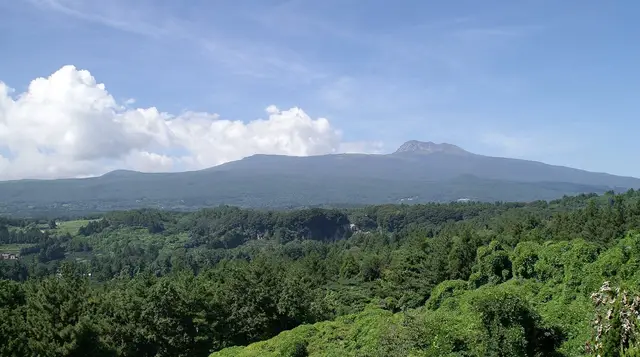

Andeok is a rural myeon in southwest Jeju best known for one thing most visitors don’t associate with a subtropical volcanic island: tea. The area’s iron-rich volcanic soil and mild, humid climate turned out to suit green tea cultivation well enough that Osulloc, Korea’s best-known tea brand, built its flagship museum and largest field here — and Andeok has quietly become one of Jeju’s most photographed inland landscapes as a result.
| Where | Andeok-myeon, southwest Jeju (Seogwipo side) |
| Cost | Osulloc fields free; Spirited Garden ₩10,000-12,000; Camellia Hill ₩7,000-9,000; Bonte Museum ₩15,000-20,000 |
| Time needed | Half a day for the tea fields and garden; a full day with Sagye’s coastline |
| Getting there | 50-60 min by car from CJU via the Pyeonghwa-ro cross-island road |
| Best time | May for fresh tea harvest; November-March for Camellia Hill’s bloom |
Osulloc Tea Museum and fields
Osulloc’s Innisfree-adjacent tea museum sits at the edge of rolling fields of neatly rowed tea bushes that stretch toward Sanbangsan’s silhouette on clear days — one of the more genuinely striking inland views on the island, especially in the soft light of early morning or late afternoon. Entry to the fields and the ground-floor exhibition is free; the museum’s upper-floor tea-culture displays and tasting café charge separately, with a set of green-tea-based drinks and desserts (the tea ice cream and roll cake are the best-known items) running ₩5,000-9,000. May brings the year’s first harvest and the fields at their most vividly green, but the rows photograph well in any season. The Osulloc Green Tea Fields guide has more on visiting hours and photo timing.
Spirited Garden
A short drive from Osulloc, Spirited Garden (Bunjae Artpia) is a bonsai and landscaped garden built over decades by a single collector, now one of the most internationally recognized bonsai collections outside Japan — it drew enough attention that North Korean leader Kim Jong-un reportedly requested trees from here as a diplomatic gift. Entry runs around ₩10,000-12,000, and the garden rewards a slow, unhurried walk rather than a quick pass-through; some of the trees on display are well over a century old. The Spirited Garden guide covers the layout and seasonal highlights (the garden changes noticeably between spring blossom and autumn color).
If you would rather have your entry sorted before you arrive, an entry ticket for the bonsai garden can be arranged in advance, which keeps the visit itself free of fiddling at the gate and leaves your attention for the trees.
Camellia Hill and Bonte Museum
Andeok also holds two more of Jeju’s better inland attractions: Camellia Hill, a forest of over 6,000 camellia trees that blooms from November through March (peaking December-February, when much of the rest of the island is at its bleakest), and the Bonte Museum, a Tadao Ando-designed contemporary art and architecture space known as much for its concrete-and-water building as its exhibitions. Both sit within a 10-15 minute drive of Osulloc, making a full “garden and museum circuit” day realistic without much driving between stops. Camellia Hill and Bonte Museum have fuller details on hours and current exhibitions.
Andeok’s landscape beyond the attractions
Between the named sights, Andeok is quietly scenic in its own right — rolling farmland, stone-walled fields, and glimpses of Sanbangsan from unexpected angles as the road winds through. It’s a good area for a slower driving pace than the coastal highway offers, and one of the better parts of the island for photographers looking for green, layered landscapes rather than coastline or volcanic drama.
Getting here
Andeok is about 50-60 minutes by car from CJU airport, most directly via the Pyeonghwa-ro cross-island road. It sits between Seogwipo to the east and the Sagye/Sanbangsan cluster to the west, with Daejeong bordering to the southwest. Public buses reach Osulloc from both Jeju City and Seogwipo, but a car makes far more sense if you’re planning to combine the tea fields with Spirited Garden, Camellia Hill, and Bonte Museum in one day, since these sights, while close together, aren’t realistically walkable between.
Jeju: SouthWest Authentic Tour with Mt Halla, Waterfall, Green Tea covers Andeok’s tea-country sights alongside the broader southwest region as a guided day tour, a reasonable option if coordinating multiple garden stops on your own feels like more logistics than the day is worth.
Travelers who want the freedom of a car without driving themselves can look at a customized private day tour by van, which lets you shape the route around the tea fields, the garden and whichever of the other stops appeal to you.
Where to stay
Andeok has a scattering of boutique guesthouses and pension-style stays, generally quieter and cheaper than Jungmun’s resort hotels, running roughly ₩80,000-150,000/night. It’s a reasonable base for travelers who want easy access to the southwest’s gardens and tea fields without paying resort prices, though most visitors day-trip in from Seogwipo or Jeju City rather than basing here overnight.
Food in Andeok
Dining in Andeok centers on tea-culture cafés near Osulloc — green tea lattes, tea-flavored desserts, and light meals — plus a handful of standard Korean restaurants scattered through the farming villages, generally priced ₩10,000-16,000 per person. This isn’t a destination for a major meal so much as a pleasant café stop between gardens.
Budget for an Andeok day
Osulloc’s fields and ground floor are free; Spirited Garden runs ₩10,000-12,000, Camellia Hill around ₩7,000-9,000 (in-season), and Bonte Museum roughly ₩15,000-20,000. A café stop at Osulloc adds ₩5,000-9,000. A full day covering two or three of these sights plus a light meal comes to roughly ₩35,000-55,000 (about US$26-41) per person — one of the pricier inland circuits on the island once you add up multiple entry fees, though each individual stop is reasonably priced on its own.
Photographing the tea fields
Osulloc’s rows of tea bushes photograph best from the elevated walking path that runs along one edge of the main field, giving a clean diagonal line through the rows toward Sanbangsan on the horizon. Early morning light is softer and less likely to wash out the deep green of the bushes than the harsher midday sun, and a light morning mist — common in this area given its microclimate — can add real atmosphere if you’re willing to be there right at opening time.
Combining Andeok with the coast
Andeok pairs naturally with a continuation to Sagye’s Sanbangsan and Yongmeori Coast, about 15-20 minutes further west, or east toward Jungmun’s resort strip and waterfalls. A full day covering Andeok’s inland gardens in the morning and Sagye’s coastline in the afternoon is one of the more well-rounded southwest itineraries available with a car.
What to prioritize if you only have half a day
If time is tight, Osulloc’s fields and Spirited Garden together cover the two most distinctive Andeok experiences without requiring a full day — Camellia Hill and Bonte Museum, while worthwhile, are easier to skip on a first visit or save for a return trip focused on winter bloom or contemporary art specifically.
Seasonal notes
May is the standout month for Osulloc’s fresh tea harvest and the fields at their greenest; November through March brings Camellia Hill into bloom, making Andeok one of the better winter destinations on an island where many outdoor attractions feel muted in the colder months. Spirited Garden and Bonte Museum are both indoor-adjacent enough to work regardless of weather.
Why tea grows well here
Andeok’s success with green tea comes down to a specific combination of factors: well-drained volcanic soil rich in minerals, a mild, humid subtropical climate with mist rolling in off the coast on many mornings, and enough elevation change across the myeon to give growers some flexibility in field placement. Osulloc chose this specific area for its flagship fields in the 1980s after research into which parts of the island could realistically support commercial tea cultivation, and the investment paid off enough that Jeju green tea, once a novelty, is now a recognized category in Korean tea culture. It’s a reminder that Jeju’s volcanic geology, usually discussed in terms of lava tubes and oreums, also quietly shapes what can be farmed here.
The Bunjae Artpia story
Spirited Garden’s founder, Sung Beom-young, reportedly began collecting and shaping trees as a personal project starting in the 1960s, on land that was originally unpromising rocky farmland unsuited to conventional crops — turning a liability into what’s now considered one of the finest bonsai collections outside Japan took decades of patient, unglamorous work. That backstory is worth knowing before you walk through: many of the specimens on display represent 40, 60, even over 100 years of shaping, a scale of patience that’s easy to walk past without registering if you don’t know what you’re looking at.
Rainy-day options in Andeok
If weather turns during an Andeok visit, both Bonte Museum and the covered portions of Osulloc’s exhibition space offer reasonable shelter without cutting the day short — a useful thing to know given how often Jeju’s coastal weather can shift with little warning, even when the forecast looked clear that morning.
A quieter alternative circuit
If Osulloc and Spirited Garden feel too busy on a summer weekend, Andeok’s back roads hold a scattering of smaller, less-marketed tea shops and family-run gardens that don’t appear on most tour itineraries — worth asking about locally if you’re staying overnight in the area rather than day-tripping through. These smaller operations rarely match Osulloc’s polish, but they offer a calmer, more conversational version of the same tea-country experience, often at lower prices for a tasting.
Weather and light for garden photography
Andeok’s inland gardens are more sheltered from coastal wind than towns like Aewol or Gwakji, which makes for calmer, more forgiving conditions when photographing Spirited Garden’s bonsai or Osulloc’s tea rows — mist that regularly settles over this area in early morning can add real atmosphere, but it also means checking forecasts specific to Andeok’s slightly higher elevation rather than a general coastal report.
Frequently asked questions about Andeok
Is the Osulloc Tea Museum free to visit?
The fields and ground-floor exhibition are free; the upper-floor tea-culture area and café menu items are paid separately.
How much time should I budget for Andeok’s attractions?
Roughly 45 minutes to an hour each for Osulloc, Spirited Garden, and Camellia Hill or Bonte Museum — a full day if you want to see three or four of them without rushing.
Is Andeok worth visiting outside of tea season?
Yes — the fields hold their visual appeal year-round, and Camellia Hill’s winter bloom makes Andeok one of the better cold-season destinations on the island.
Do I need a car to see Andeok’s sights?
Strongly recommended — the attractions are close together but not walkable, and public transit connections between them are limited.
Can I combine Andeok with Sanbangsan in one day?
Yes — Sagye, home to Sanbangsan and Yongmeori Coast, is about 15-20 minutes further west, making a combined day realistic.
Is Bonte Museum worth the entry fee?
If you’re interested in architecture or contemporary art, yes — the Tadao Ando-designed building is as much a draw as the exhibitions inside.
What’s the best month to see Camellia Hill in bloom?
December through February for peak flowering, though the season runs November through March overall.
Who created the Spirited Garden bonsai collection?
Sung Beom-young, who began shaping trees on the site decades ago, turning rocky, agriculturally unpromising land into what’s now one of the most respected bonsai collections outside Japan.
Can I buy Osulloc tea to take home?
Yes, the museum’s gift shop sells a range of packaged teas and tea-based products, generally at prices comparable to Osulloc retail stores elsewhere in Korea.
Is Andeok suitable for visitors with limited mobility?
Osulloc’s ground-floor areas and Bonte Museum are reasonably accessible; Spirited Garden and Camellia Hill involve more uneven garden paths that are harder to navigate with mobility limitations.

