
Jeju's lava tubes, explained
| Where | Manjanggul, east Jeju |
| Cost | Around ₩4,000 entry |
| Time needed | 40 minutes-1 hour for the public walkway |
| Temperature | Consistently cool year-round — bring a light layer |
| Best paired with | Nearby oreums or a UNESCO east coast day |
Beneath Jeju’s surface runs one of the most extensive lava tube cave systems in the world — a network formed by volcanic eruptions tens of thousands of years ago, largely invisible from above ground until you’re standing inside one of the entrances. Manjanggul, the most famous and accessible of these, is part of what earned Jeju its UNESCO World Natural Heritage status, and it’s a genuinely different kind of attraction from the island’s more familiar coastal and volcanic-peak sights.
How lava tubes actually form
A lava tube forms when a river of molten lava, flowing from an eruption, develops a hardened outer crust while the interior lava keeps moving. Once the eruption ends and the remaining lava drains out or solidifies, what’s left is a hollow tunnel — sometimes stretching for kilometers — with distinctive features like lava stalactites, flow lines on the walls marking the original lava’s surface level, and occasionally rare formations like lava balls or coral-like mineral growths where mineral-rich water has dripped for millennia afterward. Jeju’s tubes formed as part of the same broader volcanic activity that built Hallasan and the island’s oreum network, making the caves and the surface landscape part of a single connected geological story rather than separate features.
Manjanggul: the UNESCO-listed showcase
Manjanggul is the most visited and accessible lava tube on the island, with roughly a kilometer of its total length open to the public via a well-maintained walkway. Inside, the tunnel is tall enough in most sections to walk upright comfortably, cool year-round (a genuine relief during Jeju’s humid summers), and dimly lit to preserve the cave’s natural ecosystem, which includes several species of cave-adapted organisms. The most famous single feature is a large lava column near the end of the public route — one of the tallest known lava columns in the world, formed by lava dripping from the ceiling and building up from the floor simultaneously until the two connected.
Manjanggul’s contribution to Jeju’s UNESCO World Natural Heritage designation (granted in 2007, alongside Hallasan and Seongsan Ilchulbong) reflects its status as one of the best-preserved and most scientifically significant lava tube systems globally, not just a scenic cave.
What visiting is actually like
The public section of Manjanggul is a straightforward, flat-to-gently-sloping walk, accessible to most visitors without technical caving experience or equipment. Temperatures inside stay a consistent, cool level regardless of the season outside, so bring a light layer even in summer — the contrast with Jeju’s outdoor heat and humidity is significant enough to catch people off guard. The path can be uneven and occasionally slippery in wetter sections, so proper footwear matters more than it might seem for what’s otherwise an easy walk. Photography is allowed, though flash can disturb the cave’s sensitive ecosystem, so check current signage and follow posted guidance.
If you’d rather not manage transport and ticketing yourself, Jeju: Private Transfer to Manjanggul Cave and Ticket bundles the round-trip transfer with entry, which is a reasonable option if Manjanggul is a standalone stop rather than part of a larger east-coast day.
Other lava tubes on the island
Jeju has numerous other lava tubes beyond Manjanggul, though most aren’t open to the public due to conservation concerns or lack of safe infrastructure for visitors — the broader Geomunoreum Lava Tube System, of which Manjanggul is technically a part, includes several other tubes studied primarily by researchers rather than opened for tourism. This is worth knowing if you come across references to Jeju having “dozens” of lava tubes and wonder why only one is realistically visitable: most exist purely as a geological and ecological resource rather than a tourist attraction, and that’s intentional conservation policy rather than an oversight.
The science behind lava tube formation, in more detail
The specific mechanics of how Manjanggul and its connected system formed involve a relatively fluid, low-viscosity basaltic lava type, which flows fast enough and stays hot enough for long enough to carve out extended tunnel systems rather than solidifying into a shorter, blockier flow. As the outer surface of the flow cools and crusts over from exposure to air, it insulates the still-molten lava underneath, allowing it to keep moving through the newly formed tube even as the surrounding landscape cools. When the eruption feeding the flow eventually stops, the lava still inside the tube either drains further downhill or solidifies where it stands, sometimes leaving distinctive “lava shelves” marking different levels the flow occupied over time — a feature visible in several sections of Manjanggul’s public walkway if you know to look for the subtle horizontal lines on the tunnel walls.
Cave ecosystem and why it’s protected so carefully
Manjanggul and the broader lava tube system support a specialized ecosystem of cave-adapted organisms, including several species of bats and invertebrates that have evolved specifically for the cave’s dark, stable-temperature environment. Some of these species exist nowhere else, which is part of why access restrictions on the unopened sections of the system are taken so seriously by conservation authorities rather than treated as a bureaucratic formality. Visitors are asked to avoid touching cave walls or formations, since oils and bacteria from human skin can disrupt the fragile mineral formations and the microhabitats supporting these species — a low-effort request that makes a meaningful conservation difference given the volume of annual visitors.
Combining lava tubes with the rest of Jeju’s volcanic landscape
Manjanggul sits within the same general east-coast region as several of the island’s most accessible oreums, making it easy to combine an underground visit with an above-ground volcanic hike on the same day. See the best oreums to climb in Jeju for nearby options that pair naturally with a Manjanggul visit, particularly Geumun-oreum, part of the same broader lava tube system and worth understanding as a connected feature rather than a separate attraction. If Hallasan’s summit trails are also part of your plan, the Hallasan permit system guide covers the reservation requirements for that separate, much larger volcanic feature.
Lava tubes elsewhere on the island beyond the geopark system
While Manjanggul and its immediate system get the most attention, Jeju’s volcanic history has produced lava tube features in other areas of the island as well, though most aren’t developed for tourism or safely accessible without specialized equipment and permission. Occasionally, construction or agricultural work on the island has uncovered previously unknown or unmapped tube sections, a reminder that the full extent of Jeju’s underground volcanic network likely isn’t completely documented even today. This ongoing discovery is part of why geological survey work continues on the island, well beyond what a typical visitor would ever interact with directly.
Why lava tubes matter beyond the tourist experience
Jeju’s lava tube system isn’t just a scenic curiosity — it’s actively studied by geologists internationally as one of the best-preserved examples of this specific volcanic feature anywhere in the world, and ongoing research continues to identify new cave-adapted species within the unopened sections. This scientific significance is part of why access to most of the system remains restricted, and it’s worth appreciating that the single kilometer open at Manjanggul represents a carefully managed compromise between public access and genuine conservation need. For visitors interested in Jeju’s less-visited natural features generally, the guide to Jeju’s hidden gems off the beaten path covers several other under-visited natural sites beyond the well-known highlights.
Accessibility considerations for visiting Manjanggul
The public walkway through Manjanggul is relatively flat and well-maintained compared to many natural cave attractions, though it isn’t fully wheelchair accessible given some uneven sections and a modest number of steps near the entrance and exit points. Visitors with mobility concerns should check current accessibility information before planning a visit, since infrastructure updates do happen periodically. The cave’s cool, humid interior air can also be a consideration for visitors with respiratory sensitivities, though conditions are generally mild rather than extreme compared to some other cave environments.
Manjanggul as part of Jeju’s UNESCO trio
Manjanggul is one of three sites — alongside Hallasan and Seongsan Ilchulbong — that together earned Jeju its 2007 UNESCO World Natural Heritage designation. Visiting all three across a single trip gives a fuller picture of the same volcanic history than any one site alone, since each represents a different stage or feature of Jeju’s formation: the underground tube system, the shield volcano itself, and a dramatic tuff cone from a separate eruption type.
A practical east-coast day combining the cave with other sights
Manjanggul sits close enough to several other east-coast highlights that a single day can reasonably combine the cave with an oreum climb and a coastal stop, rather than treating the cave as an isolated half-day trip. The east Jeju day tour guide covers how to sequence a day like this efficiently, useful if you’re trying to avoid backtracking across the island.
Jeju: Small Group Day Tour of Volcano, Landmark & UNESCO Sites covers Manjanggul alongside other UNESCO-listed stops on the same day, a reasonable option for travelers without a rental car who still want to see the full trio in one outing.
Where to go next after the cave
If this article made you curious about the cave itself, the dedicated Manjanggul lava tube guide goes deeper into the visit. For the above-ground side of the same volcanic story, the Geumun Oreum crater hike and the Sangumburi crater guide show what a volcanic landscape looks like once you’re back in daylight, and the broader oreum hiking guide helps you choose among the island’s many other cones.
Travelers who want the whole UNESCO picture without planning every transfer can read the UNESCO sites day tour guide, and those weighing a guided outing against going alone will find the trade-offs in private vs group day tours. If you’d rather build the cave into a longer plan, the east Jeju itinerary shows how it can sit alongside the coast and the oreums, and the Gimnyeong area page is a useful starting point for understanding the nearby coastline.
Frequently asked questions about Jeju’s lava tubes
What is a lava tube?
A hollow tunnel formed when the outer crust of a flowing lava stream hardens while the molten interior continues moving and eventually drains out, leaving behind a cave system.
Can I visit Manjanggul Cave without a tour?
Yes — it’s open to independent visitors with a standard entry ticket, though transfer-inclusive tours are convenient if you don’t have a rental car.
How long does it take to visit Manjanggul?
The public walking section takes roughly 40 minutes to an hour at a comfortable pace, covering about a kilometer of the cave’s total length.
Is Manjanggul cold inside?
It stays consistently cool year-round regardless of outside temperature, so bring a light layer even during Jeju’s hot, humid summer months.
Why is only part of Manjanggul open to visitors?
Conservation of the cave’s sensitive ecosystem, including cave-adapted species, limits public access to a well-maintained section rather than the tube’s full length.
Are there other lava tubes to visit in Jeju besides Manjanggul?
Most other tubes in the broader Geomunoreum Lava Tube System aren’t open to the public due to conservation restrictions, making Manjanggul the primary publicly accessible option.
Can I combine Manjanggul with Hallasan and Seongsan Ilchulbong in one trip?
Yes — the three sites together form Jeju’s UNESCO World Natural Heritage designation, and many day tours combine some or all of them, though Hallasan’s summit typically needs a separate dedicated day.
Is Manjanggul suitable for kids?
Generally yes — the walkway is flat and easy, though the dim lighting and cool temperature are worth explaining in advance to younger children who might find an underground cave unsettling at first.
Related guides

Manjanggul Lava Tube
Manjanggul is Korea's longest lava tube, a UNESCO site near Gimnyeong. Opening hours, entry fees, what the walkable section actually looks like.
Haenyeo: Jeju's Sea Women
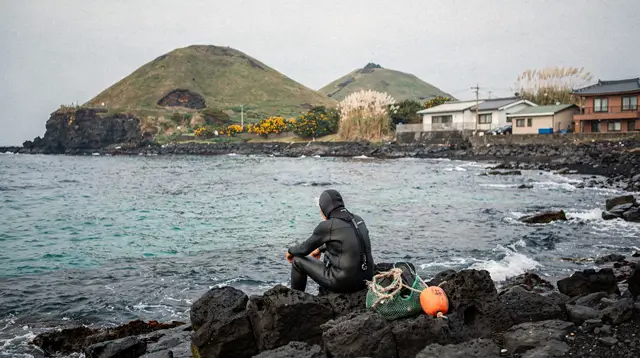
Who Jeju's haenyeo sea women are, where to see them dive, and how to experience this UNESCO-listed living tradition without turning it into a photo op.

Hiking Seongsan Ilchulbong at Sunrise
Hiking Seongsan Ilchulbong for sunrise means an early start, a short but steep climb, and genuine crowds — here's how to plan it well.

East Jeju day tour
What an east Jeju day tour actually covers — Seongsan, Manjanggul, Udo add-ons — with realistic timing, prices, and self-drive comparisons.