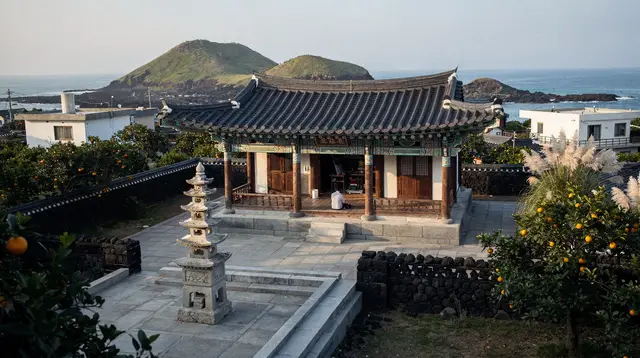
First-timer's Jeju itinerary
A first Jeju trip involves more unfamiliar logistics than the sightseeing itself suggests: an International Driving Permit requirement most visitors don’t expect, a K-ETA process that changes periodically, and navigation apps that don’t work the way they do at home. This four-day itinerary covers the same core loop as the standard 4-day version — Jeju City, East Jeju, Seogwipo, and West Jeju — but spends more time on the planning details that trip up first-time visitors specifically. The first-time Jeju planning guide is a useful companion for background beyond this specific four-day structure.
| Where | Jeju City, East Jeju, Seogwipo, West Jeju |
| Cost | ₩650,000-850,000/person for 4 days, excluding flights |
| Getting around | Rental car, IDP required |
| Best for | First-time visitors, anyone unfamiliar with Korea |
| Book ahead | Rental car, plus any Hallasan-style reservations |
Who this itinerary suits
This suits anyone on their first trip to Jeju or to South Korea generally, travelers unfamiliar with East Asian travel logistics, and couples or solo travelers who’d rather over-prepare than improvise once they land. Returning visitors don’t need this level of planning detail — the standard 4-day itinerary covers the same route more efficiently once you already know the basics.
Before you go: the planning checklist
Most nationalities — US, EU, UK, Canada, Australia among them — get 30 days visa-free entry when flying directly into CJU, and the K-ETA exemption for these same passport groups runs through December 2026. Confirm your specific nationality’s current status before booking, since exemption lists do change. If you plan to rent a car (recommended — see below), bring an International Driving Permit from home; Korea does not accept a foreign license alone, and this is checked at pickup without exception, so this isn’t something to sort out after arrival.
Confirm your specific arrival routing too — the visa-free exemption above applies to a direct flight into CJU, not necessarily to itineraries that route through a mainland Korean airport first. If your flight connects through Seoul or Busan before continuing to Jeju, double-check whether that affects your entry category before assuming the same 30-day exemption applies automatically.
An eSIM or pocket wifi device, arranged before landing, solves most of the navigation and translation friction that catches first-timers off guard — see the Jeju eSIM guide for current options. Download Naver Map or Kakao Map before you land — Google Maps has significant gaps in Korea’s driving directions, which surprises visitors used to it working everywhere else. The K-ETA and visa guide and the CJU airport guide both cover the arrival process in more depth than the summary above, worth a read if this is your first trip to South Korea specifically rather than just to Jeju.
Day-by-day summary
| Day | Region | Main activity | Overnight |
|---|---|---|---|
| 1 | Jeju City | Rental car pickup, Dongmun Market | Jeju City |
| 2 | East Jeju | Manjanggul, Seongsan Ilchulbong | Seongsan |
| 3 | Seogwipo | Maeil Olle Market, Cheonjiyeon Waterfall | Seogwipo |
| 4 | West Jeju | Sanbangsan, Aewol cafe coast, depart | — |
Day 1: Jeju City and rental car basics
Land at CJU and collect a rental car in Yongdam, where agency counters cluster within a five-minute walk of arrivals. Bring your home driver’s license plus the International Driving Permit — both are checked at pickup. Insurance terms vary meaningfully between agencies; confirm what the collision damage waiver covers and photograph the car from all angles before driving off, since damage disputes are a genuinely common complaint among first-time renters unfamiliar with the process.
Spend the rest of the day easing into Jeju City — Dongmun Traditional Market for lunch (grazing multiple stalls is the easiest way to sample Korean street food without committing to a full restaurant meal, and the Dongmun Market food guide has a stall-by-stall rundown if you’d rather plan than wander), then Yongduam Rock for a short evening walk. Jeju Island: 1 Day Private Tour is worth considering for this entire day if driving on unfamiliar roads on day one feels like more than you want to handle. Overnight in Jeju City, mid-range rooms ₩80,000-120,000/night.
Day 2: East Jeju’s headline sights
Drive east 50-70 minutes to East Jeju for Manjanggul lava tube (entry ~₩4,000, 40-60 minute walk, constant 11-21°C underground — bring a layer) and Seongsan Ilchulbong (entry ~₩5,000, 20-40 minute climb on paved steps). A mid-morning visit to Seongsan works fine for a first trip if a pre-dawn sunrise wake-up sounds daunting — the crater view holds up at any hour, just without the sunrise colors.
Jeju: UNESCO Natural Heritage Private Tour by a Certificated Guide is a solid option if you’d rather have a knowledgeable guide explain what you’re looking at rather than relying on posted signage alone. The Manjanggul lava tube guide and Seongsan Ilchulbong guide both have more detail on what to expect at each stop, worth a quick read the night before if this is your first time at either. Overnight in Seongsan, guesthouse rooms ₩60,000-90,000/night.
Day 3: South to Seogwipo
Drive south to Seogwipo — about an hour — for the Maeil Olle Market and Cheonjiyeon Waterfall (entry ~₩2,000; see the Cheonjiyeon Waterfall guide). Seogwipo is noticeably milder than the east coast in most seasons, sheltered by Hallasan’s windbreak effect — worth knowing if you’re comparing weather forecasts between regions and wondering why they differ on the same day. Overnight in Seogwipo, mid-range rooms ₩90,000-130,000/night.
Day 4: West Jeju, then depart
Drive west (45-60 minutes) toward West Jeju for Sanbangsan’s grotto temple and coastal cliffs (entry ~₩2,500), then an unhurried final morning along Aewol’s cafe coast before the drive back to CJU — 20-45 minutes depending on your exact location. Return the rental car with a full tank to avoid the inflated per-liter refueling penalty most agencies charge, and budget 20-30 minutes for the return process.
If you’d rather not self-drive the return leg after a full trip of unfamiliar roads, Jeju: Airport (CJU) Transfer Pick-up & Sending Service is worth booking in advance for a fixed pickup time rather than navigating the final drive with a flight to catch.
Common first-timer mistakes to avoid
Underestimating driving times is the most frequent planning error — Jeju’s roads pass through towns and along winding coastline rather than expressways, so a distance that looks short on a map often takes longer than expected. Assuming Google Maps will work for driving directions is the second most common mistake; switch to Naver Map or Kakao Map before you land. Forgetting the International Driving Permit is a genuinely common and entirely avoidable problem — it must be obtained in your home country before travel, not on arrival.
A less obvious mistake: assuming Jeju’s weather is uniform island-wide, since the island is large enough that conditions genuinely differ region to region on the same day. East Jeju’s exposed coastline can be noticeably windier than sheltered Seogwipo on the same day, and checking a single island-wide forecast rather than a region-specific one has caught more than a few first-time visitors off guard, particularly around ferry crossings and coastal hikes.
Overpacking the schedule is the fourth common mistake: trying to fit Hallasan’s summit, a full island loop, and an islet day trip into four days usually means seeing everything rushed and enjoying none of it fully. This itinerary deliberately covers less ground than a longer trip could, on purpose.
A fifth, subtler mistake: assuming every attraction takes the “official” time listed online. Parking, ticket lines, and simply getting oriented at a new site regularly add 15-20 minutes on top of a stated visit duration, and stacking several such underestimates across a single day is a common reason first-timers arrive at dinner later and more frazzled than planned.
If it rains
Manjanggul is a reliable underground fallback regardless of weather. If Seongsan’s climb is rained out, it stays open and worth visiting later — the crater view holds up without sunrise colors. Cheonjiyeon and other waterfalls actually look better after rain, since spring runoff visibly increases flow. First-timers sometimes assume a rainy forecast means canceling outdoor plans entirely; in practice, most of Jeju’s outdoor sights remain open and worthwhile in light rain.
Budget for a first trip
A realistic mid-range daily budget runs ₩100,000-140,000 per person for food, entry fees, and local transport, before lodging and the car. Entry fees stay modest throughout: Manjanggul ₩4,000, Seongsan Ilchulbong ₩5,000, Cheonjiyeon ₩2,000, Sanbangsan ₩2,500. Three nights of mid-range lodging run ₩240,000-350,000 total, and a compact rental car across four days runs ₩200,000-280,000 in low season.
Rough per-person total for four days, split between two travelers: ₩650,000-850,000 (~US$480-630), excluding flights to Jeju. Cards and contactless payment work at the vast majority of restaurants and hotels; cash remains useful at market stalls where card readers aren’t universal.
First-timers sometimes over-budget for currency exchange fees, assuming they’ll need significant cash reserves — in practice, contactless payment is widespread enough on Jeju (buses, most restaurants, hotels) that a smaller cash buffer than you’d expect for other Asian destinations is genuinely sufficient. ATMs at convenience stores and banks are reliable for topping up cash as needed rather than exchanging a large sum on day one. See the money and currency guide for more on card acceptance and getting cash if a specific stall or small vendor doesn’t take contactless payment.
Packing basics for a first Jeju trip
Comfortable walking shoes matter more than any other single item — Manjanggul’s uneven cave floor, Seongsan’s crater-rim steps, and general market wandering all favor sturdy, broken-in footwear over sandals or fashion sneakers. A separate pair for driving days is unnecessary; one broken-in pair genuinely covers everything on this itinerary. Pack layers rather than a single jacket, since Manjanggul’s cool underground temperature and coastal wind both run cooler than the daytime air. Type C and Type A plug adapters are worth bringing if your home country uses a different standard, since airport adapter rental counters exist but add an avoidable line at arrival.
Where to stay
Moving twice — Jeju City to Seongsan to Seogwipo to West Jeju — follows the loop naturally without backtracking, though it means three separate check-ins across four days. First-timers who’d rather simplify logistics can base in Seogwipo for two nights instead, accepting a longer drive to Seongsan on day two.
Booking accommodation before arrival rather than searching on the ground is worth doing for a first trip specifically — Seongsan’s guesthouse supply is smaller than Jeju City’s or Seogwipo’s and can genuinely sell out around weekends and bloom-season weeks, catching unprepared first-timers off guard more often than seasoned Jeju visitors who already know to book that leg early.
Avoiding tourist traps on a first trip
First-timers are the most common target for Jeju’s handful of overpriced roadside attractions — manufactured “photo garden” setups near major sights, souvenir shops with inflated prices right outside a parking lot, and tour-bus-only stops with little connection to the island’s actual landscape. The Jeju tourist traps guide and overrated attractions guide both name specific examples worth skipping, and as a general rule, free natural viewpoints a short walk further from a crowded parking area are usually a better use of the same time than a paid “experience” clustered right at the entrance.
What to skip on a first trip
Hallasan’s summit trails don’t fit a first four-day trip — both need a dedicated 8-9 hour day with an advance reservation, better suited to a longer return visit once you’re familiar with the island’s logistics. A full Udo Island day trip is similarly better saved for later; the ferry crossing and e-bike logistics add a layer of complexity worth skipping on a first visit while you’re still learning how Jeju’s transport works generally.
A realistic sense of what a first Jeju trip feels like
Most first-time visitors describe Jeju as more physically active and more driving-heavy than they expected going in — this isn’t a destination where you park once and walk everywhere, and accepting that upfront makes the trip smoother than discovering it on day one. The island’s pace also runs slower than a typical city break: fewer must-do attractions per square kilometer than, say, Seoul, and more emphasis on scenery, food, and unhurried coastal walks than a packed sightseeing checklist. Visitors who arrive expecting a beach-resort vacation are sometimes surprised by how much of the appeal is outdoor and nature-focused rather than pool-and-lounge-chair oriented, particularly outside the Jungmun resort strip specifically.
Language barriers tend to be smaller in practice than visitors fear beforehand — restaurant staff and hotel workers in tourist-frequented areas generally manage enough English for basic transactions, and translation apps fill most remaining gaps. The bigger adjustment for many first-timers is less about language and more about pace: Korean service culture moves briskly and efficiently, which can read as brusque to visitors used to more drawn-out small talk, but isn’t intended as unfriendly.
Frequently asked questions about the First-Timer’s Jeju itinerary
What’s the biggest thing first-time visitors get wrong about Jeju?
Assuming it’s a small, quick-to-cover island — Jeju is roughly 1,850 square kilometers with a 180-200km coastal loop, genuinely requiring multiple days to see properly rather than a single day trip.
Do I need to speak Korean to get around?
No — English signage is moderate to good in tourist areas, and navigation apps with English modes cover most practical needs, though learning a few basic phrases is appreciated by locals.
Is Jeju safe for first-time solo travelers?
Yes — South Korea has a low crime rate, reliable transport, and trustworthy locals, making it a comfortable choice for a first solo trip to Asia.
What should I do if I forgot my International Driving Permit?
Rental agencies will not issue a car without one — your only options become taxis, buses, or guided tours for the entire trip, so this is worth double-checking before you leave home rather than discovering the problem at the counter.
How much cash should I bring for a first trip?
Enough for market stalls and small vendors — ₩100,000-200,000 in cash is a reasonable buffer, since cards and contactless payment cover the vast majority of larger purchases.
Is tipping expected anywhere on Jeju?
No — tipping isn’t customary anywhere in South Korea, including restaurants, taxis, and tour guides, so none of the prices above need anything added on top.
What’s the easiest mistake to avoid on a first Jeju trip?
Trying to see too much — a four-day trip covering Jeju City, East Jeju, Seogwipo, and West Jeju at a reasonable pace beats a rushed attempt to add Hallasan or Udo on top.
Should I book everything before I arrive, or figure it out on the ground?
Book the rental car and any Hallasan-style reservations in advance; markets, casual restaurants, and most sightseeing entry fees can be handled on arrival without issue, since Jeju doesn’t require advance booking for most day-to-day activities.
What’s one thing I should pack that I might not think of?
A physical or downloaded offline map as a backup — cell coverage is generally good but not universal, and having Naver Map or Kakao Map pre-downloaded for offline use avoids a stressful moment if connectivity drops at an inconvenient spot.
Is four days really enough for a first trip, or should I extend?
Four days covers the core loop well. If your schedule allows a fifth day, it’s genuinely worth adding — see the 5-day itinerary for how that extra day works best, typically by adding a Hallasan day.
How different is Jeju from mainland South Korea?
Meaningfully different in pace and identity — Jeju has its own dialect, distinct food culture (heukdwaeji, haenyeo seafood), volcanic landscape, and a slower, more nature-oriented tourism style than Seoul or Busan’s city-break energy, even though it’s part of the same country and currency.
Do I need travel insurance for a first Jeju trip?
It’s generally advisable for any international trip, though not a Jeju-specific requirement — South Korea has reliable healthcare infrastructure, and Jeju’s hospitals in Jeju City and Seogwipo handle most visitor medical needs without issue.
What’s the single best piece of advice for a first-time visitor?
Build in more buffer time than feels necessary between stops — Jeju’s roads and driving times are less predictable than they look on a map, and a rushed schedule is the most common source of first-trip frustration.
How do I spot a Jeju tourist trap before wasting time and money on it?
Watch for tour buses parked outside a manufactured “photo garden” or attraction with little visible connection to Jeju’s actual landscape or culture — the Jeju tourist traps guide names specific examples, and a free natural viewpoint a short walk further is usually the better alternative.
Should I buy an eSIM before I land or on arrival?
Before landing is simpler — an eSIM activated ahead of time means you have working data and navigation the moment you land, rather than hunting for wifi at the airport to set one up.
Related guides

First-time Jeju planning guide
A complete first-timer checklist for planning a Jeju trip — visa, timing, days needed, base, budget, packing, SIM, safety, and getting around.

Jeju with kids: full guide
Planning a Jeju trip with children — which attractions actually work for which ages, realistic pacing, and logistics that make or break a family trip.

How many days do you need in Jeju?
Realistic day-count breakdowns for Jeju by trip style — from a 2-day highlights weekend to a 10+ day slow loop, with what to actually skip.

Jeju budget guide
Realistic daily costs for Jeju by travel style — budget, mid-range, and comfort — covering accommodation, food, transport, and attraction fees in KRW.
Ready to book? Top tours for this guide
We earn a small commission if you book through GetYourGuide — at no extra cost to you. Every tour is hand-picked and verified.
Jeju: UNESCO Day Tour for Cruise Guests
Jeju: Highlights Day Trip (East Course)
Jeju Island: Full Day Tour for Cruise Ship Passengers
Jeju: Small Group UNESCO Highlights Tour for Cruise Guests

Jeju East: Cherry Blossom Early Bird Tour with Hotel Pickup