
Jeju Stone Park
What is Jeju Stone Park and is it worth visiting?
Jeju Stone Park is a large, sparsely visited park and museum complex near Jocheon dedicated to Jeju's volcanic stone culture and the local Grandmother Seolmundae creation myth, combining an indoor museum, outdoor stone gardens, and a re-created traditional stone-house area. It's worth a visit for travelers interested in Jeju folklore and geology specifically; it's a low priority for a first, time-limited trip.
| Where | Jocheon area, northeastern Jeju City district |
| Cost | around ₩3,000-5,000 for adults, reduced for children/seniors |
| Time needed | 2-3 hours |
| Getting there | rental car recommended; limited bus service |
| Pair with | Manjanggul lava tube or Dongbaekdongsan Wetland |
Jeju Stone Park doesn’t appear on most first-time visitor itineraries, and that’s a fair reflection of how it’s positioned — a large, low-key park dedicated to a niche combination of local mythology and volcanic geology, rather than a headline photo-op attraction. For travelers with a genuine interest in Jeju’s folklore or its use of native basalt, though, it’s one of the more thoughtfully assembled sites on the island, and one of the few places that explains the story behind Jeju’s stone culture in real depth rather than reducing it to a decorative motif.
What Jeju Stone Park actually is
The park sits on a large tract of land in the Jocheon area north of central Jeju City, combining an indoor stone culture museum with extensive outdoor grounds landscaped around stacked and arranged volcanic rock formations. Unlike a conventional museum, much of the experience happens outdoors, walking between different themed sections spread across a considerable area — plan for genuine walking distance between sections rather than a compact, single-building visit. The park was developed specifically to document and preserve Jeju’s stone culture, from the practical (dry-stone field walls, traditional stone houses) to the mythological (the Grandmother Seolmundae creation story explained below), giving it a broader scope than a typical single-theme garden or museum.
The Grandmother Seolmundae myth
Central to the park’s design is the local creation myth of Grandmother Seolmundae (Seolmundae Halmang), a giant goddess said to have created Jeju Island itself, shaping Hallasan and the island’s many oreum (volcanic cones) by carrying earth in her apron and letting bits spill out along the way.
In the most commonly told version of the myth, she had 500 sons, and after a famine forced her to cook porridge in an enormous cauldron, she fell into it and drowned; when her sons discovered what happened and realized they had unknowingly eaten from the same pot, their grief turned them to stone, forming the rock formations now associated with the story. The park’s outdoor sections include large-scale stone arrangements and sculptural areas built specifically to represent this myth, giving visitors a physical, walkable way to engage with a story that’s otherwise only encountered as text in most guidebooks.
The 500-generals theme and outdoor stone arrangements
One of the park’s most distinctive outdoor sections uses large stacked and arranged stones to represent the 500 sons from the Seolmundae myth, sometimes referred to locally as the “500 generals.” Walking through this section works best with at least a basic understanding of the myth beforehand — without that context, the stone arrangements read as an attractive but somewhat unexplained sculptural garden, while with it, the same walk becomes a genuinely moving narrative experience tied to a specific piece of local belief. This is a good example of why the park rewards a bit of advance reading or a guided visit over a purely self-directed walk-through.
The Stone Culture Museum
The indoor museum building houses exhibits on the practical, everyday uses of volcanic stone across traditional Jeju life — field boundary walls, house construction, water collection, and tools — alongside sections dedicated to the island’s more famous stone icons, including dol hareubang. For visitors who want deeper context on the stone grandfather statues seen across the island, see the dedicated dol hareubang guide, which covers the statues’ history and where the verified originals stand; Jeju Stone Park’s museum complements that guide with broader context on Jeju’s stone culture as a whole, beyond the hareubang statues specifically.
The traditional stone house area
A re-created section of the park recreates traditional Jeju rural housing, using the low volcanic-stone walls and thatched roofing historically adapted to withstand the island’s strong coastal winds. It’s a useful complement to more dedicated folk village sites like Seongeup Folk Village or the Jeju Folk Village, though considerably smaller in scope — treat it as a supplementary stone-focused angle on traditional architecture rather than a substitute for a full folk village visit.
Entry fees and opening hours
Entry runs a modest amount, generally in the low thousands of won for adults, with reduced rates for children and seniors — noticeably cheaper than most ticketed gardens on this list given the park’s larger, less commercially developed scale. The park is typically open from morning through late afternoon or early evening, with seasonal adjustments; check current hours before visiting since the site’s outdoor sections mean posted closing times matter more here than at an indoor-only museum.
How much time to allow
Because the park spreads across a genuinely large area with real walking distances between the museum, the outdoor stone sections, and the traditional house area, budget at least 2-3 hours for a reasonably thorough visit — longer if you want to read every exhibit panel and walk every outdoor path. This is meaningfully more time than most single-purpose nature sites on this list require, and worth factoring into a day’s schedule rather than treating it as a quick add-on stop.
Getting there
Jeju Stone Park sits in the Jocheon area, part of northeastern Jeju City district, roughly 30-40 minutes by car from central Jeju City and a similar distance from Manjanggul lava tube. Public bus service to the immediate area is limited and infrequent, making a rental car the practical way to visit independently — this isn’t a site regularly bundled into standard bus-based day tours, so plan around a self-drive visit if public transit isn’t an option.
Why this site is less visited than it might deserve
Jeju Stone Park’s low visitor numbers relative to its scale and content depth come down largely to positioning and awareness rather than quality — it’s not marketed with the same intensity as Seongsan Ilchulbong or the island’s beaches, and its subject matter (mythology and stone culture) is a harder sell for a quick, visually immediate photo stop compared to a dramatic coastal cliff or volcanic peak. Visitors who do make the trip consistently note that the depth of storytelling and the scale of the outdoor sections exceed what the park’s relatively low profile would suggest, making it something of an underrated stop for travelers with the right interests and enough time in their schedule.
Pairing with nearby sights
The park’s location in the Jocheon area puts it within a reasonable driving distance of Manjanggul lava tube and Dongbaekdongsan Wetland, both of which sit in the same general northeast corner of the island. A day combining Jeju Stone Park’s mythology and stone culture with Manjanggul’s geological scale, or a quieter wetland walk at Dongbaekdongsan, makes for a coherent northeast Jeju theme built around the island’s volcanic origins, told through three genuinely different lenses — myth, underground geology, and wetland ecology.
Photography at the park
The outdoor stone arrangements, particularly the larger-scale sections representing the Seolmundae myth, photograph well in the softer light of morning or late afternoon, when raking light picks out texture and shadow across the stacked rock surfaces. Because the park spans a large, mostly open area, midday sun creates harsher, flatter shadows across the stone sections than the softer, more dimensional look achieved earlier or later in the day. The museum’s indoor exhibits are less photogenic in the conventional sense but offer useful reference shots if you want to document specific artifacts or informational panels for later reading.
Accessibility across the grounds
Given the park’s size and mix of paved paths, natural terrain, and stepped sections in some outdoor areas, accessibility varies considerably across the site — the museum building and main paved walkways are generally manageable for most visitors, while some of the more elaborate outdoor stone-garden paths involve uneven natural surfaces less suited to wheelchairs or strollers. Visitors with specific mobility needs may want to plan a route through the more accessible sections rather than attempting the full outdoor circuit.
Who this park suits
Jeju Stone Park suits travelers with a genuine curiosity about Korean and Jeju-specific folklore, geology enthusiasts interested in how the island’s stone informed both practical building and mythology, and repeat visitors who’ve already covered Jeju’s headline attractions and want something with more depth than another beach or garden stop. It’s a poor fit for a tightly time-constrained first trip, or for travelers who need constant visual payoff rather than a site that rewards reading and context alongside the walk.
Facilities on-site
The main museum building includes restrooms, a small gift shop, and some seating areas, along with basic informational displays introducing the park’s overall layout before heading outdoors. Given the park’s outdoor emphasis and larger scale, food service on-site tends to be limited to a small cafe or snack counter rather than a full restaurant — plan a proper meal in nearby Jocheon town or Jeju City rather than relying on on-site dining for a full-day visit built around this stop.
Seasonal notes
The park’s outdoor stone sections are viewable year-round regardless of season, since the appeal is geological and sculptural rather than tied to a bloom window the way a garden attraction is. That said, a clear day with good visibility makes for a more pleasant multi-hour outdoor walk than a rainy or windy one, and the exposed nature of much of the outdoor terrain means weather has more impact on comfort here than at a covered or indoor-heavy attraction.
A recommended walking route
Given the park’s scale, a logical route starts at the visitor center and museum building for context on the Seolmundae myth and Jeju’s stone culture before heading outdoors — reading the museum panels first makes the outdoor stone-garden sections considerably more meaningful than encountering them cold. From there, the outdoor route generally moves through the larger stone-arrangement sections representing the myth’s narrative, before finishing at the traditional stone-house area, which works well as a lower-intensity closing section after the more conceptually dense earlier parts of the walk. Because the grounds are large, wear comfortable walking shoes rather than the more casual footwear that suffices at a smaller, single-building attraction.
Visiting with a guide versus self-guided
Because so much of the park’s value depends on understanding the Seolmundae myth and the broader context behind Jeju’s stone culture, a guided visit or a pre-trip reading session adds meaningfully more value here than at a purely visual nature site. Some day tours covering northeast Jeju’s cultural sites include a stop here with guide commentary; for a self-guided visit, reading a summary of the myth beforehand — as covered above — goes a long way toward making the outdoor sections land the way they’re intended to, rather than reading as an attractive but unexplained sculpture garden.
If you would rather not drive yourself, a guided day is the other way to get context on the island’s stories. A private full-day tour by car with a guide lets you steer the day toward the sights you care about, and a customized private day in a van suits a group that wants to build its own northeast route. Check with the operator whether the park can be added before you book, since it is not a standard stop on most itineraries. For help choosing between formats, the private versus group day tours guide and the best day tours overview lay out the trade-offs.
If your trip leans toward the east of the island generally, a guided day around eastern Jeju’s UNESCO-listed sights can pair naturally with a separate, self-driven Stone Park morning on another day. The east Jeju day tour guide and the east Jeju itinerary show how those sights fit together.
Planning the rest of the trip around the park
Because Stone Park rewards a slower pace, it fits best into an itinerary with some breathing room. The how many days in Jeju guide helps you judge whether a reading-heavy stop earns a place, and the 3-day itinerary and road trip loop itinerary show where an extra half-day could go. If you are driving, the car rental and IDP guide and the driving road trip tips cover the practical side, while the bus guide and the Kakao T taxi guide explain the alternatives if you decide to rely on public options.
For more of Jeju’s stone-and-myth landscape elsewhere on the island, the oreum hiking guide and the Hallasan hiking guide connect directly to the Seolmundae story about the goddess who shaped the mountain and its cones. The Jeju weather by month article helps you choose a day with good visibility, and the haenyeo explained article adds another thread of local heritage to a culture-focused trip.
The basalt itself: why Jeju’s stone looks the way it does
Jeju’s volcanic basalt, the raw material behind everything in the park from the museum’s practical exhibits to the mythological stone arrangements outside, formed through the island’s history of shield-volcano eruptions, cooling into the dark, porous rock found across the island’s fields, coastlines, and oreum. That same basalt underlies nearly everything distinctive about Jeju’s traditional material culture — the dry-stone field walls seen across the island’s countryside, the wind-resistant low walls of traditional houses, and the material used to carve dol hareubang statues. Jeju Stone Park is essentially an attempt to gather and explain that entire material tradition in one place, connecting the practical (walls, houses, tools) to the symbolic (myth, protective statuary) in a way most single-purpose sites don’t attempt.
Comparing the park’s cultural focus to other Jeju heritage sites
Where haenyeo culture and the Haenyeo Museum document the island’s diving women tradition, and Jeju Folk Village and Seongeup Folk Village focus on everyday domestic architecture and rural life, Jeju Stone Park occupies a distinct niche centered on mythology and the island’s relationship with its own volcanic material. Together, these sites cover meaningfully different facets of Jeju’s cultural heritage, and a visitor with a genuine interest in the island’s traditions beyond its natural scenery could reasonably build a full day around combining two or three of them.
Dining near the park
Jocheon town, a short drive from the park, has a modest selection of local restaurants serving standard Korean fare and some seafood given the area’s coastal location, though it’s a quieter, less touristed dining scene than Jeju City or Seogwipo. Visitors planning a longer stay in the area sometimes combine a Stone Park visit with lunch in Jocheon before continuing on to Manjanggul or other northeast attractions, rather than relying on the park’s limited on-site food options for a full meal.
What to bring
Beyond comfortable walking shoes, sun protection matters more here than at a smaller, shadier attraction, given the amount of time spent outdoors across open ground with limited shade in several sections. Water is worth carrying independently rather than relying entirely on on-site purchase options, particularly during a multi-hour visit in summer heat. A phone or printed summary of the Seolmundae myth is arguably the single most useful thing to bring, given how much the outdoor sections benefit from that context.
An honest take
Jeju Stone Park is a genuinely well-conceived site let down by weak visibility in most standard travel planning — it offers more storytelling depth on Jeju’s stone culture and mythology than any single comparable attraction on the island, but its low profile, larger time commitment, and less immediately dramatic visuals mean it rarely makes a first-timer’s shortlist. If Jeju’s folklore, the Seolmundae myth, or the island’s volcanic stone traditions genuinely interest you beyond a passing curiosity, it’s worth the detour and the 2-3 hour time investment; if you’re working with a tight schedule and haven’t yet covered the island’s headline nature sights, this is reasonable to leave for a return trip.
Frequently asked questions about Jeju Stone Park
What is the Grandmother Seolmundae myth?
It’s Jeju’s local creation myth, describing a giant goddess said to have shaped Hallasan and the island’s oreum, and whose 500 sons were turned to stone after a tragic misunderstanding involving a famine and a shared pot of porridge — a story the park’s outdoor stone arrangements are built to represent.
How long should I plan for a visit?
At least 2-3 hours, given the park’s large scale and the walking distance between the museum, outdoor stone sections, and traditional house area.
Is Jeju Stone Park connected to the dol hareubang statues?
It covers Jeju’s stone culture broadly, including context on dol hareubang, but for a focused history of those specific statues and where the verified originals stand, see the dedicated dol hareubang guide.
Can I reach the park by public bus?
Service is limited and infrequent, so a rental car is the practical way to visit independently.
Is the park suitable for children?
It can work for curious older children interested in myths and stories, but the reading-heavy, walk-and-absorb format suits adults and older kids better than young children who need constant activity.
Why is Jeju Stone Park so much less visited than other Jeju attractions?
Largely a matter of marketing and subject matter — its mythology and stone-culture focus is a harder sell for a quick photo stop compared to a dramatic coastal or volcanic landmark, despite genuine depth in what it offers.
How much does entry cost?
A modest amount, generally in the low thousands of won for adults, with reduced rates for children and seniors — cheaper than most comparable ticketed gardens on the island.
What should I pair a Jeju Stone Park visit with?
Its location near Jocheon makes it a natural pairing with Manjanggul lava tube or Dongbaekdongsan Wetland, both within a reasonable drive in the same northeast corner of the island.
Is there an audio guide or English signage?
Most panels include English translations alongside Korean, though the depth of English text varies by section — reading a summary of the Seolmundae myth beforehand, as covered above, matters more than relying entirely on on-site signage for full context.
Should I visit Jeju Stone Park on my first trip or save it for a return visit?
Save it for a return trip unless Jeju folklore or geology genuinely interests you beyond a passing curiosity — first-timers with limited days are better served prioritizing headline sights like Seongsan Ilchulbong or Manjanggul before adding a lower-profile, reading-heavy stop like this one.
Comparing Jeju Stone Park to Jeju’s other themed gardens
Unlike ticketed flower gardens such as Camellia Hill or Hallim Park, which reward a visit mainly through visual, in-the-moment beauty, Jeju Stone Park rewards context and reading more than immediate visual payoff. A visitor expecting the same kind of quick, highly photogenic stroll as a flower garden may come away underwhelmed without first understanding the Seolmundae myth; a visitor who arrives with that context tends to rate the experience considerably higher. This distinction is worth internalizing before visiting — it changes what “worth it” means for this specific site compared to a more conventionally scenic stop.
Weather backup plan
Because the majority of the park’s most memorable sections sit outdoors and exposed, a rainy or heavily overcast forecast is worth checking before committing a half-day around this stop specifically. The indoor museum remains a reasonable fallback on a wet day, but the outdoor stone arrangements — the park’s genuine highlight — are considerably less pleasant to walk in poor weather, and the informational context loses some of its impact if you’re rushing between sections to stay dry. If the forecast looks poor, consider swapping this stop for an indoor-heavy alternative like a museum from the Jeju museums guide and returning to Stone Park on a clearer day later in your trip.
What makes the outdoor sections different from a sculpture garden
It’s worth being precise about what the park’s outdoor stone arrangements actually are, since photos alone can make them look like an abstract modern sculpture garden. Every major arrangement is tied to a specific point in the Seolmundae myth or to a documented traditional use of stone in Jeju life — nothing is purely decorative. This distinguishes the park from a generic “instagram spot” garden elsewhere on the island, where the appeal begins and ends with a single photogenic backdrop; here, each section is doing narrative or historical work, even if that work isn’t obvious without the context covered above.
A practical route combining Stone Park with lunch and Manjanggul
A workable half-day plan starts at Jeju Stone Park in the late morning, allowing 2-3 hours to walk the museum and outdoor sections at an unhurried pace, followed by lunch in nearby Jocheon town, then a drive of roughly 20-30 minutes to Manjanggul lava tube for the afternoon. This sequencing works well because it moves from a reading-heavy, above-ground cultural site to a more purely visual, underground geological one, giving the day a natural change of pace rather than stacking two similarly paced stops back to back.
Related guides

Yongduam Dragon Rock
Yongduam Dragon Rock near Jeju City: a free, dragon-shaped lava sea stack, best seen at sunrise, plus the legend behind its name and honest expectations.

Camellia Hill
Camellia Hill is a 6,000-tree camellia garden in west Jeju, at its best from November through March. Bloom timing, entry fees, and what else to see there.

Cheonjiyeon Waterfall
Cheonjiyeon Waterfall in Seogwipo: a 22m drop through subtropical forest, entry fees, opening hours, night illumination, and how it compares to Jeju's

Jusangjeolli Cliff
Jusangjeolli's hexagonal basalt columns near Jungmun: how they formed, entry fees, best time to visit for waves, and safety on the boardwalk.
Ready to book? Top tours for this guide
We earn a small commission if you book through GetYourGuide — at no extra cost to you. Every tour is hand-picked and verified.
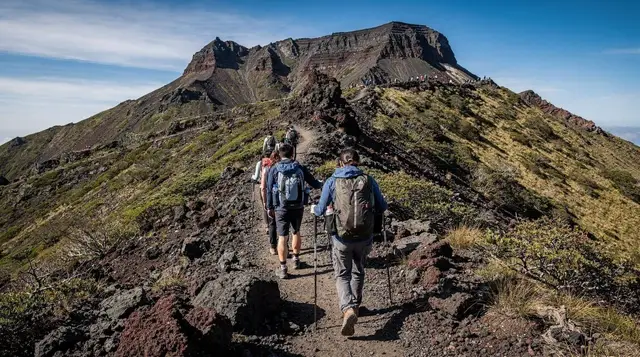
JEJU: UNESCO Mt Halla & South Jeju Coastal Wonders Day Tour

Jeju: Private Transfer to Manjanggul Cave and Ticket

Jeju: Spirited Garden Entry Ticket

Jeju West: Small Group Healing Tour w/Caves & Dolphins
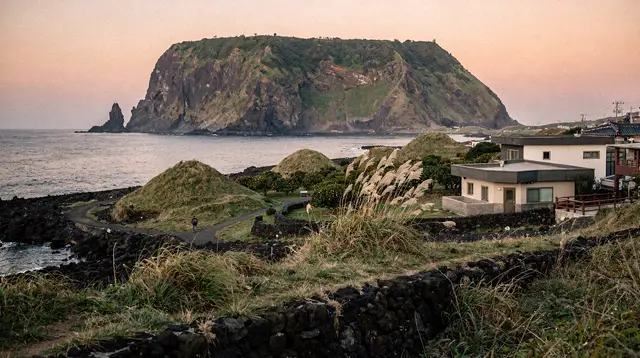
Jeju Island: Sunrise Guided Tour with Hotel Pickup
