
Woljeongri
Woljeongri pairs Jeju's most photographed turquoise beach with a dense strip of design-forward cafes — busy, but for good reason.
Quick facts
Top tours and experiences
We earn a small commission if you book through GetYourGuide — at no extra cost to you. Every tour is hand-picked and verified.
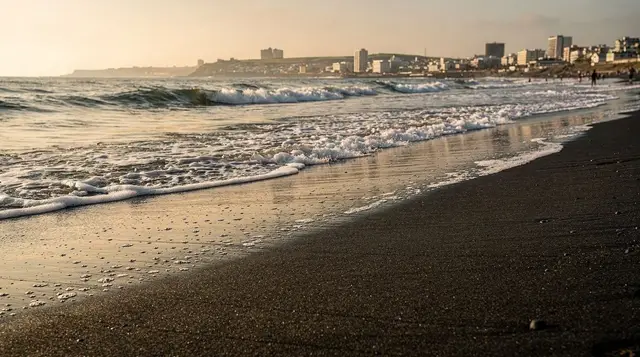

Woljeongri Beach is probably the single most photographed stretch of sand on Jeju outside of a handful of famous cliffs, and it earned that reputation honestly: a crescent of pale sand meeting genuinely striking turquoise water, backed by a strip of architecturally ambitious cafés that turned this stretch of coast into a destination in its own right rather than just a beach with parking. It’s also, as a direct result, one of the busiest and most expensive stretches of coast on the island — the honest planner’s take on Woljeongri is that it’s worth the visit, but manage your expectations about crowds.
| Where | East coast, between Gimnyeong and Sehwa (1132 coastal road) |
| Cost | Beach is free; cafés around ₩7,000-14,000 |
| Time needed | Half a day; a full day with water sports and a meal |
| Getting there | Around 40-50 min from CJU airport by car; coastal bus route runs through |
| Best time | Weekday mornings; summer for swimming, any season for cafés and photos |
The beach
Woljeongri’s water color is the draw — a genuinely vivid turquoise-to-teal gradient that photographs almost as well as it looks in person, backed by pale, fine sand. Swimming conditions are generally calm and shallow near shore, with lifeguard coverage during the official summer season. The catch is popularity: on a clear summer weekend, the beach and its parking areas fill early, and the calm, uncrowded photos circulating online rarely reflect the actual midday crowd density in peak season.
The cafe strip
Running parallel to the beach, Woljeongri’s main road holds one of Jeju’s densest concentrations of design-forward cafés — multi-story buildings with rooftop terraces, floor-to-ceiling glass facing the water, and coffee and dessert menus priced to match the views (₩7,000-14,000 for a coffee and pastry, noticeably above standard café pricing elsewhere on the island). The strip has become a destination independent of the beach itself for visitors more interested in the photo opportunities and atmosphere than actually swimming.
Water sports
Woljeongri’s combination of decent wind exposure and consistent visitor traffic has made it a hub for stand-up paddleboarding and kayak rentals, with several operators running lessons and rentals directly from the beach in season. It’s a reasonable spot to try SUP for the first time given the generally calm, shallow water close to shore — the SUP & Sea Kayaking guide has more on operators and pricing across the island.
Managing the crowds
If the crowded version of Woljeongri sounds unappealing, a few strategies help: visit on a weekday rather than a weekend, arrive early morning before the day-trip crowds build, or treat the nearby, quieter beaches at Gimnyeong or Sehwa as swimming alternatives while still driving through Woljeongri for the café strip and photos. Many visitors do exactly this — swim elsewhere, photograph and caffeinate here.
Photography tips specific to Woljeongri
The most reproduced Woljeongri photos are usually shot from an elevated café terrace looking down toward the water, using the building’s own architecture to frame the beach — worth knowing if you’re chasing a specific shot rather than a ground-level beach photo. A polarizing filter, if you shoot with a dedicated camera, makes a genuine difference in cutting glare off the water’s surface and deepening the turquoise color in bright midday sun.
Getting here
Woljeongri is about 40-50 minutes by car from CJU airport, on the more accessible northern coastal route (1132), between Gimnyeong and Sehwa. Public buses run this coastal stretch from Jeju City with reasonable frequency, and Woljeongri’s popularity means it’s one of the easier east-coast beach towns to reach without a rental car. Parking, however, is a genuine bottleneck in peak season — arriving early or using public transit avoids the worst of it.
Alternatives if Woljeongri is too crowded on arrival
If you arrive and the parking situation or crowd density is worse than you’d like, it’s genuinely fine to reroute — Gimnyeong, ten minutes down the coast, offers comparable water quality with a fraction of the visitors, and doubling back to Woljeongri later (early morning or evening) for the café strip alone is a reasonable adjustment rather than forcing a crowded midday visit.
Where to stay
Woljeongri has a wide range of guesthouses and boutique stays directly along or near the beach, running roughly ₩90,000-180,000/night, priced at a premium compared to quieter east-coast towns given the location’s popularity. Booking ahead matters more here than at less famous beach towns, especially for summer weekends.
Food beyond the cafes
Beyond the café strip, a handful of proper restaurants serve seafood and Korean staples at ₩12,000-22,000 per person, generally a short walk or drive back from the immediate beachfront where prices are highest. As with most heavily touristed strips, moving even a block or two away from the main road improves both prices and the odds of a table without a wait.
Budget for a Woljeongri day
The beach itself is free. A café stop runs ₩7,000-14,000. SUP or kayak rental typically runs ₩25,000-40,000 for an hour or two. A meal runs ₩12,000-22,000 per person. A full day covering the beach, a café stop, and a meal comes to roughly ₩25,000-45,000 (about US$19-33) per person, more with water sports added.
Combining Woljeongri with a coastal day
Woljeongri sits naturally within a beach-hopping day along the northeast coast — pairing with quieter Gimnyeong to the southwest or Sehwa and Jongdal continuing northeast. It also works as a stop on the way toward Seongsan’s Ilchulbong and the Udo ferry further south.
Seasonal notes
Summer (June-September) is peak season for both swimming and crowds — expect the busiest parking and fullest cafés during this window. Spring and autumn offer milder weather, thinner crowds, and the same water color on a clear day, making the shoulder seasons arguably the better time to actually enjoy Woljeongri rather than just endure it.
How Woljeongri became famous
Woljeongri’s rise to prominence is relatively recent — the beach was a quiet, largely local spot until social media, particularly Korean domestic Instagram culture in the mid-2010s, discovered the water’s color and the potential for striking café-and-ocean photography. Cafés followed the visitor traffic, and the traffic followed the cafés, in a feedback loop that transformed a modest fishing-village beach into one of Jeju’s most recognizable tourist strips within a relatively short span of years. It’s a useful case study in how quickly a destination’s character can change once it enters the social-media-driven travel circuit, for better and worse.
The architecture of the cafe strip
Several of Woljeongri’s cafés were built by architects specifically to maximize ocean views and photogenic interior spaces — floor-to-ceiling glass, minimalist concrete interiors, rooftop terraces — turning the buildings themselves into part of the draw independent of the coffee or food served inside. It’s worth appreciating the strip as a piece of contemporary Korean commercial architecture, even if the prices reflect the design investment as much as the product.
A note on sustainability and local impact
Woljeongri’s rapid commercial development has drawn some local criticism for changing the character of what was a quiet fishing village faster than the community could adapt, a tension playing out in various forms across several of Jeju’s most Instagram-famous spots. It’s worth keeping in mind as a visitor — supporting smaller, independently run establishments over the largest chain-style cafés is a small way to spread tourism benefit more broadly within the community.
What a first-time visitor should expect
If your only exposure to Woljeongri is curated social media photography, the actual experience — parking logistics, a genuinely busy strip on weekends, and prices reflecting the location’s popularity — can feel like a letdown by comparison. Arriving with realistic expectations, and treating the beach and café strip as a lively, photogenic stop rather than a serene escape, sets up a much better visit than expecting the quiet, uncrowded version of the same postcard.
Woljeongri by season
| Season | Weather | Crowds | Best for |
|---|---|---|---|
| Summer (Jun-Sep) | Hot, humid, warm sea | Peak — parking is the main bottleneck | Swimming, SUP, kayaking |
| Spring (Mar-May) | Mild, occasional rain | Moderate | Photos, cafe crawl, quieter sand |
| Autumn (Oct-Nov) | Mild, clear skies | Moderate | Photos, cafe crawl |
| Winter (Dec-Feb) | Cool, often windy | Low | Cafe strip only — swimming not realistic |
Woljeongri and the Olle trail
Woljeongri sits along one of the coastal legs of Jeju’s Olle trail network, so hikers walking this stretch of coast pass directly through the beach and café strip without a detour — a natural rest stop with food, coffee, and clean facilities roughly midway through a longer day’s walking. If you’re not doing the full trail, even a short 20-30 minute stretch of the coastal path north or south of the beach gives a quieter, less commercial view of the same coastline.
Without a rental car
Visitors relying on public transport or tours rather than a rental car still have solid options for reaching Woljeongri and the wider east coast. A guided day tour covering multiple east-side stops removes the parking headache entirely and is worth considering on a summer weekend specifically because of it.
Jeju East Full-Day Bus Tour with Entry Fees IncludedPairing a beach stop with the island’s haenyeo diving culture is another way to build a fuller east-coast day around Woljeongri without needing your own transport.
Jeju East Coast Healing Tour with Haenyeo Diving ShowFrequently asked questions about Woljeongri
Is Woljeongri worth visiting despite the crowds?
Yes, for the beach’s color and the café strip’s atmosphere — just plan around weekday mornings or shoulder-season timing if crowds are a concern.
How does Woljeongri compare to Gimnyeong Beach?
Similar water color and sand quality, but Woljeongri has far more cafés, crowds, and higher prices — Gimnyeong offers a quieter version of the same core experience.
Is parking difficult at Woljeongri?
Yes, especially on summer weekends — arriving early or using public transit helps considerably.
Can I do water sports at Woljeongri without prior experience?
Yes, several operators offer beginner SUP and kayak lessons directly on the beach.
What’s the best time of day to photograph Woljeongri’s water?
Late morning to early afternoon, when the sun is high enough to bring out the turquoise color most vividly.
Are the cafes at Woljeongri worth the higher prices?
If the view and atmosphere matter to you, yes — but they’re priced at a clear premium over standard Jeju café pricing, worth knowing going in.
Is Woljeongri suitable for a full day, or just a stop?
Either works — a quick stop covers the photo-and-coffee experience, while a full day allows for swimming, water sports, and a proper meal.
Why did Woljeongri become so popular so quickly?
Social media, particularly Korean domestic Instagram culture in the mid-2010s, discovered the beach’s water color and photogenic potential, triggering a wave of café development that turned a quiet fishing village into one of Jeju’s most visited spots within a few years.
Are there ways to support the local community when visiting Woljeongri?
Choosing smaller, independently run cafés and restaurants over the largest chain-style operations is one modest way to spread tourism income more broadly within the village.


