
Wimi
Wimi is a quiet coastal village on Seogwipo's east side, home to a century-old camellia forest and some of Jeju's best hallabong tangerine orchards.
Quick facts
Top tours and experiences
We earn a small commission if you book through GetYourGuide — at no extra cost to you. Every tour is hand-picked and verified.
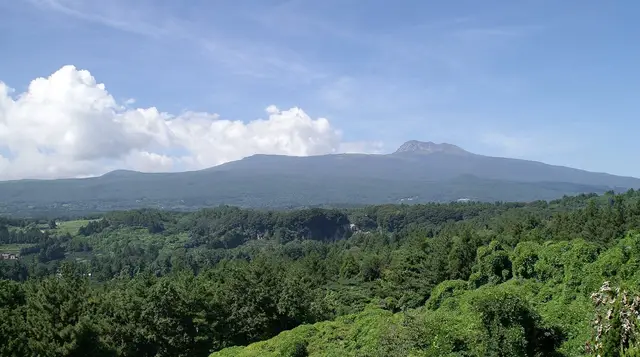

Wimi-ri is a small coastal village on Seogwipo’s eastern edge, easy to drive past without a second look, that holds one of Jeju’s more quietly remarkable sights: a forest of camellia trees planted, according to local history, generations ago by a resident who wanted to leave something of lasting value to her family. That forest, along with the tangerine orchards that blanket the surrounding hillsides, is the whole reason to make a stop here — Wimi isn’t trying to be anything more than a working village, and that’s part of its appeal.
| Where | Seogwipo’s eastern edge, 55-65 min from CJU airport |
| Cost | Free camellia forest; ₩10,000-15,000 for tangerine picking |
| Time needed | Half a day |
| Getting there | Rental car recommended; buses run infrequently |
| Best time | December-February for camellia bloom |
Wimi Camellia Forest
Tucked along the coast near Wimi harbor, this camellia forest is older and less manicured than the more famous Camellia Hill in Andeok — a genuinely wild-feeling grove of century-old trees rather than a landscaped garden, with a network of dirt and gravel paths winding beneath a dense canopy. When the trees bloom, from roughly December through February, deep red flowers litter the forest floor beneath the trees as much as they bloom on the branches, a look distinct enough from Camellia Hill’s more curated presentation that visitors interested in the flower often make time for both. There’s no significant entry fee for the Wimi forest, and it draws a fraction of the crowds Camellia Hill sees even at peak bloom — a genuine off-the-beaten-path option for travelers who’ve already done the more famous version.
Tangerine and hallabong country
Wimi and the surrounding villages sit within one of Jeju’s most productive citrus-growing areas, and the hillsides here are dense with tangerine and hallabong (a large, distinctively bumpy Jeju hybrid citrus) orchards. Several farms in the area run seasonal picking experiences, typically September through December depending on the variety, letting visitors pick and eat straight from the trees for a modest per-kilo or flat entry fee — a genuinely pleasant, low-key activity that doesn’t require booking a formal tour. If you’d rather have the logistics handled, Tangerine Picking Tours covers organized options elsewhere on the island, though Wimi’s farms are generally approachable to visit independently if you’re driving through.
The village and harbor
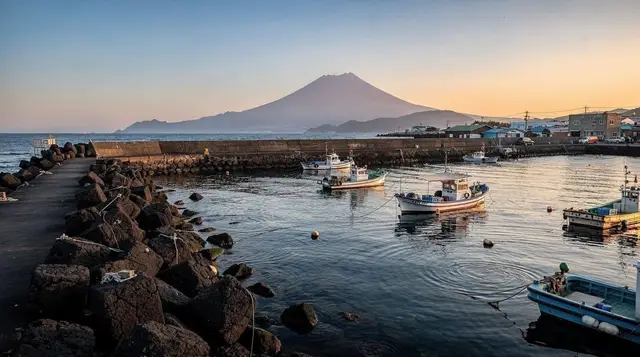
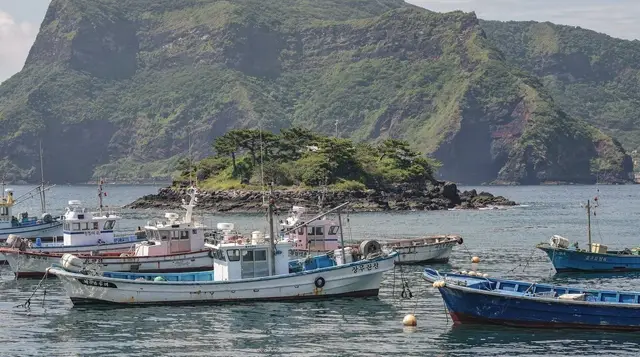
Wimi’s small fishing harbor gives the village its working rhythm — boats coming and going, nets drying along the quay, a handful of seafood restaurants serving whatever came in that morning. It’s not a destination harbor in the way of Seongsan or Moseulpo, just a genuine slice of coastal Jeju life worth a slow walk if you’re already in the area for the camellia forest.
What working coastal Jeju looks like day to day
Spend an hour in Wimi and you’ll get a clearer sense than almost anywhere else on this list of what daily life actually looks like for a Jeju fishing-and-farming village: boats leaving before dawn and returning by mid-morning, orchards tended between tourist seasons, and a rhythm that has very little to do with the island’s tourism calendar. It’s a useful corrective if a trip has started to feel like a sequence of ticketed attractions — Wimi doesn’t perform anything for visitors, which is exactly its appeal for travelers who want to see the place rather than a version of it built for cameras.
Getting here
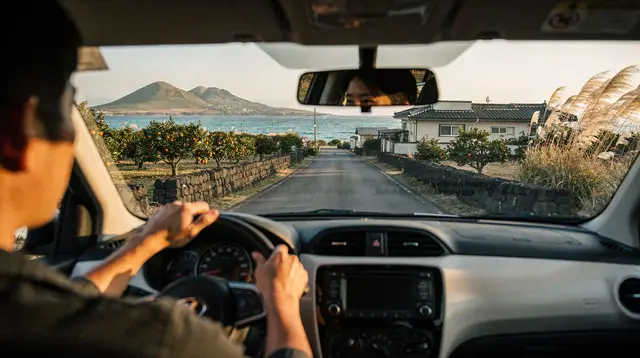
Wimi is about 55-65 minutes by car from CJU airport, along the coastal road (1132) east of central Seogwipo. It sits between Namwon to the west and Beophwan toward Seogwipo’s center, making it a natural stop on a coastal drive rather than a destination requiring a special detour. Public bus service along this stretch of coast exists but runs infrequently — a car is the practical way to reach Wimi and combine it with neighboring stops in the same visit.
Where to stay
Wimi has essentially no dedicated tourist accommodation — this is a village to visit, not to base yourself in. Central Seogwipo, about 20 minutes west, or Pyoseon further east toward the island’s east coast, are the practical overnight options for anyone building Wimi into a broader itinerary.
Food in Wimi
The harbor’s small cluster of seafood restaurants offers simple, fresh options at reasonable prices, typically ₩12,000-20,000 per person for a seafood meal — nothing elaborate, but honest and locally caught rather than tourist-oriented. Outside the harbor, options thin out quickly; this isn’t a place to plan a major meal around.
Budget for a Wimi stop
The camellia forest has no significant entry fee, tangerine picking (in season) typically runs ₩10,000-15,000 for an informal pick-your-own experience at a farm along the road, and a seafood meal at the harbor runs ₩12,000-20,000 per person. A half-day covering the forest, a picking stop if in season, and a meal comes to roughly ₩20,000-35,000 (about US$15-26) per person.
Why Wimi is worth the detour
Jeju’s marketing tends to funnel visitors toward the same handful of camellia and citrus experiences — Camellia Hill, the organized tangerine tours near Seogwipo — and both are genuinely worth doing. But Wimi offers a rawer, less packaged version of the same seasonal draws, without the crowds, ticket booths, or gift shops. If you’ve already done the marquee version elsewhere on the island, or specifically want a quieter alternative, Wimi delivers a similar experience at a fraction of the visitor volume.
Combining Wimi with a coastal drive
Wimi works best as one stop on a longer eastward drive along Seogwipo’s coast — pairing naturally with Beophwan’s Oedolgae Rock and Soesokkak Estuary to the west, or continuing to Namwon and onward toward Pyoseon and the east coast. Few visitors build a dedicated day around Wimi alone; it’s the kind of stop that rewards a flexible itinerary with room for unplanned detours.
Seasonal notes
Camellia season (December-February) is Wimi’s clear highlight, offering a genuine reason to visit during Jeju’s quietest tourist months. Tangerine and hallabong picking runs roughly September through December depending on variety. Outside these windows, the village and harbor are still a pleasant, low-traffic stop, just without a specific headline reason to detour.
The story behind the camellia forest
Local accounts of Wimi’s camellia forest describe a resident who, decades ago, began planting camellia trees on family land as a long-term investment for her daughters rather than a quick cash crop — camellia oil, pressed from the seeds, has traditionally been valued in Korea for hair and skin care, giving the trees practical as well as ornamental value. Whether or not every detail of the story is precisely documented, the forest itself is real, mature, and distinct from any manufactured tourist garden: irregular spacing, uneven canopy heights, and paths that follow the land’s natural contours rather than a landscaper’s plan. It’s a good example of how much of Jeju’s most interesting scenery began as ordinary agricultural decisions rather than tourism planning.
Comparing Wimi to Camellia Hill
Camellia Hill in Andeok, with over 6,000 trees, formal walking paths, an entry fee, and a gift shop, is the version most visitors see and photograph. Wimi’s forest is smaller, rougher around the edges, and free — the trade-off is fewer curated photo opportunities in exchange for a more solitary, unpolished experience. If you have time for only one, Camellia Hill delivers a more reliably photogenic visit; if you’ve already been there or specifically want to avoid crowds, Wimi is a legitimate substitute rather than a lesser version.
Hallabong versus regular tangerines
Jeju grows several distinct citrus varieties, and it’s worth knowing the difference before a picking visit: standard mandarin-style tangerines (gyul) are smaller, sweeter, and available earlier in the season (roughly September-December), while hallabong — larger, with a distinctive bump at the stem end, a hybrid developed from Japanese citrus varieties — ripens later and commands a higher price both at farms and in stores. Wimi’s orchards typically grow both, and farm stands or picking experiences will usually specify which variety is in season on a given visit.
A quiet stop between busier destinations
Wimi’s real value on an itinerary is pacing rather than any single spectacular sight — it’s a place to slow the car down, walk under trees for twenty minutes, and reset before continuing to a busier destination. Travelers moving between Seogwipo’s waterfalls and the east coast’s UNESCO sites often benefit from exactly this kind of unstructured stop, even if it doesn’t photograph as dramatically as the named attractions on either side of it.
Guided picking if you’d rather not go it alone
Wimi’s own farms are approachable for a walk-in visit, but if you’d prefer a structured experience that combines camellia scenery with organized tangerine picking elsewhere on the island, a small-group option handles the logistics:
Jeju: Camellia & Tangerine Picking Small Group TourWimi in the wider camellia and citrus season
Camellia bloom and tangerine harvest both have their own dedicated guides worth reading before a seasonal visit: the Jeju camellia season guide covers bloom timing across the island’s various camellia sites, and the Hallabong citrus guide goes deeper on Jeju’s citrus varieties than fits here. For the more manicured alternative, Camellia Hill in Andeok remains the island’s best-known bloom site if Wimi’s quieter version doesn’t fully satisfy the itch.
Pairing Wimi with Seogwipo’s coast
Because Wimi sits between Namwon and central Seogwipo, it slots easily into a broader south-coast day. Travelers already planning a stop at Cheonjiyeon Waterfall or exploring Seogwipo proper can add Wimi as a quiet interlude without much extra driving, and the Jeju autumn foliage guide covers how the region’s seasonal color complements a tangerine-picking stop in the same trip.
If you’d rather not drive in winter
Camellia season falls in the cold months, when short days and the occasional snowy morning on the east side can make a self-drive day feel more demanding. Anyone who prefers to leave the driving to someone else can look at a winter day trip across the east that mixes snow scenery, camellia flowers and tangerines, which covers a similar seasonal mood to Wimi without needing a rental car. It won’t replace the unhurried feel of wandering the forest on your own, but it is a sensible fallback when the weather or your confidence behind the wheel says otherwise.
Frequently asked questions about Wimi
Is the Wimi Camellia Forest free to visit?
Yes, there’s no significant entry fee, unlike the more developed Camellia Hill in Andeok.
How does Wimi’s camellia forest compare to Camellia Hill?
Wimi’s forest is older, wilder, and far less visited — a genuine alternative if you want the same seasonal bloom without the crowds of the more famous site.
When is the best time to see camellias in Wimi?
December through February, peaking in January in most years.
Can I pick tangerines in Wimi without booking ahead?
Many local farms along the road accept walk-in visitors during harvest season (roughly September-December), though hours and availability vary by farm.
Is there anywhere to stay overnight in Wimi?
Not really — plan to base in Seogwipo or Pyoseon and visit Wimi as a day stop.
Do I need a car to reach Wimi?
Yes, effectively — bus service along this stretch of coast is infrequent enough that a rental car or taxi is the practical option.
What else is nearby if I’m visiting Wimi?
Beophwan’s Oedolgae Rock and Soesokkak Estuary to the west, and Namwon’s coastal drive continuing east.
What’s the difference between hallabong and regular Jeju tangerines?
Hallabong is a larger hybrid citrus with a distinctive bump near the stem, ripening later in the season and priced higher than standard mandarin-style tangerines.
Is Wimi’s camellia forest managed or genuinely wild?
It’s a real, mature planted forest rather than untouched wilderness, but it lacks the formal landscaping and infrastructure of a managed tourist garden like Camellia Hill.
Is there a guided tour that includes Wimi specifically?
Not as a named stop on most itineraries, but small-group camellia and tangerine picking tours cover similar seasonal experiences elsewhere on the island if you’d rather not visit independently.
What season pairs best with a Wimi visit — camellia or tangerine?
Both work, but they’re different windows: camellia bloom peaks December-February, while tangerine and hallabong picking runs roughly September-December, so check which season you’re traveling in before planning around one specifically.


