
Chagwido
Chagwido, off Jeju's northeast coast near Gujwa, is the least-developed and least-visited of the island's four outlying islets.
Quick facts
Top tours and experiences
We earn a small commission if you book through GetYourGuide — at no extra cost to you. Every tour is hand-picked and verified.
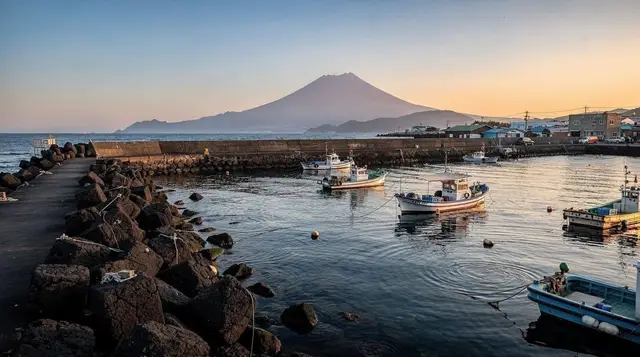
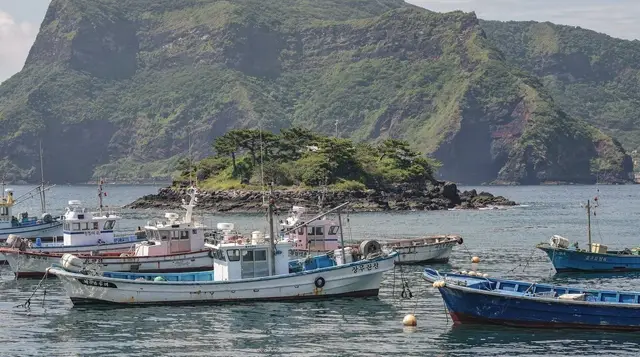
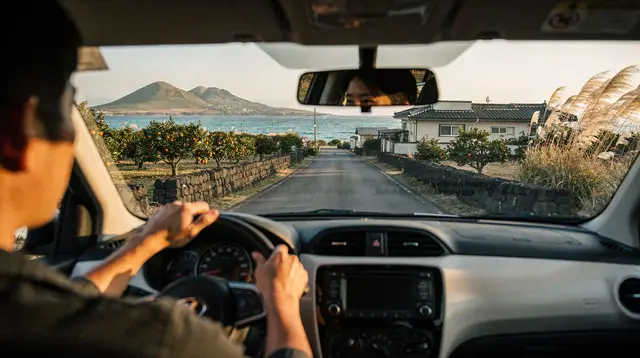
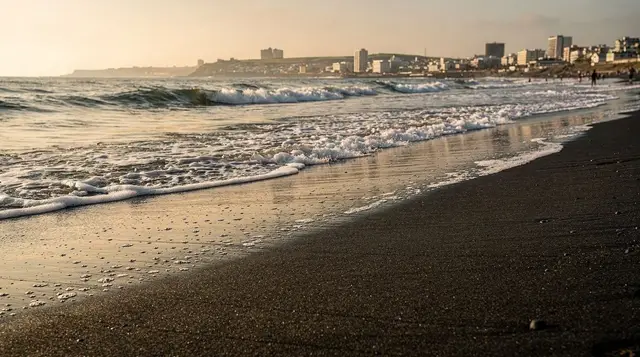
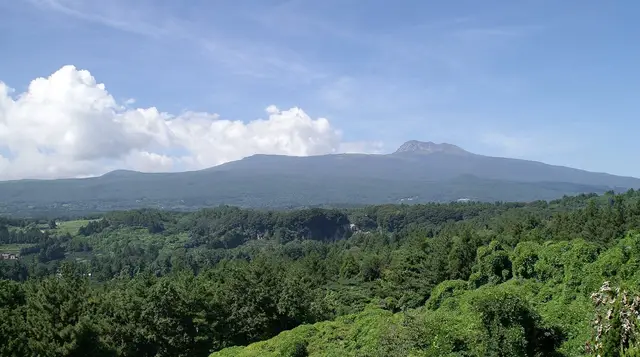

Chagwido is the least-visited and least-developed of Jeju’s four outlying islets, a small landmass off the island’s northeast coast near Gujwa, with none of the ferry infrastructure, cafés, or bike-rental stands that define Udo. This page is written honestly: Chagwido is a genuine off-the-beaten-path option, but “off the beaten path” here means minimal facilities and boat access that isn’t as reliably scheduled as the regular Udo, Gapado, or Marado ferries — verify current access locally before building a day around it.
| Where | Off Jeju’s northeast coast, near Gujwa |
| Cost | Minimal, negotiated locally; no fixed ticket price |
| Time needed | A few hours, if a crossing can be arranged |
| Getting there | ~25-35 min by car to Gujwa’s departure point, plus boat |
| Best time | Calm-sea days; verify access locally first |
How Chagwido compares to Jeju’s other three islets
| Islet | Ferry | Facilities | Best for |
|---|---|---|---|
| Udo | Frequent, scheduled | Cafés, bike rental, full infrastructure | First-time islet visitors |
| Gapado | Scheduled, less frequent | Small restaurants, bike rental | Barley-field cycling, quiet |
| Marado | Scheduled | Minimal, a few restaurants | Southernmost-point novelty |
| Chagwido | Informal, unscheduled | Essentially none | Repeat visitors seeking solitude |
Access — check before you go
Unlike Udo, Gapado, and Marado, which run frequent, scheduled passenger ferries, Chagwido’s boat access is more limited and less consistently available — sometimes a small local boat service, sometimes seasonal, and not always running a fixed public timetable the way the other three islets do. If reaching Chagwido specifically matters to your trip, ask locally in Gujwa or at the departure point near the northeastern coast for current conditions, rather than assuming a crossing will be straightforward to arrange on the day. This is a meaningfully different logistics picture from the other three islets, and worth knowing before you plan around it.
What’s actually there
Chagwido’s coastline is characterized by exposed volcanic rock and basalt formations, quieter and less developed than any other stretch of coast in the Jeju islet group — no crowds of cafés, no bike rental stands, just a small fishing community and undeveloped coastal walking. For visitors who’ve already done Udo and specifically want a genuine escape from any crowd whatsoever, Chagwido delivers on that promise more completely than any other islet option near Jeju. It does not deliver on food, facilities, or reliable transport back if plans change, so treat any visit as a deliberate trade-off.
Getting to the departure point
The departure point for Chagwido sits near Gujwa on Jeju’s northeast coast, itself about 35-45 minutes by car from CJU airport and roughly 25-35 minutes from downtown Jeju City. From east Jeju’s Seongsan area, expect a similar drive time along the coast road.
Why most visitors skip it
For nearly all Jeju itineraries, Udo delivers a far more complete, reliable, and rewarding islet experience — frequent ferries, real facilities, and genuine scenery, all without the access uncertainty that comes with Chagwido. Chagwido makes sense specifically for repeat visitors to Jeju who’ve already covered the island’s main sights and specifically want a low-key, undeveloped alternative, not as a first-time islet choice.
Where to stay
There’s no dedicated tourist accommodation on Chagwido itself — any visit is a short excursion from a base on Jeju’s main island, most practically in Jeju City or a coastal town near Gujwa.
Budget for a Chagwido visit
Costs here are minimal and variable given the informal nature of access — any boat arrangement will likely need to be negotiated or confirmed locally rather than booked online in advance, and there’s essentially nothing to spend money on once ashore beyond whatever you bring yourself. Budget primarily for the drive to the departure point and factor in that this is a low-cost but logistically uncertain add-on rather than a polished, priced experience like the other three islets.
Seasonal notes
Like all of Jeju’s islet crossings, calmer seas in spring and autumn improve the odds of any boat access running smoothly. Given the more informal, less-scheduled nature of Chagwido’s boat service compared to Udo, Gapado, or Marado, seasonal weather patterns matter even more here — winter storms and summer typhoon risk (late August-September) can shut down access entirely for stretches at a time.
Why Chagwido stayed undeveloped
Unlike Udo, which invested in ferry infrastructure and tourism-oriented businesses over recent decades, Chagwido’s small size, limited fresh water, and distance from the main tourist routes on Jeju’s northeast coast meant it never attracted the same level of development interest. This isn’t necessarily a permanent state — smaller islets elsewhere have occasionally seen belated tourism investment once nearby areas become crowded — but as of now, Chagwido remains defined by its lack of infrastructure rather than any deliberate conservation policy.
What research turns up
Compared to Udo, Gapado, and Marado, which all have well-documented ferry schedules, ticket prices, and visitor facilities easily found through standard travel research, Chagwido generates far less reliable information — a reflection of how few visitors attempt the trip and how informal any existing boat access remains. This guide describes what’s generally understood about the island rather than a fixed, bookable itinerary, and readers seriously considering a visit should treat local, current information (asked for directly in Gujwa or nearby coastal towns) as more reliable than any general online description, including this one.
Setting honest expectations
If you do manage to arrange a crossing, expect a short visit focused on the coastline and the small fishing community rather than any specific ticketed attraction — there’s no equivalent to Udo’s lighthouse viewpoint or Gapado’s barley festival to build a visit around here. The appeal is entirely about the undeveloped, quiet quality of the place itself, which either resonates with a particular kind of traveler or doesn’t; there’s little middle ground for a destination this minimal.
What “least-visited” actually means here
It’s worth being precise about the claim that Chagwido is Jeju’s least-visited islet: this isn’t a marketing angle built around exclusivity, but a straightforward description of an island most travel content simply doesn’t cover because reliable visitor information barely exists. Anyone drawn to the idea of an “undiscovered” Jeju islet should understand that the reason it’s undiscovered is largely practical rather than a hidden gem waiting to be revealed.
Weighing the trade-off
Every Jeju itinerary involves trade-offs between time spent chasing something unusual versus time spent on reliable, well-documented experiences, and Chagwido sits firmly on the unusual, unreliable end of that spectrum. For travelers with a fixed, limited number of days on Jeju, the honest recommendation is almost always to prioritize Udo, Gapado, or Marado — all three deliver a genuine, satisfying islet experience without the access risk. Chagwido is worth pursuing only once those three are already checked off, or for travelers whose primary interest is specifically in seeking out Jeju’s least-visited corners as an end in itself.
An honest alternative recommendation
Given the access uncertainty, most travel planning for Jeju’s islets should default to Udo, Gapado, or Marado, all of which offer dependable, well-documented ferry services and genuine visitor infrastructure. Chagwido belongs in an itinerary only as an optional, exploratory add-on for travelers with flexible schedules and low expectations about facilities — not as a planned centerpiece of a Jeju islands day.
The Gujwa coastline as a consolation
Even without a Chagwido crossing, the stretch of coast near Gujwa where any departure point would be located has its own worthwhile stops — quiet fishing harbors, basalt coastline, and a slower pace than the busier tourist areas further south along the east coast. Visitors who make the trip out here specifically hoping for Chagwido and find access isn’t available on a given day can still spend a worthwhile few hours exploring this stretch of coast, paired with Gujwa’s own attractions like Manjanggul and Geomun-oreum a short drive inland.
Why this page exists despite the access limitations
Some Jeju travel content omits Chagwido entirely given how little reliable, bookable information exists about it — this page takes a different approach, documenting honestly what’s understood about the island (its location, its undeveloped character, its uncertain access) rather than either inventing specifics that can’t be verified or pretending the islet doesn’t exist. For the small number of travelers specifically researching all four of Jeju’s outlying islets, that honest accounting is more useful than silence, even when the practical conclusion is “check locally, and don’t count on it.”
A note on researching before you go
If Chagwido genuinely interests you, the most reliable approach is asking directly at accommodations or visitor information points in the Jeju City or Gujwa area shortly before you’d want to go, rather than trying to book or plan a crossing weeks in advance the way you might for Udo. Local knowledge changes faster than most published travel guides can track for a destination this minor, and conditions genuinely vary based on factors (fishing boat availability, informal arrangements) that don’t show up in standard ferry schedules.
Building a day around the northeast coast
Because a Chagwido crossing can fall through, the sensible way to plan is to treat the northeast coast as the real day and the islet as a bonus. Start with the practical groundwork in the first-time Jeju planning guide and the Jeju bus guide, then decide whether you want your own wheels. The car rental and IDP guide and the driving road-trip tips cover what you need for the coast road, and the Kakao T taxi guide is the fallback if you would rather not drive. If you land at the airport and head straight out, a private airport transfer across the island removes the first logistical step, and the CJU airport guide explains the arrival process.
If the boat is not available on the day, the rest of the east side offers plenty. A guided option such as an unhurried eastern day tour for relaxed walkers pairs well with the quiet spirit of this coast, and the east Jeju day tour and east Jeju itinerary lay out a fuller loop. Seongsan and the Manjanggul lava tube sit within easy reach, and the Geumun Oreum crater hike is a good way to get a view over the same coastline without any boat at all.
Travelers who want the islet experience with certainty can switch to the proven option. The Udo island day trip guide and the islets ferry guide explain how the scheduled crossings work, and a day combining Udo by e-bike with a speedboat ride from Seongsan is an easy way to see an islet without relying on informal arrangements. For the wider picture, the Jeju islets overview and the Gapado and Marado day trip help you compare all four.
What to pack if you go
Given the near-total absence of shops or restaurants, treat a Chagwido visit like a self-sufficient day hike rather than a normal islet trip: bring cash (not cards), your own food and water, sun or wind protection, and a fully charged phone with the current forecast, since conditions can change faster than the informal boat schedule can adapt. There’s no equivalent to the small stores found near Udo or Gapado’s ferry docks once you’re ashore.
Frequently asked questions about Chagwido
Is there a regular ferry to Chagwido like Udo or Gapado?
No — access is more limited and less consistently scheduled than the other three islets. Check locally near Gujwa for current conditions before planning a visit around it.
Is Chagwido worth the extra effort to reach?
Only for visitors who’ve already covered Jeju’s main islets and specifically want a quiet, undeveloped alternative — it has genuine charm for that narrow purpose, but very little in the way of food, facilities, or guaranteed transport.
What should I do if I can’t arrange a Chagwido crossing?
Treat Udo as the reliable, well-developed alternative — it offers a comparable island-hopping experience with dependable ferry service and real visitor infrastructure.
Is there food available on Chagwido?
No meaningful restaurant infrastructure — bring your own food and water if you do arrange a crossing.
How far is the Chagwido departure point from Jeju City?
Roughly 25-35 minutes by car to the Gujwa area, plus whatever additional time is needed to arrange the boat crossing itself.
Is Chagwido suitable for a first Jeju islet visit?
No — first-time visitors are better served by Udo’s frequent ferries and developed facilities; Chagwido is a niche option for repeat travelers.
How should I research current Chagwido access before my trip?
Ask directly at accommodations or visitor information points near Jeju City or Gujwa shortly before you’d want to go — local, current knowledge is more reliable for a destination this minor than any advance-booked itinerary.
What should I bring if I do arrange a crossing?
Your own food, water, and sun or wind protection, since there’s essentially no commercial infrastructure to rely on once ashore.
Does Chagwido have any named beaches or landmarks?
Not in the way Udo or Gapado do — the appeal here is the general undeveloped coastline and small fishing community rather than any single ticketed or named attraction.


