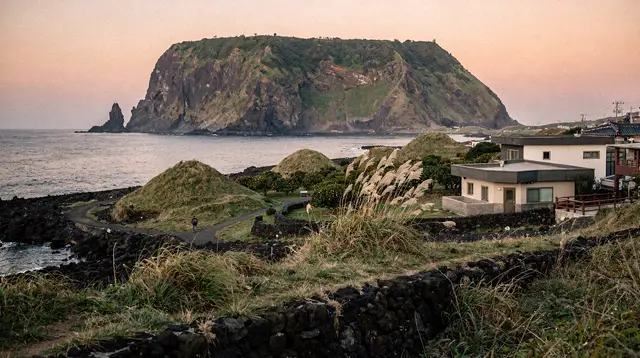
Sea fishing boat tours in Jeju
Do I need experience to go on a Jeju sea fishing tour?
No — most Jeju sea fishing boat tours are designed for complete beginners, with crew handling bait, tackle setup, and basic instruction. A typical trip runs 2-4 hours, includes gear and often a seafood lunch cooked from the catch, and costs roughly $70-90 per person.
Sea fishing is a genuinely popular domestic activity in South Korea, and Jeju’s boat operators run tours specifically built around it — a few hours on the water catching mackerel, sea bream, squid, or other seasonal species, generally followed by a meal made from part of the catch. It requires no prior fishing experience or license, and it’s a reasonable alternative to a purely scenic boat tour for travelers who want a more hands-on time on the water.
| Where | Departs mainly from Jeju-si harbor |
| Cost | Around $70-90/person (₩90,000-120,000), incl. lunch |
| Time needed | 2-4 hours |
| Experience needed | None — crew handle bait and tackle |
| Best for | Families with older kids, seafood lovers, non-swimmers |
What a typical trip includes
Most sea fishing boat tours run 2-4 hours, departing from a harbor on the main island (commonly Jeju-si) rather than from a beach directly. Crew handle bait, rod and tackle setup, and basic instruction on technique, meaning a complete beginner can realistically catch fish on a first attempt without embarrassment or wasted time fumbling with unfamiliar gear. A representative option:
Jeju: Hidden Gems Sea Boat Fishing Tour with LunchThis runs about 3 hours and costs roughly $85, departing from Jeju-si and including gear and a lunch prepared from part of the day’s catch — a reasonable half-day activity that combines fishing with a genuine, non-touristy meal rather than a standard restaurant lunch.
What you might catch
Catch varies by season and location, but common targets around Jeju’s coastal waters include mackerel, various rockfish and sea bream species, and squid, particularly on evening or night trips specifically timed around squid activity. Squid fishing at night, using bright lights to attract squid to the surface near the boat, is a distinctly popular Korean domestic fishing activity and a different experience from a standard daytime rod-fishing trip — worth asking about specifically if it interests you, since not every operator runs night trips.
The onboard or dockside meal
A meal made from part of the day’s catch, often prepared simply — grilled, in a spicy stew (maeuntang), or as fresh sashimi depending on the fish and the operator’s style — is a standard feature of many Jeju fishing tours and one of the more memorable parts of the experience, since it’s about as fresh and locally sourced as a seafood meal can get. Portion and quality vary by operator and by how good the day’s catch actually was, so treating the meal as a bonus rather than a guaranteed restaurant-quality feast sets reasonable expectations.
Seasickness and who this activity suits
Boat fishing involves more time stationary or drifting than a scenic cruise, which can increase motion sensitivity for anyone prone to seasickness — taking motion sickness medication in advance if you have a history of seasickness is a reasonable precaution, since the trip’s value depends heavily on being able to enjoy several hours on the water rather than spending the trip feeling ill. Families with children old enough to sit still and handle basic tackle under supervision can generally join, though very young children may find the several-hour duration and the wait between bites less engaging than older kids or adults.
Cost of a fishing boat tour
A standard half-day fishing trip with lunch runs roughly $70-90 (₩90,000-120,000) per person, similar to the representative tour above. Shorter trips without a meal cost somewhat less; specialized night squid-fishing trips or longer full-day charters cost more, reflecting the additional time and, for squid trips, the specialized lighting equipment used. Private charters for a family or small group, rather than joining a shared group trip, run considerably higher but offer more flexibility on timing and target species.
How this compares to other Jeju water activities
Sea fishing offers a slower-paced, more sedentary alternative to the more physically active water sports covered elsewhere on this site — no swimming, paddling, or balance required, making it accessible to a wider range of ages and fitness levels than surfing or kayaking. It’s also one of the few water activities on this list that doesn’t require getting wet at all, a genuine consideration for travelers uncomfortable in open water but still wanting a boat-based experience. For anyone specifically wanting underwater time instead, scuba diving or snorkeling deliver a very different, submersion-based alternative.
What happens to fish you don’t eat on board
On trips where the catch exceeds what’s used for the onboard or dockside meal, policies vary by operator — some let guests keep a portion of their catch to take home or to a nearby restaurant for separate preparation, while others retain the catch as part of the boat’s own operation. Confirming this ahead of time is worth doing if bringing fish back to a hotel or vacation rental is part of your plan, since accommodation with cooking facilities is far from universal on Jeju and a fresh catch with nowhere to prepare it is a common and avoidable disappointment.
Best season for fishing tours
Fishing runs year-round around Jeju, with different target species more active in different seasons — summer and autumn tend to bring the most reliable overall activity and the most comfortable weather for a multi-hour trip, while winter fishing, while possible, means a colder, windier experience on an open or semi-open boat. Squid fishing specifically tends to peak in the warmer months when squid activity near the surface increases, making summer and early autumn the more reliable window for a dedicated squid trip.
Night squid fishing, in more detail
Squid fishing after dark is worth calling out separately from standard daytime trips, since it’s a distinctly different experience — boats use bright lights suspended over the water to attract squid toward the surface, and the visual of a fleet of illuminated fishing boats dotting the coastline at night is itself a recognizable part of Jeju’s (and broader Korean coastal) nighttime seascape. These trips run later in the evening than standard tours, generally starting around dusk and running a few hours into the night, and tend to appeal more to travelers specifically seeking a novel experience than to families with young children given the later timing. Not every operator runs night trips, so specifically searching for or asking about squid fishing availability is worth doing if this variant interests you more than a standard daytime trip.
Safety notes
Standard boat safety practices apply — life vests should be worn as instructed by crew, and anyone with limited mobility or balance concerns should factor in the challenge of moving around a moving boat, particularly in choppier conditions. Fishing gear itself carries minor risks (hooks, weighted lines) that basic care and crew supervision manage adequately for beginners. As with any boat-based activity on Jeju, trips are weather-dependent and can be canceled or rescheduled in poor conditions, particularly during the typhoon-risk window of late August into September.
Is a fishing tour worth it compared to just eating at a seafood restaurant?
For travelers mainly interested in eating well rather than the activity of fishing itself, a well-chosen seafood restaurant delivers a more reliable meal for less money and less time commitment than a several-hour boat tour. The case for a fishing tour is the experience itself — being on the water, catching your own dinner, and seeing the working side of Jeju’s fishing economy up close — rather than the meal being the more efficient way to eat good seafood. Framed that way, it’s a reasonable activity to include specifically because it’s an experience rather than purely a means to a meal, and expectations should be set accordingly.
Combining a fishing trip with the rest of a Jeju day
A morning or midday fishing tour departing from Jeju-si combines naturally with an afternoon in Jeju City — Dongmun Market, Yongduam Dragon Rock, or a simple rest afternoon after several hours on the water. It’s a reasonable inclusion on a trip that already features other water activities, offering a change of pace from swimming or diving-focused days without requiring a special trip to a separate part of the island.
Fishing tours and Jeju’s wider seafood culture
Jeju’s identity is deeply tied to its seafood — from the haenyeo sea women who free-dive for abalone and conch, to the fishing villages that dot the coastline, to the abalone stew and fresh sashimi found in restaurants across the island. A fishing boat tour is a reasonable, hands-on way to connect with that broader culture rather than just observing it from a restaurant table, even though recreational rod fishing and the haenyeo’s traditional free-diving harvest are entirely different practices serving different purposes. If the cultural side interests you more than the activity itself, Dongmun Market offers a way to see the retail side of the island’s seafood economy — stalls selling the day’s catch from working fishing boats — as a complement to or substitute for an actual fishing trip.
Travelers who would rather meet the island’s sea-women heritage directly can book a haenyeo culture experience with a seafood tasting, which pairs well with a fishing day: one gives you the rod-and-line side of Jeju’s waters, the other the free-diving tradition behind much of the island’s seafood.
Choosing an operator
Fishing tour operators vary in group size, boat type (open deck versus a more sheltered cabin boat), and how much English-language support is available, given that a meaningful share of Jeju’s fishing tour clientele is domestic Korean travelers. Checking reviews for mentions of crew helpfulness with non-Korean-speaking guests, and confirming whether the trip is a shared group booking or effectively a private charter for your party, helps set expectations before booking. Smaller boats generally mean more individual attention from crew but can be less stable in choppier water, worth weighing if seasickness is a concern.
Private charters versus shared group trips
Beyond the standard shared group tours, some operators offer private charter fishing trips for a family or small group, at a higher total cost but with more flexibility on departure time, trip length, and even target species or fishing style. This is a reasonable upgrade for a group specifically prioritizing a more personalized experience or wanting to avoid sharing a smaller boat with strangers, though it comes at a meaningful price premium over the standard per-person shared tour rate.
What to bring
Most operators supply all fishing gear, but a few personal items are worth bringing regardless: sun protection (a boat deck offers little shade and reflects additional sun off the water), a light jacket for wind and spray even on a warm day, and non-slip shoes given the wet, sometimes uneven footing on a working fishing boat deck. Motion sickness medication, taken well before departure rather than after symptoms start, is worth packing for anyone with any history of seasickness, even mild.
Booking ahead versus showing up
Standard daytime shared-group fishing tours are usually bookable a day or two ahead outside peak season, but popular night squid trips and weekend departures in summer and autumn can sell out further in advance, particularly for operators with strong reviews. Booking a few days ahead is a reasonable default if a specific date matters to your itinerary, while spontaneous travelers with flexible dates can often find same-day or next-day availability with some operator shopping, especially on weekdays. Private charters generally need more lead time, since they require coordinating an entire boat around your schedule rather than joining an existing shared departure.
Fishing tours versus scuba diving and other boat activities, at a glance
| Activity | Gets you wet? | Physical effort | Good for seasickness-prone travelers? |
|---|---|---|---|
| Sea fishing boat tour | No (unless you choose to) | Low | Moderate risk — mostly stationary/drifting |
| Scuba diving | Yes, fully submerged | Moderate | Lower risk once underwater |
| SUP/kayaking | Partially, splash likely | Higher | Lower risk — active movement |
| Snorkeling | Yes, at the surface | Low-moderate | Lower risk — near the boat |
What to wear
Dress in layers you don’t mind getting a little wet or fishy — a light, water-resistant jacket over a t-shirt handles both spray and wind reasonably well. Avoid your best clothes; even careful anglers occasionally end up with bait or fish residue on their hands and gear. A cap or hat helps with sun glare off the water in addition to standard sunscreen, particularly on longer 3-4 hour trips with limited shade on deck.
Tipping and etiquette on a Jeju fishing boat
Tipping isn’t a standard expectation on Korean fishing charters the way it might be elsewhere, and crew generally don’t anticipate it, though rounding up for exceptional service on a private charter is not unusual. Basic boat etiquette matters more than tipping: listen to crew instructions on where to stand and cast, avoid crowding other guests’ lines, and follow any instructions about handling your catch, since some operators have specific practices for keeping fish fresh until the onboard meal. The Jeju food and tipping etiquette guide covers the broader picture of tipping norms across the island if this is a first visit to Korea.
Frequently asked questions about sea fishing boat tours in Jeju
Do I need a fishing license to go on a Jeju sea fishing tour?
No — recreational fishing tours for visitors don’t require a personal license; the boat and crew operate under their own commercial permits, and all gear is provided.
How long does a typical Jeju fishing boat tour last?
Most trips run 2-4 hours, departing from a harbor such as Jeju-si, with some operators offering longer full-day or specialized night squid-fishing trips.
Is lunch included on Jeju fishing tours?
Many tours include a meal prepared from part of the day’s catch, though quality and portion vary by operator and by how good the day’s fishing was.
Is sea fishing in Jeju good for families with children?
Yes, for children old enough to sit still and follow basic instructions under supervision; very young children may find the multi-hour duration less engaging.
What should I do if I get seasick easily?
Taking motion sickness medication in advance is a reasonable precaution, since boat fishing involves more stationary or drifting time than a moving scenic cruise, which can increase motion sensitivity for some people.
What fish can you catch on a Jeju fishing tour?
Common catches include mackerel, various rockfish and sea bream species, and squid, particularly on trips timed around evening or night squid activity.
How much does a Jeju sea fishing boat tour cost?
A standard half-day trip with lunch runs roughly $70-90 per person; shorter trips without a meal cost less, and specialized or private charters cost more.
Related guides

Scuba diving in Jeju
Jeju is South Korea's best scuba diving destination, with soft coral reefs at Munseom and beginner-friendly dives near Seongsan Ilchulbong.

Jeju water sports: best seasons and safety
When Jeju's water sports are safe and enjoyable: water temperature by month, jellyfish season, rip currents and typhoon risks.

Jet skiing in Jeju
Jungmun Saekdal Beach has Jeju's biggest jet ski scene, with banana boat and donut boat rides also available in peak summer at Hamdeok and Woljeongri.

Snorkeling in Jeju
Jeju's clearest coastal water offers reasonable casual snorkeling at several beaches — here's where visibility is best, what gear to bring, and when to go.
Ready to book? Top tours for this guide
We earn a small commission if you book through GetYourGuide — at no extra cost to you. Every tour is hand-picked and verified.