
Jungmun area culture walk
What cultural sites are near Jungmun beyond the resorts?
The Jungmun area, part of Seogwipo, has more cultural depth than its resort-strip reputation suggests — Yakcheonsa Temple, Jusangjeolli's columnar basalt cliffs, and several art and craft venues sit within a compact area, making a half-day cultural loop feasible without leaving the immediate resort district.
Jungmun, part of Seogwipo on the island’s south coast, is best known as Jeju’s main resort district — a concentration of large hotels, a manicured beach, and amenity-heavy tourism infrastructure that can make the area feel disconnected from the rest of the island’s culture and history. That reputation undersells what’s actually within a short drive of the resort strip: a major Buddhist temple, one of Jeju’s most distinctive volcanic rock formations, and enough cultural texture to fill a genuine half-day without leaving the immediate area.
| Where | Jungmun resort district, Seogwipo, south coast |
| Time needed | Half-day (3–4hrs) for the core loop; full day with Seogwipo old town |
| Cost | Yakcheonsa free; Jusangjeolli a few thousand won |
| Getting there | Car or taxi — sites spread across several kilometers |
| Best time | Early morning at Jusangjeolli, before crowds and heat build |
Starting point: Yakcheonsa Temple
Yakcheonsa, a short drive inland from the Jungmun resort core, anchors a cultural route with its enormous main hall — among the largest Buddhist temple buildings in Asia, completed in the 1990s — surrounded by gardens and mountain views. Free to enter and typically requiring 30-60 minutes for a relaxed visit, it’s an efficient first stop that establishes a cultural counterpoint to the resort district’s otherwise commercial character.
For visitors wanting a more structured cultural experience rather than a self-guided temple visit, Jeju: Seogwipo and Jungmun Walking Tour covers this general area with guided context, useful for filling in historical and religious background that isn’t always evident from posted signage alone.
The history of Jungmun’s resort development
Understanding why Jungmun looks the way it does today — a concentrated resort district rather than an organically developed town — helps explain the disconnect visitors sometimes feel between the area’s polished infrastructure and the older cultural sites nearby. Jungmun was deliberately developed as a purpose-built tourism zone starting in the 1970s and 1980s, part of a broader South Korean government push to create world-class resort infrastructure capable of competing with other Asian beach and leisure destinations, drawing both major international hotel chains and domestic Korean conglomerates to build large-scale properties in a coordinated resort master plan rather than through organic small-scale growth.
This planned development explains both Jungmun’s strengths (coordinated infrastructure, consistent quality across properties, a genuinely excellent beach) and its cultural thinness relative to organically developed towns like central Seogwipo or Jeju City, which grew around centuries of actual settlement rather than a mid-20th-century tourism development plan. The temple, cliffs, and craft venues covered in this guide predate or exist somewhat independently of that planning process, which is precisely why seeking them out adds a dimension to a Jungmun stay that the resort infrastructure alone doesn’t provide.
Jusangjeolli columnar basalt cliffs
A short drive from the temple, Jusangjeolli is one of Jeju’s most visually distinctive natural sites — a stretch of coastline where volcanic activity formed tall, hexagonal basalt columns stacked in dramatic geometric patterns, created as lava flowing into the sea cooled and contracted in a characteristic pattern also seen at similar sites worldwide, including Ireland’s Giant’s Causeway. While technically a natural rather than a cultural site, Jusangjeolli’s formations have long been part of local folklore and are frequently referenced in Jeju’s broader visual and cultural identity, appearing on everything from tourism materials to local artwork. Entry requires a modest fee, typically a few thousand won, for access to the protected cliffside viewing paths.
Jusangjeolli in seasonal and geological context
The columnar formations at Jusangjeolli formed through a specific volcanic process — lava flowing into the sea cooled rapidly and contracted, cracking into the tall, roughly hexagonal columns visible today, a process that took place over Jeju’s volcanic history spanning roughly the last two million years, making the formations themselves ancient even as the surrounding resort infrastructure is recent. Wave action along this stretch of coast varies considerably by season, with rougher winter seas and typhoon-season swells (late August through September) sometimes prompting temporary closures of the cliffside viewing paths for visitor safety, while calmer spring and autumn conditions generally offer the safest and most comfortable viewing.
The site’s popularity means it can draw significant crowds during peak travel periods, particularly midday in summer and around the spring and autumn holiday weeks; visiting in early morning shortly after opening generally offers a quieter experience and more comfortable walking conditions before both crowds and, in summer, heat build up over the course of the day.
Craft and art venues in the area
Jungmun’s broader area includes several smaller craft and art venues that don’t always make it onto standard resort-district itineraries — glass art studios, ceramic workshops, and small galleries scattered through the district, reflecting the same cluster-of-niche-attractions pattern found more broadly across Jeju’s museum landscape. Quality and depth vary considerably between venues; a quick check of current offerings before committing significant time is worthwhile, since some are substantial working studios and others are closer to gift-shop-adjacent tourist stops.
What the craft venues actually offer
The glass art studios and ceramic workshops scattered through the wider Jungmun area range from working artisan spaces where visitors can watch pieces being made, sometimes with paid hands-on workshop options for making a simple piece to take home, to more retail-focused galleries where the emphasis is purchasing finished work rather than observing the process. Prices for finished glass and ceramic pieces vary enormously based on size, complexity, and the individual artist’s reputation, from modest souvenir-priced items to genuinely significant works aimed at serious collectors. As with Jeju’s broader theme-museum landscape covered in the museum roundup, checking recent visitor feedback on a specific venue before committing time is a reasonable way to separate substantive craft spaces from thinner tourist-facing gift shops trading on a vaguely artisanal presentation.
Adding island heritage to a Jungmun stay
The temple and the cliffs cover religion and geology, but the culture that shaped everyday life on Jeju sits a little further afield, and a Jungmun base makes several of those threads easy to pick up. The sea-women tradition is the best known: the haenyeo diving women are central to how islanders describe themselves, and the haenyeo explainer is a good primer before you meet the subject in person. For something hands-on, a haenyeo culture session with a seafood tasting pairs the story with the food it produces, and it fits well on an afternoon you would otherwise spend at the hotel pool. If you would rather browse at your own pace, the haenyeo museum guide covers the self-guided option.
History is the other thread. Jeju’s 20th-century past is part of why the island feels the way it does, and visitors who want that context can start with the guide to the 4.3 Incident or the shorter blog explainer. A guided option such as a cultural tour focused on the 4.3 Incident gives the subject the careful, local framing it deserves, which is hard to get from a quick read of signage. It is a sober outing, so plan something lighter for the rest of that day.
For a quieter counterpart to the temple visit, the temple meditation guide explains what a contemplative stay or session looks like, and the wellness retreats roundup shows how that fits into a slower trip. None of these need to be squeezed into the half-day loop; treat them as options for another morning or evening.
Building a half-day or full-day route
A half-day version of this route, roughly 3-4 hours, comfortably covers Yakcheonsa and Jusangjeolli with time for a meal in between, typically at one of the resort district’s restaurants or a smaller local spot away from the hotel strip. Visitors with a full day can extend the route toward Seogwipo’s old town, roughly 15-20 minutes further along the coast, adding the Lee Jung-seop House and Maeil Olle Market to create a fuller cultural day spanning the resort district and the historic town center.
For visitors also interested in Jeju’s more contemporary art offerings, Arte Museum Jeju near Aewol is a further drive northwest (roughly 40-50 minutes), better treated as a separate day than folded into the Jungmun route given the distance involved.
| Route | Stops | Time | Best for |
|---|---|---|---|
| Half-day core loop | Yakcheonsa + Jusangjeolli | 3–4hrs | Resort guests wanting a cultural break without a long drive |
| Full-day extension | Add Seogwipo old town | 6–8hrs | Visitors wanting the historic town center too |
| Separate art day | Arte Museum Jeju (Aewol) | Half-day on its own | Contemporary art fans, too far to fold in |
Dining options along the route
The Jungmun resort strip has no shortage of hotel restaurants, but a few independent options break up the route without a long detour. Casual Korean spots near the temple turnoff serve straightforward lunch options — bibimbap, noodle dishes, grilled meats — at prices noticeably lower than resort-district hotel restaurants, worth seeking out if budget matters as much as convenience. For a coffee or light snack stop between Yakcheonsa and Jusangjeolli, several small cafes along the connecting road offer a reasonable pause without committing to a full sit-down meal, useful for keeping the half-day pace relaxed rather than rushed between two anchor stops.
Combining the walk with Jungmun’s other resort activities
Because this route stays entirely within the Jungmun area, it slots naturally around resort amenities rather than competing with them for a full day. A common pattern: a morning at Yakcheonsa and Jusangjeolli, back to the hotel by early afternoon for beach or pool time, then dinner in the resort district or a short drive into old-town Seogwipo. Visitors also planning a jet ski or banana boat session at nearby Jungmun Saekdal Beach often use the cultural walk as the calmer half of a day that gets more active in the afternoon.
Seasonal gardens and flower displays near Jungmun
Several garden and botanical attractions in the broader Jungmun and west Seogwipo area add a seasonal dimension to a cultural walk, with tropical and subtropical plantings that reflect Jeju’s unusually mild microclimate for a Korean location. Spring brings flowering displays timed around the same cherry blossom and canola bloom windows that draw visitors island-wide, while some gardens maintain greenhouse sections with tropical plants that stay visually interesting through the cooler winter months when outdoor color is scarcer elsewhere on the island. These gardens function as a reasonable pairing with the temple and cliff stops on days with pleasant weather, adding a slower-paced, horticultural counterpoint to the more geologically and architecturally focused core of the route.
Why bother with culture in a resort district
It’s a reasonable question for visitors who chose Jungmun specifically for its beach and resort amenities: why add a cultural detour to a trip built around relaxation? The honest answer is that Jungmun’s resort infrastructure, while comfortable, is largely interchangeable with beach resort districts elsewhere in Asia — international-standard hotels, a groomed beach, resort restaurants — and doesn’t on its own convey much about Jeju specifically. A half-day cultural loop breaks up resort time with content genuinely tied to the island’s actual history and geology, without requiring a long drive away from your accommodation.
Planning around the rest of your trip
If this loop is one piece of a longer stay, the south Jeju day tour and the 3-day itinerary show how Jungmun fits alongside the island’s other highlights. Travelers who like the idea of a coastal walk beyond Jusangjeolli can look at the Olle trail overview, and those who want help choosing where to base themselves will find options in where to stay in Jeju. For a food-focused evening after the walk, the Seogwipo restaurant guide is a sensible next stop.
Practical notes
Yakcheonsa is free to enter; Jusangjeolli charges modest admission. Neither site requires advance booking for independent visits. Comfortable walking shoes matter more at Jusangjeolli than Yakcheonsa, given the uneven natural terrain along the cliffside paths, and the site can close temporarily during high surf or severe weather warnings for safety reasons — worth checking, particularly during typhoon season in late August and September.
Getting there
Both Yakcheonsa and Jusangjeolli sit within a compact area a short drive from the main Jungmun resort strip, connected by local roads rather than requiring the main highway. A car or taxi is the practical way to link the sites, since while all technically within “the Jungmun area,” they’re spread across several kilometers rather than immediately walkable from each other or from most resort hotels. Visitors based in Jeju City should budget about an hour each way for the drive south.
Quick answers about the Jungmun culture walk
Is Jungmun just resorts and beaches, or is there cultural content too?
Jungmun is primarily known for its resort hotels and beach, but Yakcheonsa Temple, Jusangjeolli’s basalt cliffs, and several smaller cultural and craft venues within a short drive add meaningful cultural depth for visitors staying in the area.
How long does a Jungmun cultural walk take?
A half-day, roughly 3-4 hours, covers Yakcheonsa Temple and Jusangjeolli comfortably with time for a meal; a full day allows adding Seogwipo’s old town further along the coast.
Do I need a car to do this route?
A car or taxi makes it considerably easier since the sites, while all within the Jungmun area, are spread across a few kilometers rather than immediately walkable from each other.
Is this route suitable for a rainy day?
Partially — Yakcheonsa’s main hall offers indoor shelter, but Jusangjeolli’s cliffside walk is entirely outdoors and best avoided in heavy rain or high surf conditions.
Can this be combined with Jungmun’s beach or resort amenities?
Yes, easily — most visitors doing this cultural loop are already staying in the Jungmun resort area and can split a day between the cultural stops and beach or resort time.
Is there an entry fee for any of these sites?
Yakcheonsa Temple is free; Jusangjeolli charges a modest entry fee, typically a few thousand won, to access the protected cliffside viewing paths.
Related guides

Seogwipo old town walking tour
A self-guided cultural walking route through Seogwipo's old town — Lee Jung-seop Street, the harbor market, and the town's quieter historic core.

Jeju Folk Village
A practical guide to Jeju Folk Village, the open-air museum in Pyoseon: reconstructed houses, admission, hours, and whether it's worth visiting.

Yakcheonsa Temple
Yakcheonsa is one of Asia's largest Buddhist temple halls, near Jungmun in Seogwipo — hours, etiquette, and how to combine it with a temple stay.
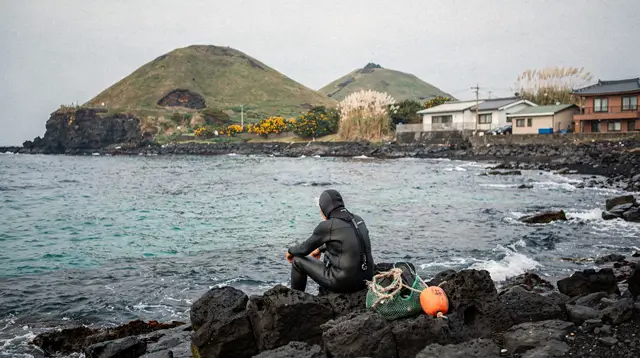
Haenyeo: Jeju's Sea Women
Who Jeju's haenyeo sea women are, where to see them dive, and how to experience this UNESCO-listed living tradition without turning it into a photo op.
Ready to book? Top tours for this guide
We earn a small commission if you book through GetYourGuide — at no extra cost to you. Every tour is hand-picked and verified.
Jeju East: Small Group Healing Tour w/Woman Divers Show
Jeju: Eastern UNESCO Sites Tour with Haenyeo Show
Jeju: Eastern UNESCO Join-in Tour (Seongsan, Haenyeo Show)

Jeju: 4.3 Incident History & Cultural Tour with a Guide
Jeju: 4.3 Incident History & Cultural Tour with a Guide (SW)