
Jeju tea culture and Osulloc: a practical guide
Is Osulloc Tea Museum free to visit?
Yes, entry to the museum and tea field grounds is free. You pay only for food, drinks, and any tea products you choose to buy — the green tea ice cream and tea-based desserts are the main paid draw for most visitors.
| Where | Seogwang-ri, West Jeju |
| Cost | free entry; food/drinks around ₩6,000-9,000 |
| Time needed | 45-90 minutes |
| Best time | early morning or after 4 p.m. to avoid queues |
| Getting there | rental car recommended |
Osulloc Tea Museum, set among working green tea fields in West Jeju, is one of the more consistently recommended stops on the island — not because it’s a hidden gem, but because it delivers a genuinely pleasant, low-cost experience without the inflated pricing or crowding that affects some of Jeju’s more heavily marketed attractions.
What Osulloc actually is
Osulloc is a tea brand owned by Amorepacific, one of Korea’s largest cosmetics and consumer goods companies, and the museum-and-tea-field complex in Seogwang-ri functions as both a working tea plantation and a branded visitor attraction. The tea fields themselves are real, actively cultivated green tea plantations rather than a decorative backdrop, and the rolling rows of tea bushes make for a genuinely scenic, photogenic walk regardless of your interest in the beverage itself. The museum building includes exhibits on Korean tea history, tea-processing equipment, and the cultivation methods used on Jeju specifically, giving useful context beyond just walking the grounds.
Green tea’s Jeju connection
Jeju’s climate — mild winters, consistent rainfall, and volcanic soil — turned out to be well suited to tea cultivation, and Amorepacific began developing tea fields on the island in the 1980s as part of a long-term push into Korean-grown, Korean-branded tea rather than relying on imported leaf. This is a relatively recent industrial development rather than a centuries-old indigenous farming tradition specific to Jeju, worth knowing since some marketing framing implies a longer local heritage than the actual timeline supports. That said, the fields have now been operating for decades, and Jeju green tea has become a genuinely well-regarded domestic product within Korea.
Walking the tea fields
The tea field grounds are open and free to walk, with paved and gravel paths running between the neat rows of tea bushes, some rising to a small hill with a viewing platform overlooking the wider plantation. It’s an easy, flat-to-gently-sloped walk suitable for most fitness levels and works well for families, though strollers may struggle on some of the less paved sections. Photography is unrestricted and this is genuinely one of the more photogenic agricultural landscapes on the island, particularly in the golden light of late afternoon.
The cafe and what to actually eat
The main paid draw at Osulloc is the cafe, serving a range of green tea-based drinks and desserts — green tea lattes, green tea soft-serve ice cream (probably the single most photographed item at the complex), tea-infused cakes and cookies, and matcha-style desserts. Prices run roughly ₩6,000-9,000 for a drink or soft-serve item, in line with a mid-range specialty cafe elsewhere on Jeju rather than a marked-up tourist premium, which is one of the reasons this stop has a reputation for good value relative to its popularity. Expect queues at the main counter during peak visiting hours (late morning through mid-afternoon) in high season, since it’s a stop on many organized day tours as well as independent visits.
Innisfree Jeju House next door
Adjacent to Osulloc sits Innisfree Jeju House, a separate complex run by the same parent company built around Amorepacific’s Innisfree skincare brand, which markets Jeju-grown ingredients (green tea, volcanic ash, and others) in its cosmetics line. The Jeju House includes a greenhouse cafe and space showcasing the ingredient-sourcing story behind the brand, and most visitors treat the two complexes as a single combined stop given their proximity — a short walk apart. If you’re not interested in skincare shopping, Innisfree Jeju House is easy to skip without missing much beyond a second, smaller cafe option.
Korean tea culture beyond Osulloc
Korea’s broader tea tradition (dado, the “way of tea”) has historical roots connected to Buddhist temple culture and Joseon-era scholar traditions, distinct from — and generally less internationally known than — Japanese or Chinese tea ceremony practices. Osulloc’s museum exhibits touch on this wider context, covering traditional tea preparation tools and the historical role of tea in Korean court and temple life, alongside the more commercial modern history of Jeju’s plantation industry. It’s a useful primer if you have no prior background in Korean tea culture, though it’s presented through the lens of a single corporate producer rather than as a neutral academic exhibit, so treat the historical framing as broadly accurate but curated to support the brand’s own narrative.
For visitors specifically interested in a more ceremonial or hands-on tea experience beyond browsing a museum and buying a drink, options are limited on Jeju compared to what’s available at temples or dedicated tea houses on the Korean mainland; Osulloc’s format is closer to a self-guided walk-and-cafe visit than an instructor-led ceremony.
Practical visitor tips
Osulloc gets busiest between roughly 11 a.m. and 3 p.m., when both independent visitors and tour buses converge, so an early morning or later afternoon visit (opening time through mid-morning, or after 4 p.m.) generally means shorter cafe queues and a quieter walk through the tea fields for photography. The complex is fully outdoors for the field-walking portion, so check the weather forecast — a rainy day makes the walking paths less appealing, though the museum and cafe remain a reasonable indoor fallback. Restrooms and a gift shop are available on-site, and the whole complex is wheelchair and stroller accessible on its main paved paths, with some optional side paths less suited to wheels.
Budget for a visit
A typical visit costs nothing beyond food and any purchases, making it one of the most budget-friendly stops on the island relative to its popularity. A reasonable per-person spend — one cafe drink or dessert, plus a small tea souvenir — runs roughly ₩15,000-25,000 (about US$11-19). Skipping souvenirs and just having a drink brings that down to ₩6,000-9,000, and skipping the cafe entirely (just walking the free grounds and museum) costs nothing at all beyond transport to get there.
How Osulloc compares to other tea attractions in Korea
Mainland Korea has its own well-known tea-growing regions, particularly Boseong in South Jeolla province, which has a longer-established tea tourism industry and a more traditional, less corporate-branded presentation than Osulloc’s Amorepacific-run complex. Visitors who have already been to Boseong or a similar mainland tea region may find Osulloc’s polish and retail focus a more commercial experience by comparison, though Jeju’s version has the advantage of convenience for anyone already on the island who doesn’t want to add a separate mainland tea-region trip.
Combining with nearby West Jeju attractions
Osulloc sits within a reasonable driving loop of several other West Jeju attractions — Hallim Park, the Sanbangsan and Yongmeori coast cluster, and the Hyeopjae/Gwakji beach area are all within 20-40 minutes by car, making it easy to build into a full day covering the island’s southwest corner. A rental car is the practical way to link these stops, since public bus routes connecting them run at lower frequency than city routes and add meaningfully to travel time between attractions spread across a rural area.
Is it worth the marketing hype?
Osulloc is heavily featured in Jeju tourism marketing and appears on most tour-bus day-trip itineraries, which sometimes triggers skepticism about whether it’s an authentic attraction or purely a corporate showcase. The honest assessment: it succeeds as both — a genuinely pleasant, free-to-walk scenic stop with reasonably priced food, that also happens to serve as a brand showcase for its corporate owner. Unlike some heavily marketed Jeju attractions that charge a significant entry fee for a modest experience, Osulloc’s free grounds access and fair cafe pricing make the marketing push feel earned rather than a bait-and-switch.
Buying tea to take home
The gift shop sells packaged loose-leaf and bagged tea in various grades and blends, along with tea-based snacks (cookies, chocolate) that make reasonable, shelf-stable souvenirs without the customs concerns that come with fresh produce like Jeju’s citrus products. Prices range from roughly ₩8,000 for a basic tea bag box to ₩30,000 or more for premium loose-leaf gift sets. The same product line is also sold at Jeju’s airport and in Osulloc retail locations on the mainland, so buying at the museum itself isn’t the only opportunity if you run out of time or decide later in your trip.
Tea culture versus Jeju’s cafe boom
It’s worth contrasting Osulloc’s tea-focused identity with Jeju’s much larger and more visible coffee cafe culture, concentrated along coastal strips like Aewol and covered in the Aewol cafe street guide. The two scenes serve somewhat different visitor interests — Osulloc leans into agricultural tourism and a single-brand narrative around Jeju-grown tea, while the broader cafe boom is driven by independent operators competing primarily on ocean views and interior design rather than any specific local ingredient story. Visitors with limited time sometimes have to choose between the two rather than fitting in both; if you only have room for one, Osulloc’s free grounds access and lower overall cost make it a lower-risk stop, while the Aewol cafe scene offers more variety and a livelier social atmosphere if that’s more your interest.
A note on the corporate ownership
Some travelers prefer to know the corporate structure behind an attraction before deciding whether to visit, and it’s worth being upfront here: Osulloc and Innisfree Jeju House are both owned and operated by Amorepacific, a publicly traded conglomerate, and the entire complex functions as a marketing and retail platform for the company’s tea and skincare products alongside its role as a public tea-field attraction. This isn’t a hidden fact — Amorepacific branding is visible throughout the site — but it’s a different kind of attraction than a small independent or family-run farm, and visitors looking specifically for a small-scale, non-corporate agricultural experience may prefer one of the smaller citrus farms covered in the tangerine picking tours guide instead.
Seasonal notes
The tea fields are visually distinct across seasons — vivid green through spring and summer, a slightly muted but still attractive tone in autumn and winter, since tea bushes remain evergreen year-round unlike Jeju’s deciduous trees. There’s no strong “best season” to visit purely for the tea fields themselves, unlike hallabong or cherry blossom timing elsewhere on the island, which makes Osulloc a relatively reliable year-round stop regardless of when your trip falls.
What locals actually think of Osulloc
Among Jeju residents, Osulloc is generally regarded as a legitimate, well-run local employer and agricultural operation rather than a tourist gimmick — it does employ local labor for tea cultivation and processing, and its tea fields represent a real, decades-long commitment of land and capital to the island rather than a pop-up attraction. That said, it’s also widely understood locally as a corporate tourism draw first and a working farm second in terms of how its public-facing operations are run, and residents are generally unsentimental about treating it primarily as a nice place to bring visiting family or friends for an easy, photogenic outing rather than a deeply significant cultural site. This matches the honest framing worth carrying into your own visit: enjoyable, well-executed, and worth the stop, without needing to oversell it as more culturally profound than it actually is.
Frequently asked questions about Jeju tea culture and Osulloc
Do I need to book tickets in advance for Osulloc?
No, entry is free and doesn’t require booking; only cafe items and any private events require paying at the point of purchase.
How does Osulloc compare to a traditional Korean tea house?
Osulloc is a modern, brand-operated museum and cafe rather than a traditional teahouse experience — it’s closer to a scenic agritourism stop with a strong retail component than an intimate tea ceremony setting.
Is there parking at Osulloc?
Yes, free on-site parking is available, standard for most West Jeju attractions given the rural, car-dependent nature of the area.
Can I combine Osulloc with a citrus picking tour on the same day?
Yes, several West Jeju farms are within a reasonable driving distance, making a combined tea-and-citrus day feasible — see the tangerine picking tours guide for seasonal options.
Is the green tea soft-serve ice cream worth the hype?
It’s a solid, well-executed dessert and a reasonable photo subject, though treat “must-try” framing with the usual skepticism reserved for any heavily Instagrammed food item — it’s good, not transcendent.
Is Osulloc part of a bus tour route, or do I need my own transport?
Both — it’s a common stop on organized West Jeju day tours, and also easily reachable by rental car; public bus service exists but runs at lower frequency than a car trip would take, making it a less convenient option for a single-stop visit.
Are there other tea plantations open to visitors on Jeju besides Osulloc?
Osulloc is by far the most visited and developed for tourism; smaller, less commercially developed tea farms exist elsewhere on the island but generally don’t offer the same level of visitor infrastructure (museum, cafe, parking) as the Osulloc complex.
Photographing the tea fields
The neat, repeating rows of tea bushes photograph particularly well from the small hill and viewing platform overlooking the wider plantation, giving a sense of scale that a ground-level shot along a single row doesn’t capture. Late afternoon light brings out the fields’ texture more than the flatter light of midday, and a wide-angle composition capturing several rows in a converging pattern is one of the most reliably strong shots available at the complex. Unlike some of Jeju’s more restricted photography spots, there are no posted limits on photography across the outdoor grounds, making it a relaxed stop for casual and dedicated photographers alike.
Making Osulloc part of a full West Jeju day
Because Osulloc sits centrally within a cluster of other West Jeju attractions, most visitors don’t treat it as a standalone destination. A typical combined day might start at Hallim Park in the morning, move to Osulloc for lunch-hour tea and dessert, then continue to the tangerine picking tours or the Sanbangsan-Yongmeori coast cluster in the afternoon, all within a manageable driving loop given the area’s rural but well-connected road network. Building the day around Osulloc’s typically quieter early-morning or late-afternoon hours, rather than the crowded 11 a.m.-3 p.m. window, also improves the pacing of the rest of the day’s stops.
Accessibility and facilities
The main paved paths through the tea fields and the museum-cafe building are wheelchair and stroller accessible, with restrooms available on-site, though a few of the smaller side paths through denser rows of bushes are less suited to wheels. Free on-site parking, standard for West Jeju’s rural, car-dependent attractions, removes one of the more common friction points visitors run into at busier, more central Jeju City attractions.
Gift shopping strategy at Osulloc
If tea souvenirs are on your shopping list, it’s worth deciding upfront whether you want to buy at Osulloc directly or wait until a later stop, since the same product line is also sold at Jeju’s airport and other Osulloc retail locations around the island. Buying at the source has a certain appeal for gift-giving, and the museum shop offers the fullest range of grades and gift-set packaging, but airport pricing is generally identical, meaning there’s no real financial pressure to buy everything in one visit if your itinerary has room left for shopping later in the trip.
Osulloc as a rainy-day option
Because the cafe and museum building offer a genuine indoor fallback alongside the outdoor tea fields, Osulloc works reasonably well even on a day with uncertain weather — walk the fields if conditions allow, and retreat to the museum and cafe if rain moves in. This flexibility is a real practical advantage over a purely outdoor West Jeju stop like a beach or a fully exposed garden, worth factoring in in when planning around a forecast that isn’t fully reliable.
If you would rather not drive
Not everyone wants to handle a rental car on the island’s rural roads. If that is you, an organized day is a sensible alternative: a full-day tour covering the west and south of the island lets someone else do the navigating, and for a more flexible pace a private guided car tour for a full day allows you to linger in the tea fields or skip a stop altogether. The trade-off is the usual one covered in our private versus group day tours comparison, and the West Jeju day tour guide shows how the same area is usually sequenced. If you do drive, our notes on car rental and the international driving permit and driving tips for a Jeju road trip cover the practical side.
Where Osulloc fits in a longer trip
Osulloc rarely deserves a day of its own. It slots naturally into the West Jeju itinerary, and it is an easy add-on for first-time visitors following the first-timer Jeju itinerary. If you are still deciding how long to stay on the island, the how many days in Jeju guide helps you judge whether a relaxed tea-and-dessert stop fits your schedule. Travelers who enjoy food-focused stops may also like the Jeju street food guide as a savory counterpart to a sweet tea-field afternoon.
Related guides

Hallabong and Jeju citrus: what to know before buying
Hallabong and Jeju's citrus varieties explained — season, real prices, where to buy quality fruit, and how to avoid overpriced tourist-shop tangerines.

Eating at Dongmun Market: a food-focused guide
Dongmun Market's food scene explained — what to eat, honest prices, the night market food street, and how to avoid the priciest tourist stalls.

Jeju abalone and seafood: what to eat and where
Jeju's abalone and seafood tradition explained — jeonbok-juk, haenyeo-caught seafood, and where to eat it without overpaying at tourist restaurants.

Jeju black pork BBQ: what it is and where to eat it
Jeju black pork explained — the real heukdwaeji breed, how it's grilled and served, honest price ranges, and which streets to trust over tourist-trap
Ready to book? Top tours for this guide
We earn a small commission if you book through GetYourGuide — at no extra cost to you. Every tour is hand-picked and verified.
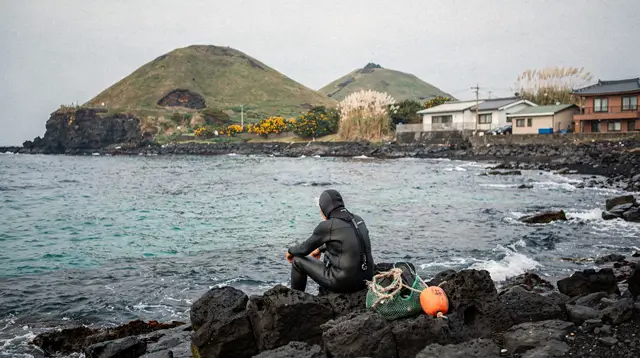
Jeju: Haenyeo Culture Experience with Seafood Tasting
Jeju: Small Group South Cherry Blossom Tour & Tangerine Cafe
Jeju: Small Group Tour w/Pink Muhly & Tangerine Picking
Jeju: Hotel Pickup East Snow, Camellia, Tangerine Picking
Jeju: Small Group Tour w/ Camellia & Tangerine Picking