
Jeju soju and makgeolli: a drinker's guide
What's the local soju brand in Jeju?
Hallasan Soju, in its recognizable green bottle featuring the mountain's silhouette, is Jeju's dominant local soju brand, served by default at most restaurants on the island rather than mainland brands like Chamisul or Jinro.
Jeju has its own regional identity when it comes to alcohol, distinct enough from mainland Korean drinking culture to be worth understanding before your first restaurant dinner — starting with the near-ubiquitous green bottle of Hallasan Soju that will likely be on your table whether you order it specifically or not.
| Local default | Hallasan Soju, green bottle, around 16-17% ABV |
| Restaurant price | around ₩5,000-7,000 per bottle |
| Store price | around ₩2,000-3,000 per bottle |
| Classic pairing | black pork BBQ with soju |
| Where to buy bottles | supermarkets, convenience stores, the airport |
Hallasan Soju: the local default
Hallasan Soju, named for and labeled with Jeju’s central volcanic peak, is the dominant soju brand served at restaurants across the island, effectively occupying the role that Chamisul or Jinro hold on the Korean mainland. It’s produced by a Jeju-based distillery and, like standard Korean soju generally, sits around 16-17% ABV, distilled from a starch base (commonly sweet potato or grain, depending on the specific product line) with a clean, mildly sweet flavor profile designed to pair with food rather than be sipped alone. For most visitors, the practical difference between Hallasan Soju and a mainland brand is regional branding and local identity rather than a dramatically distinct taste — but ordering it specifically, rather than defaulting to whatever a restaurant pours, is a small way to engage with local food culture rather than treating the whole trip as generic “Korean food.”
Makgeolli and Jeju’s local versions
Makgeolli is Korea’s traditional unfiltered rice wine — milky white in appearance, lower in alcohol than soju (typically 6-8% ABV), and slightly sweet and tangy in flavor, traditionally served in a metal bowl-style cup rather than a shot glass. It’s historically associated with farming communities and rural celebration, which gives it a somewhat different cultural register from soju’s more universal, everyday-drinking status. Jeju producers make their own versions, sometimes incorporating local ingredients — hallabong or other citrus flavoring is a common Jeju-specific twist on the standard recipe, giving it a brighter, more citrus-forward profile than a plain mainland makgeolli. These citrus-infused versions are worth seeking out specifically as a Jeju-distinctive drink rather than settling for a standard makgeolli you could find anywhere in Korea.
Craft beer on Jeju
Beyond the traditional categories, Jeju has a small but genuine craft beer scene, with at least one dedicated local brewery producing beers that incorporate island ingredients — tangerine peel-infused wheat beer styles are a notable example, leaning into the same citrus identity that runs through Jeju’s food and drink generally. This is a newer addition to the island’s drinking culture compared to the decades-long presence of Hallasan Soju, and craft beer remains a smaller niche than soju or mainstream lager in terms of overall consumption, but it’s a reasonable option for visitors who prefer beer and want something more locally distinctive than a mass-market Korean lager.
Where and how these drinks are served
Soju and makgeolli are both overwhelmingly consumed alongside food rather than at a standalone bar in Korean drinking culture — a bottle of Hallasan Soju at a black pork BBQ dinner is the classic pairing, while makgeolli tends to show up more with lighter, savory pancake-style dishes (though it pairs reasonably with most Korean food). Restaurants serving alcohol typically have both available, with soju more universally stocked and makgeolli somewhat less consistently available depending on the restaurant’s style and specialty.
Prices
A bottle of Hallasan Soju at a restaurant runs ₩5,000-7,000, broadly in line with mainland Korean restaurant soju pricing; makgeolli, sold by the bottle or bowl, runs similarly or slightly higher for the citrus-infused specialty versions. Retail prices at convenience stores or supermarkets are considerably lower — soju around ₩2,000-3,000 per bottle, makgeolli similarly affordable — making a store-bought bottle a budget-friendly option if you’re drinking in your accommodation rather than at a restaurant. Craft beer, given its smaller-scale production, generally costs more per serving than soju or makgeolli, closer to specialty craft beer pricing found internationally.
Drinking etiquette
Korean drinking etiquette carries some specific norms worth knowing, particularly around shared meals. Traditionally, you pour for others at the table rather than yourself, and it’s polite to hold your glass with both hands (or support your pouring arm with your other hand) when being poured for by someone older or in a position of respect — a custom rooted in Confucian-influenced social hierarchy that’s relaxed somewhat in casual settings but still commonly observed, especially among older Koreans or in more formal group settings. When drinking with someone significantly older, it’s traditional to turn slightly away from them when taking a sip, though this is now more of an optional courtesy than a strict rule, particularly in casual tourist-facing restaurant settings where staff won’t expect visitors to know or follow it.
Non-alcoholic alternatives
For visitors not drinking alcohol, Jeju’s citrus-based non-alcoholic drinks — tangerine ade, various citrus juices — are widely available at both cafes and restaurants and make a reasonable substitute that still connects to the island’s flavor identity, rather than settling for plain water or a generic soft drink. Barley tea (boricha), served free and unlimited at many Korean restaurants as a default table drink, is another common non-alcoholic option that requires no special ordering.
The cultural weight of a regional soju brand
Regional soju loyalty is a genuine, widely recognized phenomenon across Korea — different provinces and cities have historically had their own dominant local brand, and residents often express real preference for their home region’s soju over the nationally dominant Chamisul or Jinro labels, treating it as a point of local identity similar to how some regions take pride in a local beer or spirit elsewhere in the world.
Jeju’s relationship with Hallasan Soju fits this pattern closely: it’s not simply the cheapest or most available option at local restaurants, but a product actively associated with island identity, reinforced by the mountain-referencing name and label design. Ordering it as a visitor, rather than asking for a mainland brand by name, is a small gesture that restaurant staff generally notice and appreciate, similar to ordering a regional beer rather than an imported one when traveling elsewhere.
Craft beer taprooms and where to try them
Jeju’s craft beer producers generally operate a small number of taproom locations, concentrated in and around Jeju City, where the citrus-infused and other specialty beers can be tried on-site alongside a food menu, rather than being widely available at every restaurant across the island the way soju is. If trying local craft beer specifically is a priority, it’s worth checking current taproom locations and hours before building a day around it, since availability is considerably more limited and centralized than the near-universal presence of Hallasan Soju at restaurants island-wide. Some convenience stores and specialty bottle shops also stock canned or bottled versions for a more casual, lower-commitment way to try it without visiting a dedicated taproom.
Pairing drinks with Jeju’s signature foods
The classic Jeju pairing logic follows fairly intuitive lines: Hallasan Soju’s clean, mildly sweet profile complements the richness of grilled black pork without competing with its flavor, which is part of why the two are so consistently served together at grill restaurants. Makgeolli’s tangier, slightly effervescent character works well alongside seafood dishes and lighter fare, a pairing pattern that holds across Korean cuisine generally rather than being uniquely Jeju. Citrus-infused versions of both drinks extend naturally to pairing with the island’s citrus-forward desserts and cafe menus covered in the Aewol cafe guide, creating a loosely coherent flavor thread that runs through Jeju’s food and drink identity as a whole.
Buying bottles to take home
Bottled Hallasan Soju and packaged Jeju makgeolli are both sold at supermarkets, convenience stores, and the airport, making them straightforward souvenirs for visitors who want to bring a taste of Jeju’s drinking culture home, though check your destination country’s alcohol import allowances before buying in quantity, since these vary by country and are typically more restrictive than the customs rules for solid food souvenirs. Glass bottles also add weight and breakage risk to checked luggage, worth factoring in if you’re already traveling light.
Drinking games and social customs
Korean drinking culture, including on Jeju, often involves casual drinking games at group meals, ranging from simple number or clapping games to more elaborate ones, generally used as social icebreakers among larger groups of friends or coworkers rather than something visitors are expected to know or participate in. As a visitor, you’re unlikely to be drawn into these unless dining with Korean friends or colleagues who specifically invite you to join, and there’s no expectation that a tourist needs to understand or participate in this aspect of the culture.
What is more broadly relevant is the general norm of not letting a companion’s glass sit empty for long at a shared meal — refilling for others as their glass empties, and expecting the same courtesy in return, is a small but consistently observed practice worth being aware of even if you don’t fully internalize every nuance of the etiquette.
Legal drinking age and where alcohol is sold
Korea’s legal drinking age is 19 by Korean reckoning (which can differ slightly from international age from birth depending on birth month, though in practice ID checks use the calendar-year system), and alcohol including soju and makgeolli is sold at convenience stores, supermarkets, and restaurants without the more restrictive sale-hour limitations found in some countries — convenience stores typically sell alcohol at any hour they’re open, which for many is 24 hours. Public drinking in outdoor spaces like parks or beaches is broadly tolerated in Korea generally, including on Jeju, though exercising ordinary discretion and cleaning up after yourself is expected regardless of the informal legality.
Building a Jeju drinks-and-food evening
A satisfying way to experience Jeju’s drinking culture without turning it into a standalone activity is folding it into an evening meal already on your itinerary. Order Hallasan Soju alongside a black pork dinner for the classic pairing, or ask for a citrus makgeolli if you’re eating somewhere serving lighter, seafood-leaning dishes from the abalone and seafood guide. Neither drink needs to be pre-booked or sought out specifically — both are available at essentially any restaurant serving alcohol, which makes this one of the lowest-effort ways to add a genuinely local element to an otherwise ordinary dinner.
A note for non-drinkers traveling with a group
If you’re traveling with people who do plan to drink but alcohol isn’t for you personally, it’s entirely normal in tourist-facing Jeju restaurants to order a citrus ade or barley tea instead while others at the table order soju or makgeolli — nobody will press the issue in a typical restaurant setting, even if a polite offer or two comes first. This lets you still participate in the shared-table dining format that Korean drinking culture is built around, covered further in the food etiquette guide, without needing to actually drink to fit in.
Frequently asked questions about Jeju soju and makgeolli
Can I find Hallasan Soju outside of Jeju?
It’s primarily distributed and consumed on the island itself; while some specialty Korean retailers elsewhere may stock it, it doesn’t have the nationwide mainland distribution of major brands like Chamisul.
Is makgeolli stronger or weaker than soju?
Weaker — makgeolli typically runs 6-8% ABV, compared to soju’s 16-17%, though makgeolli is often served in larger quantities per serving, which can offset some of that alcohol-content difference over a full sitting.
Do bars in Jeju City have a strong nightlife scene built around these drinks?
Jeju City has a modest bar and nightlife scene, generally smaller and quieter than mainland Korean cities like Busan or Seoul, with soju-and-food pairing at restaurants remaining the more dominant drinking format than a dedicated bar-hopping culture.
Is it acceptable to decline alcohol at a Korean meal in Jeju?
Yes, declining is entirely acceptable and increasingly common, though be prepared for a polite offer or two before it’s dropped, consistent with general Korean hospitality norms around food and drink offers.
What’s the best food pairing for Jeju citrus makgeolli?
Lighter savory dishes — Korean pancakes (jeon) or a simple seafood dish — pair well with the brighter, citrus-forward flavor, though it’s flexible enough to work reasonably with most Korean meals including black pork.
Ordering without speaking Korean
Most restaurant staff on Jeju are used to visitors pointing at a menu photo or simply saying “soju” or “makgeolli,” and both words are understood island-wide without further explanation. If a restaurant’s menu lists more than one soju or makgeolli option, pointing at the bottle on a neighboring table or asking staff for “the Jeju one” (referring to Hallasan Soju or a local makgeolli brand) generally gets the intended local option rather than a generic mainland pour. This is one of the easiest food-and-drink interactions to navigate as a visitor, with far less language friction than ordering off a full Korean-language restaurant menu — see the Jeju food etiquette guide for broader dining norms beyond just drinks.
Where to try these drinks alongside a proper meal
Pairing a bottle of Hallasan Soju or a citrus makgeolli with dinner works best at a sit-down restaurant rather than a bar, in keeping with Korea’s food-first drinking culture. Dongmun Market and other food-hall style venues sometimes sell drinks alongside prepared food stalls, though a proper restaurant meal remains the more traditional setting. For a lighter, grazing-style approach that still lets you sample a drink or two, the Jeju street food guide covers venues where a casual drink sometimes accompanies a market meal, and Seogwipo’s restaurant scene offers a calmer, less touristed setting for a full sit-down soju-and-dinner pairing in the south of the island.
Getting home after dinner
Because soju and makgeolli arrive with the meal, the practical question is how you travel afterwards. If you have rented a car, plan the drinking evening for a night when someone else is driving, or skip it; the rental rules and paperwork are covered in the car rental and IDP guide, and the road trip tips explain why Jeju’s dark, winding roads are a poor place to improvise. Without a car, Kakao T taxis and the island bus network get you back to your lodging, though buses thin out in the evening, so check the last service before you settle in at the table.
One comfortable way to remove the problem entirely is to let someone else handle the day’s driving. A private guided day by car lets you eat a long, unhurried dinner at the end of the day without anyone needing to watch the clock or the road, and the private versus group tours comparison helps you decide whether that format suits you. If you would rather stay on the east side of the island, a full-day coach tour of the east does the same job at a gentler pace, and the east Jeju day tour guide shows what that day tends to look like.
Choosing where to stay for a drinking evening
If a relaxed dinner is a highlight of your trip, it helps to sleep within a short walk or a short taxi ride of the restaurants. The where to stay guide compares the main bases, and Jeju City’s market area is a natural place to wander before or after a meal. Staying close also keeps your evening budget predictable, which matters if you are following the budget guide; the money and currency guide explains how to pay for restaurant bills without surprises.
Drinks, hangovers, and the next morning’s plans
Soju is easy to drink alongside rich grilled pork, and the combination can make the following morning slower than expected. If you have a big outdoor day coming, such as a summit attempt, keep the night before modest. The Hallasan hiking guide and the hiking gear and safety guide both stress an early, clear-headed start, and the Seongpanak trail guide is a good example of a route where you will be glad you slept well. If you would rather have a guide handle the logistics, a guided hike up Hallasan with lunch keeps the morning simple, so you can save your drinking for the evening after you come down.
For a slower morning after a late dinner, the Osulloc tea fields guide and the tea culture guide suggest a gentler way to start the day than a hard hike. In colder months, the winter guide is worth a read, since a warm bowl of food and a drink indoors suit the season well. To spot places that look appealing but are not worth your evening, the tourist traps guide and the safety guide are useful companions.
Related guides

Eating at Dongmun Market: a food-focused guide
Dongmun Market's food scene explained — what to eat, honest prices, the night market food street, and how to avoid the priciest tourist stalls.

Hallabong and Jeju citrus: what to know before buying
Hallabong and Jeju's citrus varieties explained — season, real prices, where to buy quality fruit, and how to avoid overpriced tourist-shop tangerines.

Jeju abalone and seafood: what to eat and where
Jeju's abalone and seafood tradition explained — jeonbok-juk, haenyeo-caught seafood, and where to eat it without overpaying at tourist restaurants.

Jeju black pork BBQ: what it is and where to eat it
Jeju black pork explained — the real heukdwaeji breed, how it's grilled and served, honest price ranges, and which streets to trust over tourist-trap
Ready to book? Top tours for this guide
We earn a small commission if you book through GetYourGuide — at no extra cost to you. Every tour is hand-picked and verified.
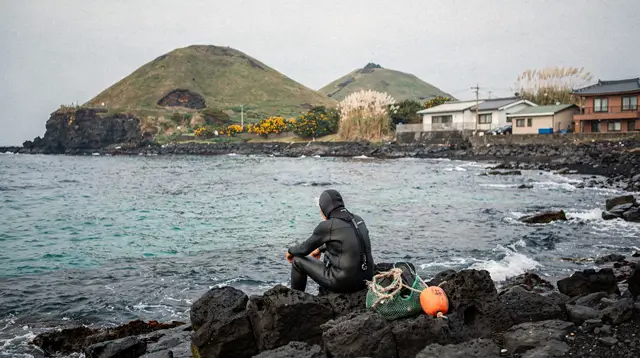
Jeju: Haenyeo Culture Experience with Seafood Tasting
Jeju: Small Group South Cherry Blossom Tour & Tangerine Cafe
Jeju: Small Group Tour w/Pink Muhly & Tangerine Picking
Jeju: Hotel Pickup East Snow, Camellia, Tangerine Picking
Jeju: Small Group Tour w/ Camellia & Tangerine Picking