
Best restaurants in Seogwipo: an honest guide
Is Seogwipo a good base for restaurant variety?
Yes — Seogwipo has a strong mix of seafood restaurants, black pork grill houses, and a major traditional market, generally at lower prices than the resort restaurants in its own Jungmun district, which cater specifically to hotel guests and cruise passengers.
Seogwipo, Jeju’s southern coastal city, has a restaurant scene shaped by two very different forces: a genuine local dining culture in its town center, and a resort-district pricing structure in Jungmun built around hotel guests and cruise-ship passengers. Understanding which is which makes a real difference to both your bill and the quality of what you’re served.
| Where | Seogwipo town center (best value), Jungmun resort district (convenience premium) |
| Cost | Around ₩25,000–45,000/person town dining; ₩40,000–70,000 in Jungmun |
| Getting there | Town center is walkable; a car or Kakao T taxi helps for Jungmun and outlying spots |
| Best for | Seafood, black pork BBQ, and Maeil Olle Market street food |
| Booking | Rarely necessary outside peak holidays or weekend dinner at popular seafood spots |
Seogwipo town center
Central Seogwipo, away from the Jungmun resort strip, functions as a normal Korean coastal town with restaurants serving its own residents as the primary customer base rather than tourists exclusively. This means more realistic pricing, a higher likelihood of finding restaurants without English menus (a reasonable trade for better value), and a food scene less shaped by the specific needs of resort tourism — package meals, buffet formats, hotel-adjacent convenience — than what you’ll find a short drive away in Jungmun. Black pork grill restaurants, seafood restaurants, and standard Korean dining (stews, rice dishes, noodle shops) are all well represented in the town center at prices comparable to or slightly below Jeju City equivalents.
If you are still deciding where to sleep, the where to stay guide explains how the choice of base shapes your dining options, and the Seogwipo destination page gives the wider picture of the town beyond its restaurants.
Seogwipo Maeil Olle Market
Seogwipo’s main traditional market, generally calmer and smaller than Jeju City’s Dongmun Market, offers a comparable street-food and seafood experience without the same volume of tourist traffic. It’s a reasonable choice for visitors staying in southern Jeju who want a market-food experience without the drive north to Dongmun Market, and its relatively lower profile means prices and crowding are both generally more manageable. See the Dongmun Market food guide for the broader market-food format that applies similarly here, and the Jeju street food guide for what to look for regardless of which market you visit.
The Jungmun resort pricing gap
Jungmun, a purpose-built resort district within Seogwipo’s administrative area, hosts most of Jeju’s largest international hotel chains and, correspondingly, a cluster of restaurants priced for that captive, often less price-sensitive audience. It’s common to see the same category of meal — a seafood platter, a black pork BBQ dinner — priced 30-50% higher in Jungmun than an equivalent restaurant in Seogwipo’s town center or elsewhere on the island, a pattern that repeats at resort districts worldwide rather than being specific to Jeju. This isn’t necessarily bad value if convenience matters more than cost to you — staying at a Jungmun resort and eating on-site saves transit time — but visitors on a tighter budget, or those simply preferring better value, benefit from the short drive into central Seogwipo for dinner rather than defaulting to a resort restaurant.
Seafood specifically
Seogwipo’s coastal position gives it strong access to fresh seafood, and several well-regarded seafood restaurants operate in and around the town center, generally serving the same abalone, sea urchin, and raw-fish dishes covered in the abalone and seafood guide. As with Jeju City, restaurants directly adjacent to major sightseeing points — near Cheonjiyeon Falls or other headline Seogwipo attractions — tend to price at a premium compared to restaurants a few streets further into town, a pattern worth watching for regardless of which part of the island you’re in.
Black pork in Seogwipo
While Jeju City’s Ojang-dong gets the most attention as “the” black pork street, Seogwipo has its own black pork restaurants serving the same style of thick-cut grilled pork with the region’s characteristic fermented dipping sauces — see the Jeju black pork BBQ guide for the format and etiquette that applies equally here. Prices in Seogwipo’s town-center black pork restaurants run comparably to Jeju City, generally ₩23,000-35,000 per 200g portion, with the same tourist-premium pattern applying near major attractions.
A day-trip dining strategy
For visitors day-tripping to Seogwipo’s waterfalls and coastal attractions from a Jeju City base, or vice versa, planning lunch or dinner around the town center rather than the nearest attraction-adjacent restaurant generally yields better value and often better food. Seogwipo’s compact downtown makes this easy — most of its restaurant variety is within a walkable core rather than spread across a large area, unlike some of Jeju’s more sprawling towns.
Anyone building a full food-focused trip around the island will find the food lovers itinerary a useful companion, with Seogwipo meals slotted in alongside the north-coast highlights.
Chilsimni and other local food streets
Beyond the immediate downtown core, Seogwipo has smaller local food streets and restaurant clusters — Chilsimni among them — that serve a similar range of Korean dining (grilled meat, stews, noodle shops) to a predominantly local clientele rather than a tourist-facing crowd. These clusters generally offer the best value in the city precisely because they’re not positioned around tourist foot traffic, though the tradeoff is the same as anywhere off the main visitor track: less English signage, less certainty about what you’re ordering without some Korean language ability or a translation app, and a bit more effort required to find a specific recommended spot.
For visitors staying multiple nights in Seogwipo and wanting to eat like a resident rather than exclusively at guidebook-recommended restaurants, exploring one of these local clusters is a reasonable way to diversify a multi-night stay’s dining beyond the same few well-known names.
How Seogwipo’s food scene compares to Jeju City’s
Jeju City, as the island’s largest urban center and main airport gateway, has a larger overall restaurant scene by sheer volume, plus the concentrated black pork street in Ojang-dong that draws specific culinary tourism. Seogwipo’s scene is smaller but arguably more consistent in quality relative to price in its town center, partly because it hasn’t developed the same scale of tourist-specific restaurant clusters that inflate prices in parts of Jeju City. Visitors splitting a trip between north and south coasts will find comparable overall food quality in both cities, with Jeju City offering more sheer variety and Seogwipo offering a marginally calmer, less crowded version of a similar range of Korean coastal dining.
Waterfall-adjacent dining
Seogwipo’s headline attractions — Cheonjiyeon, Jeongbang, and Cheonjeyeon waterfalls — each have restaurant clusters at their respective parking and entrance areas, generally priced at the tourist-attraction premium discussed above. If a waterfall visit is part of your day, it’s worth either eating beforehand in the town center or walking a few minutes further from the immediate attraction entrance before choosing a restaurant, since pricing typically normalizes within a short distance of any single high-traffic tourist stop.
Prices overall
A proper sit-down dinner (seafood or black pork) at a Seogwipo town restaurant runs ₩25,000-45,000 per person including rice, banchan, and a drink, broadly comparable to Jeju City pricing. Jungmun resort-district restaurants run meaningfully higher, often ₩40,000-70,000 for a comparable meal, reflecting the resort pricing structure discussed above. Casual meals (a noodle shop, a simple rice dish restaurant) are considerably cheaper across both areas, generally ₩8,000-15,000 per person.
Breakfast and lighter meals
Traditional sit-down Korean breakfast culture is less developed than lunch or dinner dining nationwide, and Seogwipo is no exception — many visitors rely on hotel breakfast, a bakery, or a quick market stall item rather than a dedicated breakfast restaurant. Bakeries and cafes in the town center offer a reasonable alternative for a lighter morning meal, and Seogwipo Maeil Olle Market opens early enough to serve as a breakfast option for visitors willing to eat market-stall style rather than sit down.
Cruise passenger considerations
Seogwipo’s port occasionally receives cruise ships, and on days when a large ship is in port, restaurants near the port and major attractions can see a significant, temporary spike in demand — longer waits, and sometimes a shift toward set-menu offerings designed for handling higher volume quickly. If your visit coincides with a cruise ship day (worth checking if timing flexibility matters to you), building in extra time for meals near the port area, or simply eating further from the port entirely, avoids the worst of this temporary crowding.
A practical two-meal plan for a Seogwipo day
For a single day based in Seogwipo, a workable plan is a market lunch at Seogwipo Maeil Olle Market — cheap, fast, and varied — followed by a proper sit-down dinner at a town-center seafood or black pork restaurant once the day’s sightseeing is done. This sequencing avoids overloading a single meal slot with a heavy restaurant sit-down in the middle of a sightseeing day, while still allowing for one substantial, relaxed meal to end the day. Visitors also touring Jungmun’s resort attractions (Jungmun Beach, nearby gardens) can adjust this by having a market lunch beforehand in town, then treating Jungmun purely as an afternoon activity stop rather than a dining destination.
Getting around for meals
Central Seogwipo is walkable for most restaurant-hopping within the town core, but reaching restaurants further out, or making the trip to or from Jungmun, benefits from a car or taxi given the distances involved and Seogwipo’s spread-out overall footprint compared to a purely pedestrian city center. Kakao T, Korea’s standard ride-hailing app, works reliably in Seogwipo for these shorter hops if you don’t have a rental car.
The Kakao T taxi guide covers how to set the app up before you arrive, and the Jeju bus guide is worth a look if you would rather link Seogwipo and Jungmun by public transport. If you plan to drive yourself, the car rental guide explains what you need beforehand. Anyone eating in Jungmun itself can pair the meal with a stroll through the Jungmun area, which makes the trip feel like more than a dinner run.
Seogwipo town versus Jungmun at a glance
| Seogwipo town center | Jungmun resort district | |
|---|---|---|
| Typical dinner | ₩25,000–45,000/person | ₩40,000–70,000/person |
| Audience | Local residents, some tourists | Hotel guests, cruise passengers |
| English menus | Common at busier spots, less so elsewhere | Common |
| Best for | Value, authenticity | Convenience if staying resort-side |
A guided alternative to independent dining
For visitors who’d rather have a market-food experience curated than navigate stalls independently, Jeju Taste: A Culinary Journey Through a Traditional Market pairs market tastings with guided context, a reasonable option for a first stop before venturing into Seogwipo’s town-center restaurants independently for the rest of a trip.
Combining Seogwipo dining with a south-coast day
Since most visitors reach Seogwipo as part of a broader south-coast day taking in the waterfalls and coastal sights, it’s worth deciding on a dining plan before setting out rather than defaulting to whichever restaurant sits closest to the last attraction on the itinerary. A day built around Cheonjiyeon or the Seogwipo walking tour pairs naturally with a town-center dinner afterward, once the day’s driving and walking are done and a relaxed sit-down meal is more appealing than a quick attraction-adjacent bite.
Travelers who prefer to let someone else handle the logistics of a long south-coast day can look at a guided walking tour of Seogwipo at sunset, which finishes at the right hour to head straight into a town-center dinner. For a wider overview of how guided days compare, the private versus group tours guide lays out the trade-offs.
Frequently asked questions about restaurants in Seogwipo
Is it worth staying in Jungmun if I care about restaurant value?
If restaurant value specifically is a priority, staying in or near Seogwipo’s town center gives easier access to better-value dining than a Jungmun-based stay, which requires a drive into town to escape resort pricing.
Are there vegetarian or vegan restaurants in Seogwipo?
Dedicated vegetarian or vegan restaurants are rare, consistent with the broader Korean dining landscape, though rice, vegetable banchan, and some noodle or bibimbap dishes can be adapted with a bit of communication about dietary restrictions.
Does Seogwipo have any restaurants worth a special trip from Jeju City?
Seafood and black pork restaurants in Seogwipo are comparable in quality to Jeju City’s best, but not meaningfully superior in a way that would justify a special trip purely for dining if you’re not otherwise visiting the south side.
Is tipping expected at Seogwipo restaurants?
No — tipping isn’t part of Korean dining culture generally, including in Seogwipo; see the Jeju food etiquette guide for more detail on this and related norms.
Are English menus common in Seogwipo?
More common in Jungmun’s resort-oriented restaurants and at busier town-center spots used to visitor traffic; smaller local restaurants may rely on Korean-only or picture menus.
Is Seogwipo Maeil Olle Market open every day?
Yes, it operates daily as a functioning local market, though individual stalls may vary their hours or take occasional days off, particularly around major Korean holidays.
Should I book restaurants in advance in Seogwipo?
Generally not necessary for most town-center restaurants outside of peak holiday periods; larger group bookings or specific well-known seafood restaurants during weekend dinner hours may benefit from a reservation or at least calling ahead to check wait times.
Does Seogwipo have good options for a quick, cheap lunch between sightseeing stops?
Yes — the market and smaller noodle or rice-dish restaurants in the town center both offer fast, inexpensive options well suited to a lunch break between waterfall or coastal sightseeing stops.
Related guides

Jeju abalone and seafood: what to eat and where
Jeju's abalone and seafood tradition explained — jeonbok-juk, haenyeo-caught seafood, and where to eat it without overpaying at tourist restaurants.

Jeju black pork BBQ: what it is and where to eat it
Jeju black pork explained — the real heukdwaeji breed, how it's grilled and served, honest price ranges, and which streets to trust over tourist-trap

Eating at Dongmun Market: a food-focused guide
Dongmun Market's food scene explained — what to eat, honest prices, the night market food street, and how to avoid the priciest tourist stalls.

Hallabong and Jeju citrus: what to know before buying
Hallabong and Jeju's citrus varieties explained — season, real prices, where to buy quality fruit, and how to avoid overpriced tourist-shop tangerines.
Ready to book? Top tours for this guide
We earn a small commission if you book through GetYourGuide — at no extra cost to you. Every tour is hand-picked and verified.
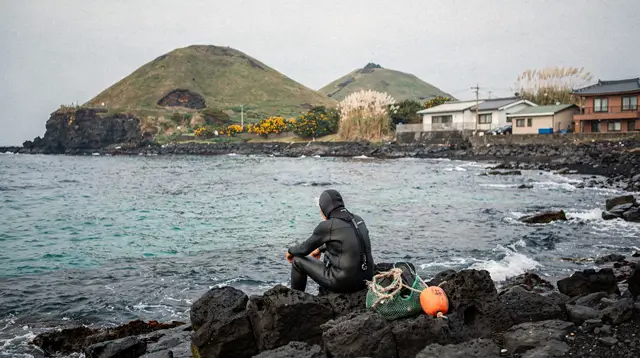
Jeju: Haenyeo Culture Experience with Seafood Tasting
Jeju: Small Group South Cherry Blossom Tour & Tangerine Cafe
Jeju: Small Group Tour w/Pink Muhly & Tangerine Picking
Jeju: Hotel Pickup East Snow, Camellia, Tangerine Picking
Jeju: Small Group Tour w/ Camellia & Tangerine Picking